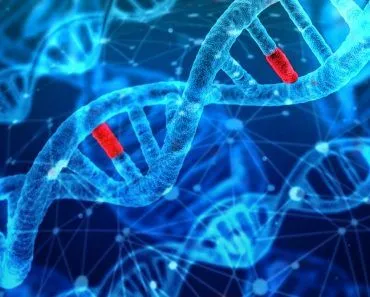
When the Human Genome Project officially finished in 2003 it had pieced together only about 92% of the genome. The remaining 8% sat in highly repetitive regions (centromeres, telomeres, and the short arms of acrocentric chromosomes) that short-read sequencing of the time could not unambiguously resolve. The Telomere-to-Telomere (T2T) consortium finally closed the gaps using long-read sequencing and announced the first gapless human genome on April 1, 2022.
It’s amazing how four different molecular letters can combine to make living organisms as small as a microbe and as ginormous as blue whales. These four molecular molecules, A (Adenine), T (Thymine), G (Guanine), and C (Cytosine) make up our DNA (along with sugars and phosphates).
The entire library of the sequences of ATCGs that hold the key is called the genome. The genome contains all of the information necessary to construct that organism and allow it to grow and develop over time. The size and complexity of a genome varies from species to species, and it is governed by a set of instructions in the form of DNA.
Think of the genome as a multi-story building constructed by the repetition of building blocks, while the different stories of the building store the information necessary for the proper functioning, signaling, and survival of the organism.
It is necessary to conduct a detailed analysis of this building in order to understand the problems (genetic disorders) that may be occurring in any part of it, which can be accomplished by beginning with the foundation.
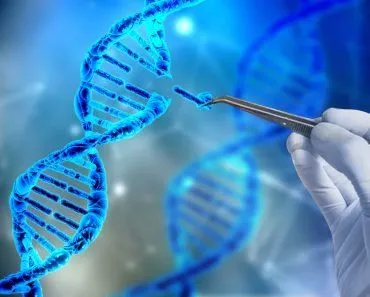
Sequencing is the process of learning about a species’ genome in a detailed order, and is accomplished through research.
The Human Genome Project
The Human Genome Project began in October 1990 with the goal of sequencing the entire human genome. By 2003, however, the project had managed to sequence only about 92% of it. The remaining 8% was finally decoded after almost two more decades of work and announced by the Telomere-to-Telomere (T2T) consortium in April 2022. But why did it take so long to sequence the last 8%?
The answer lies in the framework of the human genome.
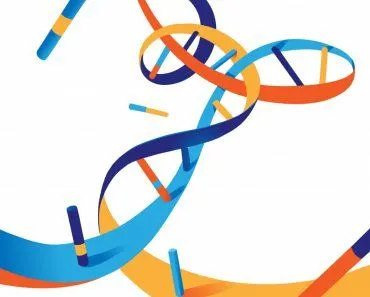
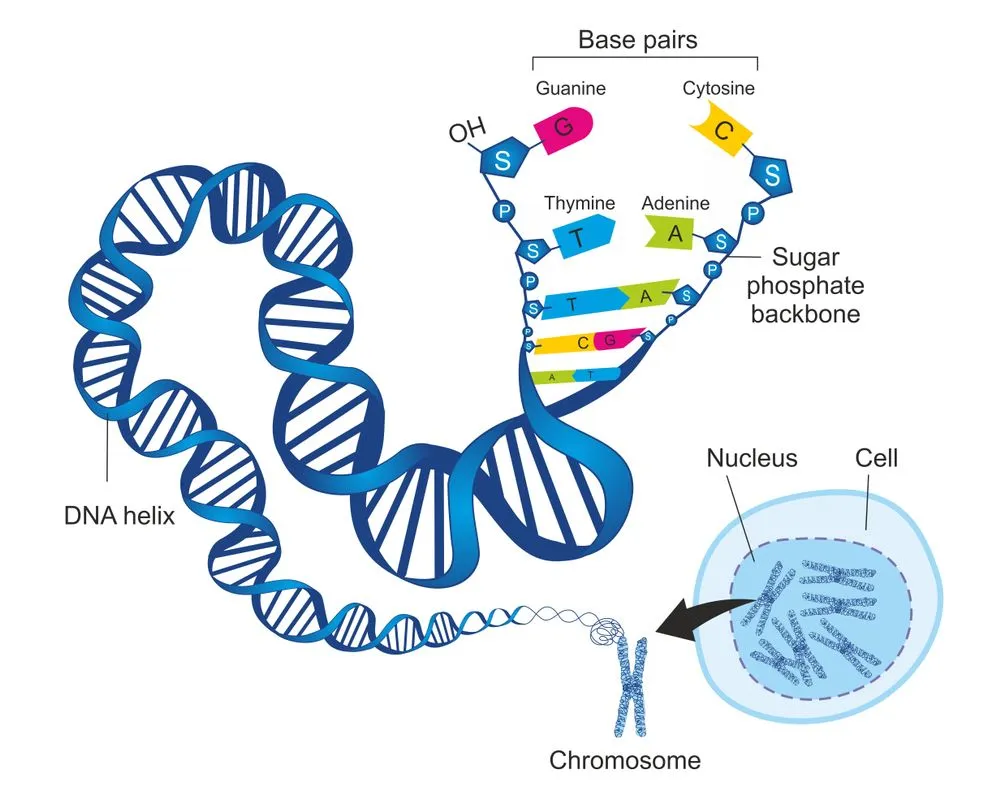
Each letter is a nucleobase that, attached to a sugar and a phosphate, makes one nucleotide. On the double helix, nucleotides on the two opposite strands pair up (A always with T, and C always with G) to form what are called base pairs. A long string of these base pairs makes up our entire genome. A string of nucleotides that codes for particular information (usually a protein) is a gene. The genes and all the strings of DNA that are not genes is collectively the genome.
Scientists now know that the human genome contains about 3.055 billion base pairs (T2T-CHM13, 2022), of which only 1-2% directly encodes proteins. The majority of the remaining 99% of the genome was once considered useless "junk." And much of this 99% were long repeats of nucleotides, which was a significant problem.
It is like placing identical-looking bricks in a building, but these identical bricks must be placed in an appropriate order and sequence, which posed a significant challenge. Due to the similarity in structure and content of these repeating sequences, the technology we used to sequence couldn’t pick up and tell apart these sequences.
In other words, let’s say we have a cast that can only hold 100 bricks at a time; how can we be certain that the specific 100 bricks should be placed in this section? As a result, we needed a more extensive cast to lay all the bricks at once.
How Did They Solve The Problem?
This difficulty was overcome by a group of scientists working together as part of the Telomere to Telomere Consortium. The consortium managed to piece together the long repeats thanks to advancements in biotechnology and computational methods. The new methods developed required less memory than previous techniques, which allowed researchers to process the lengthy repeats. The new technology also helped bring down the costs of processing the data.
What Does The Human Genome Look Like?
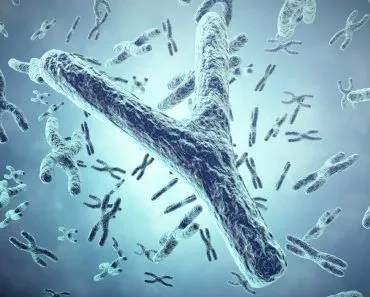
If you could zoom in on a single human cell, the genome would not look like one tidy diagram. It nests together at several scales. At the top sit 46 chromosomes (23 pairs), each one a single, tightly wound molecule of DNA. Unspool a chromosome and you get the familiar double helix, two strands twisting around each other. The rungs of that ladder are base pairs: adenine (A) always paired with thymine (T), and cytosine (C) always paired with guanine (G). A stretch of base pairs that spells out the instructions for a protein is a gene.

So how big is the whole thing? The complete human genome runs to about 3.055 billion base pairs in the 2022 Telomere-to-Telomere reference (T2T-CHM13), spread across all 23 chromosomes. People often describe those base pairs as the genome's "letters," so the answer to "how many letters make up the human genome" is roughly 3 billion pairs of letters (around 6 billion individual A, T, C and G bases if you count both strands).
Here is the surprising part: only about 1 to 2% of all those base pairs actually code for proteins. That slim coding fraction holds an estimated 20,000 protein-coding genes. The other roughly 98% was once dismissed as "junk" DNA, although much of it turns out to switch genes on and off, fold the chromosome, and do other essential jobs. A large slice of that non-coding majority is made of long, near-identical repeats, and that, as we will see, is exactly why the last stretch of the map was so stubborn.
When Was The Human Genome Mapped, And How Long Did It Take?
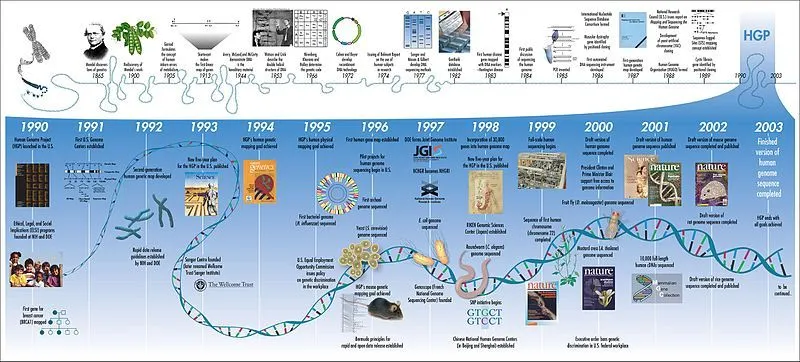
The short answer is that "mapping the human genome" happened in stages, not on a single day, which is why the dates can feel confusing. Here is the timeline that the National Human Genome Research Institute (NHGRI) lays out:
- October 1990: The Human Genome Project officially launched, jointly funded by the US National Institutes of Health and Department of Energy, with partners across the United States, United Kingdom and several other countries.
- June 2000: The International Human Genome Sequencing Consortium announced a "working draft" covering about 90% of the genome.
- April 2003: After roughly 13 years, the consortium declared the sequence essentially complete. In practice that meant about 92% of the genome, with fewer than 400 remaining gaps in the hard-to-read repetitive regions.
- 2022: The Telomere-to-Telomere consortium published the first truly gapless human genome, adding nearly 200 million base pairs that the original project had never resolved.
So how much of the human genome is mapped today? Effectively all of it. The 2003 milestone is the one most textbooks call "the human genome mapped," but the genome was not finished, end to end, until the T2T work nineteen years later. One asterisk remains: T2T-CHM13 came from a cell line without a Y chromosome, so the complete Y was sequenced separately, a story we cover in why the Y chromosome stayed a mystery for so long.
Conclusion
A complete genome refers to an individual’s entire genetic sequence; consequently, the complete human genome will serve as a reference for comparing various people’s genomes and identifying genetic differences that make us unique. It will also aid in the comparison of a family’s genome and understanding the source of genetic differences in order to identify the genes (active or inactive) that cause various inheritable diseases. This represents a significant step forward in the understanding and treatment of numerous genetic illnesses and mutations in people, as well as in the advancement of mankind.
References (click to expand)
- The Human Genome Project pieced together only 92% of the .... The Conversation
- International Human Genome Sequencing Consortium, Lander, E. S., Linton, L. M., Birren, B., Nusbaum, C., Zody, M. C., … The Wellcome Trust:. (2001, February 15). Initial sequencing and analysis of the human genome. Nature. Springer Science and Business Media LLC.
- The human genome sequence is now complete. National Human Genome Research Institute, 2022.
- (2008) The Human Genome Project. The Stanford Encyclopedia of PhilosophyIt
- Human Genome Project Fact Sheet. National Human Genome Research Institute.
- Gene. Talking Glossary of Genomic and Genetic Terms. National Human Genome Research Institute.
- Nurk, S., et al. (2022). The complete sequence of a human genome. Science. (NIST publication record)