A Reuleaux triangle is a curved triangle of constant width, formed by drawing three circular arcs, each centered on one vertex of an equilateral triangle and spanning the other two. Because its width is the same in every direction, it can roll like a circle. For width w, its perimeter is πw and its area is ½(π − √3)w2.
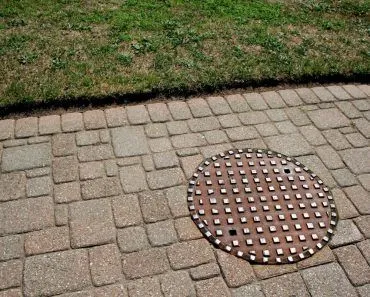
Aside from a circle, what other shapes can a manhole be so that it won’t fall through the hole? One of the answers to this question is a Reuleaux triangle.
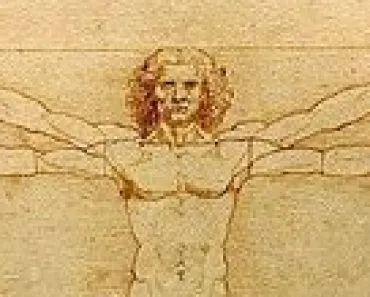
A Reuleaux triangle is a curved (or curvilinear) triangle made from three intersecting arcs, drawn when circles are centered on the vertices of an equilateral triangle. It is sometimes loosely called a spherical triangle in architecture, though that term properly refers to a triangle on the surface of a sphere. This shape has a constant width as it rotates, which makes it useful for many purposes. Sketched by Leonardo da Vinci and later studied formally by Leonhard Euler, among other mathematicians, it shows up in all sorts of applications, from rotary engines and architectural windows to guitar picks and graphic signage.
Construction Of Reuleaux Triangle
The Reuleaux Triangle is named after Franz Reuleaux, the 19th-century German engineer who pioneered the study of kinematics, the science of how machines translate one type of motion into another. Although the shape was known to earlier mathematicians, Reuleaux was the first to demonstrate its constant-width property, and he used it in many of his designs.
The construction of the Reuleaux Triangle is fairly straightforward:
- Make an equilateral triangle
- Using a compass, draw a circle, taking one of the vertices as the center and passing through the other two vertices.
- Repeat step 2 by taking the other points as the center, respectively.
Mathematical Properties Of Reuleaux Triangle
Curve Of Constant Width
The defining property of the Reuleaux Triangle is its constant width. If you trap the shape between two parallel supporting lines and then rotate it, the gap between those lines never changes, no matter which way the shape is turned. That width equals the side length of the equilateral triangle you started with, which is also the radius of each of the three arcs. The circle is the only other shape this simple that shares this trait, which is exactly why a Reuleaux triangle can roll smoothly under a flat board and why it makes a manhole cover that cannot fall through its own hole.
Perimeter And Area
Constant width leads to a surprisingly neat result for the perimeter. Barbier’s theorem, proved by Joseph-Émile Barbier in 1860, states that every curve of constant width w has the same perimeter as a circle of diameter w, namely πw. So a Reuleaux triangle of width w has a perimeter of exactly πw, identical to a circle that fits snugly through the same gap.
The area, however, is not the same. Each of the three arcs subtends an angle of 60° (π/3 radians) at its center, and adding up the three circular sectors and subtracting the equilateral triangle counted twice gives:
A = ½(π − √3)w2 ≈ 0.7048w2
That makes the Reuleaux triangle the smallest possible curve of constant width: among all shapes that share the perimeter πw, none enclose less area. (The circle, with area ¼πw2 ≈ 0.7854w2, encloses the most.)
How Do You Calculate The Area Of A Reuleaux Triangle?
The area formula looks tidy once it is written down, but where does ½(π − √3)w2 actually come from? You can build it up piece by piece from the three arcs and the equilateral triangle they sit on.

Start with a Reuleaux triangle of width w. Remember that w is both the side length of the underlying equilateral triangle and the radius of each of the three arcs. Now picture three circular sectors, one centered on each vertex, each with radius w. Because the interior angle at every corner of an equilateral triangle is 60° (π/3 radians), each sector is a 60° wedge, so its area is ½w2 × (π/3) = πw2/6.
Lay all three sectors on top of the shape and together they cover the whole Reuleaux triangle, but they overlap on the central equilateral triangle, blanketing it three times instead of once. Adding the three sectors and then removing that double over-count gives the area:
A = 3 × (πw2/6) − 2 × (√3/4)w2 = ½(π − √3)w2 ≈ 0.7048w2
The (√3/4)w2 term is just the area of the equilateral triangle, subtracted twice to cancel the overlap. Plugging in a real number makes it concrete: a Reuleaux triangle 10 cm wide has an area of ½(π − √3) × 102 ≈ 70.48 cm2, a little less than the 78.54 cm2 of a circle 10 cm across. That gap is not a coincidence. The Blaschke-Lebesgue theorem, published independently by Henri Lebesgue in 1914 and Wilhelm Blaschke in 1915, proves that of every possible curve of constant width w, the Reuleaux triangle encloses the smallest area.
Applications Of Reuleaux Triangle
Due to its compact geometry and equal proportions, the Reuleaux Triangle is used as a fundamental basis of structural and rotational strength. Some of the applications are:
Pencils
Modern pencil design has seen the adaptation of the Reuleaux Triangle as its predominant form. The triangle enables a stronger grip. As a person writes with three fingers, each curve of the triangle supports a finger, which provides better overall control of the pencil.

Guitar Picks
Similar to the pencil, guitar picks use the base geometry of the Reuleaux Triangle for better control and a tighter grip. It is easier to manipulate the strings with one of the edges of the curve while holding two fingers to hold the other two. Variations of the Reuleaux Triangle pick are even used for different genres of music to generate different sounds.

Carving Squares
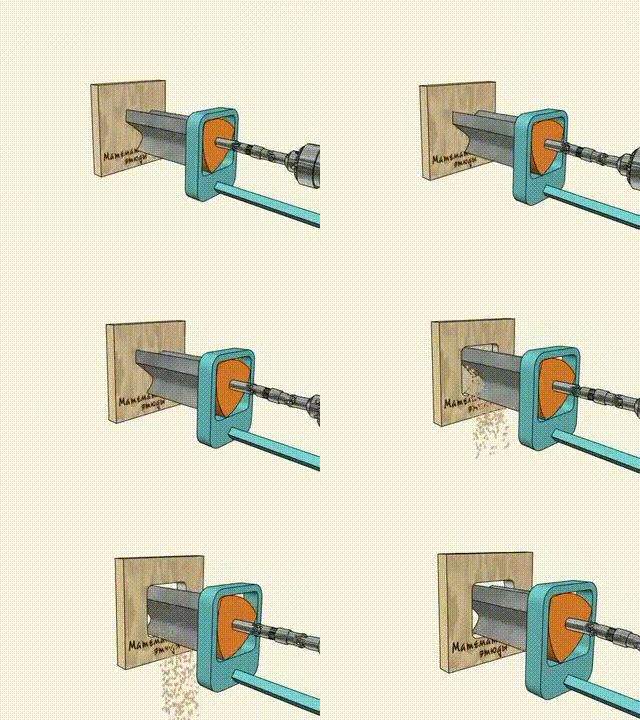
The Reuleaux Triangle is the basis for a drill bit that cuts an almost-square hole. The Watts drill, patented by Henry Watts in 1914, uses a Reuleaux triangle reshaped with cutting edges. Held in a special floating chuck (so it has no fixed center of rotation), its constant width lets it sweep out a square with only slightly rounded corners.
Mechanism Design
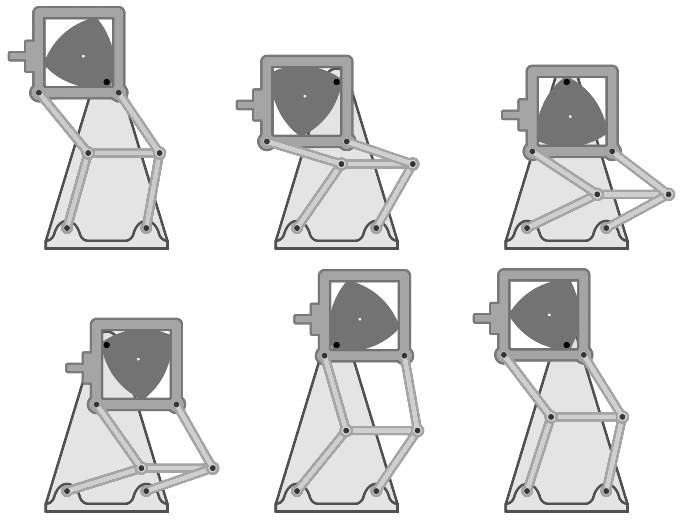
Franz Reuleaux intensively studied the mechanical properties of a Reuleaux Triangle. The triangle can be used as a mechanical linkage that converts rotation around an axis into motion. A close relative of this shape shows up in the Wankel rotary engine used in some cars: the three-cornered rotor is essentially a fattened Reuleaux triangle (its sides bulge slightly outward rather than being true circular arcs), spinning inside a housing shaped like a curve called an epitrochoid.

Some early film projectors have also used the triangle to project images. The Luch-28mm film projector uses it as a key piece in the rotation of the mechanism.
Architecture
The Reuleaux Triangle has been extensively used in architectural forms. Its compact geometry and sturdy structural integrity make it highly versatile and aesthetically pleasing to the eye. In the late 13th or early 14th century, it was used as a decorative feature in many churches, mainly as a window design of the facade.

This shape is also used in staircase design. The 2D form of a triangle is used as the base plan for the staircase. The stairwell is then arranged on the three curves while the remaining center area is kept as a cavity.

In modern architecture, this triangle has been used as the floor plan of high-rise buildings. The KölnTriangle tower in Cologne, Germany, completed in 2006, has a ground plan in the shape of a Reuleaux triangle, and its office complex spans a gross floor area of 84,300 m2 (907,000 sq ft). The three curved sides give panoramic views in three directions while also varying the depth of the rooms arranged along each curve.
In Nature
The structure of soap bubbles has intrigued scientists for centuries, as it forms a fractal-like arrangement of varying sizes of bubbles.

Plateau’s laws state that soap films always meet in threes at 120°, which is also the interior angle at each corner of a Reuleaux triangle. Based on this law, it is possible to construct Reuleaux Triangles inside the intersecting bubbles.

Map Making
Leonardo da Vinci made maps of the world based on the geometry of the Reuleaux Triangle. He took 8 of these shapes and divided them into two parts to make the surfaces of the earth. Each Reuleaux Triangle represents 1/8th of the world. It is called Leonardo da Vinci’s Mappamundi.
Reuleaux Polygons And The Coins In Your Pocket
The triangle is the simplest curve of constant width, but it is not the only one. The same trick works on any regular polygon with an odd number of sides: replace each straight edge with a circular arc centered on the vertex directly opposite it, and you get a rounded shape whose width stays the same in every direction. These are called Reuleaux polygons, and the family includes the Reuleaux pentagon (built from a five-sided polygon), the Reuleaux heptagon (seven sides), and beyond.

You almost certainly carry a Reuleaux polygon around with you. The British 20p and 50p coins are regular Reuleaux heptagons, seven-sided curves of constant width. The 50p, released on 14 October 1969, was the first seven-sided coin in the world; the 20p followed in 1982 as a smaller coin with the same outline. The shape was devised by Hugh Conway, an engineer on Britain’s Decimal Currency Board, who tracked down a formula for a non-circular shape of constant breadth in a mathematics textbook.
Why go to the trouble? Constant width is exactly what a vending machine or coin sorter needs. Whatever angle the coin arrives at, a slot measuring across it always reads the same value, so a seven-sided 50p rolls and gauges just like a round coin while staying instantly distinguishable from other denominations by touch and by sight. Canada’s 11-sided one-dollar “loonie” uses the same constant-width principle. The redesigned 12-sided British £1 coin of 2017, by contrast, is not a true Reuleaux polygon, because its width is not actually constant.
In Closing
The Reuleaux Triangle has been used in many ways and in many things. Its three equal curved sides and constant width make it desirable for everything from pencils to projectors. That same blend of structural stability and roll-like-a-circle geometry has earned it a place in architecture and mechanical design. To this day, designers keep finding fresh uses for this deceptively simple curved triangle.
References (click to expand)
- The Reuleaux Triangle and the Drilling of Square Holes. University of Florida.
- The Geometry Junkyard: Reuleaux Triangles.
- Reuleaux triangles · Matt Roughan.
- Reuleaux Triangle. Wolfram MathWorld.
- Barbier’s theorem. Wikipedia.
- Blaschke-Lebesgue theorem. Wikipedia.
- Reuleaux polygon. Wikipedia.
- Fifty pence (British coin). Wikipedia.