Table of Contents (click to expand)
The particle is the neutrino, an elusive subatomic particle nicknamed the ‘cosmic ghost’. The IceCube Neutrino Observatory at the South Pole threads 5,160 light sensors through a cubic kilometer of clear Antarctic ice, reaching about 2.5 km deep, to catch the faint flashes of light produced when a rare high-energy neutrino interacts with the ice.
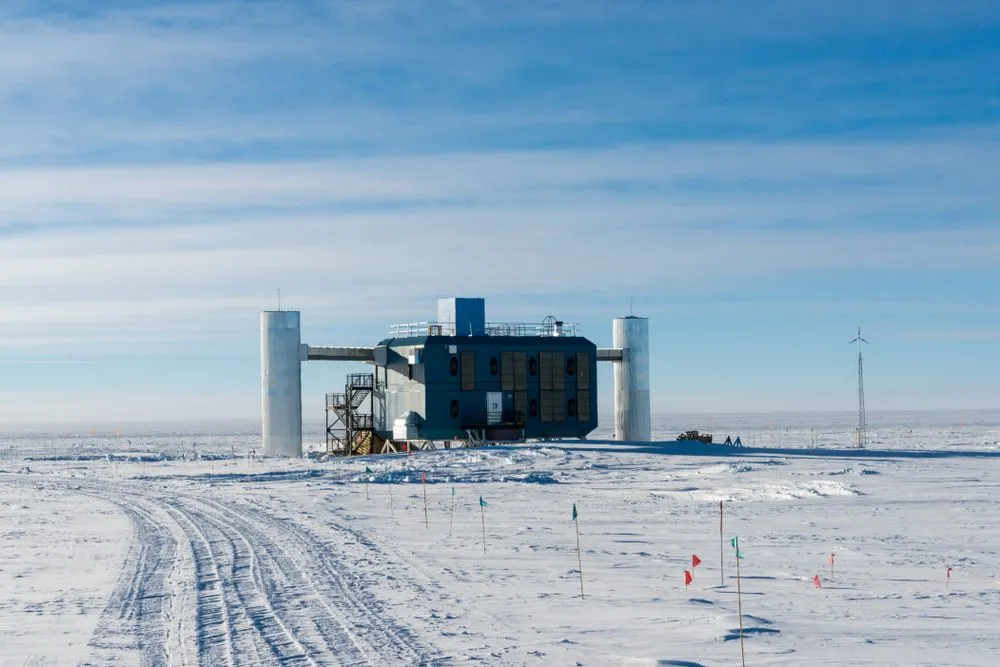
Far from civilization, in the planet’s coldest temperatures, sits a detector searching for one of the most elusive particles in the universe. The detector, known as IceCube, looks like an ordinary lab on the surface.
But what we see in the picture below is just the tip of the gargantuan observatory… the actual detector extends to 2.5 km inside the ice!
So what strange particle are scientists looking for that can only be found far from civilization and deep in ice? Why, unlike other detectors, is this one located in such an extreme place?
The answer lies in understanding the particle for which the lab is hunting: neutrinos, and specifically ultra-high energy neutrinos, lovingly known as cosmic ghosts.
So, What Are Neutrinos?
To better understand neutrinos, we must first be introduced to their family. When you enter the house of this family of particles, you will find two kinds: one that makes up matter, and the other that facilitates forces, or what we know as interactions. Our neutrino comes under the matter particles category.
However, when being introduced to matter members of the family, you will further notice two bifurcations within them: one that takes part in strong force interactions (i.e., the force keeping a proton intact) called quarks, and the other kind, which does not take part in strong interactions, called leptons.
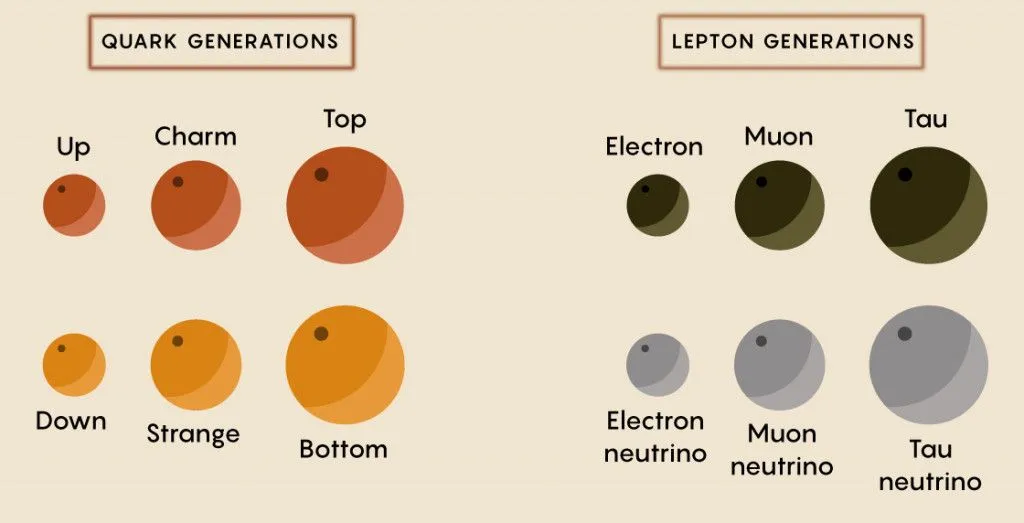
This time, a neutrino comes under leptons, i.e., it does not take part in strong interactions.
This family of particles comes with its own mysterious peculiarity. In their case, it is the love for the number three. There are three generations of particles that are identical in nature, but just progressively heavier.
For instance, the electron family consists of itself (the lightest among the three), muons (heavier than an electron), and tau (the heaviest of the three).
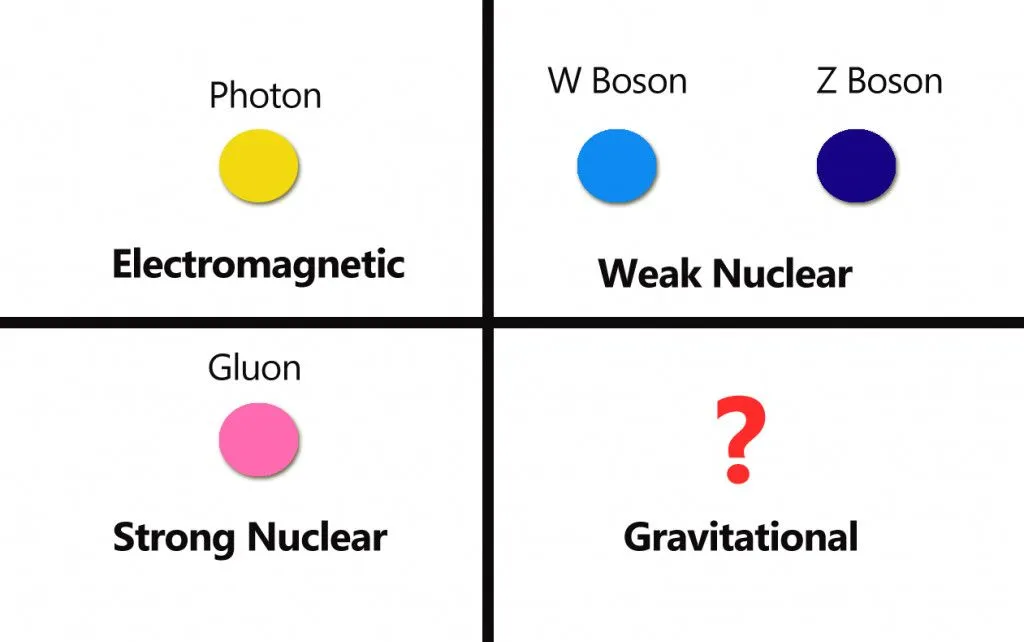
This is followed for every particle, including neutrinos. Now, we have three types of neutrinos: electron neutrino, muon neutrino, and tau neutrino (in ascending order of mass).
Given the Antarctic digs, we can safely suspect that neutrinos must be particularly important particles to receive such special treatment. One of the reasons for this is that they were formed in the very first instant of the universe’s formation. Moreover, they are still present in abundance today. Basically, it is one of the oldest particles that can give us a glimpse of the past.
But what exactly makes it so cryptic to be named the cosmic ghost that must be hunted in the coldest temperatures on Earth?
Why Are Neutrinos Called Cosmic Ghosts?
Part of the reason for this name lies in the origin of this particle. The universe is filled with sources of neutrinos. They come from our Sun as a remnant of the energy formation process, and from other stars too, as well as from the death of these stars, all the way back to the Big Bang.
Moreover, they have varying energies, depending on their source. The most energetic are the ultra-high energy neutrinos (as the name suggests) and are the current hot topic of particle hunting.
However, to put into perspective how abundantly filled the universe is with neutrinos, imagine the amount of energy that stars produce. Since neutrinos are produced through the same reaction, imagine how many neutrinos there are in the cosmos. This is not even counting the greatest source of neutrinos – the Big Bang. To put it simply, it’s like we’re swimming in neutrinos, but here is the other reason for its cryptic name.
They do not interact with electric or magnetic fields! That means they pass by electrons in an atom and are unaffected by the massive magnetic fields of cosmic objects. In short, there is very little (big or small) that it actually interacts with! So, of the millions of neutrinos bombarding Earth, only a handful of them actually interact, while the rest of them are passing right through our planet like… ghosts. Thus, combining the clues, we have “cosmic ghosts”.
These cosmic ghosts are important not only for their abundance, but also because they hint at the processes happening inside cosmic bodies based on the different energies they have. However, the most important reason is that these particles are transcending and reaching us from parts of the universe that we aren’t even capable of seeing! Continuing with their cryptic theme, they are literally messengers from the other side of the universe that is invisible to us…
How Does IceCube Catch Them?
In true ghost fashion, a cosmic ghost cannot be detected directly. Most of the time, they pass through matter without a second thought, since they don’t interact with most of those particles. But when they do, inside a medium such as ice, we notice Cherenkov light as an indicator of their presence and interaction.
This light is seen when charged particles (the products of a neutrino’s interaction) travel faster than the speed of light through that medium. Strange, right? Nothing is breaking the cosmic speed limit here. Light slows down inside a medium like ice or water (in water it drops to about 75% of its vacuum speed), so a high-energy particle can outrun it while still staying below the speed of light in a vacuum. This blue glow, the optical equivalent of a sonic boom, is what the sensors detect and study to better understand these particles.
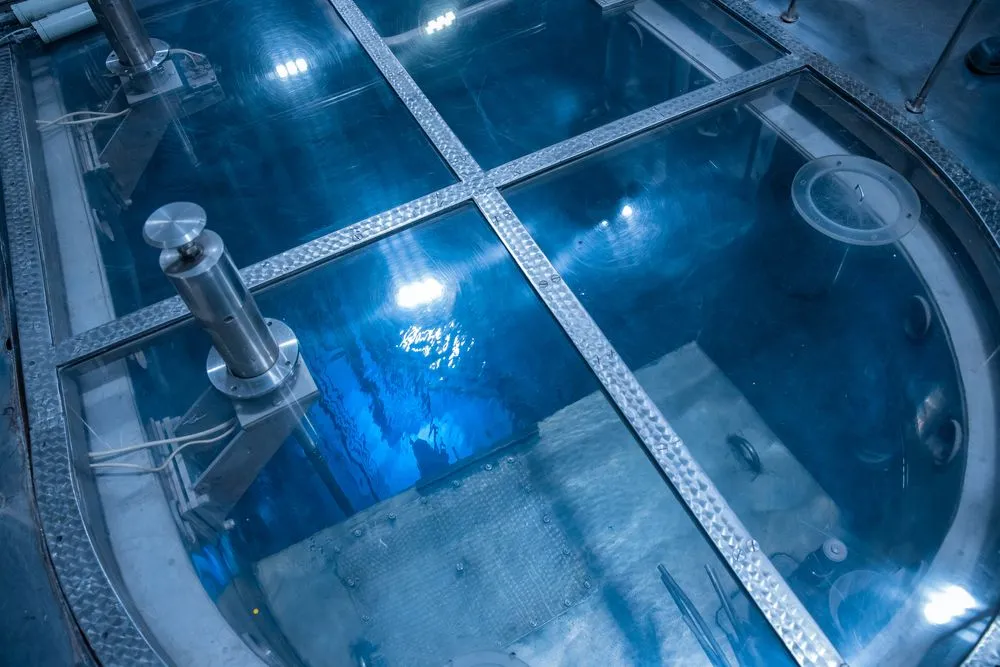
But was building an underground detection station really necessary? Couldn’t they have done it in another medium, such as water? Well, yes! Actually, there are detectors in deep-sea stations, as well as humongous tanks filled with ultra-pure water buried deep under the ground, but the location in Antarctica provides an environment that is free of any type of signals that may dampen or distract the fragile detection system.
The availability of ice, an extremely good medium for detection, is the cherry on top that makes this the best place on Earth to catch these cosmic ghosts. Going by the success of this observatory, it seems that the strategy is working great.
What Has IceCube Actually Found?
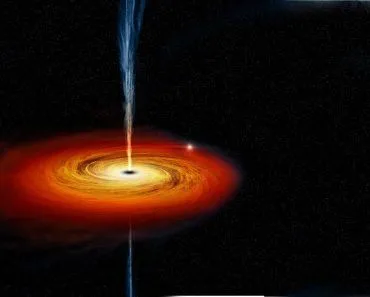
So, has all that drilling paid off? Quite spectacularly, in fact. In 2017, IceCube caught a single high-energy neutrino and, within a minute, alerted telescopes around the world to look at the same patch of sky. They pointed back to a flaring blazar (a supermassive black hole firing a jet straight at us) called TXS 0506+056, billions of light-years away. It was the first time astronomers had ever traced a high-energy cosmic neutrino back to its source, a landmark moment for what scientists call multi-messenger astronomy.
Then, in 2022, the collaboration reported a steady drizzle of neutrinos coming from NGC 1068, a nearby active galaxy whose central black hole appears to be a hidden neutrino factory. And in 2023, after sifting through a decade of data, IceCube unveiled something even more striking: the first ever image of our own Milky Way drawn in neutrinos rather than light. The galactic plane quietly glows with these ghostly particles, a portrait of the sky no ordinary telescope could ever capture.
The hunt is not IceCube’s alone. In 2025, the KM3NeT telescope on the floor of the Mediterranean Sea announced the most energetic neutrino ever recorded, carrying about 220 PeV, roughly 16,000 times the energy of the strongest collisions produced at CERN’s Large Hadron Collider. The cosmic ghosts, it seems, still have plenty of surprises left for the detectors waiting in the dark.
There are many more particles in the family that, like neutrinos, are strange and mind-boggling for mere mortals. Each of these particles has its own story that gives us a glimpse into what makes our universe the way it is today. There are also some particles that we haven’t observed yet, but are certain of their existence! Needless to say, there is never a boring day in the world of particle physics!
References (click to expand)
- Detector - IceCube Neutrino Observatory - UW-Madison. The University of Wisconsin–Madison
- Madsen, J. (2019). Ultra-High Energy Neutrinos (Version 1). arXiv.
- Neutrinos! - www.astro.wisc.edu
- IceCube neutrinos point to long-sought cosmic ray accelerator. IceCube Neutrino Observatory, University of Wisconsin–Madison.
- IceCube neutrinos give us first glimpse into the inner depths of an active galaxy (NGC 1068). IceCube Neutrino Observatory, University of Wisconsin–Madison.
- Our galaxy seen through a new lens: neutrinos detected by IceCube. IceCube Neutrino Observatory, University of Wisconsin–Madison.
- KM3NeT detects the highest energy neutrino ever observed. The KM3NeT Collaboration.