Table of Contents (click to expand)
Electromagnetic pollution (or EMF pollution) is the unwanted buildup of man-made electromagnetic fields from devices like phones, WiFi routers and cell towers. The radiofrequency fields they emit are non-ionizing, and the WHO reports that, at the low everyday levels we encounter, no adverse health effect has been causally linked to this exposure.
If you’re reading this article, chances are good that you’re already swimming in electromagnetic pollution! Ever since the first radio waves were transmitted, an entire generation of new devices that work solely on the electromagnetic spectrum has evolved. The truth is, convenience is the commodity that this generation seeks and expects. As such, we’re perpetually surrounded by devices that emit electromagnetic waves, including our mobile phones, WiFi routers, Bluetooth devices, etc.

So what does "electromagnetic pollution" actually mean for our health? It’s worth being precise here, because this is a topic where the hype runs well ahead of the evidence. The radiofrequency fields from phones and WiFi are non-ionizing: unlike X-rays or gamma rays, they don’t carry enough energy to break chemical bonds or damage DNA directly. In 2011, the International Agency for Research on Cancer (IARC) classified radiofrequency electromagnetic fields, including those from mobile phones, as Group 2B, meaning "possibly carcinogenic". That same category includes things like pickled vegetables and aloe vera extract, and it signals limited evidence rather than confirmed harm.
The WHO is careful on this point: after decades of research, it states that no adverse health effect has been causally linked to exposure from wireless technologies, provided the exposure stays below international (ICNIRP) guidelines. You may have heard people report headaches, insomnia or anxiety and blame their devices, a condition sometimes called electromagnetic hypersensitivity. The symptoms are real, but in controlled double-blind studies, people cannot reliably tell whether a field is switched on or off, so the symptoms have not been causally tied to the fields themselves.
What Are Electromagnetic Waves?
Let’s try to better understand this by considering the following example. Have you ever seen the colorful patterns of the northern and southern lights? These lights can be observed near the north and south poles of the Earth in the most magnificent colors. According to scientists, charged particles streaming from the sun are funneled by Earth’s magnetic field toward the poles, where they collide with oxygen and nitrogen atoms high in the atmosphere. Those atoms absorb the energy and then release it as light. That glow is visible light, which is itself a form of electromagnetic wave, so the Northern Lights are a perfect (and beautiful!) example of electromagnetic radiation in action.

Technically, when an electric field oscillates perpendicular to a magnetic field, and both are perpendicular to the direction of travel, the result is an electromagnetic wave. It is therefore composed of both electric and magnetic components. In the case of the aurora, the wavelength of the light an excited atom emits depends on the atom and how much energy it absorbed: oxygen glows green or red, while nitrogen can glow blue or purple. When that emitted light falls within the visible part of the spectrum, we see the vivid colors of an aurora.
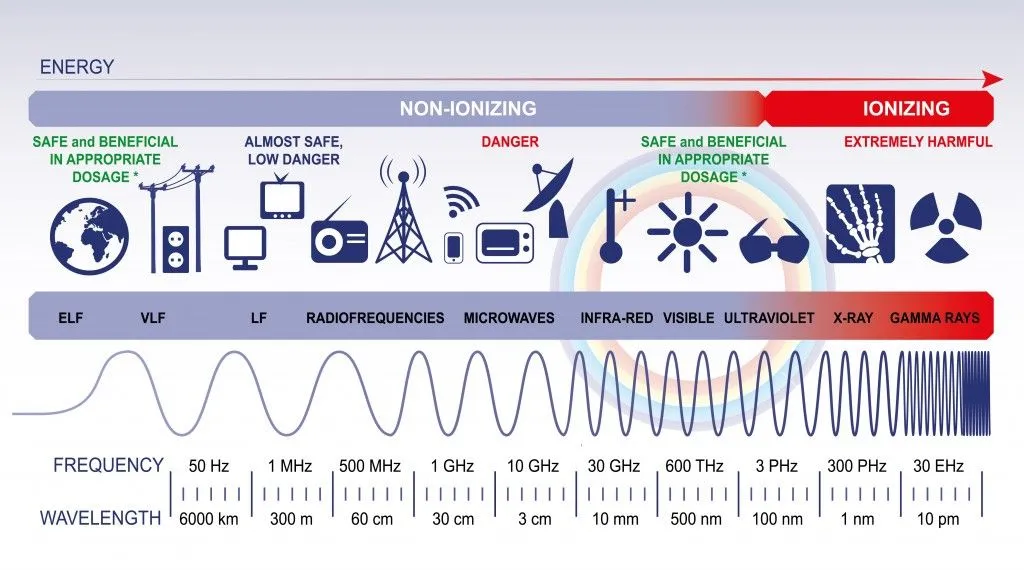
Moreover, gamma rays coming from distant galaxies, x-rays in the universe and those that are artificially produced, microwaves in your kitchen, infrared radiation from your space heater and radio waves from communication devices are all excellent examples of electromagnetic waves. Although you cannot perceive them with your normal vision, they’re certainly still there!
How Do Electromagnetic Waves Cause Pollution?
Can you imagine your life without electronic devices? Writing letters instead of emails, walking to places instead of booking an Uber, wandering through the aisles of the supermarket instead of ordering groceries from home… these are just a few of the countless other comforts you would have to sacrifice in the absence of electronics. Moreover, the entire concept of the Internet would make no sense in such a situation.
It is important to consider that with an ever-rising population, the number of these electronics is also climbing steadily. These days, a person is constantly surrounded by some amount of electromagnetic radiation, regardless of where they are in the world! The spread of cellular connectivity has also multiplied the number of cell towers around us. It’s worth being clear, though: at ground level, the radiofrequency exposure from a typical cell tower is a tiny fraction of the international safety limits, far below the levels at which any biological effect is expected.

You’ll find no shortage of alarming claims online, like the idea that living within 50 meters (about 160 feet) of a mobile tower is as dangerous as sitting inside an oven all day. Claims like that don’t hold up: the measured field strength near a cell tower at street level is nowhere near enough to heat tissue. The only well-established way radiofrequency fields can affect the body is by warming it slightly, and at extremely high field strengths, low-frequency fields can stimulate nerves, but those intensities are found in industrial settings, not in your living room.
That doesn’t mean device makers get a free pass. In 2019, reporters from the Chicago Tribune commissioned lab tests of the radiation that popular smartphones emit and reported that some exceeded the federal limit when held right against the body. The FCC retested the same models and found that they complied with U.S. limits at the separation distances manufacturers specify, which highlights how much the result depends on exactly how a phone is tested and how close it sits to your skin.
Are There Any Indirect Effects of Electromagnetic Pollution?
Unfortunately, yes, there are some indirect ways in which electromagnetic waves contribute to a reduced quality of life. For instance, ever since this technology emerged, people have been drawn to it like moths to a flame. Nowadays, people prefer to video chat instead of visiting people in person, and with the massive number of applications on our smartphones, it seems like they’re constantly in our hands.
We need the Internet so desperately that our life has become inseparable from it. Looking for a parking lot has suddenly become so time-consuming that we order our clothes online. We choose microwaved food because cooking fresh meals takes too long and our lives are simply too busy!

Basically, with so many devices running on electromagnetic waves all around us, our physical health has been compromised. The comfort we derive from devices working on these waves has taken a toll on the healthy lifestyle that we should be following. Paying attention to the world around them, real-life interactions, healthy eating and productive behavior have all been compromised by our technological obsessions.
No matter how great WiFi is for our personal and professional lives, it’s worth occasionally choosing presence over convenience. Switching your mobile phone off and taking a walk through a garden might sound like a strange or outdated idea, but it’s a genuinely good habit, even if the science says the phone in your pocket wasn’t the thing harming you in the first place!