Table of Contents (click to expand)
Urine is yellow because of a pigment called urobilin (also known as urochrome). It is the end product of haemoglobin breakdown: old red blood cells are degraded to bilirubin in the liver, gut bacteria reduce it to colourless urobilinogen, and oxidation turns that into the yellow urobilin you see in urine. A 2024 study identified the specific gut enzyme — bilirubin reductase, or BilR — that does the bilirubin-to-urobilinogen step.
Chocolate wrappers, soda cans, and paper scraps… these are just a few examples of waste that we produce as we function in our daily lives. Our bodies also function 24/7, albeit internally, and the waste they produce must amount to a lot!
The waste our bodies produce due to our numerous biological processes comes in many shapes and forms. It is excreted by the three main excretory organs: the lungs, kidneys, and skin. There are a few waste products handled by these organs, including urine, feces, sweat, and even the carbon dioxide we breathe out.
Let’s talk about the liquid wastes that we produce, mainly urine and sweat. These two are vastly different, even if their form is the same. Sweat is largely clear whereas urine, most of the time, has a distinctly yellow hue.
So what gives urine its color?
How Is Urine Formed?
When a red velvet cake is baked, the red food coloring is added after having formed the cake batter. Similarly, to understand where our urine gets its color, we will go over its formation first.
Urine is created by the excretory system present in our body, specifically the kidneys, urinary bladder, urinary tracts, and urethra. If the excretory system were a factory, the kidneys would be the manufacturing sector, the urinary bladder would be the storage facility, urinary tracts the delivery system, and urethra the final endpoint of the package.
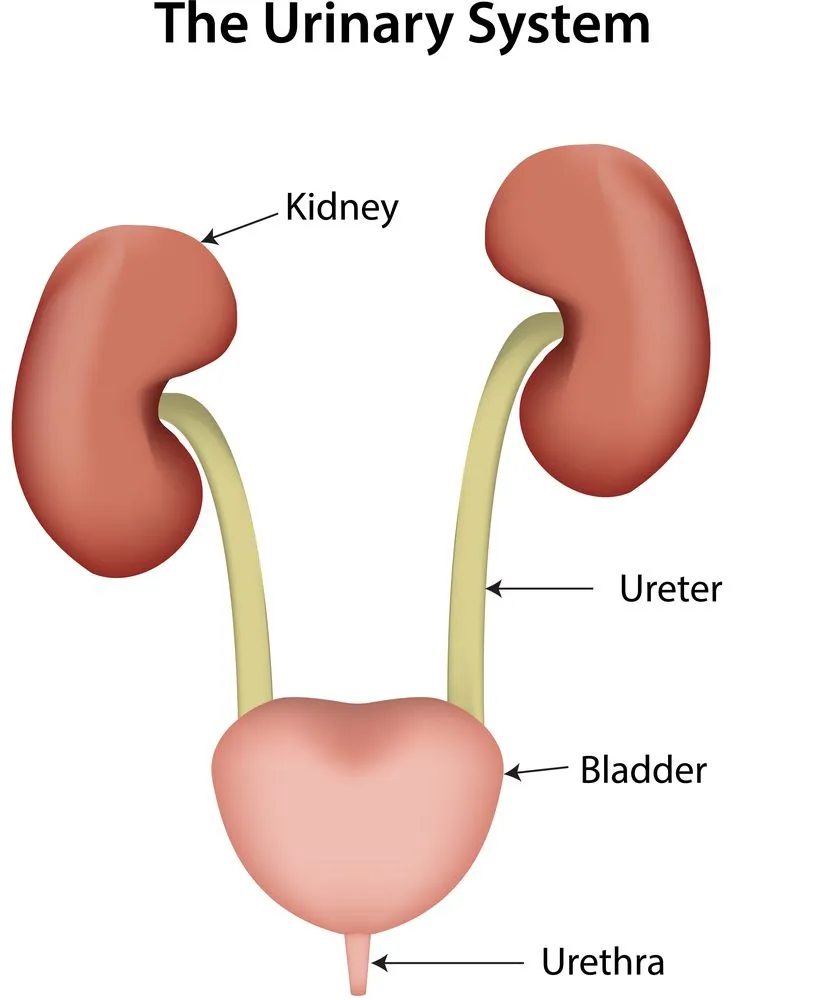
Kidneys, the reddish bean-shaped organs, lie on either side of our spinal cord, a little higher than the halfway point. The kidneys (and the renal system) mainly work to extract and expel waste created in our body, owing to processes such as digestion.
The digestion of proteins results in amino acids, which are broken down in the liver to produce toxic ammonia. This ammonia is then converted to urea, a less toxic form.
The urea enters our bloodstream. The kidneys remove this urea from our blood in three steps: filtration, reabsorption, and secretion. All of these steps occur in tiny units known as nephrons that make up the kidney.
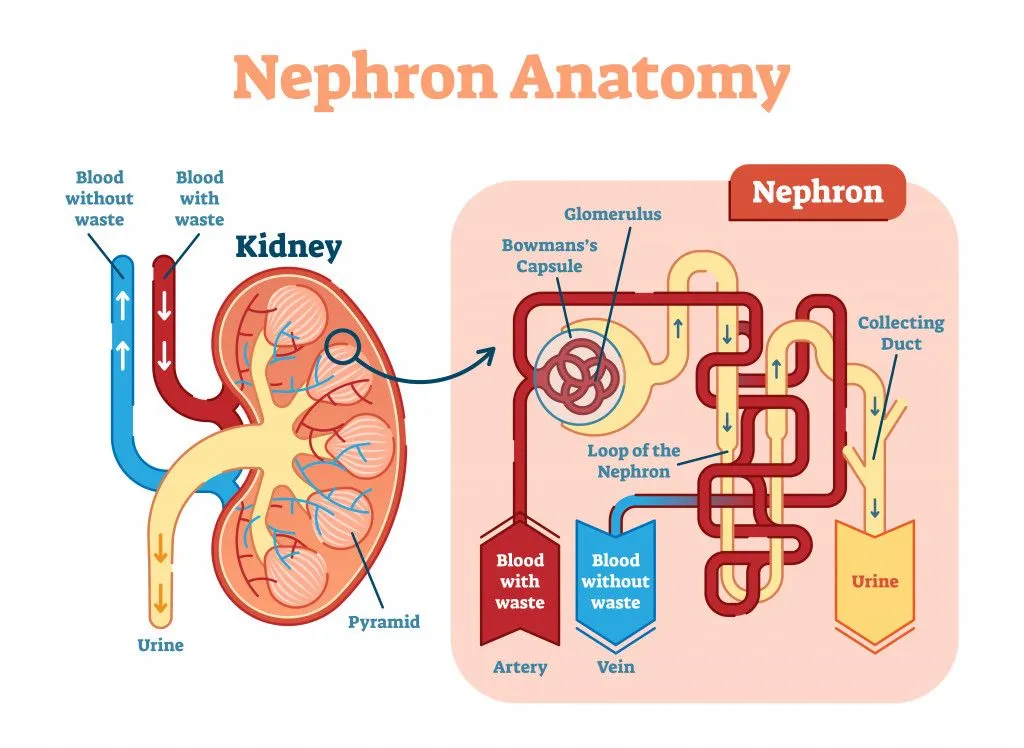
Filtration takes place in the glomerulus, a mesh of blood capillaries essentially acting as a filter. As our blood passes through this mesh, its components, salts, glucose, and urea, are filtered out. We know that urea is toxic for our body, but glucose and salts, such as sodium and potassium, are essential to survival, and our body can not afford to lose them all.
Herein comes the process of reabsorption. Also occurring in the nephrons, in this process, nutrients and the majority of the water are absorbed back into the body.
During the reabsorption, however, excess water and salt, and even urea, are reabsorbed. Therefore, the secretory process works to secrete back some of these salts and other metabolites in order to maintain the appropriate concentration of these molecules required by the body.
Following these processes, the final urine product is formed, which travels via the ureters to the urinary bladder where it is stored. Our urinary bladders can hold up to 1000 ml of urine. However, 300-400 ml is normally our cue for nature’s call.
So, How Does Urine Get Its Color?
Old red blood cells in our body are degraded to produce a green pigment called biliverdin, which the liver then converts to a yellow-orange pigment called bilirubin. Bilirubin is responsible for the ochre-yellow colour of bile and the brown tinge of stool.
Most of that bilirubin goes into the gut via bile, where gut bacteria reduce it to a colourless compound called urobilinogen. Some of this urobilinogen is reabsorbed into the bloodstream and filtered out by the kidneys. Once in the urinary tract, the urobilinogen is exposed to oxygen and is oxidised to urobilin (the same pigment is sometimes called urochrome) — and that is the actual yellow pigment you see. In other words, urobilinogen is colourless; it is urobilin that gives urine its yellow hue.
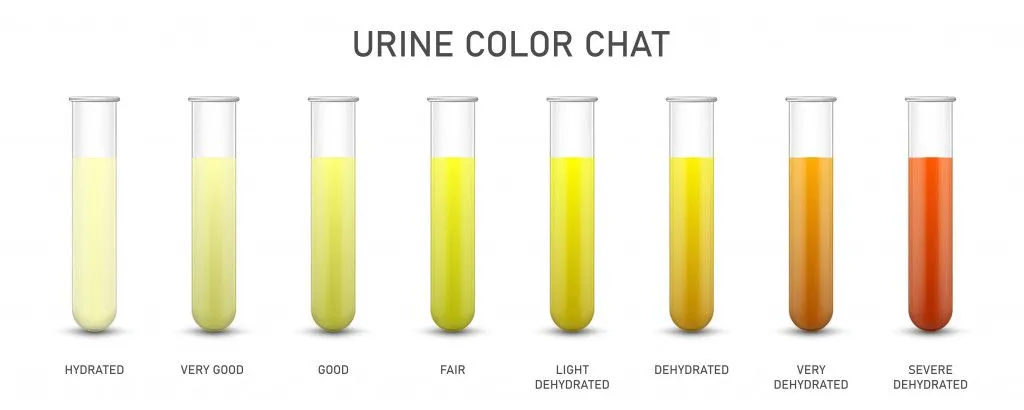
However, the colour spectrum of urine primarily depends on our hydration levels. If we drink lots of water, our urine contains a lot of water, diluting the urobilin (urochrome) pigment and making the urine a very light yellow or almost colourless. On the other hand, in severely dehydrated people, urine contains very little water and is a dark amber, owing to high concentrations of urobilin.
The 2024 Discovery: An Enzyme Called BilR
For over a century, biologists knew that some gut microbe was converting bilirubin into colourless urobilinogen, but the specific enzyme responsible stayed stubbornly unidentified. That gap was finally closed in January 2024, when Hall and colleagues at the University of Maryland and NIH reported in Nature Microbiology that the enzyme is bilirubin reductase, abbreviated BilR. BilR is encoded almost exclusively by gut bacteria in the Firmicutes phylum and is essentially ubiquitous in healthy adults.
The discovery has a couple of nice downstream implications. BilR is missing or low in newborns (whose gut microbiomes are still developing), which helps explain why neonatal jaundice (a build-up of bilirubin in the blood) is so common in the first weeks of life. BilR-encoding bacteria are also depleted in people with inflammatory bowel disease, hinting at a possible link between gut microbe composition and bilirubin-related conditions like gallstones. So the prosaic question of "why is urine yellow" actually leads, in 2024, to a microbiome-medicine story.
Conclusion
Urine color can also change depending on our diet or medication. For example, taking vitamin B capsules turns the color of urine a bright neon green, and if a person were to eat loads of carrots or sweet potatoes the orange pigments in these vegetables (beta-carotene, a carotenoid) can tint the urine a darker yellow or even orange.
Nevertheless, the major colouring agent of urine is urobilin (urochrome), and the colour of urine is lightened when a person drinks more water and stays well hydrated.
References (click to expand)
- Hall B et al. BilR is a gut microbial enzyme that reduces bilirubin to urobilinogen. Nature Microbiology, January 2024.
- Urobilin (Molecule of the Week). American Chemical Society.
- Ogobuiro I, Tuma F. Physiology, Renal. StatPearls. NCBI Bookshelf.
- Physiology, Urination. StatPearls. NCBI Bookshelf.
- Physiology, Bilirubin. StatPearls. NCBI Bookshelf.
- Perrier ET et al. Urine colour change as an indicator of change in daily water intake. European Journal of Nutrition, 2015.