No. Air resistance and gusting wind make a falling pen tumble and drift, so it won’t drop straight down. A penny is famously harmless (it flutters down at about 40 km/h, or 25 mph), but a heavier, dart-shaped pen could fall much faster and do real damage. At the actual Empire State Building, the setbacks would stop either one well before the street.
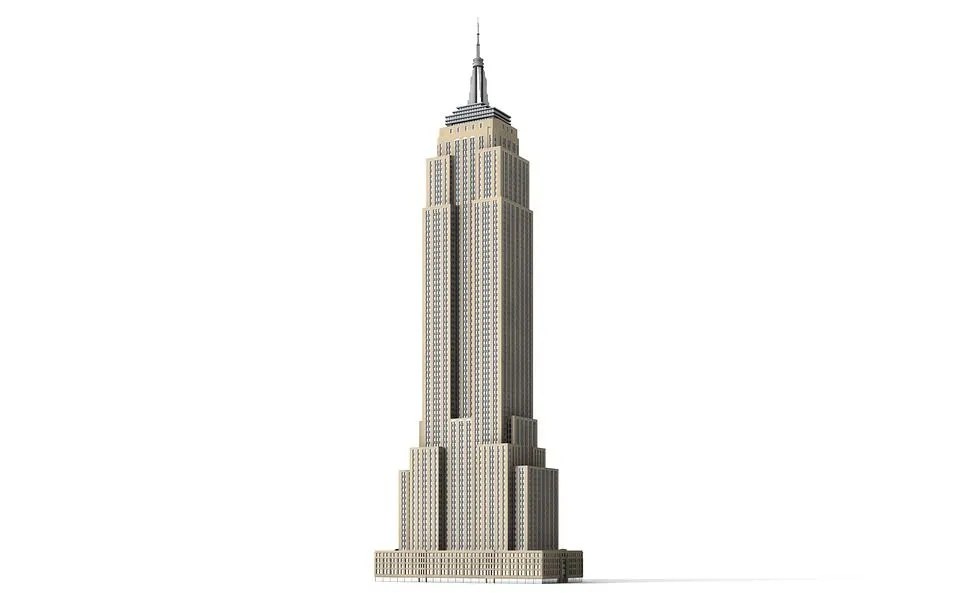
The Empire State Building is one of the most famous skyscrapers in the world, even though it is no longer a record holder. As of 2025 it ranks as the 8th-tallest building in New York City and the 59th-tallest in the world[1]. The skyscraper, which welcomes roughly 4 million visitors per year, is famous primarily due to its historical and cultural significance, and to its countless appearances in media, thus cementing its place in pop culture. It was built as part of the race to raise the world’s first 100-plus-story structure and was finished in an astonishing, record-breaking one year and 45 days.

Now, when I see a structure that tall, standing at 443 meters (1,454 feet) to the tip of the antenna and 381 meters (1,250 feet) to the roof, the first thought that enters my mind is, “Could a pen dropped from up there kill someone?”. It’s the same morbid curiosity behind the old urban legend about a penny tossed off the top supposedly killing a pedestrian below. And for the pen to do any real damage, it would have to fall with the tip facing downwards, i.e., straight. So, a second question arises… would a pen dropped from the Empire State Building drop down straight?
The short answer to this question: No. A pen dropped from the Empire State Building would not drop down straight.
Right off the bat, the answer is a no because of the structure of the Empire State Building. The building was designed such that no object thrown out of a window could ever reach the ground. The roofs of the lower floors that crop outwards would intercept the object long before it even came close to reaching the ground.
But where’s the fun in sticking so close to reality? So, for the sake of hypothesizing, let’s assume that we found a way to bypass these outcroppings.
Dropping The Pen
In a vacuum, all objects dropped towards the Earth’s surface fall at the same rate, irrespective of their shape or size. This rate is the acceleration due to gravity (represented by g), roughly 9.8 m/s2. Gravity alone does not care whether you drop a feather, a pen, or a bowling ball. So, in a vacuum, with no other factors at play, the pen really would drop down straight.
However, the air above New York City is very much not a vacuum, and that changes everything. As the pen speeds up, the air pushes back with a drag force that grows with speed. Once that upward drag balances the downward pull of gravity, the object stops accelerating and falls at a steady speed called its terminal velocity[2]. How quickly an object reaches terminal velocity, and how fast that speed is, depends heavily on its shape, size, and mass, not just on gravity.
This is exactly why the famous “a penny dropped from the Empire State Building can kill you” claim is a myth. A penny is flat and light, so it has a tiny mass for its surface area, almost like a miniature parachute. It hits terminal velocity after only about 15 meters (50 feet) of fall and then flutters down at a mere 40 km/h (25 mph). Physicist Louis Bloomfield of the University of Virginia tested this with wind tunnels and high-speed cameras and found that a penny striking you would feel like a flick to the forehead, not a fatal blow[3]. The popular science show MythBusters reached the same verdict, firing pennies at terminal velocity into a ballistics-gel head and a paving slab without so much as a dent.
A pen, though, is a different animal. So before we ask how it lands, we have to address the air it is falling through[4]. The shape and size of the pen do not influence the effect of the Earth’s gravity on it, but they completely govern how the air, and any wind, push it around on the way down.
Wind Pressure On The Pen
There are two ways that wind could affect the pen’s motion, the first being that it would alter its trajectory. Disregarding the spire and the tip of the Empire State Building, in order to make this hypothesis a bit more practical, the top floor stands at an altitude of about 380 meters (1,250 feet).
At that height, wind is a serious force. The pressure of the wind on a skyscraper like the Empire State Building is enough to sway and gently oscillate the building itself, a phenomenon driven by spinning eddies of air called vortex shedding[5].
Thus, the trajectory of a pen making its way down from the same altitude, without a base fixing it to the ground, will also be pushed sideways significantly by these gusts.
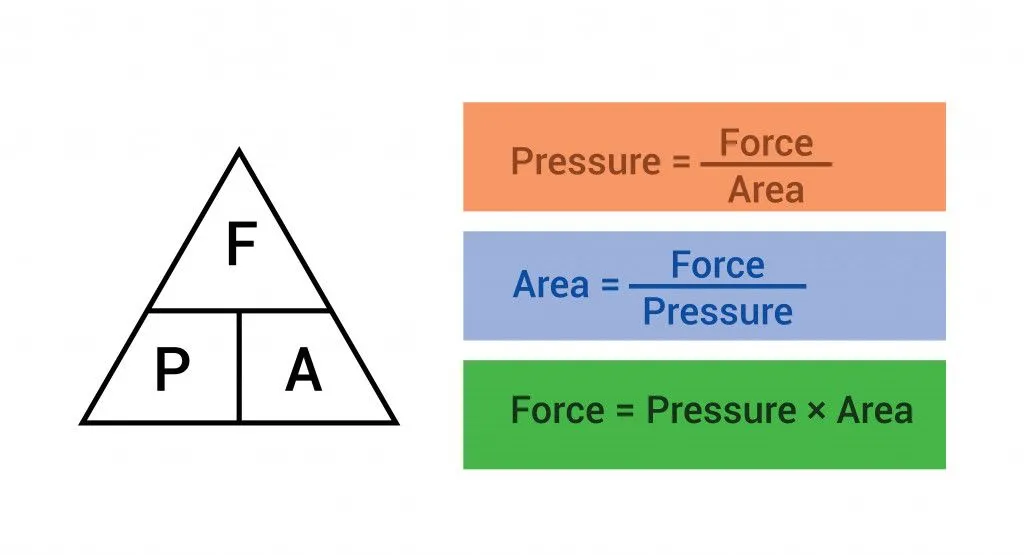
Secondly, the air would cause the pen to tumble rather than fall point-first. To see why, think about pressure, which is simply force spread over an area:
P = F/A
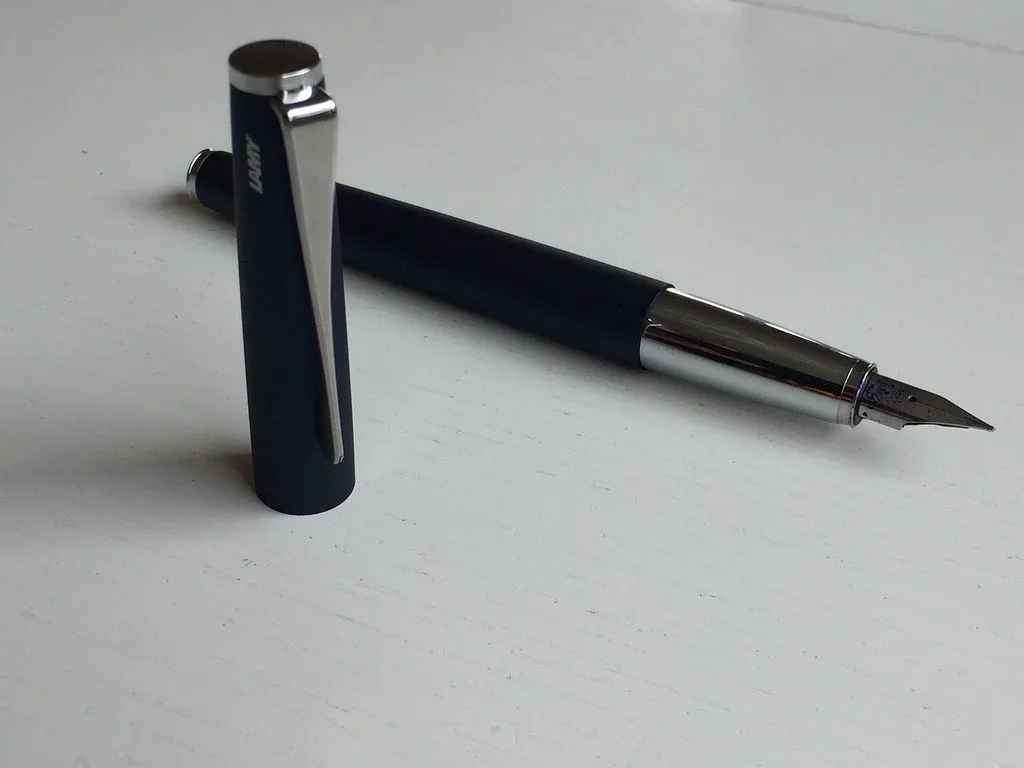
Now, as we know, a pen is unevenly shaped. Regardless of the type of pen we use, it has an irregular surface. A regular pen has a slim tip and a fatter body; a click pen adds a button, a barrel, and a tip, each with its own surface area.
The drag force from the onrushing air is spread unevenly across this lopsided shape, and crucially, the point where that air pressure effectively acts (the center of pressure) does not line up with the pen’s center of mass. That mismatch creates a twisting force, or torque, that sets the pen spinning. This is the same reason a thrown pen, a sheet of paper, or a maple seed tumbles instead of cleanly leading with one end[6].
So the pen does not knife straight down nose-first. It pitches and rotates the whole way, its exact dance decided by its structure, from the weight of each part to their respective shapes.
Therefore, the pen could happen to land on its tip, i.e. straight, but it would certainly not fall down straight.
How Long Would It Take To Fall From The Empire State Building?
This is one of those questions that sounds impossible until you realise it is just kinematics in disguise. If we again ignore those pesky setbacks and let something fall cleanly from the top at 380 meters (1,250 feet), gravity hands us a tidy formula for the time: t = √(2h/g). Plug in the height and g = 9.8 m/s2, and you get roughly 8.8 seconds of falling, with the object arriving at about 310 km/h (190 mph). That, however, is the vacuum answer, the one that ignores the very air this whole article has been obsessing over.

Once you put the air back in, that number stretches. Drag stops anything from accelerating forever, so instead of building speed the whole way down, a falling body levels off at its terminal velocity. A flat, feather-light penny reaches that limit after only about 15 meters and then dawdles the rest of the way at 40 km/h (25 mph), which means it would actually take more than half a minute to reach the street. A person is denser and more streamlined, topping out at around 55 m/s, or roughly 200 km/h (120 mph), in the belly-to-earth position[7], and needs a good 10 to 12 seconds just to work up to that speed. From 380 meters they would still be speeding up when they ran out of building, so the real fall runs a touch longer than the vacuum estimate while the impact speed stays well below that 310 km/h figure. A tumbling pen, as we have seen, sits somewhere awkward in between.
Why Size Decides Who Walks Away
The same size-and-drag logic decides which living things could walk away from a drop like this. Biologist J.B.S. Haldane put it memorably in his 1926 essay On Being the Right Size: “You can drop a mouse down a thousand-yard mine shaft; and, on arriving at the bottom, it gets a slight shock and walks away. A rat is killed, a man is broken, a horse splashes.”[8] Shrink an animal and its weight falls away far faster than its surface area does, so a mouse is nearly all drag and very little mass. A person is the opposite, and a fall from this height would be all but certainly fatal.

Cats sit in a genuinely surprising spot in the middle, and that turns out to be a longer story than this article can hold, with three decades of veterinary data behind it. We have covered it separately, in why small animals survive falls that kill big ones.
What Does Dropping The Pen Lead To?
So, in a world where the Empire State Building was designed with the critical flaw of disregarding the tendency of the people inside it to throw objects out the window, and the tendency of those objects to land on a person’s head instead of the ground:
Would a pen dropped from the Empire State Building drop down straight? Here the answer is a firm no. Drag and gusting wind would have it tumbling and drifting long before it reached the bottom.
Would that pen actually be able to hurt someone casually making their way downtown? This is where the pen parts ways with the penny. A penny is essentially harmless, but a ballpoint pen is heavier and more streamlined, so it has a much larger mass for its size and a far higher terminal velocity. If it happened to come down tip-first, it could concentrate that energy on a tiny point. Scientific American, again citing Bloomfield, notes that a falling pen is the genuinely dangerous object in this thought experiment and could put someone in the hospital[3]. So while the pen would not drop down straight, do not mistake it for the harmless penny of urban legend.
The reassuring real-world footnote is the one we started with: the Empire State Building’s tiered setbacks, plus the strong updrafts swirling around it, mean that an object tossed from the top almost never reaches the street far below. So the honest answer is that you are safe on the sidewalk, not because the pen is gentle, but because the building is built to catch it.
References (click to expand)
- Empire State Building | Height, Construction, History, & Facts. Encyclopaedia Britannica
- Terminal Velocity. NASA Glenn Research Center, Beginner's Guide to Aeronautics
- Could a Penny Dropped Off a Skyscraper Actually Kill You? Scientific American
- How high does a building have to be for a penny dropped from the top to kill a person on the ground? West Texas A&M University
- Vortices and tall buildings: A recipe for resonance. Physics Today, American Institute of Physics
- Terminal velocity | Definition, Examples, & Facts. Encyclopaedia Britannica
- Terminal velocity (skydiver figures). Wikipedia
- Haldane, J. B. S. (1926). On Being the Right Size. Internet Archive