No, a penny dropped from a tall building will not kill someone. The penny will reach a terminal velocity after falling 50 feet and will be travelling at approximately 40 kilometers per hour when it hits the ground. While this can cause minor injuries, it is not enough to kill a person.
In one of our earlier posts, we examined whether a penny placed on the tracks can cause a train to derail. Apparently pennies play another potentially dangerous role in the world, so we’re taking the time to deal with a second penny situation: Can a penny dropped from a very tall structure like a building or a tower actually kill someone?

Standing atop a tall skyscraper, you may feel a wide range of sensations. One such urge is the sudden wish to throw something off and watch it fall until it reaches its eventual destiny. The most common thing that one thinks to drop in such a situation is spare change that has been jangling in one’s bag for ages.
So, following your wild urge, you fling this penny from a building whose height is at least a few hundred meters and wait for it to hit the ground? This has become so popular that there is an interesting phrase derived from such a situation: throw a penny, kill a man.
Penny: The Object
A penny, or any average-sized coin, can weigh around roughly 2 to 3 grams. Its diameter is usually in the range of an inch (or even less than that). It’s also not particularly thick; a typical coin is approximately 1.5 millimeters thick.

Thrown from such a height, it is true that it can gain a good amount of speed, but it still wouldn’t be enough to actually kill a person.
The Science Behind The Fall
As the coin falls through the air, it experiences a lot of resistance to its downward motion due to air molecules (as these molecules continuously push up on the side of the coin facing downwards). Also, due to its small size and mass, the penny would not follow a continuous straight path like an arrow, but would act more like a leaf falling through the air, only much faster, obviously.
It is true that as an object falls through air, its velocity continues to increase. However, this increase ceases at a particular point when its acceleration becomes zero, which means that the speed of the object is constant. This constant speed is called terminal velocity.
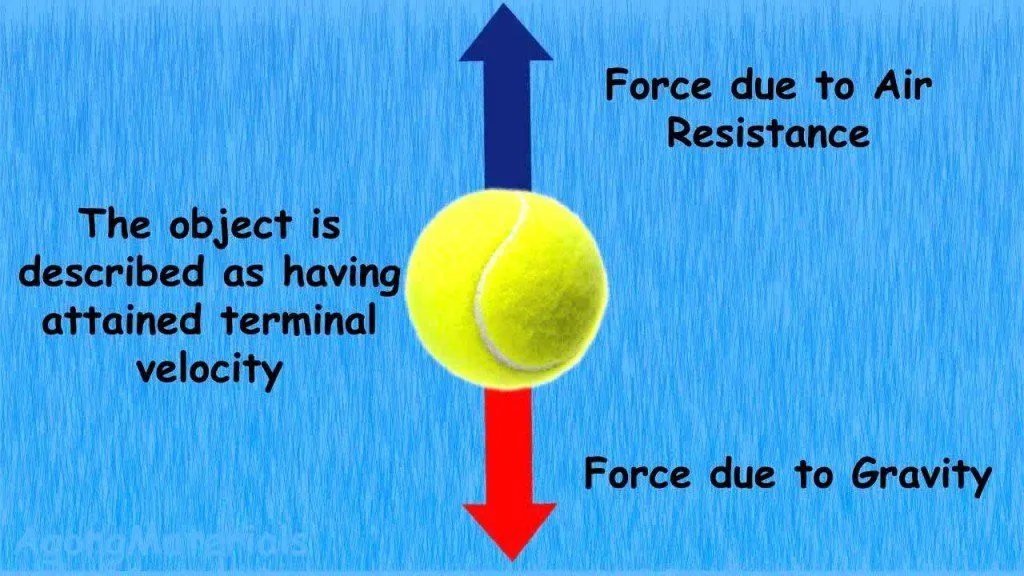
In the case of a coin, it would reach its terminal velocity after falling approximately 50 feet (15 meters) and the terminal velocity it would attain works out to roughly 25 miles per hour (40 kilometers per hour), according to calculations by University of Virginia physicist Louis Bloomfield. A coin moving at that speed isn’t fast enough to kill a person, although it would smart, leave a small bruise, and probably feel quite painful. Mythbusters even fired a penny into ballistics gel and a skull replica at 65 mph and still couldn’t produce a lethal hit, which only reinforces what the physics predicts.
In other words, the saying ‘throw a penny, kill a man’ doesn’t have a literal meaning, so you can rest easy as you walk through the busy streets of a skyscraper-filled metropolis.
What Is The Terminal Velocity Of A Penny?
If you came here just for the number, here it is: a falling penny tops out at a terminal velocity of roughly 25 miles per hour (about 40 km/h), and it reaches that speed after dropping only about 50 feet (15 meters). After that, it doesn’t matter whether the building is 100 stories or 1,000 stories tall, because the coin simply can’t go any faster. That figure comes from calculations by University of Virginia physicist Louis Bloomfield, who actually recreated the fall using wind tunnels and helium balloons.

Why such a modest speed? Terminal velocity is the point at which the upward push of air resistance grows large enough to perfectly cancel the downward pull of gravity. Once those two forces balance, the net force is zero, acceleration stops, and the speed stays constant. A penny is a textbook example of an object that hits this ceiling almost instantly: it is very light (around 2.5 grams) yet broad and flat, so it catches a lot of air for its weight.
The exact value depends on how the coin tumbles on the way down. Christopher Baird, a physics professor at West Texas A&M University, notes that a real penny’s terminal velocity can range from about 25 to 70 mph (40 to 113 km/h) depending on whether it flutters down flat or slices through the air knife-edge first. The same tumbling behavior is why a pen dropped from the Empire State Building wouldn’t fall straight down either. Even at the high end of that range it is nowhere near fast enough to be lethal, which is exactly why the “throw a penny, kill a man” myth falls apart.
What About Spitting From A Tall Building?
A surprising number of people arrive here wondering about a grosser version of the same question: if a penny is harmless, what happens if you spit from the top of a skyscraper? Could a glob of saliva pick up enough speed to hurt someone on the sidewalk below? The short answer is no, and the reason is the same physics, simply turned up a notch.

A blob of spit behaves essentially like a large raindrop, and raindrops are slow. According to NASA’s Global Precipitation Measurement mission, even the largest raindrops top out at a terminal velocity of about 10 meters per second, or roughly 22 mph (36 km/h), and most drops fall a good deal slower than that. A water droplet is heavy for its size, but it still carries a large surface area relative to its tiny mass, so air resistance takes over within the first few meters of the fall.
It gets even tamer than that. Spit doesn’t stay in one neat piece, because the tumbling airflow shears it apart into a fine spray of smaller droplets, and each smaller droplet is lighter and slower still. By the time any of it drifts down to street level, it is falling at the pace of light rain. It might be thoroughly unpleasant for whoever is standing below, but the physics guarantees it can’t do any real harm. As with the penny, the height of the building changes nothing once terminal velocity is reached.
So What Is Actually Dangerous?
Although a single coin cannot cause death or major injuries, more than one coin combined, such as a roll of coins (grouped together) can definitely cause some serious damage, even death in some cases. If a roll of 50 pennies is thrown off a building, then the terminal velocity would be much more; thus, the speed with which it hits the victim would also be higher. In that case, it could be fatal.
Essentially, tall buildings are intended to help you enjoy the beauty of the horizon, not to fling pennies and threaten the safety of those below.
References (click to expand)
- What if I threw a penny off the Empire State Building?. HowStuffWorks
- Could a Penny Dropped Off a Skyscraper Actually Kill You?. Live Science
- Could a Penny Dropped Off a Skyscraper Actually Kill You?. Scientific American
- Urban Myths: Can a coin dropped from a skyscraper kill you?. The Guardian
- How high does a building have to be for a penny dropped from the top to kill a person on the ground?. Christopher S. Baird, West Texas A&M University
- How fast do raindrops fall?. NASA Global Precipitation Measurement Mission