Table of Contents (click to expand)
Personality is shaped by both nature and nurture working together. Twin studies put the heritability of the Big Five traits at roughly 40–60%, so genes explain only about half of the differences between people. The rest comes from environment and experience, which means nurture has an equal or larger overall impact.
The hottest ongoing debate in psychology and biology – whether ‘nature’ (the genetic makeup of the individual) or ‘nurture’ (one’s environment) shapes personality, has now reached a broad consensus. Researchers, psychologists and social scientists have agreed that genes, as well as one’s environment, engage in a complex interplay when shaping personality. Understanding the cause of an individual’s personality, behavior and cognition is an area of interest in various fields, including child development, criminal psychology and the study of personality disorders.
Nature
Nature refers to the innate tendencies that one is born with. This is largely determined by our genetic makeup or uncontrollable biological factors. Certain physical characteristics are definitely the result of genes (our DNA), like the color of our eyes, skin and hair. However, an assumption that even psychological characteristics are purely based on our genetic makeup has always been seen as risky.
Those who believe in the hereditary factor as being the only shaper of personality are called nativists. Nativists like Chomsky (1965) believed that language is caused by a specific language acquisition device. In a similar vein, the influential psychoanalyst Sigmund Freud proposed that most of our behavior can be explained through two innate drives, sex and aggression.
There is definite evidence that genetic inheritance does shape behavior. How many times have you seen someone’s behavior and felt that they were behaving exactly like their mother or father? The mother is short-tempered and so is the son. The father has the tendency to lie, and so does his daughter. However, we cannot give all control to genes and stop thinking about our behavioral traits. A criminal would not be convicted for a crime if we knew that genes were the sole determiner of his actions. If that were true, then his children should similarly be brought up in jail to prevent further crimes from happening. This is not done because environmental factors play a major role in shaping personality.
Nurture
On the other end of the spectrum are empiricists, who believe that the mind is a ‘tabula rasa’ or a clean slate, one that is then filled with learning and experience. This means that empiricists believe all psychological traits are learned from one’s environment and the upbringing a child receives.
For example, Albert Bandura’s ‘Social Learning Theory’ states that personality traits like aggression are gained through imitation, exemplified in his famous ‘Bobo Doll’ experiment of 1961. In this experiment, preschool children watched an adult model punch and kick an inflatable Bobo doll. Later, when the same doll was placed in the room with them, the children who had seen the aggressive model started hitting and kicking it too.

Geography and environment can even shift how much our genes shape us. Drawing on the Twins Early Development Study, which follows around 13,000 pairs of British twins, researchers at King’s College London’s Institute of Psychiatry reported in 2012 that the balance between genetic and environmental influences on childhood traits can vary from one place to another, so where you grow up helps decide how strongly your genes show through.
The Interplay Of Nature And Nurture
There is no one particular gene that determines intelligence or a good marriage, but rather a combination of many genes (polygenic inheritance) coupled with countless environmental factors. Nature always works with nurture to form a personality. A person may have a genetic predisposition to smoking or depression, but for an individual who has never come across any smoker or experienced any stressful situations in life, the likelihood of their genetic disposition taking control markedly decreases.
Similarly, it is very often seen that even identical twins have very different personalities, even though they have an identical genetic makeup. One may be good in academics (intelligence) while the other may be more inclined towards the performing arts. Various studies on family, adoption and twins (identical and fraternal) suggest a strong correlation of personalities similar to biological parents, but this does not negate the influence of environmental factors.

The nature of the nurture: Research also suggests that the decisions that we make (environment) have a certain biological influence. Individuals select, modify and filter various activities through their genetic disposition. If a child has inherited a desire to sing or dance, the child would naturally be drawn to those activities and would unconsciously choose them over others.
Genes = Destiny: Can We Change Our Genes?
We all know that our behavioral traits can be changed through counseling and various forms of therapy, but can we change our genetic makeup?
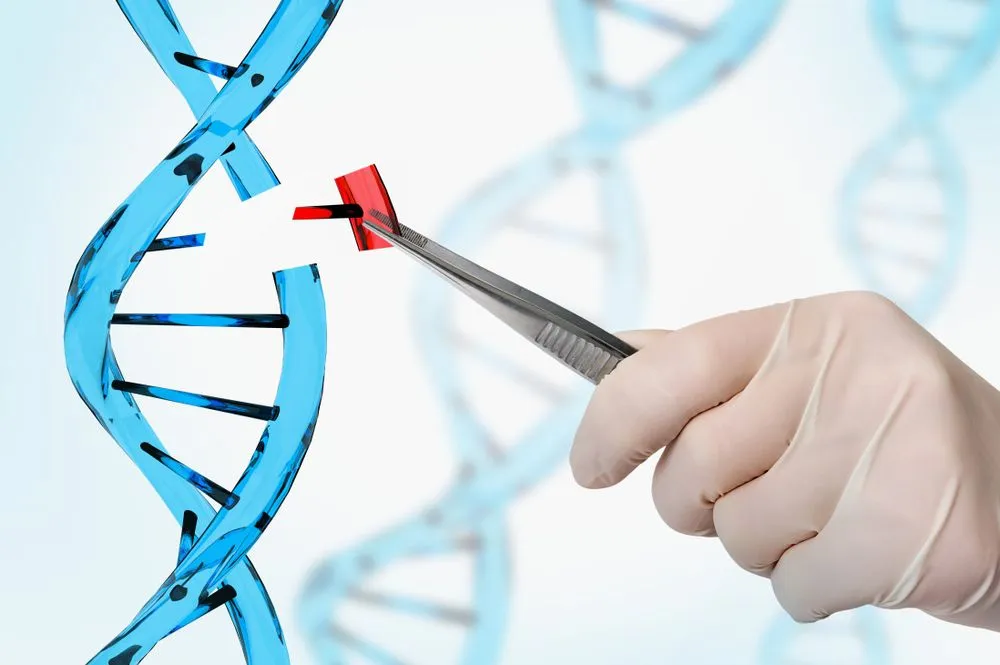
In 2019, CRISPR, a gene editing tool that lets scientists make precise changes to DNA, was used in the first human clinical trials in the United States. CRISPR has created much furor in popular science as the tool that might one day let humans engineer ‘designer babies’.
But for any gene editing tool, one needs to know where to edit.
Behavioral geneticists are trying to figure out which genes might play a role in certain behaviors. Although the Human Genome Project has documented the entire human genome, it does not mean we understand what each gene does, and how it interacts with all the other genes in the DNA.
With that being said, behavior is difficult to reduce to a few genes. Complex human behavior comes from the networks neurons form in the brain.
To map these networks, the NIH launched a collaborative effort across several universities, the Human Connectome Project. Understanding how these neural pathways in the brain shape behavior would bring us a step closer to grasping how the environment affects our minds.
As futuristic as this sounds, humans are still far away from altering our DNA. The knowledge chasm in our understanding of how genes and the environment interact is too vast to start changing our behavioral traits through editing our genome.
Furthermore, the tools available to us in the present are just not enough. The myriad of ethical constraints on animal testing limits the tools available to understand more subtle behaviors like anger, disgust, etc. Until now, genes associated with ADHD (attention-deficit/hyperactivity disorder), novelty seeking and smoking have been found through genetics.
Although the nature vs nurture debate has slowly come to a close, many questions remain. Chief among them is the question of which one affects us more. Researchers are now asking at which stage of life the environment plays the biggest role in shaping behavior, and exactly how that environment leaves its mark on our DNA.
Research suggests that we don’t simply inherit a set of personality traits, since other variables like environmental factors are also in play. These unpredictable environmental factors account for at least half of who we become, yet they are far harder to pin down and control than our genetic code, as we will certainly see in the future!
References (click to expand)
- Levitt, M. (2013, December). Perceptions of nature, nurture and behaviour. Life Sciences, Society and Policy. Springer Science and Business Media LLC.
- Is Personality More Nature or More Nurture? Behavioural and Molecular Genetics. Introduction to Psychology (1st Canadian Edition), BCcampus OpenEd.
- Largest twin study explores whether the environment affects people differently depending on their genes. King's College London.