Table of Contents (click to expand)
Epigenetic inheritance is the passing on of heritable changes in gene expression that do not alter the underlying DNA sequence. Chemical tags such as DNA methylation and histone marks switch genes on or off, and some can be passed from parents to offspring. In humans, evidence for inheritance beyond a single generation remains limited and debated.
My response to any stressful situation is simple: I sit in a quiet place until I can better comprehend my feelings. At some point I realized that my method of coping with stress was very similar to that of my mother’s. As we grow older, many of us begin to realize that our everyday habits are similar to our parents. This includes dietary habits, exercise patterns and emotional responses to stress or anxiety.
Such similarities are due to epigenetic factors. Epigenetics has gained a lot of attention in the past few decades due to its non-traditional premise of passing habits and behaviors through generations.
The term was coined way back in 1942, a time when little was known about genes and their hereditary role. Today, it is understood as a mechanism that affects the way a gene is expressed without changing the DNA sequence. Epigenetic factors decide which gene in a particular cell will be expressed and which will be silenced.
What Is Epigenetics?
Epigenetics is a branch of science that deals with phenotypic changes that manifest without changing the original DNA sequence. A phenotype is the visual expression of a gene(s). A genotype is the set of genes in the DNA responsible for a particular character or trait. A phenotype is like the outer covering of a book, while the genotype is the actual content of the book.
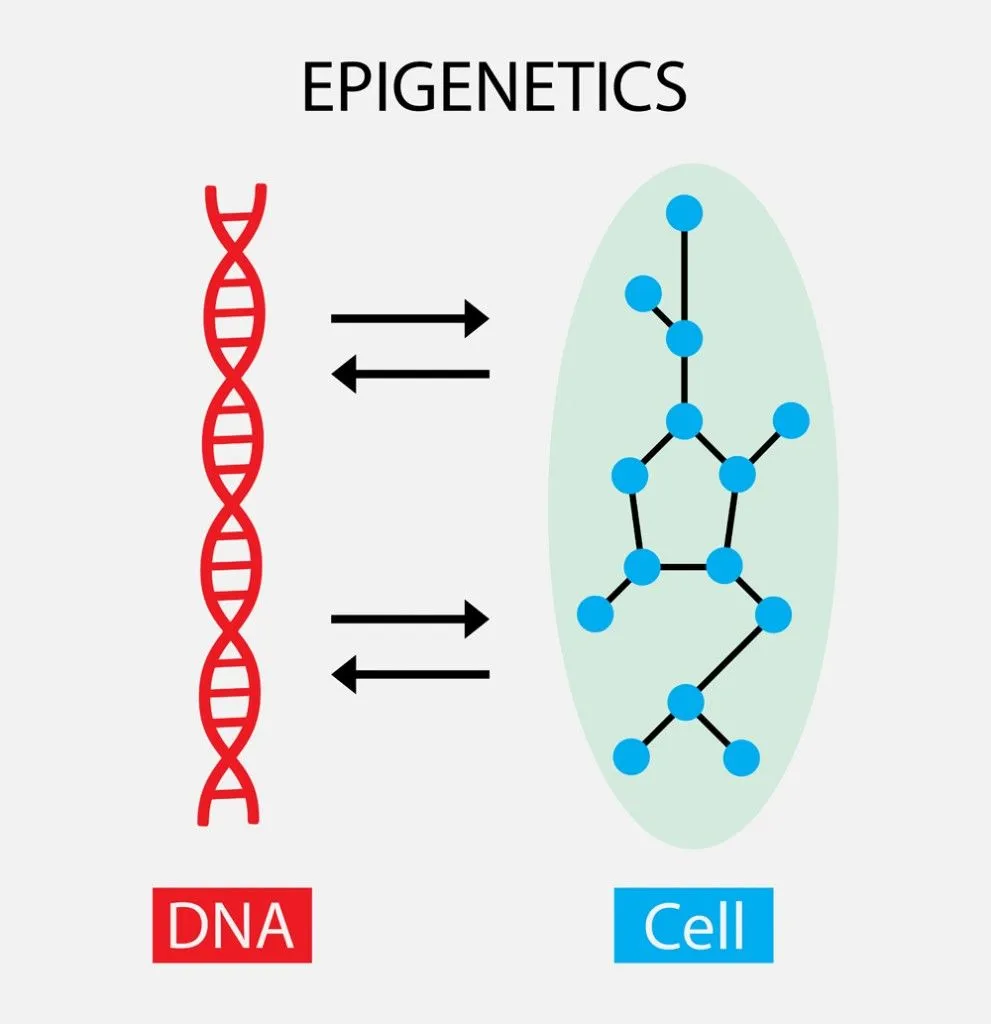
So what’s the difference between genetics and epigenetics? While genetics deals with genes and gene functions, epigenetics focuses more on gene regulation. In a literal sense, it means ‘on top of’ or ‘in addition to’ to genetics.
Most of the cells in our body contain the same sets of genes, but they are dissimilar in their appearance and expression. This is due to the selective expression and repression of genes in that particular cell. That’s why your heart cells look very different from the cells that make up your eye. The mechanism of this differentiation through gene regulation is termed epigenetics.
How Does Epigenetics Work?
Our cells contain a set of genes that make up our DNA. Genes do not directly code for proteins; they are guidelines that direct the formation of proteins. Every cell in the body does not express all the genes; rather, a very sophisticated mechanism controls the expression of genes.
There are a certain set of chemical compounds, called “tags”, that are attached to genes. These tags decide whether a particular protein will be expressed or silenced. Epigenetics controls this expression and ensures that your organs possess differentiated cells, despite having the same set of genes.
Epigenome
This brings us to a new term, epigenome. The epigenome comprises all the chemical tags that are present on an individual’s DNA. The chemical tags are not a part of the original DNA, but are only present on top of it.
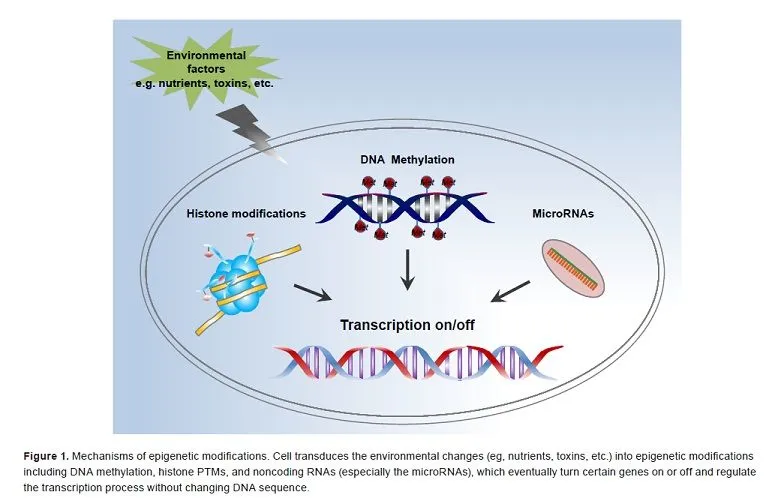
One mechanism by which epigenetic modification takes place is DNA methylation. This is the addition of a methyl group (CH3) to the DNA. The presence of this methyl group regulates the production of a protein from the gene. If the DNA were a sentence, the methyl group would decide where to add a full stop.
DNA contains 4 nucleotides (adenine, guanine, cytosine, and thymine) that are distributed throughout the DNA helix. However, the methyl group doesn’t just randomly attach to any nucleotide of the DNA. The methyl group has a particularly strong affinity for the cytosine nucleotide that precedes a guanine nucleotide. Certain regions in the DNA contain a stretch of at least 200 base pairs with a higher density of these cytosine-guanine pairs; these are called CpG islands. Such islands often sit at the start of regions that initiate protein formation, known as gene promoters. Thus, the methylation of these islands can shut down protein formation and, in turn, silence gene expression.
Now, DNA methylation isn’t the only way epigenetic processes take place in the human body. Another very interesting mechanism that causes epigenetic effects is chromatin modification. The chromatin is a complex structure of proteins called histone proteins and DNA. Chromatin is tightly packed to fit into the nucleus of the cell. Any modification in the chromatin structure influences gene expression.
The DNA is tightly packed in the chromatin with the help of histone proteins, which act like anchors and allow the DNA to wrap around them. The DNA in the chromatin might be tightly or loosely bound. The DNA which is loosely bound is exposed to enzymes that further aid in the formation of proteins.
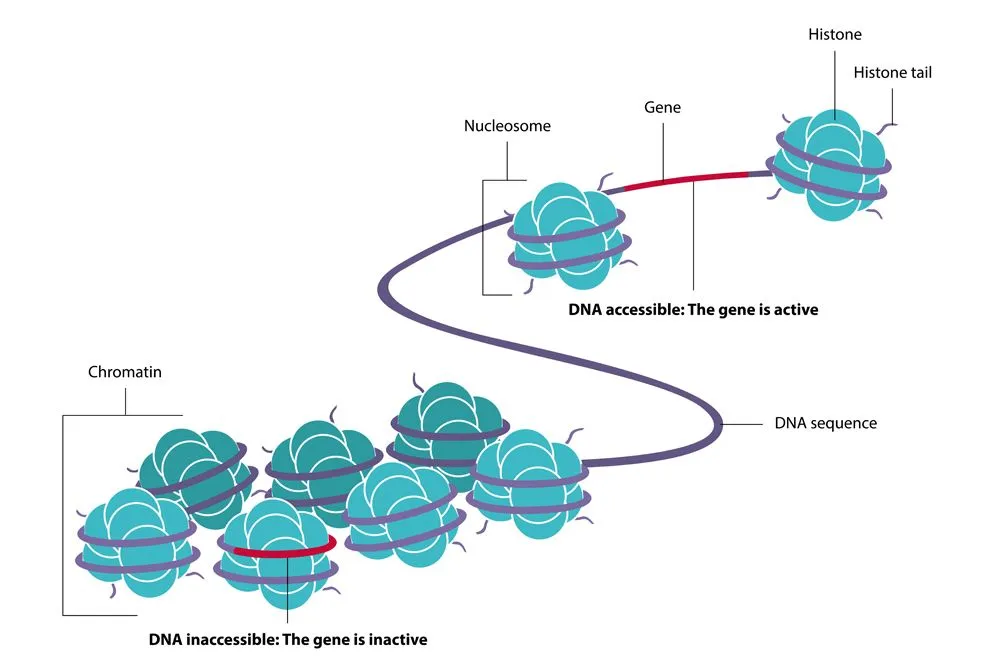
Let’s try and understand the above concept with the help of a rubber band. A twisted rubber band appropriately represents the DNA helix in the chromatin. You can easily run your finger around the smooth curve of the rubber band, but there’s a small glitch when you come towards the twist. Similarly, when the DNA-decoding enzymes run along the DNA, they can easily read the open-chain, but get stuck when they arrive at the twist. Thus, all the genes present at this twist are automatically silenced.
Moreover, the effect of an epigenetic change is not always restricted to a single generation. Within a person’s lifetime, these tags are reliably copied from a cell to its daughter cells every time the cell divides, which is why a liver cell keeps making liver cells. Studies also suggest that some epigenetic modifications can be passed to offspring, and that they are often shaped by a person’s environment.
What Is Epigenetic Inheritance?
Epigenetic inheritance goes against the conventional idea that inheritance is strictly limited to the DNA sequence. It is the transmission of the epigenome, or epigenetic markers, from one generation to the next without altering the underlying structure of the DNA.
Scientists draw an important line here. When a pregnant mother is exposed to something, her developing fetus (the next generation) and the germ cells already inside that fetus (the generation after that) are all directly exposed too. Passing an effect to these directly exposed generations is called intergenerational inheritance. Only when the effect shows up in the first generation that was never exposed do researchers call it transgenerational inheritance. For a maternal exposure, that means the great-grandchildren; for a paternal exposure, the grandchildren. This is a high bar, and it’s the reason scientists are careful about how much epigenetic inheritance in humans is truly established.
When the sperm and the egg cell meet, they transfer all their DNA into the zygote. This includes the epigenome. Before the new organism can grow into an adult, all the epigenetic tags are removed by a process called reprogramming.
The removal of epigenetic tags happens twice when the fetus is in the womb, once just after conception, and again sometime between the sixth and eighteenth week of gestation. It is an attempt by the body to ensure that the newborn will begin with a clean slate.
However, there are some instances wherein the epigenetic tags are carried forward as they are. This is referred to as imprinting, wherein a few epigenetic markers get preserved. As a result, perhaps only the mother’s copy or the father’s copy will be used later to form the protein.
The second round of reprogramming removes any repetitive tags to avoid having 2 copies of inactivated or activated genes. The second phase of reprogramming not only involves the removal of old tags, but also the addition of new epigenetic markers.
The addition of epigenetic markers is also influenced by environmental exposure, hormonal imbalances as a result of stress and dietary patterns. If DNA methylation is affected by any of these factors, the addition of epigenetic tags on genes will be consequently affected.
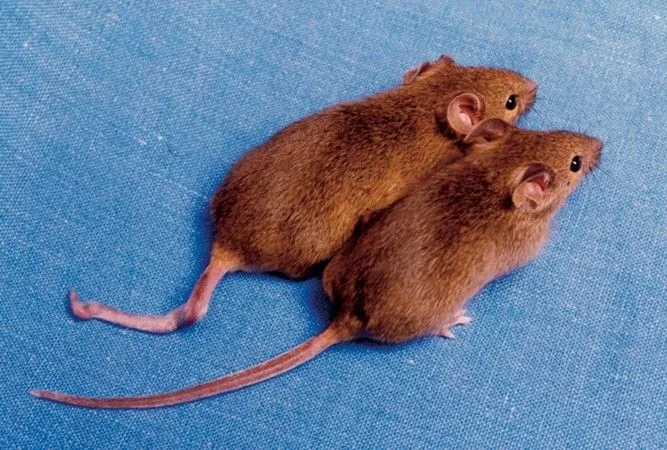
The classic example of this is the agouti mouse. In a 2003 study at Duke University, Robert Waterland and Randy Jirtle worked with a strain of mice that carry a special version of the agouti gene, which makes them yellow, obese, and prone to diabetes and cancer. When pregnant mice were fed a diet rich in methyl donors (found in foods like onions, beets, and garlic, plus supplements such as folic acid and vitamin B12), more methyl tags landed on the agouti gene and quietened it. Their pups were born brown and lean, even though the underlying gene was identical. Diet alone had flipped a switch on top of the DNA.
A study done at Washington State University offers a cautionary, harder-edged example. Michael Skinner’s lab exposed pregnant rats to vinclozolin, a common agricultural fungicide, during the window when the offspring’s reproductive systems were forming. The interesting part came generations later. By the third generation (the great-grandchildren), which had never been exposed to the chemical, the male rats still showed higher rates of testis and prostate disease, while the females had more obesity. Because that third generation was the first one not directly exposed in the womb, this is the kind of finding researchers count as genuinely transgenerational.
The chemical given to the first generation appeared to leave an altered DNA methylation pattern in the sperm that persisted across the later generations. This lent support to the hypothesis that exposure to certain toxins can change the methylation of DNA at crucial points and that the change can outlast the exposure itself.
Apart from environmental exposure to chemicals and toxins, the personal experiences of a parent may also leave a mark on epigenetic factors.
The most studied human example comes from the Dutch Hunger Winter, a severe famine in the Netherlands during the final months of World War II in 1944 and 1945. Decades later, people who had been in the womb during the famine were found to carry slightly less methylation on a growth gene called IGF2 than their own unexposed siblings. The effect was strongest for those exposed right around conception, which fits the idea that the earliest weeks of development are a sensitive window for setting epigenetic marks. A separate set of studies from the small Swedish town of Överkalix used century-old harvest and food records and found that how much food a grandfather had access to just before puberty was linked to the death rates of his grandsons. Both are associations rather than airtight proof, but they are among the strongest hints that a parent’s or grandparent’s environment can echo down the family line.
Conclusion
Since the term was coined in 1942, epigenetics has drawn enormous interest from researchers all over the world. That said, much of the human picture is still being worked out, and scientists are rightly cautious about claiming that lasting effects truly pass through several generations of people. Part of why caution is warranted is reprogramming itself: with most epigenetic tags wiped clean each generation, marks that survive intact are the exception, not the rule. Epigenetic changes are also shaped by environmental exposures and everyday experiences, so when those conditions change, some of the changes can be reversed.
Epigenetics might add another perspective to the way evolution takes place. Epigenetic inheritance could allow an organism to continually change its gene expression without changing its underlying genetic code. However, this is all just conjecture on my part. We’ll simply have to wait for further research and discovery before we can fully recognize the tremendous possibilities of epigenetics!
References (click to expand)
- Skinner, M. K. (2014, July 15). A New Kind of Inheritance. Scientific American. Springer Science and Business Media LLC.
- Weinhold, B. (2006, March). Epigenetics: The Science of Change. Environmental Health Perspectives. Environmental Health Perspectives.
- Moore, L. D., Le, T., & Fan, G. (2012, July 11). DNA Methylation and Its Basic Function. Neuropsychopharmacology. Springer Science and Business Media LLC.
- What is epigenetics?: MedlinePlus Genetics.
- Epigenetics & Inheritance.
- Heijmans, B. T., et al. (2008). Persistent epigenetic differences associated with prenatal exposure to famine in humans. PNAS. NCBI PMC.
- Paternal grandfather’s access to food predicts all-cause and cancer mortality in grandsons. Nature Communications (2018). NCBI PMC.
- Horsthemke, B. (2018). A critical view on transgenerational epigenetic inheritance in humans. Nature Communications. NCBI PMC.
- Dolinoy, D. C. (2008). The agouti mouse model: an epigenetic biosensor for nutritional and environmental alterations on the fetal epigenome. Nutrition Reviews. PubMed.
- Nilsson, E., et al. (2018). Vinclozolin induced epigenetic transgenerational inheritance of pathologies and sperm epimutation biomarkers for specific diseases. PLOS ONE. NCBI PMC.