Economic growth is a rise in a country’s output, measured by Gross Domestic Product (GDP). Economic development is broader and qualitative, covering health, education and living standards, as captured by the Human Development Index (HDI). Some growth is necessary for development, but it is not sufficient on its own. The two reinforce each other simultaneously rather than in sequence.
While it is true that some growth is necessary for development, there is no fixed point that, once an economy reaches it, development must begin. This is largely because growth and development share a common goal: socioeconomic progress.
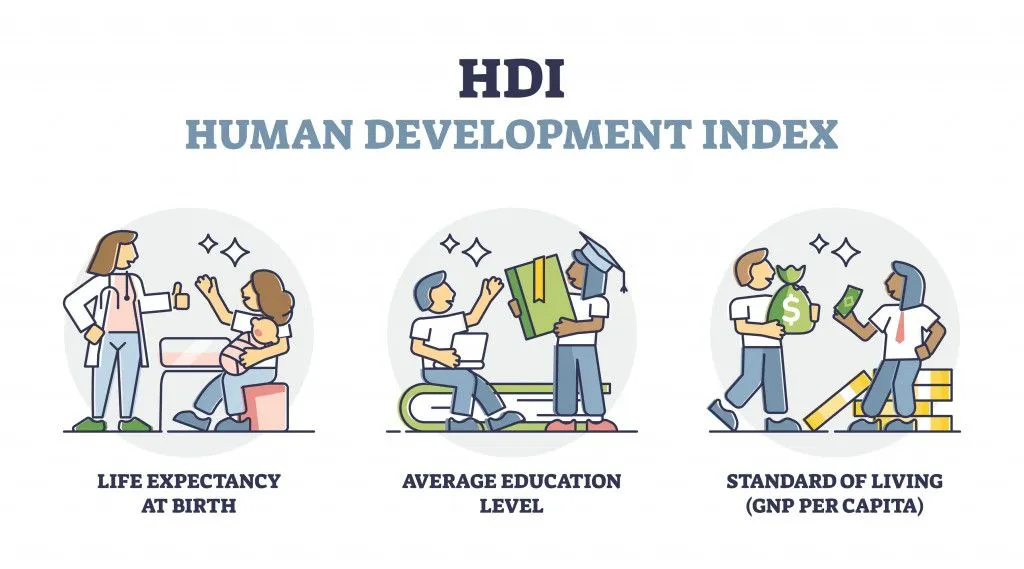
Economic growth is measured as a rise in an economy’s Gross Domestic Product (GDP) over a fixed time frame, a purely quantitative change. Economic development is the broader, qualitative idea, and as defined by the United Nations’ Human Development Index (HDI), it combines indicators of health, education and standard of living. In short, growth counts the money an economy produces, while development asks whether ordinary people’s lives actually improve.
Some economists believe that development is a prerequisite for growth, as development increases human productivity, thus raising economic growth through efficient usage of existing resources. Some others believe that focusing on growth helps aggregate incomes, after which allocation for development-related expenditures can be accounted for.
However, growth and development are very closely interlinked. Let’s explore the connections between them.
Can Economic Growth Occur Without Development?
Economic growth (read: rising income) enables an economy to spend on social infrastructure. Still, there is no defined starting point for an economy to incur development-oriented expenditure after generating income. No growth rate would be sufficient if simultaneous development expenditure did not ensue.
An economy may be extremely rich in terms of owning natural or physical resources, but sustainable growth would require their human resources to be utilized effectively. The utilization of all resources, except humans, depends on how humans are trained to use those resources. This training is heavily dependent on how human capacity is built or nurtured. Education and health are two important indicators that enable humans to realize their true potential and contribute to economic development.
No economic superpower exists today that doesn’t spend significant amounts of its GDP on health and education as a precursor. Education and health are just two of the many indicators that define human development. There are a vast number of other factors, such as the perception of the political environment, happiness, and quality/availability of public infrastructure, that determine development but have no proper basis for measurement.
Health and education are just avenues primarily touted for development. Other equally important factors are the quality of institutions that ensure last-mile access to schools, hospitals etc. State and local governments play a critical role in determining access to these institutions. Increasing expenditure on health and education will remain ineffective if it is not broad-based. State and local governments decide the parameters to access social infrastructure.
Can Development Occur Without Economic Growth?
A nation must incur expenses to build its required social infrastructure for development. Increasing GDP enables a country to incur such expenses.
The whole premise of human development is built on the edifice of increasing growth. Better provision of facilities required for human development (better political institutions, access to schools and hospitals, gender empowerment, etc.) is conducted so that growth ensues.
The impact of expenditure on development schemes can only be measured through economic growth. An increasing number of hospitals, schools and other public infrastructural items will not have any meaning if better and wider access to such institutions does not enable citizens to contribute to their full potential.
While gains from economic growth materialize quickly, gains from development expenditure, unlike economic growth, take time to materialize into innovations that help an economy grow.
Some studies show the impact of education and health on labor productivity. For instance, economist Esther Duflo’s study of Indonesia’s 1970s school-building program estimates a 1.5% to 2.7% increase in adult wages for each primary school built per 1,000 children. Similarly, the proper disbursement of health and nutrition schemes for the targeted population has also been shown to raise labor productivity.
A country can also push development further than its income alone would predict. Costa Rica is the textbook case: it overtook the United States in life expectancy back in the 1980s, when its GDP per capita was a fraction of America’s, largely by rolling out universal public healthcare. Today Costa Ricans live to about 81 years (PNAS), outliving Americans despite far lower incomes and health spending. The lesson is not that growth is irrelevant, but that how a society spends its money can matter as much as how much it has.
Conclusion – Interlinkages Between Economic Growth And Development
It is difficult for an economy to determine whether an increase in GDP is possible without development simultaneously taking shape. In other words, it is difficult to precisely assess the impact of development on a country’s growth.
While some growth is a prerequisite for development, one must not make the mistake of overemphasizing increasing growth. To worry about growth first and development later has also been called an “old-fashioned view” in economic literature.
It is equally important to let agents of the economy discover their capabilities and contribute productively to the economy. This discovery can be aided only through development. After all, despite n number of natural resources an economy can have, the most adaptable resource is the human resource. Proper utilization of the existing human resource will help economies overcome significant levels of natural resource constraints through innovation and invention!
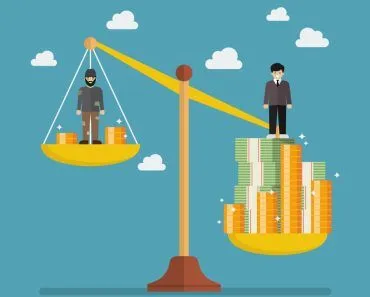
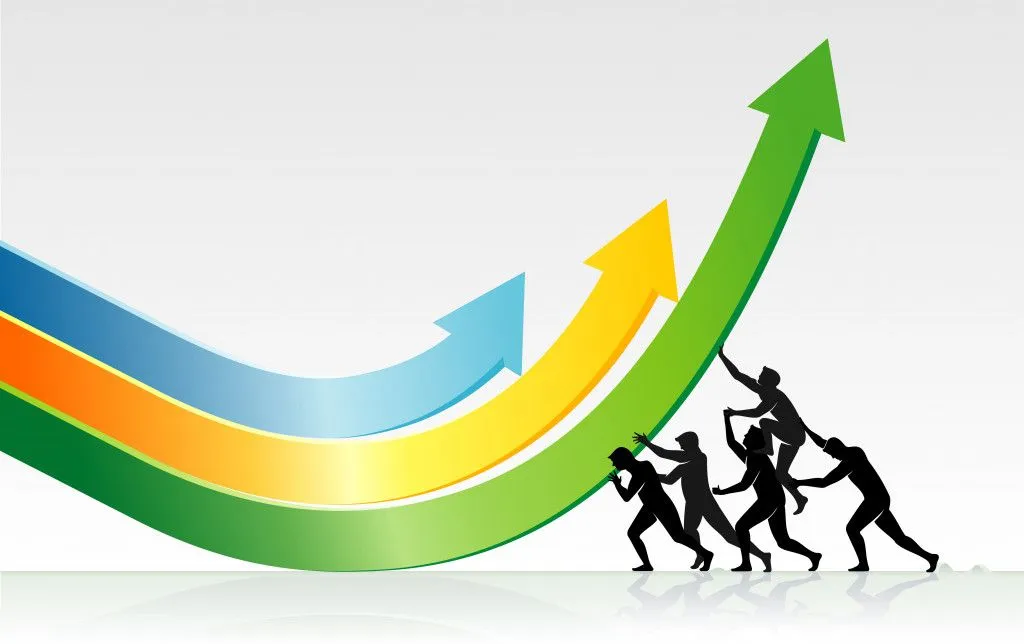
Growth and development therefore have solid two-way linkages. The goal of economic growth is to enable development. Similarly, the goal of development is to increase economic growth. Gains and losses in one are reflected in the other. Investments in both need to happen simultaneously, but the extent of investment in either often remains in the hands of policymakers. If growth results in the concentration of wealth in the hands of a few individuals, severe social unrest is bound to occur.
Growth does not ensure development, nor vice-versa. For a nation to experience prosperity, equivalent focus needs to be given to both in order to achieve a virtuous cycle of growth and development. This mutual reinforcement of one on the other will have collective compounding gains.
References (click to expand)
- (2004) Human Development and Economic Growth by Gustav Ranis. Social Science Research Network (SSRN)
- Chiappero-Martinetti, E., von Jacobi, N., & Signorelli, M. (2015). Human Development and Economic Growth. Palgrave Dictionary of Emerging Markets and Transition Economics. Palgrave Macmillan UK.
- Veiderpass, A. Economic growth: the impact on poverty reduction, inequality, human development and jobs. OECD.
- Duflo, E. (2001). Schooling and Labor Market Consequences of School Construction in Indonesia. American Economic Review (via JSTOR).
- Rosero-Bixby, L., & Dow, W. H. (2016). Exploring why Costa Rica outperforms the United States in life expectancy. PNAS.