Modernization theory is a mid-20th-century social-science framework (with roots in Max Weber and developed by Talcott Parsons, Walt Rostow, Daniel Lerner and others in the 1950s–60s) that explains how “pre-modern” societies transition into “modern” industrial-capitalist ones. Walt Rostow’s five-stage model is its most famous version. The theory has been heavily criticised, mainly by dependency theorists, for being linear, Eurocentric, and for treating “underdevelopment” as a stage rather than a relationship.
The story of human advancement spans more than 100,000 years. We started as hunter-gatherers, living in caves and voyaging endlessly to different places like nomads. This changed around 12,000 years ago, when agriculture tied humans to a settled place, giving way to larger communities and thriving civilizations.
As our population and consumption increased, new and faster methods of manufacturing were required to keep up. The total dependence on manual labor was now assisted by machines, ushering in what we know of as the Industrial Revolution.
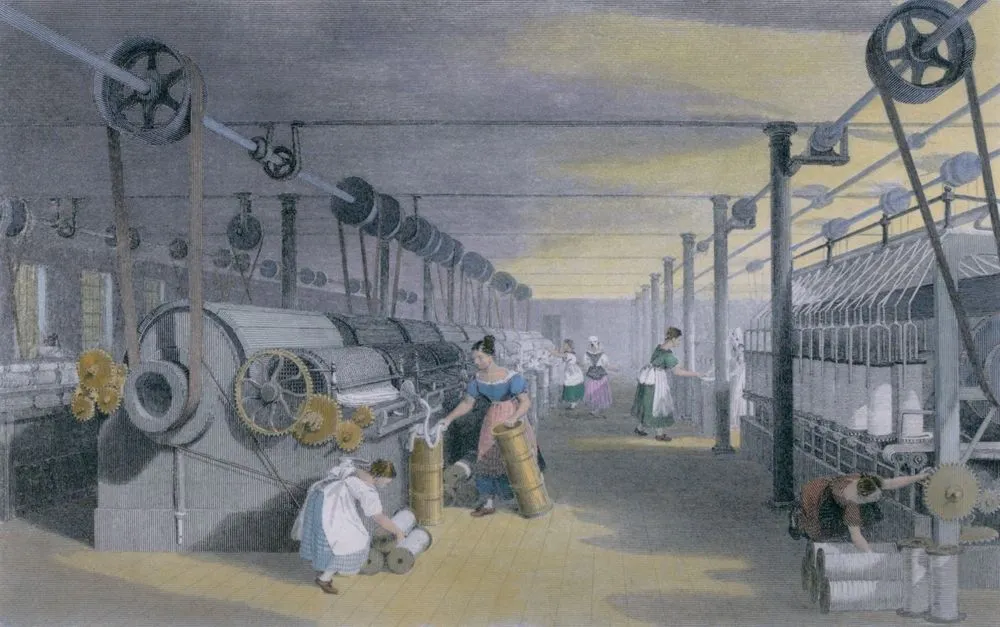
The continuous cycle of making better machines to more efficiently produce goods has resulted in much of the world we see today; increasing the standard of living of more and more people, while also modernizing more of the planet’s footprint.
Modernization theory is one of the theories that model how ‘pre-modern’ societies become ‘modern’ ones.
Modernization Theory
The road to constant development consists of constantly arming ourselves with new and better technology. Modernization theory attempts to understand this development of societies, a transition from a traditional to a modern society.
It explains this process by identifying the variables that take part in the social progress of a society. It tries to explain the social evolution of society by understanding how it changes and how it reacts to these changes. It takes into account the cultural and social aspects of a society that influence the adoption of new technology, namely whether a society is willing to change its traditional methods of working.
Modernization theory takes the position that modern societies are better off than traditional ones, in that modern citizens are freer and have a higher standard of living, along with the fact that modern states are more powerful and wealthier.
The theory draws on the early-twentieth-century work of German sociologist Max Weber on “rationalization,” but the modern formal version was developed in the 1950s and 1960s by American sociologists such as Talcott Parsons, S.N. Eisenstadt and Daniel Lerner, alongside economist Walt Rostow.
They developed modernization theory and described it as a process of transition that involves the adoption of democracy with mass consumption, industrialization, urbanization, globalization, and bureaucracy.
In the book The Stages of Economic Growth, economist Walt Rostow theorizes the stages a society takes from being a traditional economy to a modern one, which is one of the major concepts of Modernization Theory.
Who Developed Modernization Theory?
Modernization theory was not the work of a single author but a cluster of mid-20th-century thinkers who shared one basic conviction: that societies travel along a broadly similar road from traditional to modern. Its deepest roots reach back to the German sociologist Max Weber (1864–1920), whose idea of rationalization (the gradual replacement of custom and religious authority by calculation, bureaucracy and formal rules) framed how later scholars described the move into modern life.

The formal theory took shape in American social science during the 1950s and 1960s. Talcott Parsons, who translated Weber into English, supplied its cultural backbone, arguing that becoming modern meant adopting a particular set of values: achievement over inherited status, universal rules over personal ties, and specialized roles over all-purpose ones. The economist Walt Rostow contributed the most famous component, the five-stage growth model set out in his 1960 book The Stages of Economic Growth. The sociologist Daniel Lerner added a communications angle: in his 1958 study The Passing of Traditional Society, built on survey work across the Middle East, he argued that exposure to mass media nurtured empathy (the capacity to picture oneself in unfamiliar lives and roles), which he treated as a psychological engine of modernization. The Israeli sociologist S.N. Eisenstadt rounded out the early group with comparative studies, though he later helped dismantle the theory's one-size-fits-all assumptions with his influential idea of multiple modernities, the argument that industrial societies do not all converge on a single Western template.
Stages Of Modernization
Walt Rostow proposed the stages that the economy of any country takes to modernize, develop and grow. He based his model on the effectiveness of capitalism, specifically on capital accumulation, investment, and a deliberate “take-off” into self-sustaining growth (Rostow himself was a state interventionist who later served as US National Security Advisor under Lyndon B. Johnson).
Rostow’s assumptions are rooted in materialism and the belief that every society wants to become modern. Through the different stages, he tried to tackle the impulses under which traditional economies began modernizing.
He also stated that the stages may vary in length from country to country, and every condition was uncertain to occur in each stage.
The stages are:
Traditional Stage
This is the primal stage of any economy, small region or entire country. To begin with, there is no notion of a centralized nation or political system. The economy survives with the most basic agricultural methodologies and is still largely dependent on hunting and gathering.
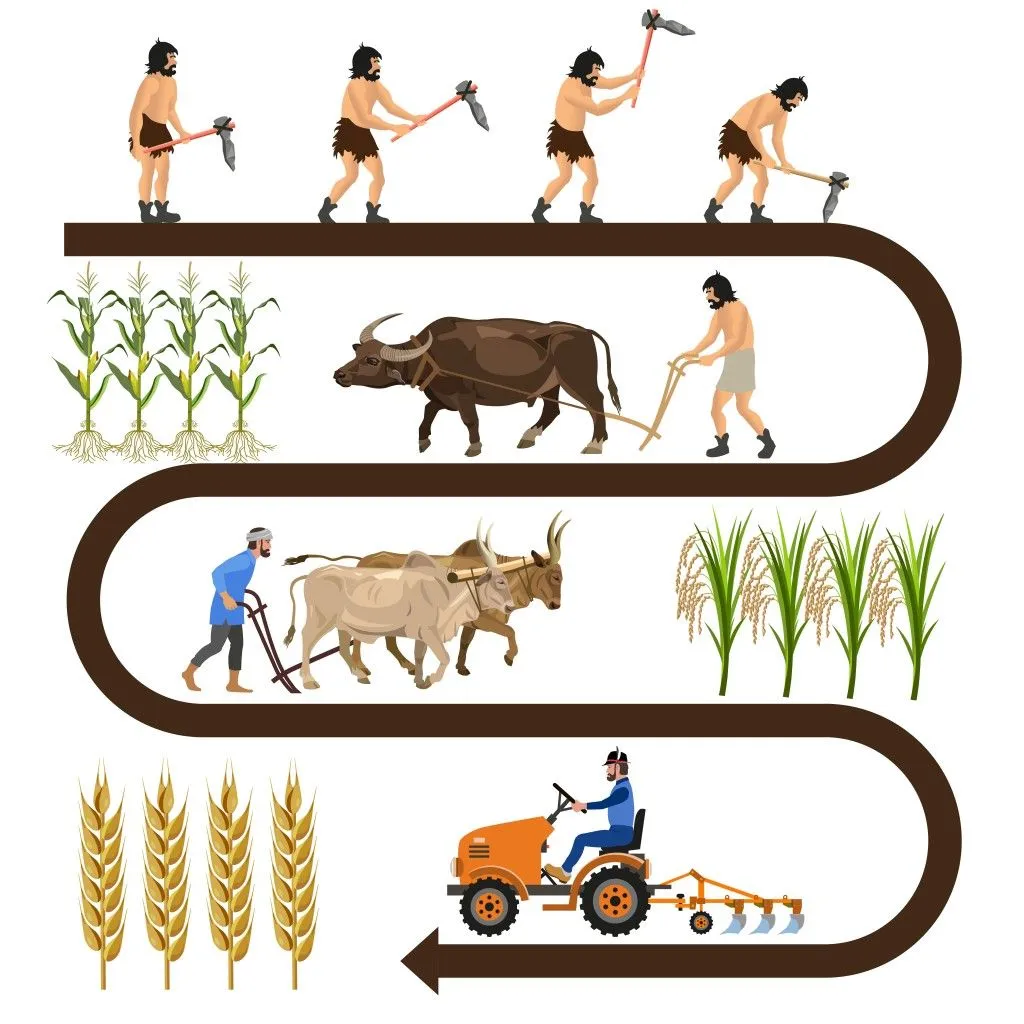
There is basic advancement in how things are made and what processes are used to make them. The absence of modern technologies makes this growth limited, resulting in a low standard of living with no individual economic mobility.
The stability of the economy is prioritized instead of change and risk, which are seen in a negative light. This is the ground-zero of society, the point from which it begins to progress to further stages.
Preconditions For Take-off
As a society stabilizes and increases in size, there is a need for better, more productive and more efficient ways to carry out agricultural tasks. These methods are not only required for food crops, but also cash crops that need to be exported.
There is a demand for external goods and raw materials that initiates economic change. Trade becomes a factor that shifts the dynamics of traditional society, thus beginning the process of change.

Much better approaches to governance are seen here, along with a well-established national identity that enables trust and shared economic interests. A centralized economy ensures robust mechanisms for both internal and external trade, which drives economic growth and increases individual economic mobility.
Investment in changing the physical environment becomes the norm, with major developments in agricultural facilities (irrigation, etc.), transportation (ports, railways) and built environment (institutions, houses).
Technological advances become widely accessible, with further advances being made in existing technologies.
Take-off Stage
During the take-off stage, societies become largely economy-based; instead of being driven by traditions, it is now driven by economic processes. With increased internal and external trade, globalization and urbanization increase. Industrialization further proceeds with new and constant technological breakthroughs.
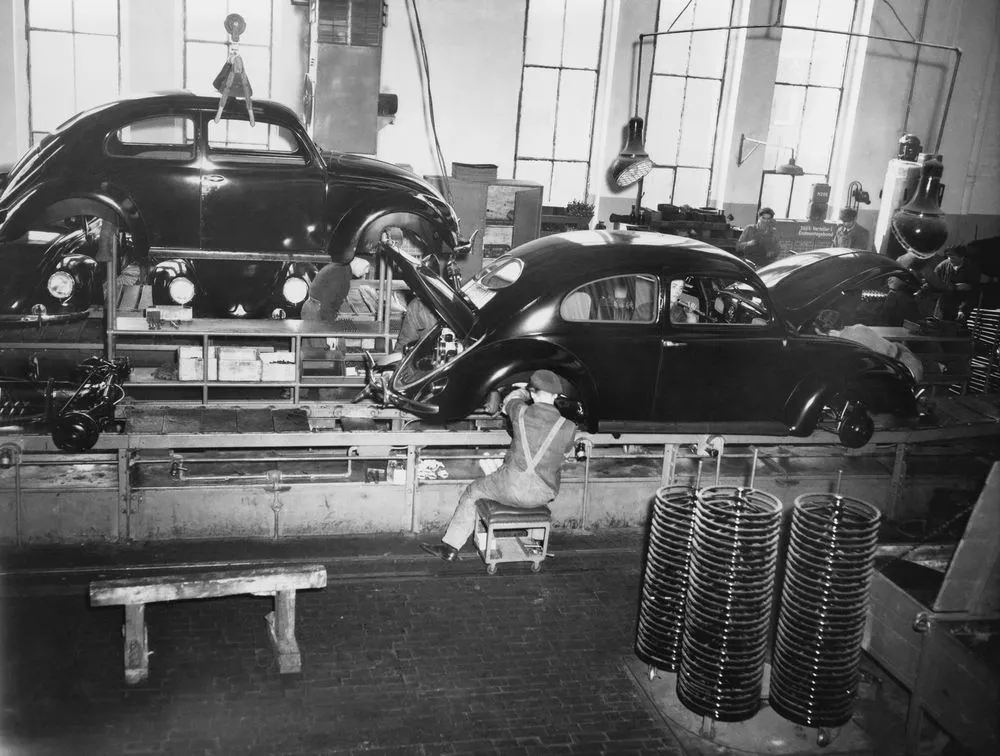
Clear industrial sectors emerge (agriculture, textile, energy, etc) and the production of secondary goods not only expands, but also becomes more prevalent than primary sectors.
Rostow lays out three major requirements that define a country as being in the take-off stage:
- The investment in production should rise from 5% to over 10% of the national income.
- There should be development and a high rate of growth in one or more major manufacturing sectors.
- As there is an impulse to expand the modern sector, institutional frameworks should emerge to provide structure, stability, and monetary impetus.
The take-off stage requires a lot of capital, which these frameworks can provide in the form of loanable funds to eager entrepreneurs. These sources could be the taxes the states collect and other fiscal measures, such as investment from domestic and foreign entities.
Drive To Maturity
After an economy takes off, there is continued growth, which is the economy’s drive to maturity. This, according to Rostow, is the stage where economies have successfully applied various modern technologies to the majority of their resources. This effort is further applied to the entire bulk of its economic activity.
The economy now finds its place in the global frontier. It produces things that it once imported and new import demands arise. As technology develops further, new sectors emerge and accelerate as old ones level off.
There is a shift in the workforce from agriculture to industries and technology, a decrease from 75% working in agriculture to only 20% of the working population being in the fields will usually occur. Professionalism is instilled in industries, as the character of leadership changes and workers become more skilled.
Investment in large-scale infrastructure like schools, universities and hospitals is carried out. The diversity of sectors and the jobs available in them raise the standard of living and reduce the poverty rate.
Age Of Mass Consumption
The agriculture industry takes a further backseat as new industries begin to dominate the economy. Higher individual economic mobility gives way to higher spending power for individuals, which is used for buying secondary goods for consumption.

Earlier concerns about basic survival have now basically been forgotten, as individuals are often brought up in existing wealth and comfort. Countries can now choose where to concentrate their forces, address military and security issues, tackle equality and welfare issues, or develop luxuries for its upper class.
What Are Some Real-World Examples Of Modernization Theory?
Because modernization theory tries to describe how whole societies industrialize, its supporters have always pointed to real national histories as evidence. The earliest case study was Daniel Lerner's 1950s survey work across the Middle East, but the examples cited most often today are drawn from East Asia.

Japan's Meiji Restoration is the classic illustration. Between 1868 and 1912, Japan went from a feudal, largely agricultural society to an industrial power. The new government abolished the feudal domain system in 1871, built railways, telegraph lines and shipping fleets, and in 1872 launched a national education system that put almost the entire population through at least six years of schooling. The Tomioka Silk Mill, opened in 1872 as Japan's first modern mechanized silk-reeling factory, became a symbol of that deliberate, state-led leap into industrial production.
The other textbook case is the postwar rise of the Four Asian Tigers (South Korea, Taiwan, Hong Kong and Singapore). Between the 1960s and the 1990s these four economies sustained growth of more than 7% a year for roughly three decades, driven largely by export-oriented industrialization, and climbed from low-income economies to high-income ones in a single generation. Their rise is frequently held up as modernization theory in action.
These examples cut both ways, however. The Asian Tigers modernized economically under authoritarian governments and only democratized later (South Korea and Taiwan in the late 1980s), while China has industrialized dramatically without democratizing at all. That sequence undercuts one of modernization theory's central predictions, that economic modernization reliably ushers in liberal democracy, which is exactly why these cases are taught both as evidence for the theory and as ammunition for its critics. The same tangled link between wealth and empire runs through the question of whether colonialism fueled industrialization in the first place.
Critics
The modernization theory is polarized in its reception, and from the late 1960s onward, it has faced sustained academic criticism.
Dependency Theory And World-Systems Theory
The most influential critique came from dependency theorists like André Gunder Frank, Raúl Prebisch and Immanuel Wallerstein in the late 1960s and 1970s. Their core charge: “underdevelopment” is not a separate “stage” that pre-modern societies are simply waiting to leave; it is an active product of the global capitalist system itself, created and reproduced by colonial extraction, unequal trade, and the structural relationship between a wealthy “core” and an impoverished “periphery.” Wallerstein’s world-systems theory generalises this into a global division of labour.
Eurocentrism
Modernization theorists tend to treat Western (especially Anglo-American) economies as the fully “modern” end-state and to deem other economies primitive by comparison. The theory is widely accused of being Eurocentric, a fair charge, as the Industrial Revolution, the French Revolution and the Revolutions of 1848 are typically taken as the starting line of modernity.
Empirical Failures
Many countries simply have not followed Rostow’s neat five-step path. Some have skipped stages (China), others have stalled or regressed, and almost none have replicated the precise sequence of Britain or the United States. The take-off threshold of “5% to 10% investment” has also proved a poor predictor of growth in practice.
Cultural And Post-Development Critiques
Edward Said’s Orientalism (1978) and later post-development theorists like Arturo Escobar argued that modernization theory implicitly produces “the Third World” as a problem to be solved on Western terms, a continuation of colonial-era assumptions in academic clothing.
Climate And Sustainability
A more recent critique: Rostow’s capstone is the “age of mass consumption,” but unending material consumption on a finite planet is now widely recognised as ecologically unsustainable. Modernization theory has no built-in answer to climate change, biodiversity collapse, or planetary boundaries.
A Partial Revival
Despite all of this, modernization theory has not disappeared. Political scientist Ronald Inglehart and colleagues at the World Values Survey have revived a softer, evidence-tested version since the 1990s (Inglehart & Welzel, Modernization, Cultural Change, and Democracy, 2005), showing empirically that as societies industrialise they tend to shift first toward secular-rational values and then toward self-expression and democratic norms, though crucially without the rigid stage-based linearity of the original theory.
Although classical modernization theory does illuminate how technology and social change interact, in its 1950s form it fails as a universal explanation for societal progress and is now usually taught alongside its critics rather than on its own.
References (click to expand)
- Introduction to Human Evolution - Smithsonian's Human Origins. The Smithsonian Institution
- Rostow's theory of modernization development - Academia.edu. Academia.edu
- Rostow's stages of growth - Wikipedia
- Agricultural Development and Structural Change, Within and Across Countries - economics.mit.edu
- Rostow W. W.,& Rostow W. W. (1990). The Stages of Economic Growth: A Non-Communist Manifesto. Cambridge University Press
- The Meiji Restoration and Modernization - Asia for Educators, Columbia University
- The East Asian Miracle: Four Lessons for Development Policy - National Bureau of Economic Research (NBER)
- The Production of Modernization: Daniel Lerner, Mass Media, and The Passing of Traditional Society - Canadian Journal of Communication
- Eisenstadt, S. N. (2000). Multiple Modernities. Daedalus, 129(1). American Academy of Arts & Sciences