Historians decipher ancient languages by leaning on bilingual “keys” like the Rosetta Stone, comparing unknown scripts to related languages, running statistical analysis on symbol patterns, and reading the archaeological context. These methods cracked Egyptian hieroglyphs and Linear B, yet scripts like the Indus Valley one remain unread.
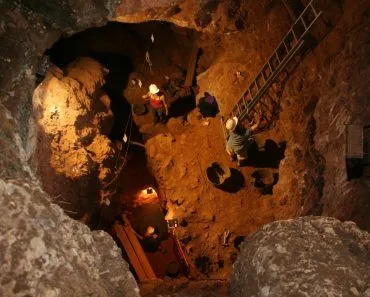
The study of ancient civilizations has fascinated historians and archaeologists for generations. However, one of the persistent challenges in understanding ancient cultures lies in deciphering their languages. Throughout history, numerous civilizations have left behind written records that remain undeciphered.
Fortunately, through the application of scientific concepts and utilizing linguistic commonalities, historians and archaeologists have made significant strides in comprehending these enigmatic civilizations. This article explores the methods and approaches employed to understand civilizations with undeciphered languages, drawing insights from the expansive fields of history and archaeology.
A Starting Point
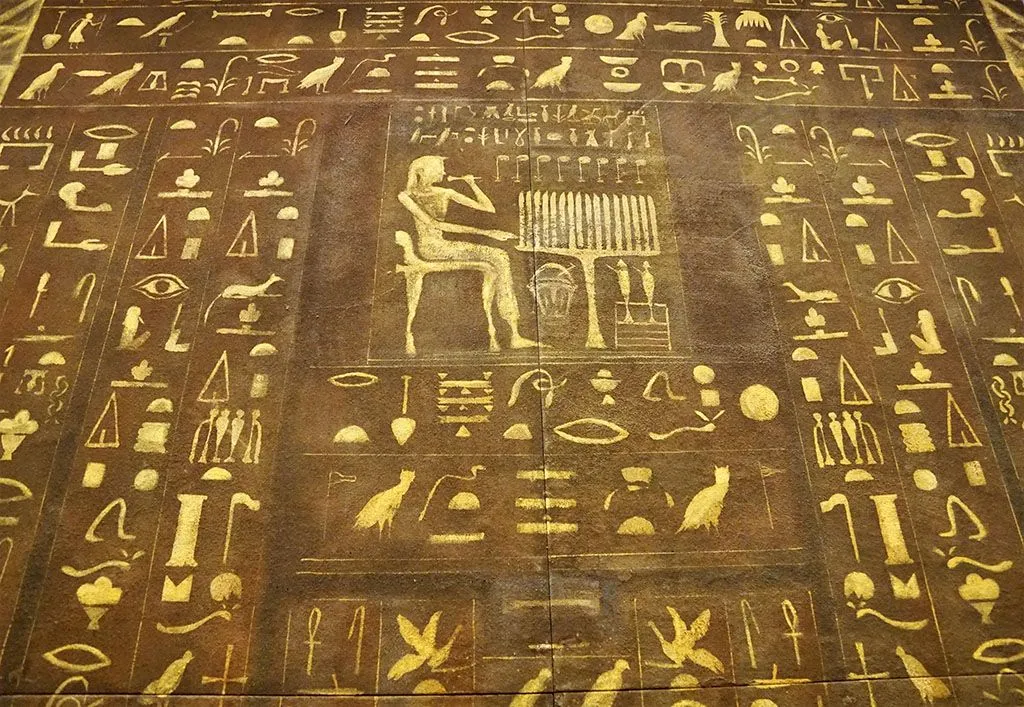
Sometimes, archaeologists are able to reconstruct unknown languages by finding transliterations in languages that can be understood. The Rosetta Stone, for example, is a famous ancient artifact with inscriptions in three languages: Egyptian hieroglyphs, Demotic script, and Greek. It provided the essential key to deciphering Egyptian hieroglyphs.

By comparing the known Greek text with the unknown scripts, linguist Jean-François Champollion made a paradigm-shifting breakthrough in 1822. He was not working alone, though. The British polymath Thomas Young had already shown that demotic and hieroglyphs were related and that the cartouches spelled out the royal name Ptolemy, laying groundwork Champollion built on. The two became rivals, but it was Champollion, with his deep command of Coptic, who realized that hieroglyphs recorded the sounds of the Egyptian language and read the script as a whole.
This monumental achievement unlocked the mysteries of ancient Egyptian civilization, radically transforming our understanding of history. The Rosetta Stone is a bilingual “key” that bridged the gap between ancient and modern languages, enabling scholars to decipher and interpret the complex hieroglyphic system that documented Egypt’s civilization.
It is when such transcripts are not available that the real work begins.
Linguistic Diversity And Language Decay
Ancient civilizations demonstrate profound linguistic diversity, as languages naturally evolve and transform over time. Consequently, interpreting ancient scripts becomes challenging without a clear connection to modern languages. Furthermore, the obstacles of language decay and extinction further complicate deciphering these forms, as entire languages can be lost, without a single living descendant to aid in their understanding.
The Indus Valley Civilization, which flourished from 2600-1900 BCE, left behind an extraordinary script that remains undeciphered to this day. Despite extensive archaeological excavations and the unearthing of roughly 4,000 inscriptions, the intricate nature of the script, the brevity of the inscriptions (most run to only four or five symbols), and the absence of a bilingual Rosetta Stone have all impeded progress in unlocking the secrets of this language. The puzzle is taken seriously enough that in 2025 the government of Tamil Nadu, in India, announced a $1 million prize for anyone who can crack it.
However, even when the script itself remains elusive, its surroundings can provide valuable hints. Like an archaeologist examining a tomb, researchers use the context in which the script is found to infer its meaning. If it’s etched onto the walls of a burial chamber, it may be considered a linguistic “Rest in Peace” sign, pointing towards funerary rituals and afterlife beliefs.
Comparative Linguistics And Language Families
Imagine a script that appears as mysterious as a riddle without a clue. In such cases, scholars turn to decipherment by analogy, where they compare the enigmatic script to other known scripts that have already been cracked. It’s like finding a similar jigsaw puzzle piece and fitting it into the right spot. By using the knowledge gained from previously deciphered scripts, they can unlock the hidden meanings and create a bridge between the known and the unknown.
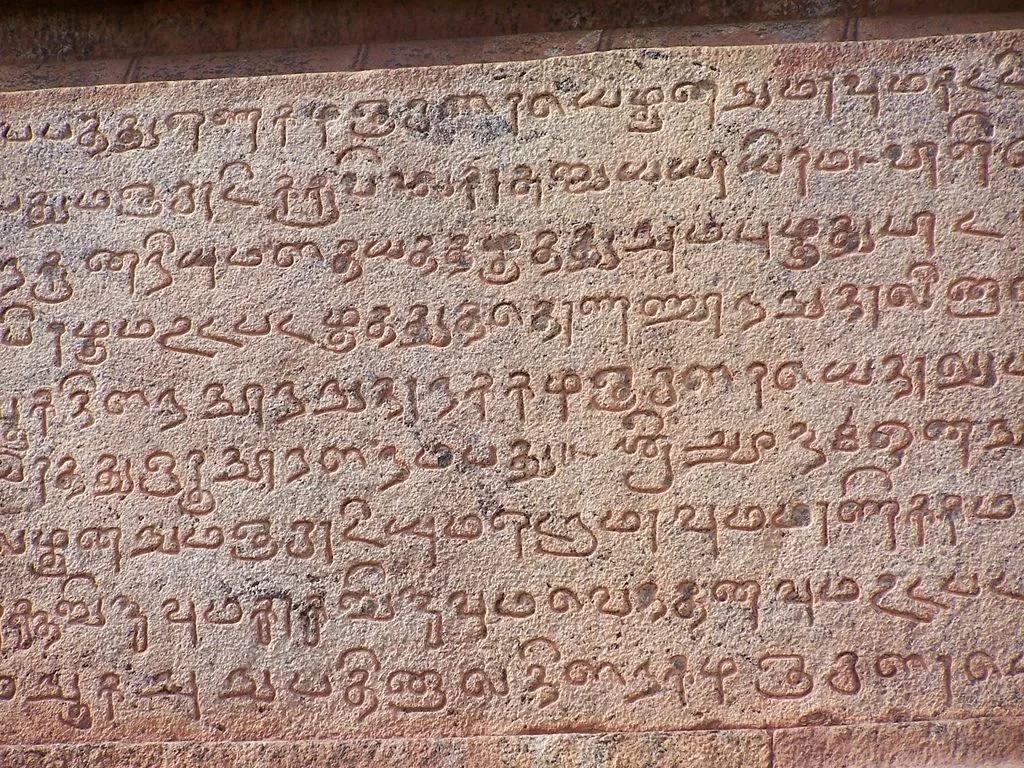
One approach to understanding undeciphered languages is through comparative linguistics. By identifying language families and utilizing cognates, linguists can draw connections between known languages and potentially decipher unknown scripts. This method relies on the assumption that related languages share similarities in grammar, vocabulary, and sound patterns.
The decipherment of Mayan hieroglyphs is a prime example of the successful application of comparative linguistics. The turning point came in 1952, when Russian scholar Yuri Knorozov argued that the glyphs were partly phonetic, with many signs standing for consonant-vowel syllables rather than whole words. Once researchers accepted that, they could sound out glyphs and check the results against dictionaries of modern Mayan languages, identifying key linguistic elements and decoding the hieroglyphic system. This breakthrough has greatly enhanced our understanding of the Mayan civilization.
Statistical Analysis And Corpus Linguistics
In cases where linguistic connections are elusive, statistical analysis and corpus linguistics can be valuable tools. By examining the frequency of different characters or symbols, these techniques can unravel patterns and structures that hide the key to understanding the ancient words.
By analyzing large datasets of texts, researchers can identify recurring patterns, such as word frequencies, collocations, and syntactic structures. These statistical insights enable scholars to make informed hypotheses about the meaning and grammar of undeciphered languages.
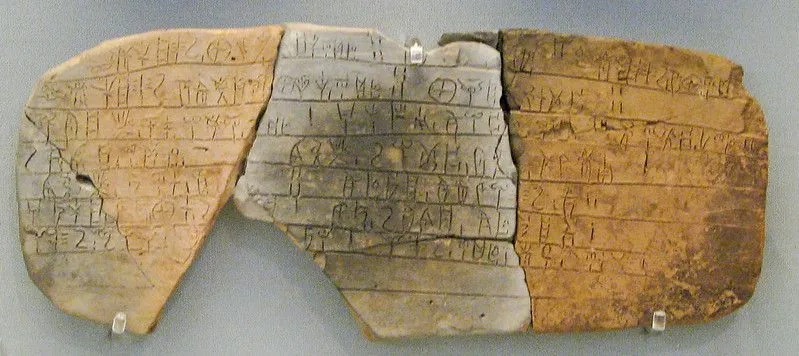
The Linear B script, used by the Mycenaean civilization in the Late Bronze Age, remained a mystery until it was deciphered in 1952. Building on the painstaking statistical groundwork of American classicist Alice Kober, the British architect Michael Ventris arranged the syllabic signs into "grids" that exposed recurring word patterns, and he successfully linked the script to an early form of Greek. This breakthrough provided immense insight into the Mycenaean civilization and their administrative practices.
Iconographic And Contextual Analysis
When linguistic paths present difficulties, scholars can also venture into the realm of iconographic and contextual analysis. By delving into the visual depictions and the accompanying archaeological contexts of enigmatic scripts, researchers glean cultural, religious, and historical insights, thus achieving a profound comprehension of the civilization being studied.
The enigmatic glyphs discovered within Mesoamerican cultures, such as the Olmec and Zapotec civilizations, have posed a formidable challenge in terms of linguistic decryption. Nevertheless, through the meticulous study of iconography and contextual interpretation, researchers have unearthed vital revelations regarding social structures, religious beliefs, and political systems of these cultures. These discoveries underscore the paramount importance of multidisciplinary approaches when unraveling the mysteries of civilizations with undeciphered languages.

Conclusion
Deciphering the languages of ancient civilizations is a challenging yet crucial task for historians and archaeologists. Whether they find linguistic clues by analogy, decode meanings through contextual analysis, crunch numbers with statistical analysis, or unite a multidisciplinary dream team, these intrepid researchers unlock the doors to ancient civilizations, granting us glimpses into their rich history and cultural nuances. With every breakthrough, we inch closer to understanding the civilizations that communicated in languages that have been lost to time.
Even so, there remain many scripts whose mysteries remain beyond our comprehension, and when it comes to these enigmatic puzzles, your guess is as good as mine!
References (click to expand)
- Pourdamghani, N., & Knight, K. (2017). Deciphering Related Languages. Proceedings of the 2017 Conference on Empirical Methods in Natural Language Processing. Association for Computational Linguistics.
- Luo, J., Hartmann, F., Santus, E., Barzilay, R., & Cao, Y. (2021). Deciphering Undersegmented Ancient Scripts Using Phonetic Prior. Transactions of the Association for Computational Linguistics, 9, 69-81.
- Damerow, P. (1999). The Origins of Writing as a Problem of Historical Epistemology. Max Planck Institute for the History of Science, Preprint 114.
- Jean-François Champollion. Encyclopaedia Britannica.
- Michael Ventris. Encyclopaedia Britannica.
- Yury Valentinovich Knorozov. Encyclopaedia Britannica.
- Officials Are Offering $1 Million to Anyone Who Can Decode This Ancient Script. Smithsonian Magazine.