Table of Contents (click to expand)
Mental illness has existed for as long as humans have, but how we explain it has shifted from demons and humors to modern diagnosis. Today nearly 1 in 7 people worldwide live with a mental disorder, anxiety and depression being the most common. Reported rates have climbed, partly from genuine increases and partly from better diagnosis, falling stigma, and the COVID-19 pandemic.
Throughout history, there has been evidence of mental illness. Whether a behavior is classified as normal or abnormal depends on the context in which the behavior occurs, and this context is subject to change over time and across cultures.
Fortunately, we now have an identification of behavior patterns, thoughts, and emotions that occur in clusters and are referred to as “mental disorders”. The most widely used and accepted guide for diagnosing mental illness is the Diagnostic and Statistical Manual of Mental Disorders (DSM), published by the American Psychiatric Association.
Because there are always new research findings, better diagnostic techniques, and societal changes, the DSM is regularly reviewed and revised. The current version is the DSM-5, with a text-revised edition (DSM-5-TR) released in 2022.
In order to understand how the frequency of mental illnesses has changed over time, it is important to first understand what mental illnesses or psychological disorders are in the first place.
What Are Mental Illnesses/psychological Disorders?
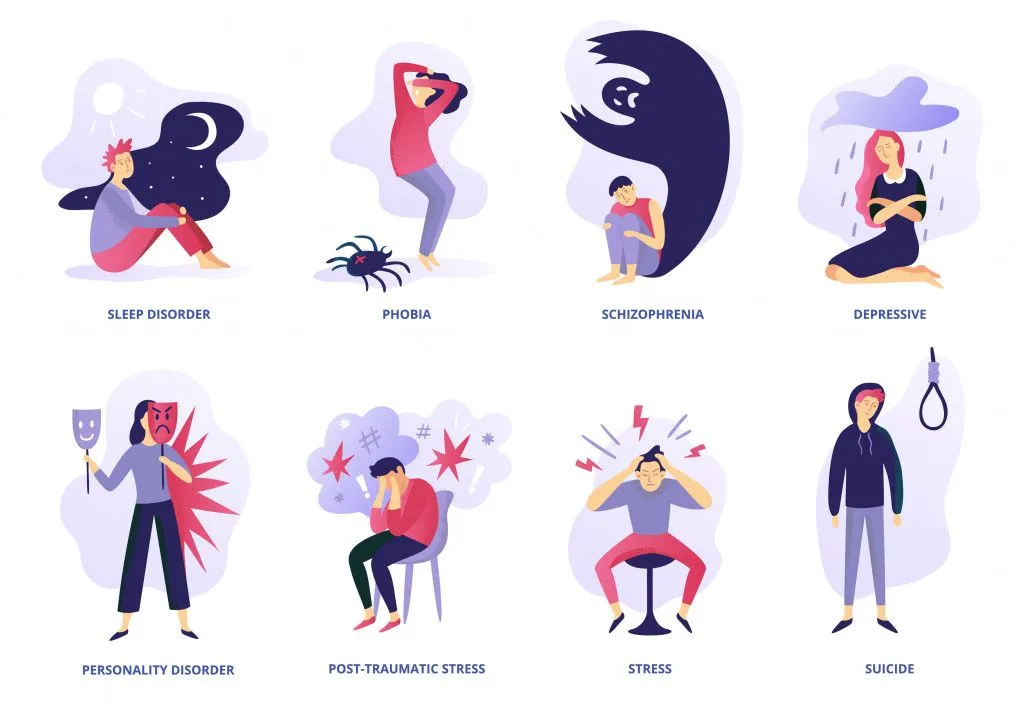
A psychological disorder is any clinically significant pattern of behavior that meets the following criteria:
- It’s personally distressing.
- It causes disability or impairment in at least one or more important areas of functioning (maladaptive behaviors).
- It increases the risk of suffering some type of disability, pain, or even death.
- It violates social norms.
We briefly review each of these criteria below.
Personal Distress
The degree of personal distress means that a person may constantly have negative thoughts and feelings about themselves that interfere with their well-being and daily functioning.
For example, someone who suffers from a fear of heights will avoid taking the stairs or leaving the house to an unhealthy extreme.
Maladaptive Behavior
Another factor is whether the condition leads to maladaptive behavior.
Maladaptive behavior is when someone is unable to perform behaviors that are relevant to their daily life. This includes the ability to form social relationships, care for oneself, or perform everyday tasks, such as showering, eating, etc.
Disability Or Impairment
The third factor is the risk of disability, being affected by pain, or death.
For example, people who misbehave are more likely to put themselves at risk of harm. One research study found that people who are addicted to methamphetamines are more likely to be unable to take care of their physical health. People who suffer from depression, schizophrenia, and substance abuse disorders are more likely to harm themselves in the long run.
Social Norms
Social norms refer to society’s general expectations of how we should behave in a given situation. In any society, people have established a set of rules that define what is considered acceptable and what is not. If a person repeatedly fails to comply with these norms, they may be considered to be mentally disturbed.
However, this factor cannot be considered in isolation, but must be coupled with at least one of the above factors. For example, we are expected to take care of ourselves and be hygienic.
A depressed person is usually unable to take care of their hygiene and may exhibit motor deficits for days (i.e., unable to shower, brush teeth, and generally unable to get out of bed). Thus, this social norm violation is worrisome and is not considered normal.
How Has The Incidence Of Mental Illness Changed Throughout History?
This is difficult to answer for several reasons.
Today, we arguably have a clearer understanding of what ‘makes’ one mentally ill, but ideas about what causes mental illness have been different through history. Women who showed symptoms of anxiety, hyperactivity, hallucinations, or delusions were labeled as “hysteric,” and their behavior was explained by any number of reasons, varying from the supernatural to reproductive issues. In 1980, with the third edition of the DSM (DSM-III), hysteria was dropped as a formal diagnosis, as it was widely seen as a sexist and unscientific way of understanding the psychological problems faced by women.
Historical records also don’t always give us the entire picture, especially of the poorest people or ordinary people. We can’t know whether mental health services were provided or available to every population, whether they were affordable and accessible, and if they existed, we don’t have data on how frequently people may have used of these services.
What is considered to be inhumane by medical standards today may have been common in the past. Mentally ill people have been linked to animals who lacked reason, and they were considered to be individuals who had no control over themselves and could respond violently without provocation. It was also believed that they had no sense of pain or temperature, and were able to live in poor and inhumane conditions with no sense of discomfort.
For this reason, people with mental illnesses weren’t considered “important enough” to keep a record of. They’d be shut inside an asylum for the rest of their lives. Electrical shock therapies were considered treatment, and they were chained and sedated, as they were considered to be “dangerous”.
However, several voices spoke out against such treatment. In the 19th century, in America, Dorothea Dix, a retired school teacher, discovered the negligence to which mentally ill people were subjected and started advocating for the establishment of more state-run hospitals.
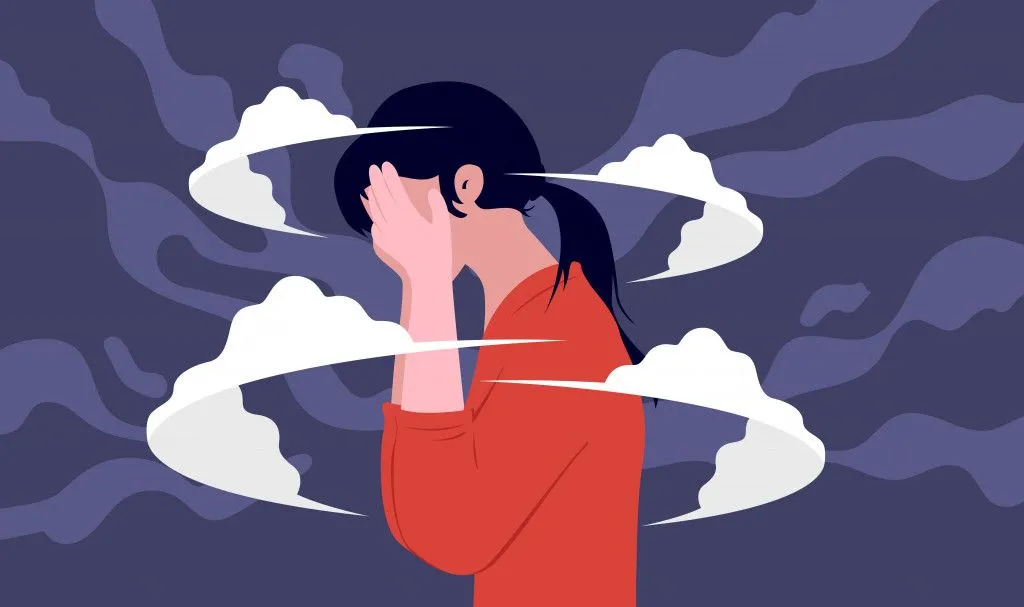
However, we do have data for recent decades.
Reports of mental illness do appear to be rising worldwide. According to the World Health Organization (WHO), nearly 1 in 7 people globally (roughly a billion) live with a mental disorder, with anxiety (around 359 million people) and depression (around 280 million) the most common. Mental health conditions also tend to start early in life: about half begin by age 14, and roughly one in seven adolescents aged 10 to 19 is affected.
The trend shows up in long-running surveys too. A survey carried out by the NHS in England found that reports of self-harm rose sharply between 2000 and 2014, and the share of people reporting suicidal thoughts went up over the same period. Even so, some of that rise may reflect greater awareness and a greater readiness to disclose, rather than a like-for-like jump in illness.
A psychological disorder that has become one of the most common and a leading cause of disability throughout the world is depression. Its most serious consequence is suicide, which the WHO ranks as the third leading cause of death among people aged 15 to 29.
People with severe mental health conditions also tend to die earlier, on average 10 to 20 years sooner than the general population. Suicide accounts for some of this gap, but most of it comes from preventable physical illnesses (such as heart disease, diabetes, and respiratory infections) that often go undertreated in people living with a serious mental disorder.
Another change in mental health is that stigmas against people with mental illness has decreased worldwide. However, some people with mental illness still face human rights violations and unfair prejudice.
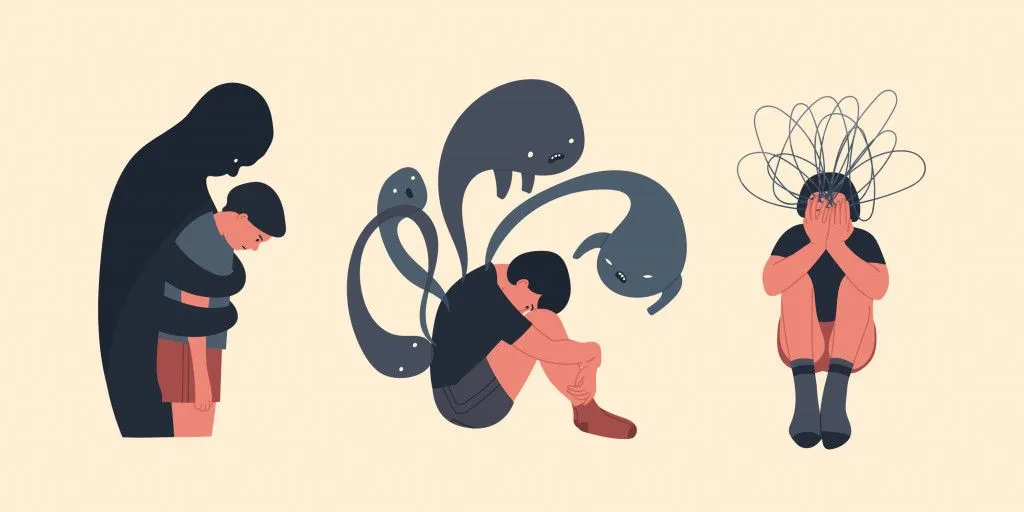
When considering the increasing number of mental health-related problems springing up around the world, it is important to consider the impact of the COVID-19 pandemic on this issue.
In fact, the WHO estimates that the global prevalence of anxiety and depression jumped by 25% in the first year of the pandemic alone. Studies have reported that the coronavirus pandemic fueled anxiety and despair across the general population. Several studies have also reported that the long duration of social isolation during the coronavirus pandemic led to an increase in people feeling that life is meaningless. It has been reported that they experience more sadness and depressed moods, and also have unexplainable anxiety.
The pandemic and the constant changing living conditions, going from lockdown (when cases spurt) to opening up (when cases dip), has also led to an increase in sleep disorders, a lack of self-control, and feelings of despair and hopelessness.
References (click to expand)
- DSM (Diagnostic and Statistical Manual of Mental Disorders). The American Psychiatric Association.
- Fass, D., Calhoun, G. B., Glaser, B. A., & Yanosky, D. J., II. (2009, March 20). Differentiating Characteristics of Juvenile Methamphetamine Users. Journal of Child & Adolescent Substance Abuse. Informa UK Limited.
- NHS - Webarchive.nationalarchives.gov.uk.. National Archives
- Adult Psychiatric Morbidity Survey: Survey of Mental Health .... NHS Digital
- Mental health - World Health Organization (WHO). The World Health Organization
- Mental disorders (fact sheet). World Health Organization (WHO).
- COVID-19 pandemic triggers 25% increase in prevalence of anxiety and depression worldwide. World Health Organization (WHO).
- (2020) How is COVID-19 pandemic impacting mental health of .... ScienceDirect
- Hossain, M. M., Tasnim, S., Sultana, A., Faizah, F., Mazumder, H., Zou, L., … Ma, P. (2020, June 23). Epidemiology of mental health problems in COVID-19: a review. F1000Research. F1000 Research Ltd.
- Devereux, C. (2014). Hysteria, Feminism, and Gender Revisited: The Case of the Second Wave. ESC: English Studies in Canada. Project Muse.
- Surís, A., Holliday, R., & North, C. (2016, January 18). The Evolution of the Classification of Psychiatric Disorders. Behavioral Sciences. MDPI AG.