Table of Contents (click to expand)
The link between genius and anxiety or depression is real but unsettled. A 2018 survey of high-IQ Mensa members found higher rates of mood and anxiety disorders, possibly because intense minds overthink and react strongly to stress. However, large population studies find the opposite, with high intelligence acting as a protective factor, so the "tortured genius" is more myth than rule.
Abraham Lincoln, Charles Dickens, Sir Isaac Newton, Michelangelo, Charles Darwin and Leo Tolstoy; do you know what these geniuses of different fields and eras all have in common?
You may not believe it, but every single one of them suffered from some type of mental affliction in their lifetime.
Why is it that creative geniuses seem to be at a higher risk of mental problems, such as stress, depression, insomnia, chronic fear and anxiety? Are mental problems an integral part of being innovative, or is there a scientific explanation tangled up somewhere in this common notion?
Overthinking Everything
Neuroticism is a personality trait that is commonly associated with bouts of anxiety, depression, moodiness, panic attacks and stress. People who suffer from these rather undesirable traits are said to be neurotic. The question is, why is this trait found so frequently in creative geniuses?
For one, they have a propensity to overthink everything that they do, say, and create. Of course, when they’re in the process of doing this, they don’t realize that they are. For them, this overthinking is a reflection of the desire to achieve a level of perfection in the stroke of their brush, or the unrelenting appetite for deriving one more groundbreaking formula. In order to achieve their objective, they tend to become reclusive and isolated from people, focusing on eliminating distractions and overthinking even more – in private.
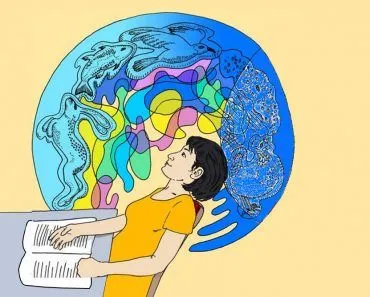
Jonathan Smallwood, an expert on daydreaming at the University of York in England, has shown that people prone to spontaneous negative thoughts have heightened activity in a region of the brain called the medial prefrontal cortex (just behind the forehead). What’s most surprising is that this region lights up even when the subjects are simply resting in the brain scanner, left to daydream with no task at all. Because the parts of the medial prefrontal cortex involved overlap with circuits that handle the conscious sense of threat, this constant self-generated thinking can tip over into worry and anxiety. In a 2015 paper, Smallwood and his colleagues argued that this very tendency, dwelling on problems when there is nothing in front of you to solve, is the same engine that fuels both neuroticism and creative problem-solving.
Sensitive Amygdala
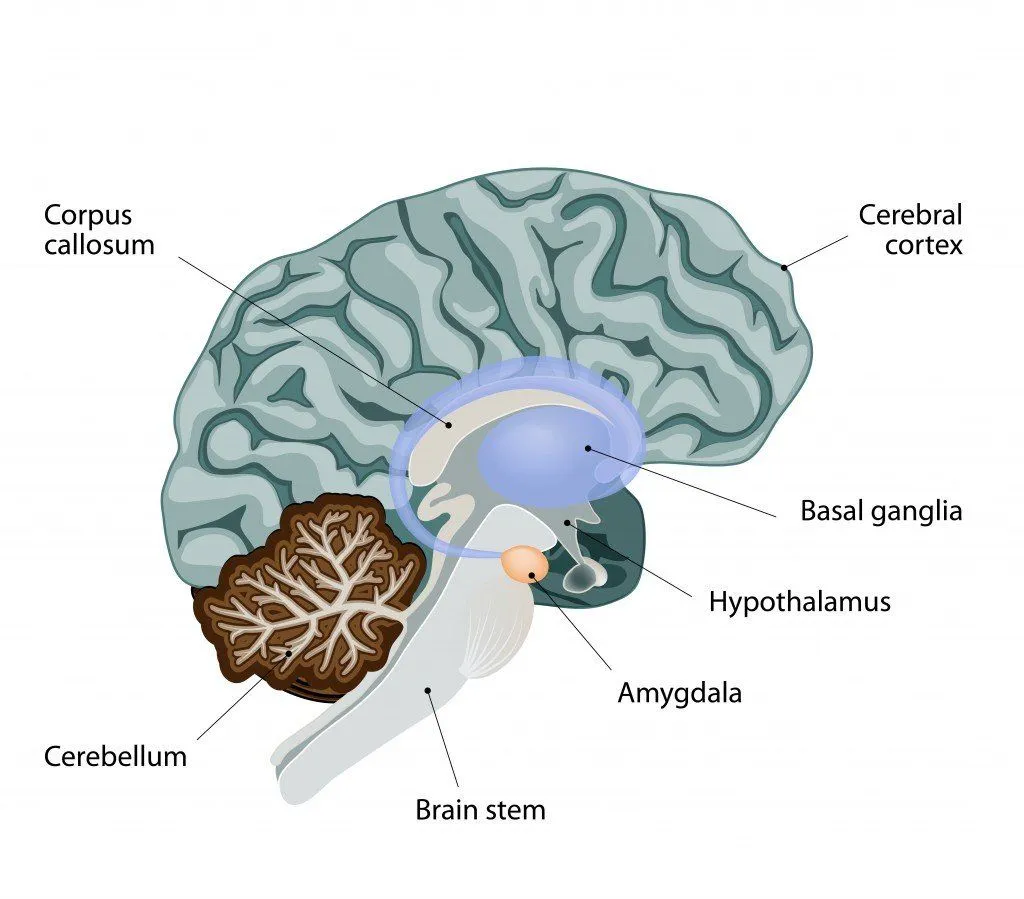
People who experience anxiety and fear on a regular basis often have a hyper-reactive amygdala. The amygdala is a small, almond-shaped structure deep inside the brain that acts as its threat-detection hub, flagging anything that might be dangerous. In many cases, it is the self-generated thoughts of these people that make them miserable about so many things, whether it is the inability to capture that perfect picture or the failure to pin down the value of some elusive ‘x’. With an amygdala primed to sound the alarm, they tend to blow these seemingly small difficulties into much larger problems, ratcheting up stress and anxiety even further. This kind of intense, outsized reactivity to inner and outer stimuli is exactly what the Polish psychologist Kazimierz Dabrowski called “overexcitability,” a trait he believed showed up more often in gifted and creative people.
The “Mad Genius” And The Creativity-Psychosis Link
So far we have talked about anxiety and depression, but people often ask a blunter question: are geniuses simply crazy? The image of the brilliant-but-unhinged artist is so old it has its own nickname, the “mad genius”, and for a long time it rested on little more than colorful biographies. The more interesting science is not about anxiety at all, but about the heavier conditions, bipolar disorder and schizophrenia.

The most rigorous early evidence came from psychiatrist Nancy Andreasen, who interviewed writers from the University of Iowa Writers’ Workshop using formal diagnostic criteria. Around 80% of the writers had experienced some kind of mood disorder during their lives, against roughly 30% of a matched comparison group, and a striking share fell on the bipolar spectrum. Tellingly, not one of the writers had schizophrenia, which already hinted that the “mad genius” idea is really about mood, not madness.
The biggest test came from Sweden, where Simon Kyaga and colleagues could link national health registers to people’s occupations. In a study covering more than a million patients, being in a creative profession was tied above all to bipolar disorder. Even more curiously, the healthy siblings of people with schizophrenia or bipolar disorder were the ones overrepresented in creative jobs, suggesting that whatever predisposes a family to these conditions may, in milder doses, feed creativity rather than illness. The clear exception was authors, who carried higher rates of several disorders and were close to 50% more likely to die by suicide than the general population. The takeaway is not that brilliance breeds insanity, but that a sliver of the same biology can tilt one relative toward art and another toward a serious diagnosis.
Not Always True
So is the link real? The honest answer is that the evidence is genuinely mixed. In 2018, researcher Ruth Karpinski and her colleagues surveyed 3,715 members of Mensa (a society whose members score in the top 2% on IQ tests) and reported that they had unusually high rates of mood and anxiety disorders. Roughly 27% had been diagnosed with a mood disorder such as depression or bipolar disorder, and about 20% with an anxiety disorder, well above the rough 10% national averages. Karpinski tied this to a “hyper brain / hyper body” idea, the same overexcitability and overthinking we have been describing.
But here is the catch: that study only looked at Mensa members, who are hardly a random slice of smart people, and a correlation in a self-selected group does not prove that being brilliant causes depression. In fact, when researchers look at large, representative populations, the pattern often flips. A 2022 study analyzing thousands of people found that high intelligence was not a risk factor for mental illness at all, and actually behaved as a protective factor, with the highest scorers showing lower rates of general anxiety and PTSD.
Since it is also quite difficult to measure or quantify the label of ‘creative genius’ in the first place, the notion that geniuses are all neurotic is a bit too much of a stretch. The likelihood of mental afflictions in someone obsessively dedicated to their creative pursuits or passions may be higher, but it is by no means a “rule”.
Therefore, don’t worry about having an inevitable nervous breakdown if you consider yourself a genius. There are certain habits that clearly benchmark neurotic behavior; if you make some simple lifestyle changes, you’ll be able to stay miles away from any kind of serious mental problems.
References (click to expand)
- High Intelligence: A Risk Factor for Psychological and Physiological Overexcitabilities. Intelligence (Karpinski et al., 2018)
- High Intelligence Is Not Associated With a Greater Propensity for Mental Health Disorders. European Psychiatry (PMC, NCBI)
- Thinking Too Much: Self-Generated Thought as the Engine of Neuroticism. Trends in Cognitive Sciences (PubMed)
- Bad News for the Highly Intelligent. Scientific American
- The Relationship Between Creativity and Mood Disorders. Dialogues in Clinical Neuroscience (Andreasen, 2008)
- Creativity and Mental Disorder: Family Study of 300,000 People With Severe Mental Disorder. The British Journal of Psychiatry (Kyaga et al., 2011)
- Mental Illness, Suicide and Creativity: 40-Year Prospective Total Population Study. Journal of Psychiatric Research (Kyaga et al., 2013)