Both ‘duck tape’ and ‘duct tape’ are correct. ‘Duck tape’ is the older term (the wartime tape used a cotton-duck cloth backing), but once the tape was used to seal heating and air-conditioning ducts after World War II, ‘duct tape’ took over and is now the more widely accepted spelling.
Although most people now call it ‘duct tape’, which is perfectly correct, the older term is actually ‘duck tape’, after the cotton-duck cloth used as its backing. So, in a way, both terms are correct, but ‘duct tape’ is the more widely accepted appellation today.
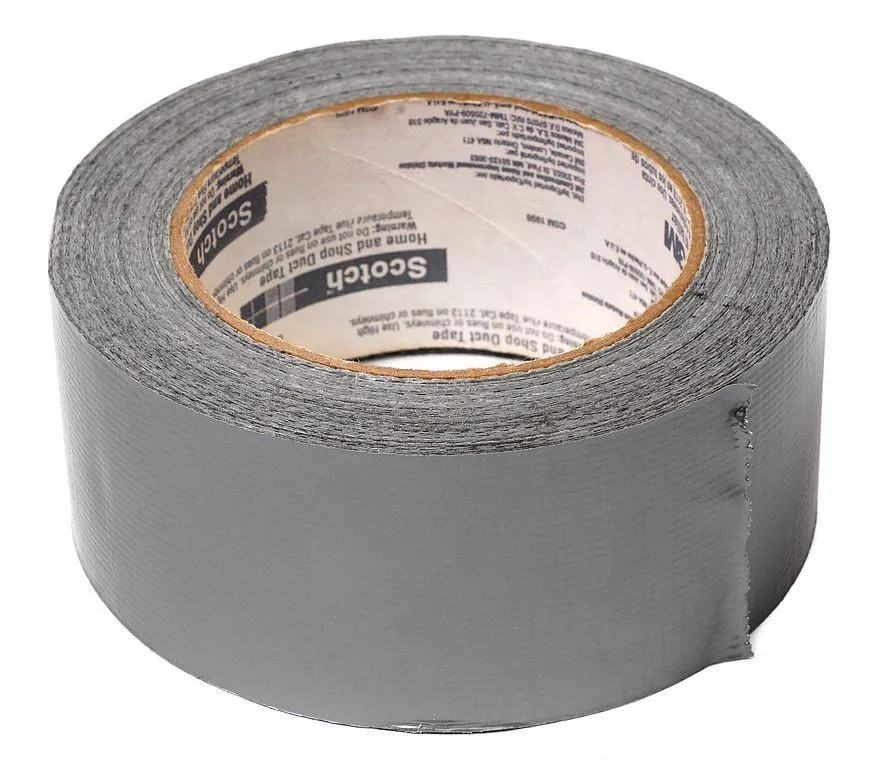
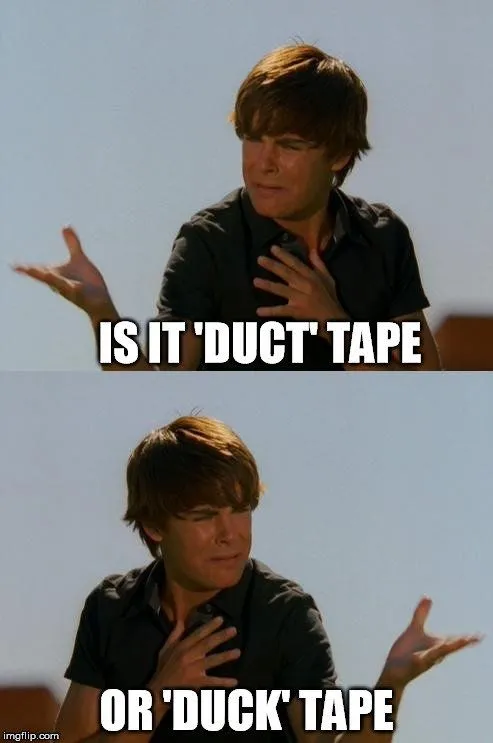
Engaged in a conversation with friends about movies the other day, I came across a rather interesting debate. One of the guys, while talking about a particular movie, referenced duct tape. A girl in the group casually pointed out that the word was ‘duck tape’ and not ‘duct tape’. Another friend took opposition to this, and apparently believed that ‘duct tape’ was actually the right word.
Soon enough, the original discussion about the movie was flushed down the toilet and the entire group was divided into two sides: one believing that the word was pronounced ‘duct’ tape (I was a member of this side), while the other insisted that it was, in fact, ‘duck’ tape.
This article is a direct upshot of that debate.
The Story Of ‘Duck’ Tape
“Duck” tape, like so many other things, has its origins in the Second World War.
An American woman named Vesta Stoudt, whose two sons were serving in the Navy, was working at the Green River Ordnance Plant near Amboy, Illinois in 1943 when she noticed a limitation in the ammo packaging. She found that the thin paper tabs the soldiers had to pull in order to open the boxes were so weak that they would often break, which made soldiers’ lives difficult in the middle of the battlefield.

In February 1943, she wrote a letter to then President Roosevelt, who seemed to agree with her suggestions. Consequently, he passed it along to the War Production Board, and within a few weeks, the Revolite division of Johnson & Johnson, which had been making cloth-backed adhesive tapes since the 1920s, began developing an alternative to the flimsy box tape that was in use at the time.
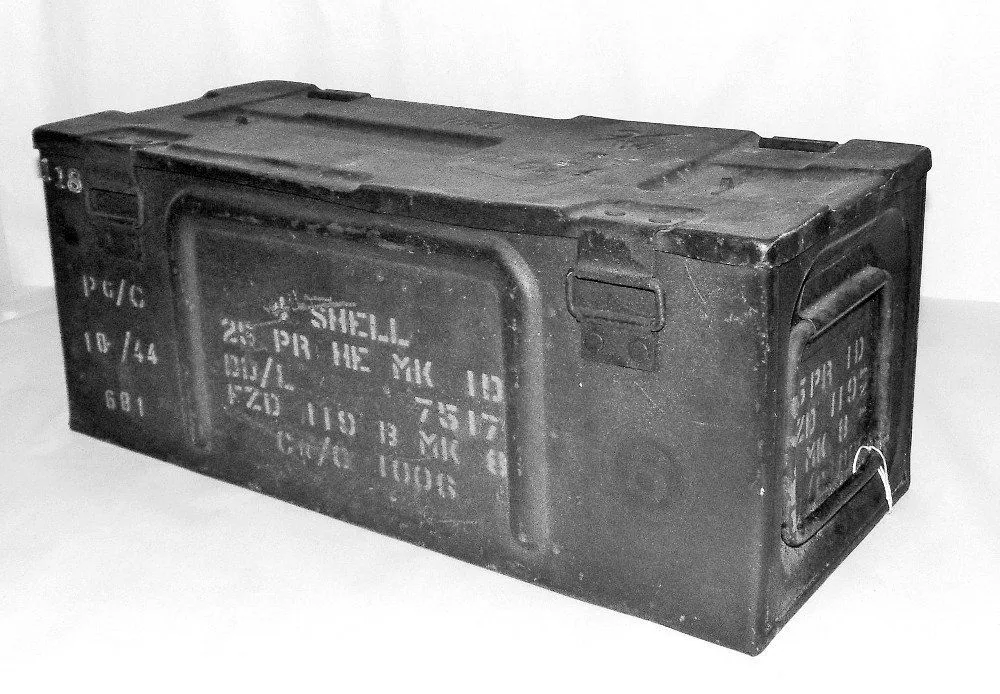
As a result of this episode, a new form of tape, which was both strong and waterproof, was put in circulation. Because it was mostly used in the army, the tape was an army-standard olive-drab green. This tape not only held things together very strongly, but also kept moisture out of ammunition cases. As for why it came to be called ‘duck’ tape, there are a couple of explanations…
a) The most credible one: the tape was made with a cotton ‘duck’ cloth backing. ‘Duck’ has been the name for that tightly woven cotton (and originally linen) fabric for centuries, and ‘duck tape’ as a term for strips of duck cloth actually predates World War II by decades.
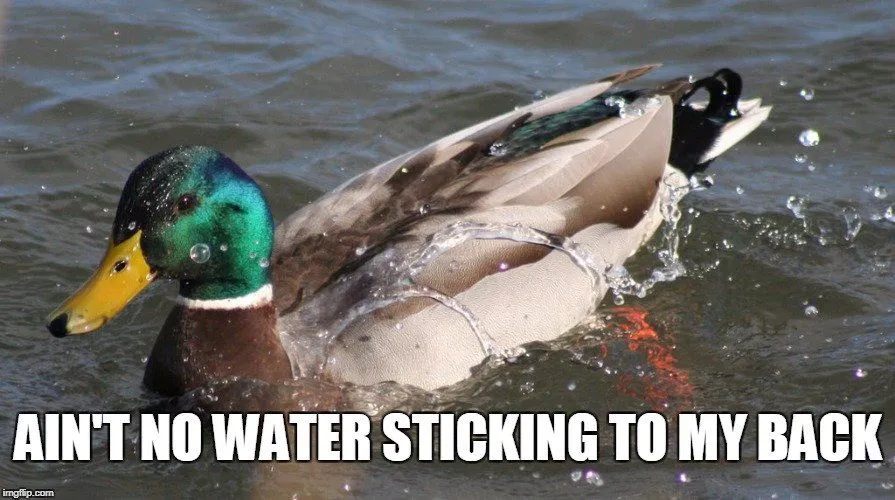
b) A more folksy story holds that because the waterproof tape made moisture roll right off, much like “water off a duck’s back,” the name simply stuck. It is a fun tale, but the cotton-duck backing is the explanation the etymologists actually back.
Army personnel also began to notice that duck tape not only sealed their munitions boxes tightly and kept them free of moisture, but also held things together and could therefore be used to repair stuff. In fact, duck tape was even being used to close up wounds during emergencies!
A Transformation To ‘Duct’ Tape
After the war ended, troops returned to their homes with their beloved duck tape in hand. It so happened that, shortly after the war, the housing market saw an upswing. Some smart guy then got the idea that the same war-tested duck tape could also be used to connect heating and air conditioning ducts in the new homes that were rapidly being erected all over the nation.
In a bid to ensure that the color of the duck tape matched that of the ducts on which it was being used, manufacturers switched its color from ‘army green’ to silver (which is the primary color of most ducts). Hence, duck tape began being recognized as the tape that connected and sealed ducts, and therefore its new name gained popularity, i.e., ‘duct’ tape.
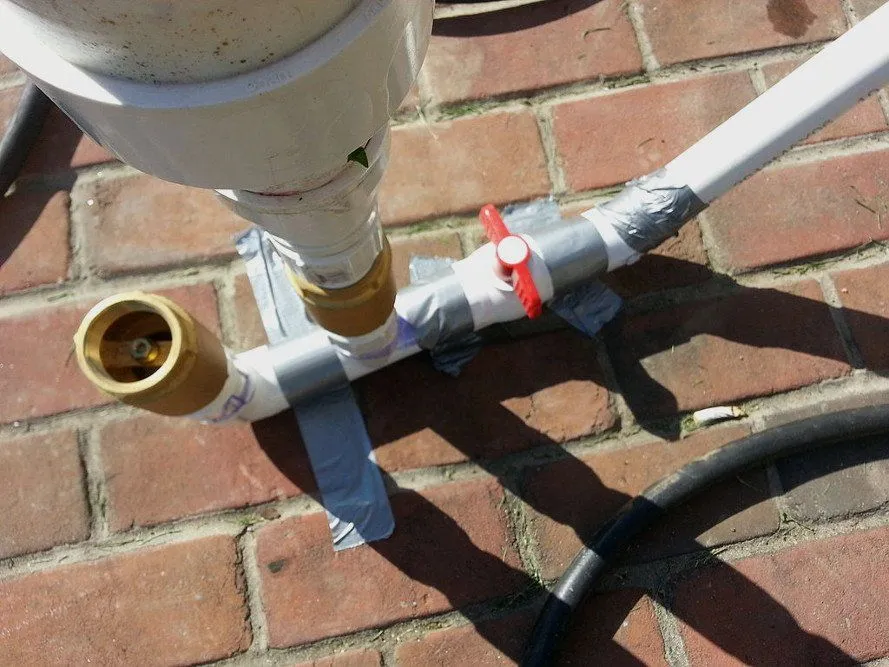
Quite ironically, however, according to Max Sherman and Iain Walker, researchers at the Department of Energy’s Lawrence Berkeley National Laboratory, duct tape should NOT be used to seal ducts, at least not as a long-term solution. They conducted numerous tests on different sealants and found that duct tape was the only one that failed, becoming brittle and falling off the joints (sometimes within days) under the heat and air-pressure cycles a duct experiences. In their words, it failed “reliably and often quite catastrophically.”
When Was Duct Tape Invented, And What Was It Used For?
If by “duct tape” you mean the strong, sticky, cloth-backed stuff in your toolbox, the answer is 1943. That is when the Revolite division of Johnson & Johnson developed the waterproof, rubber-adhesive, olive-drab tape that grew out of Vesta Stoudt’s letter. Its very first job was strictly military: sealing and waterproofing ammunition boxes so the contents stayed dry, while still tearing open easily by hand. The all-purpose “fix anything” reputation came later, once soldiers found the same roll could patch gear, boots, and even the odd jeep.

Here is the twist most people miss: the phrase “duck tape” is far older than that 1943 tape. Lexicographers have traced it in print back to the late 1890s. The earliest confirmed example etymologist Dave Wilton turned up is from the New Orleans Daily Picayune on 8 February 1899, and the Oxford English Dictionary dates the term to around the turn of the century. That early “duck tape,” though, was a completely different product: plain, non-adhesive strips of cotton-duck cloth, used for everyday jobs like hanging the slats of Venetian blinds and wrapping cables. So the name was already in circulation for decades before anyone thought to add glue to it.
Is ‘Duck Tape’ A Real Brand Name?
It is, and that is a big reason the “duck” spelling never died out. Duck Tape® is a registered trademark, not just a stubborn misspelling. The story goes that businessman Jack Kahl, who bought a tape company and renamed it Manco in 1971, kept hearing customers ask for “duck tape” instead of “duct tape.” Rather than correct them, he leaned into it: in 1980 he launched a branded line under the Duck® and Duck Tape® trademarks, complete with a cartoon-duck mascot, and was among the first to sell the tape in a rainbow of colors rather than plain silver.
The brand has changed hands over the decades, passing from Manco to the German company Henkel in 1998 and then to Shurtape Technologies in 2009, but the name stuck. So both spellings are genuinely “real” today, just in different ways: write duct tape when you mean the everyday adhesive in general, and Duck Tape (capital D) when you specifically mean the brand on the store shelf. That tidy little split is a good part of why the duck-versus-duct argument never quite settles.
As for the question of ‘duck’ vs ‘duct’, the former has the upper hand chronologically; but in the modern context, ‘duct’ tape is correct.
References (click to expand)
- duck tape | Common Errors in English Usage and More. Washington State University
- Sealing HVAC Ducts: Use Anything But Duct Tape. Lawrence Berkeley National Laboratory
- Conserving the Creativity that Saved the Apollo 13 Astronauts. The National Air and Space Museum of the Smithsonian Institution
- Duct Tape Auto Repair on the Moon. The National Air and Space Museum of the Smithsonian Institution
- duck (fabric) / duck tape / duct tape. Wordorigins.org
- Duct Tape: Definition & Meaning. Merriam-Webster
- Duct tape. World Wide Words (Michael Quinion)
- How Duck Tape Was Named. Duck Brand (Shurtape Technologies)