Table of Contents (click to expand)
Easter Island, called Rapa Nui in its native language, lost nearly all its trees and almost all its people. For years this was blamed on a self-inflicted “collapse,” but 2024 ancient-DNA research found no pre-contact population crash. The real catastrophe was European contact after 1722, which brought disease and slave raids.
For centuries, you have guarded the coastline of your land. Rolling, flat-topped hills. Jagged, rocky cliffs. Plains empty of even a single tree.
Easter Island is your home, a lonely island full of life that manages to hang on. You, a moai statue, stand stalwart as a sentinel along the coastline. Your people, the Rapa Nui, are safely protected until 1722. The first European boat laps at the shoreline, and within days a tense encounter turns deadly. Gunshots echo across the beach, ricocheting against the sound of angry waves, and a dozen of the islanders you swore to protect lie dead.
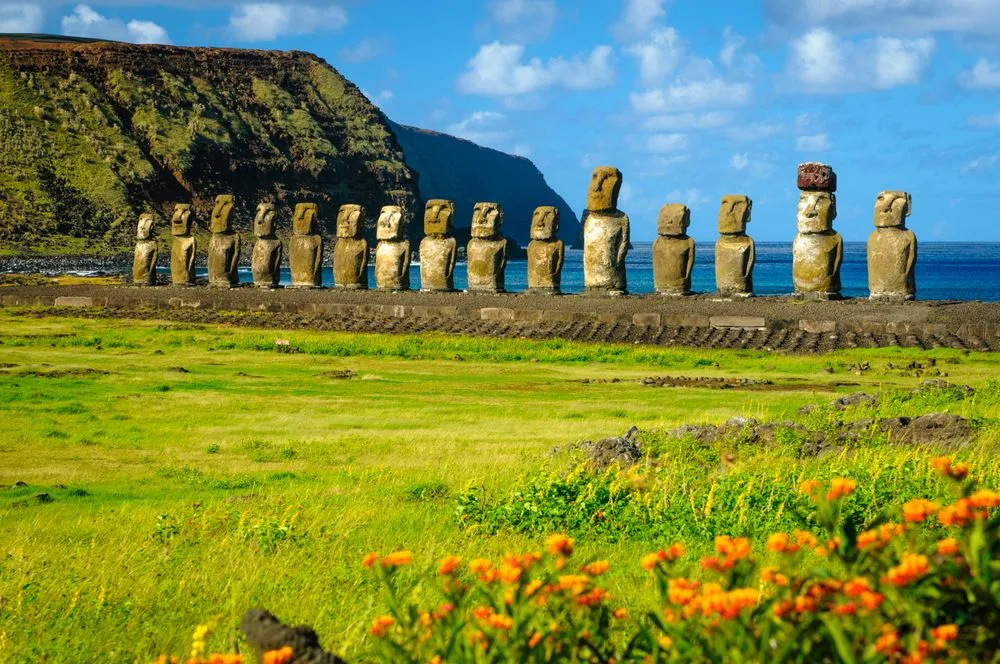
Easter Island, known in the island’s native language as Rapa Nui, is one of the world’s most argued-over archaeological puzzles. Rapa Nui is famous for its large stone statues that dotted the island’s hills and plains long before the first European explorers ever set foot on the island. 2000 km from the closest inhabited island, and 3500 km from the coast of Chile, this lonely island is incredibly remote. Currently, it is annexed by Chile.
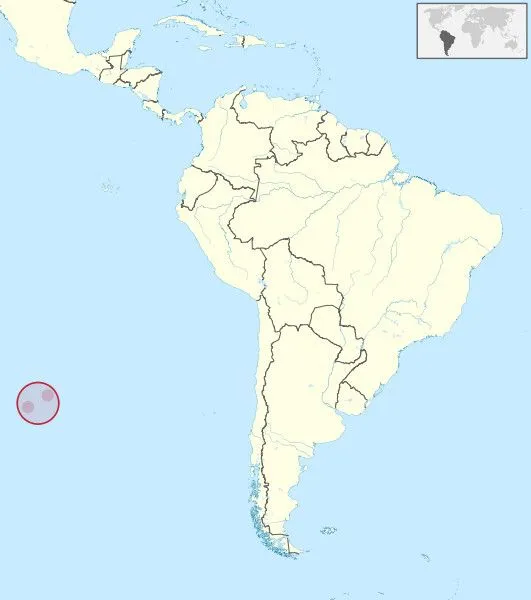
The island is roughly triangular and composed of volcanic rock. It boasts no streams or rivers, and has only three lakes, formed in volcanic craters. The entire landscape has no trees more than three meters in height, which baffled the first explorers who arrived in 1722.
The heaviest moai ever raised, nicknamed Paro, stood almost 10 meters (33 feet) tall and weighed roughly 82 tonnes (90 tons), all carved from a single block of stone. Many of the moai were mounted on stone platforms known as ahu. The ahu dot the coastline, but the stones came from a quarry in the middle of the island, so each finished statue had to be hauled after it was carved. For decades, the going assumption was that this took huge gangs and a sea of timber. Experiments with modern-day islanders later showed something far stranger: with ropes tied around the statue and teams rocking it side to side, the moai could be "walked" upright down the road, a method that needed only a few dozen people and no logs at all.
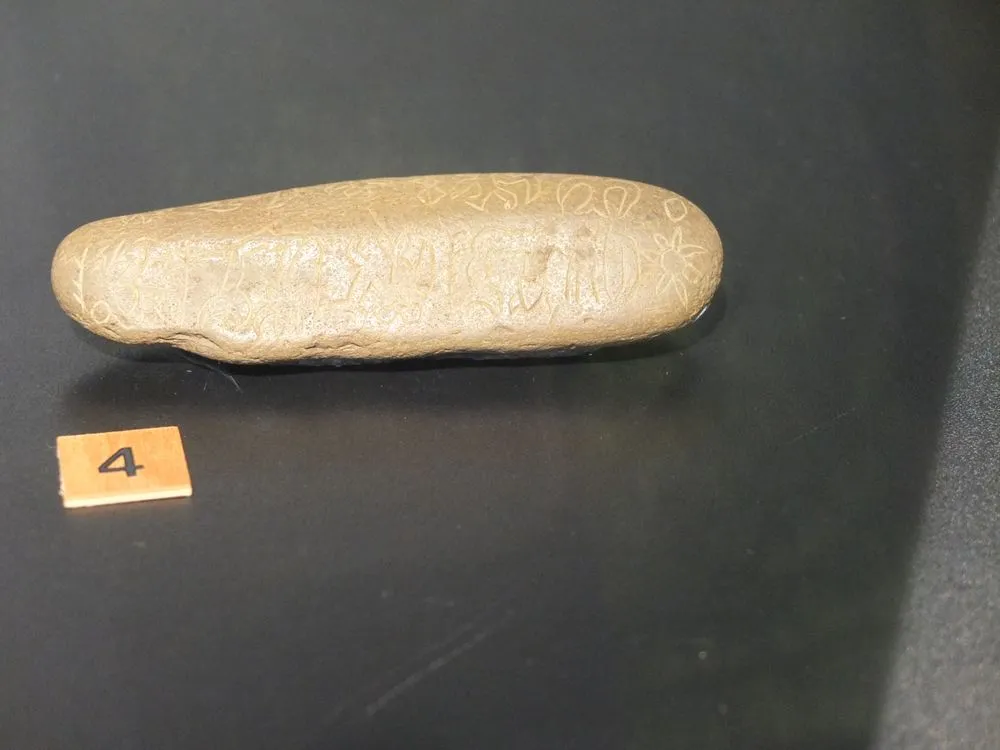
Even the walking method demanded teamwork: ropes, food, coordination, and people willing to spend weeks edging a multi-ton ancestor across the island. Nearly 1,000 moai are found around Rapa Nui, so building and raising them clearly took a well-organized society with resources to spare for religious monuments. Just how many islanders there were is hotly debated, but recent estimates put the peak population in the low thousands rather than the tens of thousands once imagined. They even developed a script of their own, known as rongorongo, which has never been deciphered.
So what happened? How did Easter Island come to lose all its trees? And how did a society that built hundreds of towering statues end up, by the 1870s, with barely a hundred Rapa Nui left alive?
The Tale Of The Fight
Two very different stories have been told about what happened to the ecology and population of Rapa Nui, and they agree on one thing: the trees disappeared. They part ways on what that meant for the people. The first is the dramatic version, the one you have probably heard.
The first humans to arrive on Rapa Nui were Polynesian settlers, who, according to the most carefully screened radiocarbon dates, landed sometime around 1150 to 1280 A.D. Oral traditions say that a spiritual leader in Old Polynesia saw himself as a bird god flying over the landscape of Rapa Nui, so they sent out an expedition to find the island the leader saw in that dream. The history of Rapa Nui after 1200 A.D is disappointing and grim, as recounted in Jared Diamond’s Collapse.
The island had a strict hierarchy. Leaders of the island’s tribes were said to be direct descendants of the mythological figure and legendary founder, Hotu Matu’a. These chiefs prompted the islanders to begin building the massive moai. In the older, log-based version of the story, the moai were pulled along on parallel tree trunks like a land sled, and the giant Rapa Nui palm, the tallest tree on the island, was felled in huge numbers to make it happen. As the moai multiplied, the palm forest dwindled.
After the trees fell, the story goes, living conditions on Rapa Nui rapidly deteriorated. Clans fell into conflict with one another, the loss of forest dried out the soil, and the land became unsuitable for farming. Overhunting wiped out most of the island’s native land birds and many seabird colonies. With no wood to build boats, the islanders could not leave, and the fish stocks around the coast were soon depleted. Desperate and starving, the dramatic version claims, the survivors turned to cannibalism, and the population crashed from an imagined high of perhaps 30,000 to barely 1,500. It is a gripping tale, and it is almost certainly wrong. The hard evidence for mass cannibalism never materialized, the obsidian mata’a long read as spear points turned out to be everyday cutting tools, and a 2024 ancient-DNA study found no sign of any population crash before Europeans arrived.
The Tale Of Love
The second tale describes the same vanished forest, but a very different people, and it is the one the evidence now favors. Yes, some trees were cut to build the moai, but the bigger culprit was something the settlers brought with them by accident. This explanation argues that Polynesian rats feasted on palm seeds and saplings, quietly preventing the forest from ever growing back.
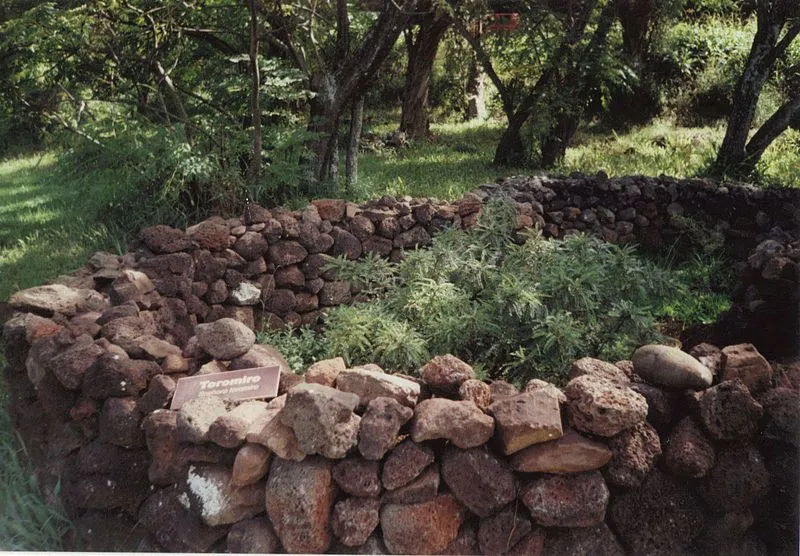
Faced with a treeless island, the Rapa Nui adapted rather than imploded. They built ingenious rock gardens, blanketing their fields with broken stone. The rocks sheltered the soil, slowly released minerals, and trapped moisture, coaxing crops out of poor volcanic ground. In this version the population stayed small, probably never more than a few thousand, and it was resilient rather than doomed. A 2024 study that sequenced the genomes of 15 ancient Rapa Nui individuals backs this picture: it found steady population growth from settlement right up to European contact, with no sign of the catastrophic crash the “collapse” story requires.
Both stories agree on what came next, and it is grim. European contact, not self-inflicted ecocide, is what nearly ended the Rapa Nui. Outsiders brought epidemic disease, and in 1862 and 1863 Peruvian slave raiders abducted around 1,500 islanders, roughly a third of the population, including chiefs and the elders who held the island’s history in memory. The handful who were repatriated carried smallpox home with them. Through this same period the islanders themselves toppled their moai; the last standing statues were reported in 1838, and by 1868 none were left upright. By the time Chile took a census in 1877, just 111 Rapa Nui remained, and every Indigenous islander alive today descends from that tiny group of survivors.
Why Is The Real History Of The Island Still Shrouded In Mystery?
Anthropology and history are, at heart, careful detective work, and Rapa Nui’s past has been pieced together painstakingly over centuries of research. For a long time one key witness was missing: the people themselves. Before their oral histories could be fully recorded and the rongorongo script deciphered, the island’s population suffered devastating blow after devastating blow, taking much of that living memory with it.
Imagine having only snapshots of history, one every hundred years, and trying to work out from the photographs alone what happened in between. Researchers piece the story together from exactly these kinds of clues: soil cores whose layered sediments record what grew when, fossilized palm seeds gnawed by rats, and the sheer scale of the moai, which hints at how many hands it took to raise them. Each line of evidence fills a small gap in the picture.
The newest snapshot comes from the islanders themselves. By reading DNA from ancient Rapa Nui remains, geneticists have shown a population that grew steadily rather than one that destroyed itself, and they even found Native American ancestry that points to Pacific crossings centuries before Columbus. The lesson of Easter Island, then, is shifting. For a long time it was told as a parable of a people who wrecked their own home. The better-evidenced story is one of resilience on a tiny, fragile island, and of how much damage outside contact can do in a single generation.
References (click to expand)
- Moreno-Mayar, J. V., et al. (2024). Ancient Rapanui genomes reveal resilience and pre-European contact with the Americas. Nature.
- Diamond, J. (2007, September 21). Easter Island Revisited. Science. American Association for the Advancement of Science (AAAS).
- Hunt, T. (2006). Rethinking the Fall of Easter Island. American Scientist. Sigma Xi.
- Hunt, T. L., & Lipo, C. P. (2006, March 17). Late Colonization of Easter Island. Science. American Association for the Advancement of Science (AAAS).
- Rainbird, P. (2002, January). A message for our future? The Rapa Nui (Easter Island) ecodisaster and Pacific island environments. World Archaeology. Informa UK Limited.
- Rull, V. (2019, October 10). The deforestation of Easter Island. Biological Reviews. Wiley.
- Rethinking Easter Island's Historic 'Collapse'. Scientific American.
- Easter Island's Ancient Population Never Faced Ecological Collapse, Suggests Another Study. Smithsonian Magazine.