Table of Contents (click to expand)
The poison pill strategy, formally a shareholder rights plan, defends a company against a hostile takeover. Once an acquirer buys past a set threshold (often 10-20% of shares), every other shareholder gets the right to buy new stock at a steep discount. That flood of cheap shares dilutes the acquirer's stake, making the takeover far more expensive.
Wars are as much a thing of corporate board rooms as they are of battlefields. And some the most spectacular corporate wars do not involve guns, grenades or the wasteful loss of resource. They are steeped in strategy and mind games, while (almost) never spilling a drop of blood.
What options does a company have to ward off hostile attempts, despite being the weaker side? Is figurative self-harm a way out of a takeover? What is the poison pill strategy?
Let’s break it down.
A Crash Course In Share Markets
The share market relies heavily on demand-supply economics. An entity whose supply exceeds demand will sell for cheap.
Conversely, something that is not readily available, but in high demand, will always command a premium. When an entrepreneur is looking to raise money for his business, he has a few choices.

Private Funding
The first is a bank loan. However, loans must be repaid, along with interest, which is the opportunity cost incurred by the banker. Another option is to take money from venture capitalists; a fancy name for rich people exchanging their money for prospective profits. The money is exchanged against part ownership of the company in bits and pieces, called shares or equity. The cumulative of these shares, called stake, is expressed as a percentage of total ownership.
Public Funding
When the mode of raising funds moves from a less concentrated pool of lenders to a wider audience, the company is said to be publicly traded. The salient feature of this form of raising funds is that people lend money based on their capacity. The money is raised from the sheer volume of shares sold to a wider audience, rather than a big stake sold to a smaller group of interested individuals. A company may either sell some or all of its shares to be traded as a public company.

Since shareholders are technically partial owners, they are entitled to influencing decisions that are made by the company. However, this is not practical in a publicly traded company. Thus, the cumulative interest of all shareholders is represented and safeguarded by a group of individuals, also called the board.
What Is A Hostile Takeover?
A hostile takeover happens when a single individual/entity buys a significant chunk of the shares against the management’s wishes. However, there is little they can do to avoid this, as the shares would have been bought legally from the public market where they are traded. Is there a way out of such a mess?
Enter Shareholder’s rights plan, more commonly known as the Poison Pill strategy.
Poison Pill Strategy

The poison pill strategy is not new. However, it recently shot to fame after Elon Musk (CEO, Tesla & SpaceX) acquired a huge amount of shares of the microblogging platform Twitter, later offering to buy it outright, against the board’s wishes.
The shareholder’s rights plan, or the poison pill strategy, is a clause built into the organization’s charter, deterring hostile takeovers by diluting the acquirer’s percentage stake in the company. There is a threshold value of the percentage of shares owned by a single person. When that threshold value is crossed, the shareholder’s rights plan, or the poison pill, as we know it, gets invoked.
How Does It Work?
To do this, the target organization, in this case Twitter, gives its existing shareholders the right to buy newly issued shares at a steep discount to their current market value. These are fresh shares created for the occasion, which is why every other holder's slice of the company grows while the acquirer's does not.
However, this offer is only available to shareholders other than the acquirer (in this case, Elon Musk). The rights kick in only once the acquirer crosses a preset ownership threshold. Twitter's plan, adopted by its board on April 15, 2022, set that trigger at 15% of outstanding stock; Musk owned roughly 9% at the time, and each right let other shareholders buy stock worth twice the exercise price they paid.
This has a few effects. The foremost is the dilution of the percentage stake of the target company held by the acquirer. This happens because of the increase in the number of shares being traded in the open market, without any increase in the acquirer’s stake.
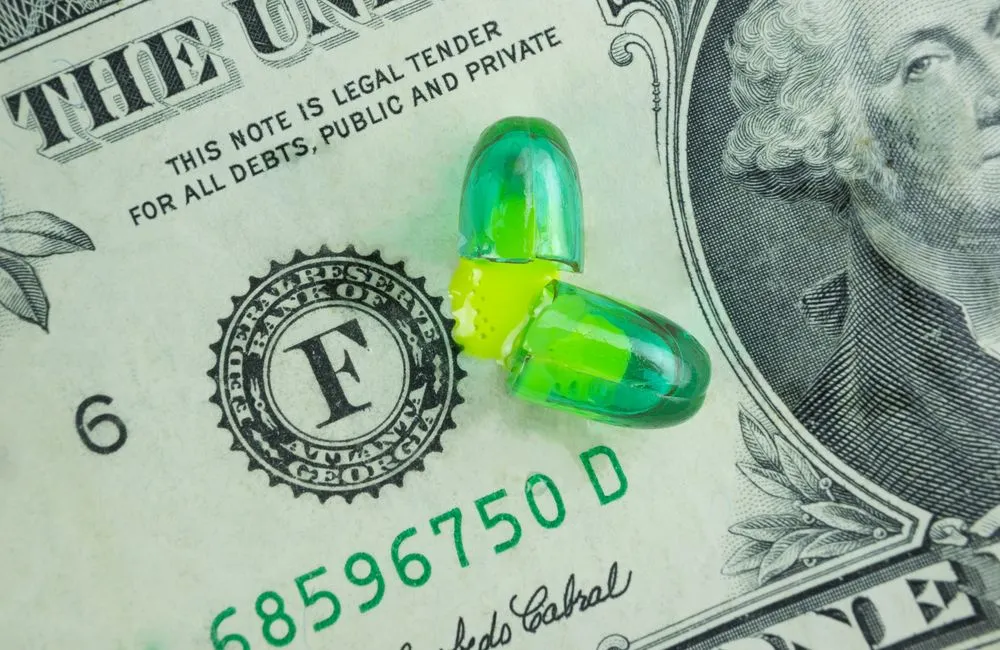
At the same time, flooding the market with discounted stock waters down the value of everyone's existing shares, the figurative self-harm that gives the strategy its name. This version is known as the “flip-in” poison pill, the most common type, wherein the organization makes itself more expensive and unappealing for the acquirer to swallow.
There exists another strategy, known as the “flip over” poison pill. This allows the shareholders of the target company to acquire a heavily discounted stake in the acquirer’s company. This causes value dilution in the acquirer’s firm, making it less conducive for them to complete their takeover bid.
What Options Does The Acquirer Have?
Triggering the poison pill is not the ultimate solution to a hostile takeover – it is merely a delay mechanism. It gives the board more time to think about the future of the company, and forces the acquirer to generate a more lucrative offer. Depending on the acquirer’s inclinations, he may choose to walk away from the deal, or make a more profitable offer to the board. At the same time, the board can either decide to reach common ground with the acquirer, or change their governance strategy.

Another, more unpleasant way of dealing with the poison pill is bypassing any negotiations with the board, and appealing directly to the open market shareholders. Known as a tender offer, the acquirer appeals via mass media, such as newspapers, to these stakeholders to relinquish their shares in exchange for a premium over the market rate. But why would shareholders want to sell their holdings to the acquirer?
Well, share markets are governed by various sentiments, not just profit. Many shareholders would be willing to exit their positions because they’re not happy with the way the company is being managed. A tender offer, though not all that frequent, is a profitable way to exit one’s risky position in the company.
What Happens In Friendly Takeovers?

The poison pill is a policy built into any organization’s charter and is triggered when a given threshold is crossed. However, what if it is desirable to get taken over? In such cases, the decision of invoking the shareholder’s rights plan is put to vote with the members of the board.
If it passes, the poison pill ceases to be applicable, or gets “rescinded”, in managerial parlance.
Ending Note
So how did the most famous poison pill of recent times play out? In the end, the deterrent did exactly what a poison pill is meant to do: it bought the board time and forced a richer offer. After months of public sparring (and at one point Musk trying to walk away), the two sides closed the deal on October 27, 2022. Mr. Musk acquired Twitter for roughly USD 44 billion, at USD 54.20 per share, a healthy premium over where the stock sat before he started buying in. He later rebranded the platform as “X” in July 2023. The takeaway: a poison pill rarely stops a determined buyer outright, but it can make them pay handsomely for the privilege.
References (click to expand)
- Poison Pill - Wex Legal Dictionary. Legal Information Institute, Cornell Law School
- Twitter Board Adopts Limited Duration Shareholder Rights Plan - Form 8-K. U.S. Securities and Exchange Commission (EDGAR)
- Poison Pill: A Shareholder Rights Plan to Prevent Hostile Takeovers. Corporate Finance Institute