Table of Contents (click to expand)
A lactate test measures an athlete's fitness by checking how much lactate builds up in the blood during exercise. A small blood sample is taken from the fingertip or earlobe and read with a handheld meter. Resting blood lactate is normally under 2 millimoles per liter (mmol/L), about 18 mg/dL. The higher it climbs during a workout, the harder the body is working anaerobically.
It’s nearly football season!
I, being a Liverpool fan, was pumped to see our center-backs out on the pitch, especially after the season where almost all of them were injured.
I was tracking their pre-season progress when I noticed that many of them were photographed undergoing a test to check their fitness levels. This test was done for all the first-team players after coming back from their break.
So, what is this test?
The lactate test.
What Is Lactate?
When we exercise, glucose is broken down to release ATP molecules, the energy currency our muscles run on. The first stage, glycolysis, happens without oxygen and splits glucose into pyruvate. When plenty of oxygen is around, that pyruvate is fed into our cells’ mitochondria and burned all the way to carbon dioxide and water, releasing a large batch of ATP. We know this oxygen-using pathway as aerobic respiration.
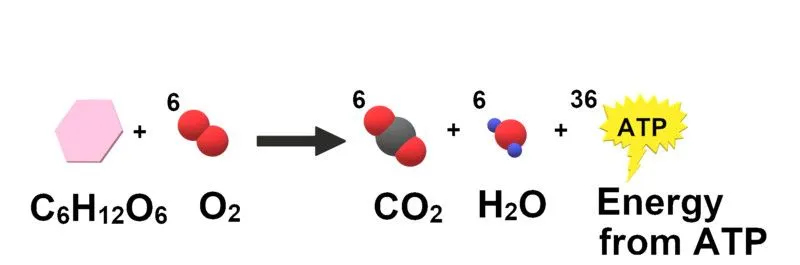
The products of that first glycolysis step are pyruvate, H+ ions and a little ATP.
Oxygen is a must, which is why our breaths get heavier when we exercise and work our muscles. However, after a point, our body is unable to meet the required oxygen levels for aerobic respiration and our cells switch to anaerobic respiration (respiration without oxygen).
The main product of this anaerobic step is lactate, the form lactic acid takes at the pH inside our body; that’s exactly what the lactate test measures.
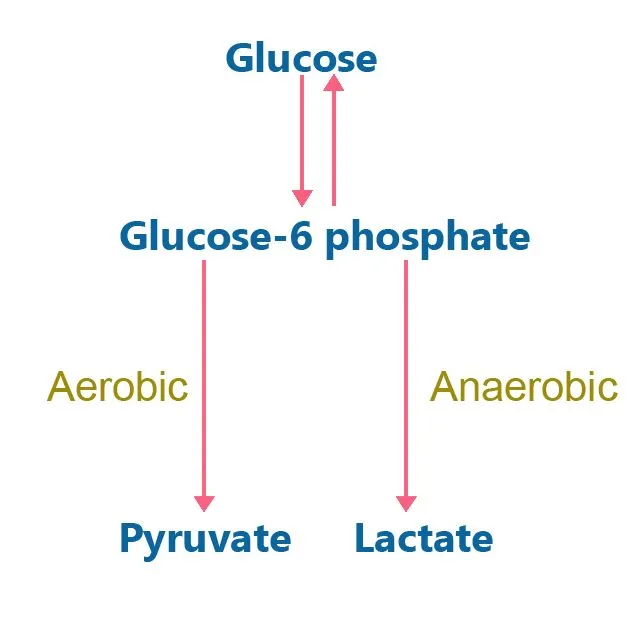
As our muscles continue to burn while we work out and our anaerobic respiration mode is switched on, lactate will continue to build up in the muscles. If this continues, the lactate builds up in the muscles and eventually leaks out into the bloodstream.
So, if an athlete is incredibly fit and their lungs are strong, their body will be able to respire aerobically for longer, delaying the switch to anaerobic respiration. In summary, the longer it takes for lactate to build up in the body, the fitter you are!
The lactate test is used for diagnostic purposes, as well as to see how fit a person is. Therefore, many sports clubs, such as Liverpool, use the lactate test data to plan training drills for their players.
Using this data, an athlete’s threshold can be narrowly determined. Athletes train daily, so it’s very important that they not over-exert themselves, as that could lead to injuries, some of which can be career-ending.

The lactate test helps in understanding an athlete’s physical state, so the club’s medical staff know when to rest them and at what intensity to keep the drills.
How Is The Lactate Test Done?
The athlete will undergo a set of drills with mixed intensity and duration, and after a particular drill, a small blood sample will be taken from either the fingertip or earlobe.
The lactate levels are then measured with the help of a biosensor. At rest, the level should be under 2 millimoles per liter (mmol/L), about 18 mg/dL. That’s the equivalent of a pinch of sugar in half a cup of tea.
After an intense workout, lactate can climb past 20 mmol/L (around 180 mg/dL). That’s a lot of sugar in one cup! For a long time lactate itself was blamed for the burning, heavy-legged feeling of fatigue, but exercise scientists now treat the rising lactate level as a marker of how hard the muscles are working anaerobically rather than the direct cause of tiredness.
What To Do With The Lactate Test Data?
This is sort of a trial-and-error thing. Athletes are given different training schedules, with a lactate test being done after each one. The lactate levels are then compared by the medical staff. Accordingly, a training program that was intense enough to build the athlete’s fitness, but wasn’t intense enough to tire their muscles, is selected.
The key thing to look for in a lactate test is the exercise intensity at which blood lactate starts to climb sharply instead of staying flat. That tipping point is the athlete’s lactate threshold. Coaches often also note when lactate passes a fixed reference of 4 mmol/L, a point called the Onset of Blood Lactate Accumulation (OBLA).
The intensity at which a person hits their threshold isn’t fixed, as it all depends on their fitness and physiology.
This way, each athlete gets their own bar set for them that they can try to reach with a minimum of injury risk.

This is very important for big sports clubs, as their players are their biggest assets. The entire football world saw what happened to Liverpool after they lost Van Dijk for the season.
Imagine what would happen to the sports industry if too many players got injured in training because it was too intense? Sports would lose their entertainment value!
Where Does This Lactate Go?
Our body works just as well to remove the excess lactate from our body as it does to produce it. Around 60% of the excess lactate is cleared by the liver, 30% by the kidneys and the remaining is taken care of by our muscles.
Inside the liver, excess lactate is either broken down to carbon dioxide and water or recycled back into glucose for energy (the Cori cycle). These recovery processes burn through oxygen, which is why we don’t stop panting the moment a long run ends.
That heavy breathing helps the body catch up on oxygen, an effect long described as repaying an oxygen debt. Physiologists now prefer the term excess post-exercise oxygen consumption (EPOC), since clearing lactate is only one of several reasons our metabolism stays elevated after exercise.
This part is quite important, because having high lactate levels is not good for the body. In fact, persistently high blood lactate is linked to a poorer prognosis in conditions such as acute heart failure.
However, to my lazier readers, this isn’t a valid argument to avoid exercising. It’s only a problem if your body can’t clear the excess lactate well enough in time.
Conclusion
Training coupled with lactate testing is popular amongst athletes and sports clubs. It helps to design training procedures to boost endurance and stamina. Usually, clubs do the lactate test for their players after a break, so they can more carefully bring them back to full fitness without exerting them too strenuously.
These days, clubs are trying to use fancy non-invasive methods like near-infrared transmission spectroscopy to measure blood lactate levels. This is just to avoid poking the players over and over with needles.
This technology is still new and needs optimization, but it’s based on light absorbance. It works similar to a temperature gun, where you can simply point it at a person’s body and it will tell you the blood lactate levels. Unfortunately, it isn’t very accurate at the moment.
The lactate test isn’t only restricted to athletes. You can also try it for yourself if you want to improve your workout routine, but do remember to consult your doctor and find a suitable lab that can perform the test properly!
References (click to expand)
- Lafrance, D. (2003, July 4). Measurement of lactate in whole human blood with near-infrared transmission spectroscopy. Talanta. Elsevier BV.
- Lee, S. M., & An, W. S. (2016, July). New clinical criteria for septic shock: serum lactate level as new emerging vital sign. Journal of Thoracic Disease. AME Publishing Company.
- Lactate Profile | UC Davis Sports Medicine. UC Davis Medical Center
- Wacharasint, P., Nakada, T.-. aki ., Boyd, J. H., Russell, J. A., & Walley, K. R. (2012, July). Normal-Range Blood Lactate Concentration in Septic Shock Is Prognostic and Predictive. Shock. Ovid Technologies (Wolters Kluwer Health).
- Goodwin, M. L., Harris, J. E., Hernández, A., & Gladden, L. B. (2007, July). Blood Lactate Measurements and Analysis during Exercise: A Guide for Clinicians. Journal of Diabetes Science and Technology. SAGE Publications.
- Budidha, K., Mamouei, M., Baishya, N., Qassem, M., Vadgama, P., & Kyriacou, P. A. (2020, September 21). Identification and Quantitative Determination of Lactate Using Optical Spectroscopy—Towards a Noninvasive Tool for Early Recognition of Sepsis. Sensors. MDPI AG.
- Zymliński, R., et al. (2018). Increased blood lactate is prevalent and identifies poor prognosis in patients with acute heart failure without overt peripheral hypoperfusion. European Journal of Heart Failure.