Table of Contents (click to expand)
The difference between A1 and A2 milk is one amino acid in the milk protein beta casein: A1 has histidine at position 67, A2 has proline. Digesting A1 releases a peptide called BCM-7. A2 milk is marketed as easier to digest, but the evidence that it is actually healthier is mixed and far from settled.
A naturally white and creamy popular drink, milk is a common choice of beverage in all age groups, from young to old. Some like it plain, others add a little something to it like coffee, or cocoa, while some prefer it in various forms like curds, cheese, cottage cheese… or perhaps you don’t like it at all!
Thanks to capitalism, various kinds of milk are actively marketed to us on a daily basis. We hear of how good cow’s milk is for kids, how buffalo milk is rich and creamy, goat milk is healthy, camel milk is tolerated by those with sensitive guts and so on.
There are variations of milk, like double cream, full cream, skimmed, two percent, low fat and even no-fat. Then there are the plant-based “milks” like rice milk, oat milk, coconut milk, almond milk and soya milk. Not to mention, milk also comes in multiple flavors!
Growing up, there isn’t anyone who hasn’t been told at some point that milk will make them tall and strong. We have all heard many times how rich it is in protein and calcium.
However, it is a gargantuan task to organize all these kinds of milk according to their health benefits, in some attempt to find the best kind for ourselves. One factor that can considerably shorten this task is to look at whether it is A1 or A2 milk.
What Is A1 And A2 Cow Milk?
Natural raw cow milk is 85% water and lactose (milk sugar), while fat, protein and minerals make up the remaining 15%. Of the total protein present, around 30% of it is a primary type of protein, called beta casein.
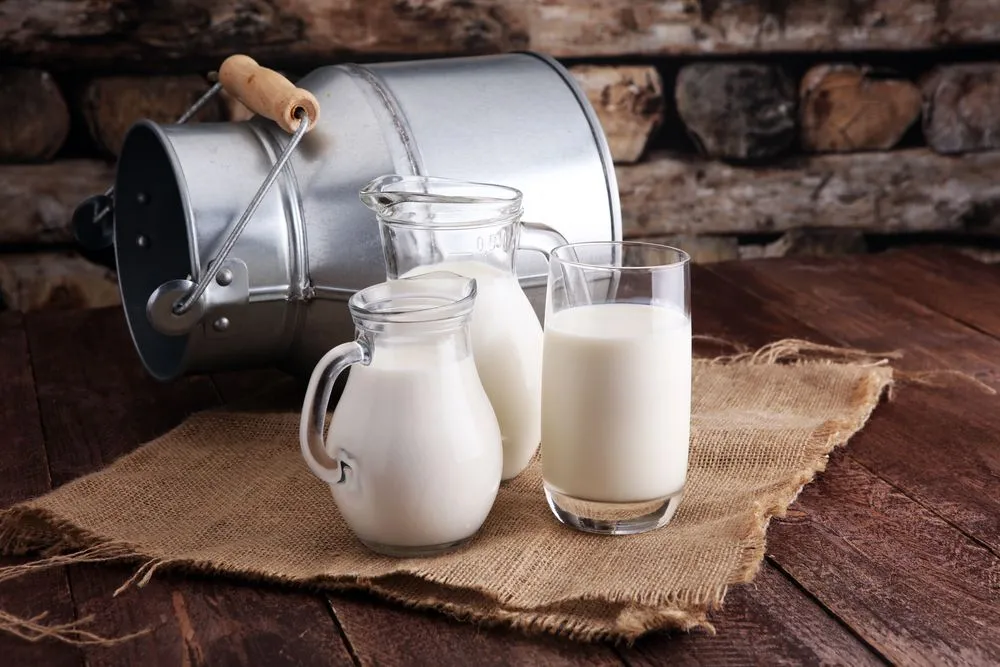
This protein exists in two forms: A1 beta casein or A2 beta casein. Presently, the debate goes on as to which one is healthier for humans.
Between these two kinds of beta casein proteins, there is one minor difference: their composition. Amino acids are the building blocks of all proteins and just one amino acid differs between A1 and A2 beta casein. The 67th amino acid in the structure of A1 beta casein protein is histidine, whereas the amino acid is proline in A2 milk’s beta casein protein.
This change in the 67th amino acid of milk protein, although it sounds small, changes how the protein is broken down in the gut. The proline in A2 beta casein sits right next to the spot where digestive enzymes would otherwise snip the chain, which makes it harder to release a fragment called BCM-7. With A1 beta casein and its histidine, that fragment comes free much more readily.
You see, when the A1 form of beta casein is broken down in the gut, something called beta-casomorphin-7 (BCM-7) is produced; as far as we can tell, the body doesn’t always get along with BCM-7. Some people report gastric disturbances of various intensities after consuming it.
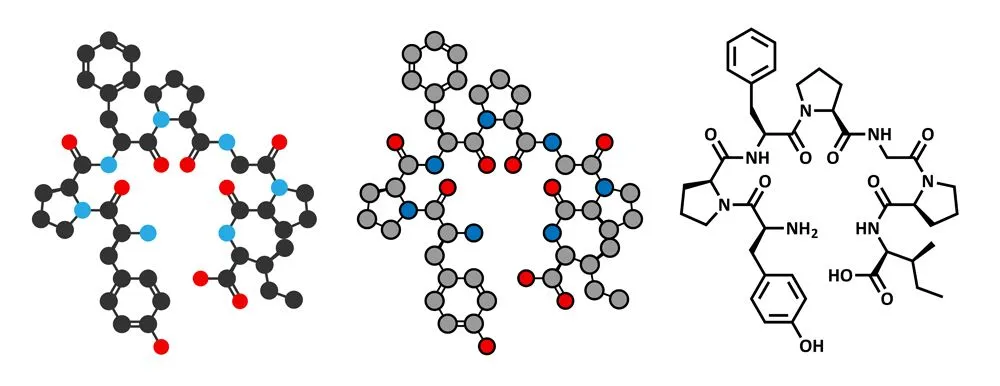
Over the years, early epidemiological studies tried to pin a lot on BCM-7, linking populations that drank more A1 milk to higher rates of Type 1 diabetes, coronary heart disease, and even autism and schizophrenia. It is important to be clear about how shaky that evidence is. These were correlations, not proof of cause, and a 2009 review by the European Food Safety Authority (EFSA) concluded that a cause-and-effect relationship between BCM-7 and any of these non-communicable diseases could not be established. So while BCM-7 is real and biologically active, the dramatic disease claims you sometimes see attached to A1 milk are not supported by solid evidence.
What we do know is that BCM-7 is an opioid-like peptide that can interact with receptors in the gut. In animal and laboratory studies, this has been linked to slower gut transit and low-level inflammation, which may explain the bloating and discomfort some people report after drinking A1 milk. It is worth stressing that this is a separate issue from true lactose intolerance, which is caused by the milk sugar lactose, not by casein at all.
When A2 milk is digested, very little BCM-7 is released, so it does not produce the same peptide. That is the logic behind the claim that A2 milk sits more easily with sensitive guts, though, as we will see, the human evidence for it is thinner than the marketing suggests.
One study found that people who consumed the A2 type of cow milk suffered far less bloating, gastric disturbances and stomach pain than those who consumed A1 milk.
If The Milk Is Different, Are The Cows Different Too?
Yes, A1 and A2 milk is sourced from different breeds of cows. It is the difference in the genetic code of the cow on its 6th chromosome that causes the difference in the beta casein structure of the milk it produces. Genes can have various alternative forms, known as alleles; in this case, the alleles code for the A1 and A2 type proteins.
For most of history, scientists believe that cows produced only A2 milk, but somewhere between 5,000 and 10,000 years ago, as cattle were bred and spread north into Europe, a single mutation in the beta casein gene swapped that proline for histidine and gave rise to the A1 allele.
These two alleles are co-dominant, which means that they are equally expressed. There are three possible outcomes in this case: a cow with the A1A1 genotype will give A1 milk, a cow with the A2A2 genotype will give A2 milk, and a cow with the A1A2 genotype will give milk that has equal amounts of the A1 and A2 beta casein proteins.
Purebred Asian and African cows have only the A2 allele and give pure A2 milk.

Usually, it is European breeds of cows like Holstein Friesian cows, Jersey cows and Scottish Ayrshire cows that have the A1 allele in them. These cows can produce pure A1 milk or A1A2 milk.

Friesian cows carry the A1 and A2 allele at about equal levels, whereas Jersey cows lean more toward A2, carrying the A1 allele at roughly 35% and the A2 allele at about 65%. Exceptionally, Scottish Ayrshire cows actually have greater percentages (>50%) of carrying the A1 allele.
Intolerance To Cheese
It is commonly believed that lactose-intolerant people can’t have cheese, yogurt or butter, even though aged cheeses and many fermented dairy products contain only nominal amounts of lactose. Interestingly, some people who handle lactose just fine still report discomfort after eating these foods, which suggests that, at least for them, lactose is not the whole story.
Scientists think the likely culprit here is BCM-7. As pointed out earlier, this protein is known to disagree with the human gut.
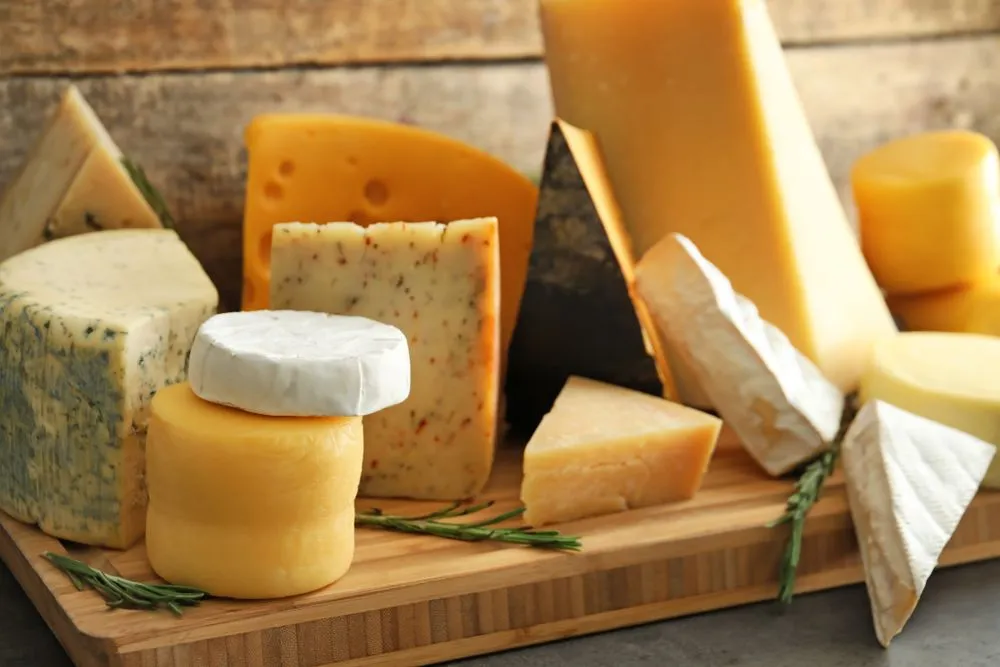
In the cheese manufacturing process, most of the lactose is fermented to form lactic acid, so there is barely any lactose in fresh cheeses like Brie, Camembert, Cheddar, Edam, and Gouda to aggravate a lactose-intolerant gut.
So, if cheese leads to gastric disturbances in your system, it might be due to the milk proteins in it, more specifically, the A1 form of beta casein. In such instances, switching to dairy products comprised purely of A2 milk may be better for your digestive system.
Conclusion
So, is there a difference between A1 and A2 milk? Yes, a real one, but it is a chemical difference, not a verdict on your health. A1 beta casein releases BCM-7 when it is digested and A2 beta casein largely does not, and that is genuinely interesting biology.
Where the story gets oversold is the leap from “BCM-7 exists” to “A2 milk is better for you.” A handful of small human trials suggest some people with sensitive stomachs feel less bloated on A2 milk, but the larger disease claims have not held up, and regulators like EFSA have found no proven cause-and-effect link. If conventional milk has never bothered you, there is little reason, on the current evidence, to pay a premium for A2.
That has not slowed the marketing. ‘The A2 Milk Company’, a New Zealand business founded in 2000, built an entire brand around selling milk from A2A2 cows, and what was once a niche product is now sold in supermarkets across the United States, the UK, Australia and beyond. As with many wellness trends, the science is more modest than the packaging.
The honest bottom line: if A1 milk gives you grief, trying A2 (or simply lactose-free milk) is a reasonable experiment. But for most people, ordinary cow’s milk remains a perfectly good source of protein and calcium.
References (click to expand)
- EFSA (2009). Review of the potential health impact of β-casomorphins and related peptides. EFSA Scientific Report.
- Rashidinejad, A., Bremer, P., Birch, J., & Oey, I. (2017). Nutrients in Cheese and Their Effect on Health and Disease. Nutrients in Dairy and their Implications on Health and Disease. Elsevier.
- Review Article - scienceandnature.org
- Jianqin, S., Leiming, X., Lu, X., Yelland, G. W., Ni, J., & Clarke, A. J. (2015, December). Effects of milk containing only A2 beta casein versus milk containing both A1 and A2 beta casein proteins on gastrointestinal physiology, symptoms of discomfort, and cognitive behavior of people with self-reported intolerance to traditional cows’ milk. Nutrition Journal. Springer Science and Business Media LLC.
- Truswell, A. S. (2005, May 1). The A2 milk case: a critical review. European Journal of Clinical Nutrition. Springer Science and Business Media LLC.
- de Vasconcelos, M. L., et al. Difficulties in Establishing the Adverse Effects of β-Casomorphin-7 Released from β-Casein Variants (A Review). Foods (2023). NCBI PMC.
- Lactose Intolerance. StatPearls. NCBI Bookshelf.