Some airports have unusually long runways because of the challenges of taking off and landing at "hot and high" airports. High temperature and high elevation both thin the air, so wings make less lift and engines make less thrust. A longer runway gives the aircraft the extra ground roll it needs to reach a safe takeoff speed.
After our airplane touched down on the runway the other day, I had a rather unusual feeling; I felt as if the airplane was running for too long on the runway. At first, I discarded the thought, but later on, I came to know that the runway was unusually longer than regular runways!
Upon further investigation, I realized that the particular airport I took off from was ‘hot and high’. After brushing aside the literal meaning of the phrase, I stumbled upon what is probably one of the smartest tweaks that humans have made to the aviation industry.
What Is ‘Hot And High’ In The Aviation Industry?

‘Hot and high’ is a phrase often used in the aviation industry, and it’s used to refer to the condition of high ambient temperature, as well as high elevation of the airport. Such conditions impact the flight of airplanes, and hence become a serious cause of concern, as they significantly influence the safety of the airplanes flying in such regions.
Let’s break down the term ‘hot and high’. ‘Hot’ is pretty intuitive; it is representative of a high ambient temperature of the region. Since temperature is a variable physical quantity (i.e., its value changes continuously), the severity of the ‘hot and high’ condition also changes. On other hand, ‘high’ refers to the elevation of the airport in question. If it’s built on land that has more elevation than the standard terrestrial height, it’s said to be a ‘high’ airport.
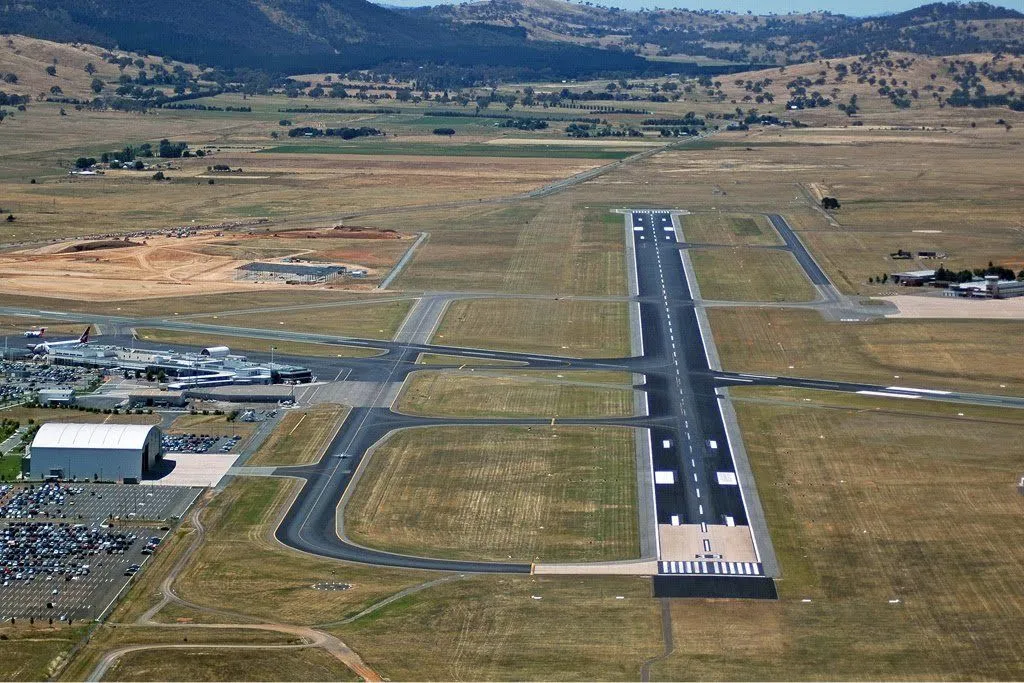
There are several prominent ‘hot and high’ airports, including Denver (Colorado, 1,655 m / 5,431 ft), Albuquerque (New Mexico, 1,632 m / 5,355 ft), Mexico City (2,230 m / 7,316 ft), Bogotá (Colombia, 2,548 m / 8,360 ft), Johannesburg (South Africa, 1,694 m / 5,558 ft) and Addis Ababa (Ethiopia, 2,334 m / 7,657 ft). The fact that ambient temperature tends to be lower at high altitudes mitigates the ‘hot and high’ effect to some extent, though a baking summer afternoon can still push the air density well below what an aircraft needs.
What’s The Challenge With A ‘Hot And High’ Airport?
Operating at an airport that has been identified as one of these ‘hot and high’ airports or has such atmospheric conditions at the time of taking off or landing, can a difficult task for the airline pilots. Why is that?
It has everything to do with air density, which is known to decrease with an increase in ambient temperature and altitude. Therefore, at an airport with such conditions, taking off becomes particularly difficult, as lower air density translates to less lift being generated by the wings or the rotors of the airplane. Not only that, lower air density also hampers the performance of aircraft engines, potentially jeopardizing the flight’s safety. Pilots capture all of this in a single number called density altitude: the altitude the air ‘feels like’ once you factor in the heat. The numbers add up quickly. As a rule of thumb the FAA uses, the takeoff roll grows by roughly 10% for every 1,000 ft (305 m) of density altitude, and a normally aspirated piston engine loses about 3.5% of its power over that same step.

Light aircraft and older helicopters often end up stalling in ‘hot and high’ conditions in a bid to maintain level flight, as their service ceilings (maximum usable altitude of an aircraft) are pretty low. There are some other grave risks involved too; sometimes, the airplane cannot climb rapidly enough to clear the surrounding terrain; things gets worse if the airport is in a mountainous region or is surrounded by mountains, buildings and other tall structures.
How Do They Tackle This Problem?
Since both the atmospheric conditions involved here, namely the hotness and elevation of a region, are artificially unalterable, you need artificially controllable alternatives that can help overcome this challenge.
The most commonly used technique at airports with such natural conditions is making particularly long (longer than usual) runways. This increases the aircraft take-off run distance, hence providing more room to build up speed before the subsequent climb into the sky. Reducing the total weight of the aircraft can also help; airlines often do this by carrying less fuel, cargo or fewer passengers out of a hot and high airport, so the plane stays within its performance limits.
Structural changes in aircraft, such as more powerful engines and bigger wings, can also help guarantee a smooth take-off or landing. Other techniques, such as additional high-lift devices, the injection of distilled water, and assisted take-offs can also compensate for ‘hot and high’ conditions.

So, next time your airplane is running on a runway that just never seems to end, you’ll know that the airport likely has weather conditions that are a bit out of the ordinary. In other words, it’s a good thing someone was thinking ahead!
Where Are The World’s Longest Runways?
If you want to see this principle taken to its extreme, look to the Tibetan Plateau. Qamdo Bamda Airport in Tibet sits at a dizzying 4,334 m (14,219 ft) above sea level. Its original runway stretched a staggering 5,500 m (about 18,000 ft, or 3.4 miles), which made it the longest civilian runway in the world from 1994 until 2017. At that altitude the air is so thin that aircraft need a very long ground roll just to get off the ground, so the runway had to be built to match. That original strip has since been replaced by a newer (and still enormous) runway of roughly 4,500 m (about 14,800 ft).
The nearby Daocheng Yading Airport in Sichuan, China, took the high-altitude crown in 2013 and remains the world’s highest civilian airport at 4,411 m (14,472 ft). To cope with the thin air up there, it was given a runway of 4,200 m (about 13,800 ft). For comparison, a typical sea-level airport handling the same jets often gets by with a runway in the 3,000–3,500 m (roughly 10,000–11,500 ft) range. The extra kilometer or so of tarmac at these airports is the price of admission for the thin mountain air.