Table of Contents (click to expand)
Pineapples have an enzyme called bromelain that can break down proteins. That enzyme can digest the cells in your mouth.
Now, don’t worry… this question wasn’t referring to a sentient pineapple with a taste for humans. However, even without sentience, the pineapple can eat a little bit of you.
Just as you digest food by breaking large molecules into smaller, easy-to-absorb molecules, pineapples can break down the molecules that make your cells and bodies. In fact, every time you eat a pineapple, it eats a little bit of you.
So, what’s happening here? Why can a pineapple eat you? And if it can digest us, why do we still choose to consume it?

Bromelain, The Digestive Enzyme In Pineapples
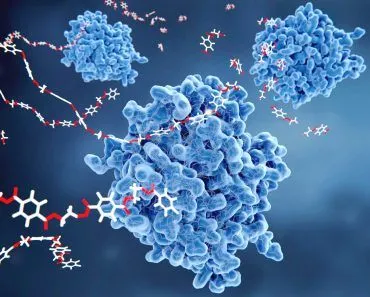
Pineapples contain a very powerful proteolytic enzyme called bromelain. However, what is a proteolytic enzyme? Simply put, a proteolytic enzyme is a molecule that can break down proteins.
An enzyme is a molecule, usually a protein, that helps reactions in the body happen faster. Bromelain makes it possible to chemically cut up proteins.
Just like beaded necklaces, which are made by joining a lot of individual beads together, proteins are made by joining many amino acids together. Just like you might cut a beaded necklace using a pair of scissors, the pineapple has bromelain scissors to break down proteins.
Pineapple has two types of bromelain, one in the stem and one in the flesh. Both versions of bromelain digest protein, but they have a slightly different structures. When proteins have different structures, their functions or ability to perform certain functions changes. In our case, stem bromelain is better at digesting proteins than the fruit bromelain.
Bromelain isn’t a single enzyme though. It is a mixture of many proteolytic enzymes, which means that it can break down proteins in many different ways, making it more potent than many other proteolytic enzymes.

What Bromelain Does To You When You Eat A Pineapple
Every time you eat a pineapple, it eats a little bit of you.
Proteins make up living things (when you exclude water and fats). They are the skeleton of your cells, the glue that holds two cells together, and the machines that run your cell. An enzyme that can break down protein will damage cells.
The stinging, tingling pain that your tongue feels when you eat a pineapple is bromelain (and the pineapple’s acid) digesting your tongue. The bromelain is physically damaging your cells.
If you eat too much pineapple in one sitting, your mouth will hurt. Your tongue might feel like you’ve scrubbed it with sandpaper. Thankfully for us, the tissue in our mouth heals faster than the rest of the body, and saliva comes equipped with our body’s very own painkillers.
This digesting was thought to be so potent that, a few years ago, some dubious people on the Internet alleged that one could get rid of their fingerprints by rubbing their fingertips on a pineapple. Some alleged that workers who cut pineapple all day had lost their fingerprints.
Logic suggested that bromelain would digest away the outermost, dermal layer of skin cells. Since the dermal layer is the reason for a fingerprint, no dermal layer would equal no fingerprint.
Removing your dermal layer of skin would hurt, and yes, it would rid you of your fingerprints, temporarily. As your skin regenerates its outermost layer of skin, your fingerprints will return. Sorry to all the wannabe spies out there!

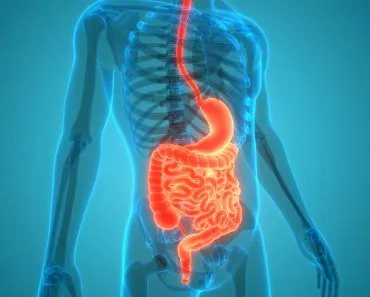
But don’t worry. Once you’ve swallowed the pineapple, the stomach’s acid and your body’s very own proteolytic enzymes will break down bromelain.
Other Fruits That Can Eat You
Pineapple isn’t the only fruit with digesting powers. Kiwifruit, another fruit that stings your tongue when you eat it, has a proteolytic enzyme called actinidin. There is also papaya, a fruit that doesn’t sting your tongue (because it isn’t as acidic as pineapple or kiwi), which contains papain. Figs also have a proteolytic enzyme, called ficin.
Interestingly, papayas don’t sting your tongue when you eat them because, unlike pineapples and kiwis, they aren’t acidic. The acid and proteolytic enzyme combine to hurt your tongue.
Uses Of Proteolytic Enzymes Like Bromelain
Bromelain and papain are used to tenderize meat. The enzymes digest the proteins in the meat. Meat, which is largely composed of muscle tissue, is rich in protein. By breaking down the proteins, you’re making the meat softer. Leave the meat in the digestive enzymes long enough and you’ll have a very tender cut of steak.
These proteolytic enzymes are also the reason you can’t make jelly (or jello, depending on where you’re from) with raw pineapples, papayas and kiwis. Jelly is normally made using gelatin, a protein that hardens when it cools in water to form jelly. Bromelain and papain will simply digest the gelatin, thereby preventing it from forming the jelly.
Why Does Pineapple Have A Proteolytic Enzyme?
Why some fruits have so much protease that they can hurt your mouth is anyone’s guess.
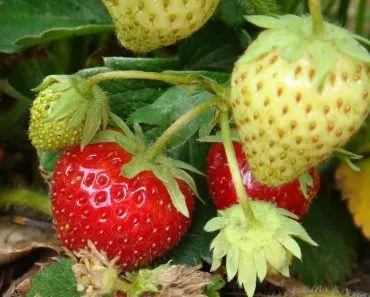
One explanation is that it might prevent animals from eating the fruit before the fruit is ripe and the seed is ready to begin its life. Once the fruit is ripe, the proteolytic enzymes won’t hurt an animal’s tongue and will be okay to eat. The proteolytic enzymes are more potent in an unripe pineapple than in a ripe one (Source).
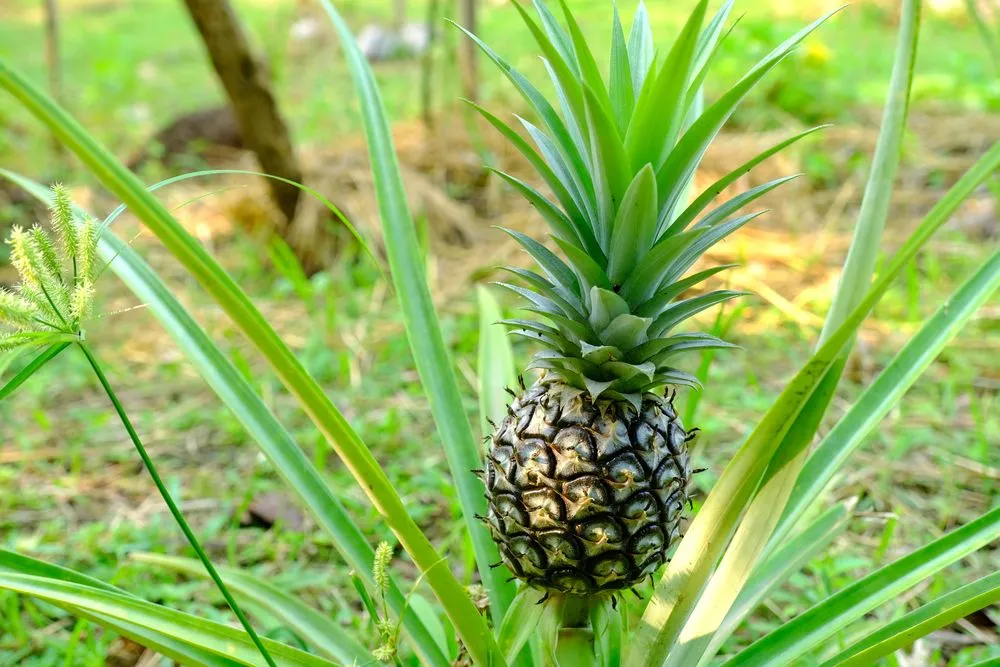
Another reason might be that the enzymes help the seed mature. Enzymes play an important role in sending messages to the cells. These messages might tell the cell when to start something, such as germination, or when to stop something, like when to stop ripening the fruit. Without these enzymes, the seed might not develop properly.
Figs have proteolytic enzymes because they need to dissolve insects. Figs pollinate through wasps, more specifically, through wasps laying their eggs in the fig, but the wasps cannot escape back out. The proteolytic enzymes dissolve the trapped wasp’s body, which is why you don’t end up eating eat any wasps inside your fig!
Does Pineapple Eat You Back?
“Pineapple is the only fruit that eats you back” is one of those lines that bounces around the Internet, and there’s a grain of truth hiding in the joke. As we saw, bromelain is a protein-cutting enzyme, and the soft lining of your mouth is made of protein. So while you’re busy chewing the pineapple, the pineapple’s bromelain is quietly nibbling at the cells of your tongue, lips and the roof of your mouth. You eat it, it eats you. Hence, “eats you back.”

This is also why your mouth can feel raw, sore or sandpapery after a big bowl of fresh pineapple. The enzyme is genuinely scraping away a thin film of cells from your mucosal lining, and the fruit’s acid stings the freshly exposed surface on top of that. The two effects together are what make pineapple bite back harder than, say, an apple. The good news is that this is almost always trivial damage that heals within hours, because the cells lining your mouth turn over faster than almost anything else in your body.
Want the flavor without the raw tongue? You don’t actually have to suffer for it. Cooking, grilling or using canned pineapple deactivates the bromelain, which is why pineapple on a pizza or in a curry never stings. A quick soak of fresh chunks in salt water blunts the enzyme too, and so does pairing the fruit with dairy, since the bromelain busies itself digesting the milk proteins in yogurt or ice cream instead of your mouth. We go into the why behind each of these tricks in the next section.
Can A Pineapple Actually Kill You?
If a fruit can digest your tongue, the obvious next worry is whether it can do something worse. “How much pineapple does it take to kill you?” is a surprisingly common question, so let’s put it to rest: as a food, fresh pineapple is not going to kill a healthy person, and there is no realistic number of pineapples that turns dinner into a danger.

Bromelain itself has very low toxicity. In animal studies, its oral lethal dose sits above 10 grams per kilogram of body weight, which is an enormous amount of pure enzyme, and dogs given high daily doses for six months showed no toxic effects. Researchers note that the human body can absorb roughly 12 grams of bromelain a day without any major side effects. A whole fresh pineapple contains only a fraction of that, so you would never reach a chemically dangerous level by snacking on the fruit.
What actually limits you is comfort, not poison. Long before you could eat a “harmful” quantity, the bromelain and acid would leave your mouth raw and your stomach unhappy. Eating a lot of fresh pineapple in one go can bring on stomach upset, diarrhea and a burning or tingling mouth, all of which tend to stop you well before any real risk. So the honest answer to “can pineapple kill you?” is no, but it can certainly make you uncomfortable.
There are two genuine exceptions worth knowing. First, some people are allergic to pineapple, and an allergic reaction (swelling of the lips, tongue or throat, hives, or trouble breathing) is a medical issue that has nothing to do with how much you eat. Second, bromelain can thin the blood slightly and may interact with blood thinners, some antibiotics and other medications, so concentrated bromelain supplements are a different question from eating the fruit. For the fruit itself, the verdict stands: it can sting, it can upset your stomach, but it cannot eat you to death.
A Final Word
There is a silver lining for all you pineapple lovers out there. If you want to avoid the sting from the fruit’s bromelain, simply cook the fruit. Enzymes change their shape when they’re heated, and an enzyme’s functioning depend on its shape. Break the enzyme’s shape with heat and the enzyme won’t work.
Alternatively, you could dunk your pineapple in salty water. Salt will similarly break the enzyme’s shape.
However, if you’re willing to unleash the inner daredevil in you, eat a pineapple raw!
References (click to expand)
- Maurer, H. R. (2001, August). Bromelain: biochemistry, pharmacology and medical use. Cellular and Molecular Life Sciences. Springer Science and Business Media LLC.
- Bromelain: An Overview - NOPR. The National Institute of Science Communication and Information Resources
- Pavan, R., et al. Properties and Therapeutic Application of Bromelain: A Review. Biotechnology Research International (2012). PMC, NCBI.
- Kansakar, U., et al. Exploring the Therapeutic Potential of Bromelain: Applications, Benefits, and Mechanisms. Nutrients (2024). PMC, NCBI.
- Bromelain - Uses, Side Effects, and More. WebMD.