Cervical ribs are extra ribs that can form in the neck region. They can cause compression of nerves and blood vessels, leading to symptoms like pain, numbness, and weakness. Treatment includes exercise and medications, with surgery being a last resort.
A while back, I began experiencing a sharp stinging pain in my shoulders, which soon began to radiate down to my fingers. I ignored it, initially, as any self-respecting science student would (stereotypical science student joke!), but eventually it started hampering my daily activities, so I finally went to an orthopedic. This brought to my knowledge a condition that I found very interesting… cervical ribs!
How Many Ribs Do Humans Have?
Before we get to the unusual extras, it helps to know the standard set. Almost everyone is born with 12 pairs of ribs, which works out to 24 ribs in total, one set curving around each side of the chest. Each pair connects at the back to one of the 12 thoracic vertebrae of the spine, building the cage that shields your heart and lungs.

Not all of those ribs are built the same way, and anatomists sort them into three groups based on how they reach the breastbone (the sternum) at the front. The first seven pairs are the true ribs: each one joins the sternum directly through its own strip of costal cartilage. Pairs 8, 9 and 10 are the false ribs; their cartilage does not run straight to the sternum but instead hooks onto the cartilage of the rib above. The last two pairs, 11 and 12, are the floating ribs. They never reach the sternum at all and simply end in the muscle of the back, which is why you can sometimes feel them move a little near the bottom of your ribcage.
Do Men And Women Have The Same Number Of Ribs?
This is one of the most stubborn myths in human biology, so let me answer it plainly: yes, men and women have the same number of ribs. The typical count is 12 pairs in everyone, regardless of sex. Men do not have one fewer rib than women, and women do not have an extra pair.

So where does the idea come from? It traces back to the biblical story of Eve being made from one of Adam's ribs, which left many people assuming that men must therefore be a rib short. The belief held for centuries until the Flemish anatomist Andreas Vesalius dissected real human bodies and, in his landmark 1543 work De humani corporis fabrica, showed that male and female skeletons carry identical numbers of ribs. Even if Adam had lost a rib, by the way, it would not have changed the count for his descendants, because surgery does not rewrite the genes that are passed on to children. The bottom line is that any difference you do see in someone's rib count comes from individual anatomical variation, not from being male or female.
Cervical Ribs
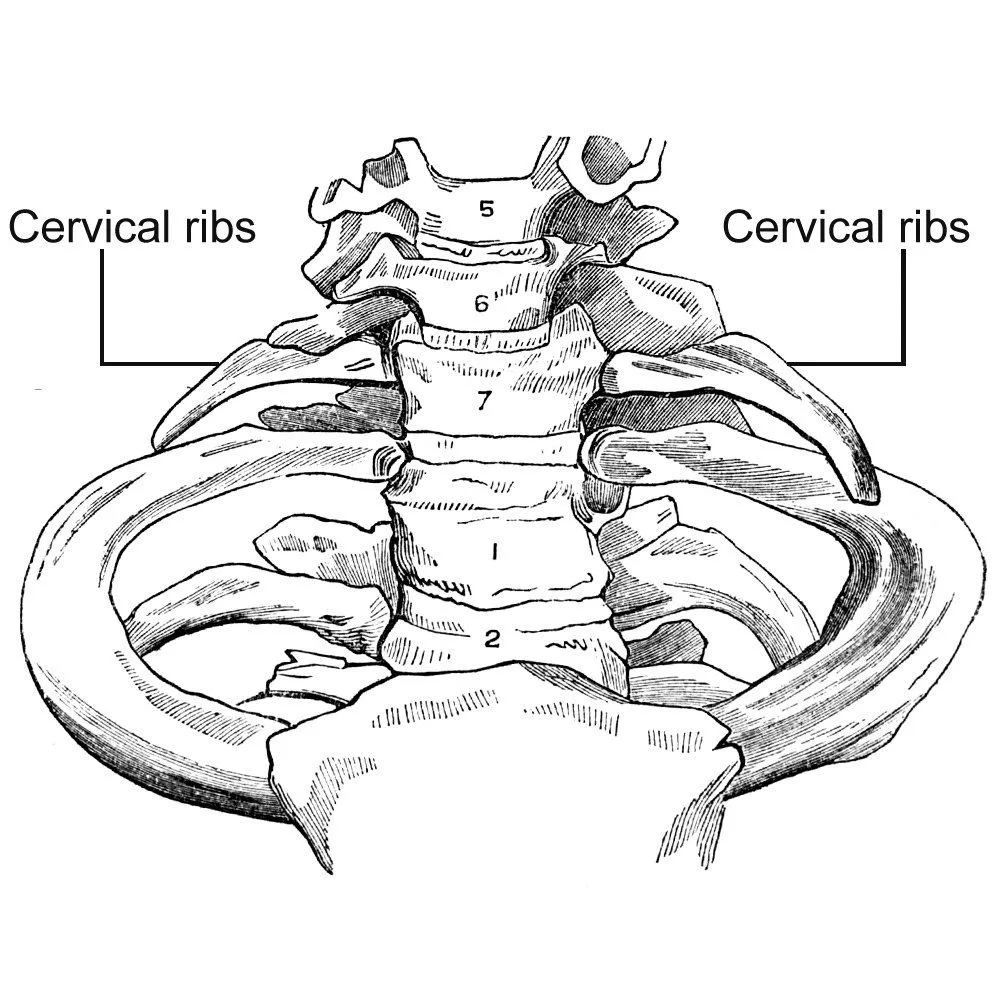
Any person well versed with the skeletal system of humans will know that our ribs belong to the thoracic region of our body, and they articulate with the thoracic vertebrae. The cervical vertebrae are the vertebrae of our neck, so how does the idea of a cervical rib make any sense?
Well, it might make you scratch your head, but it’s real. This is a congenital condition wherein a person has an extra cervical rib or a pair of them. These extra ribs originate from the seventh cervical vertebrae, called the vertebra prominens. In the early stages, this is a normal condition. However, the bony protrusion is typically re-absorbed into the vertebrae. When this doesn’t happen, however, it results in an extra bony ossification or thickened tissue fibers.
Symptoms Of Cervical Ribs
Considering how compact and well designed the human body is, it seems doubtful that an extra rib or pair of ribs wouldn’t cause some problems. However, that’s not really the case. A 2018 meta-analysis of 141 studies pooled the prevalence at roughly 1.1% in the general population (around 1 in 100 people), though population-specific estimates range from about 0.5% to over 3%. Most cases of cervical ribs are asymptomatic and are in fact discovered by accident, often as an incidental finding on a chest X-ray or CT scan.
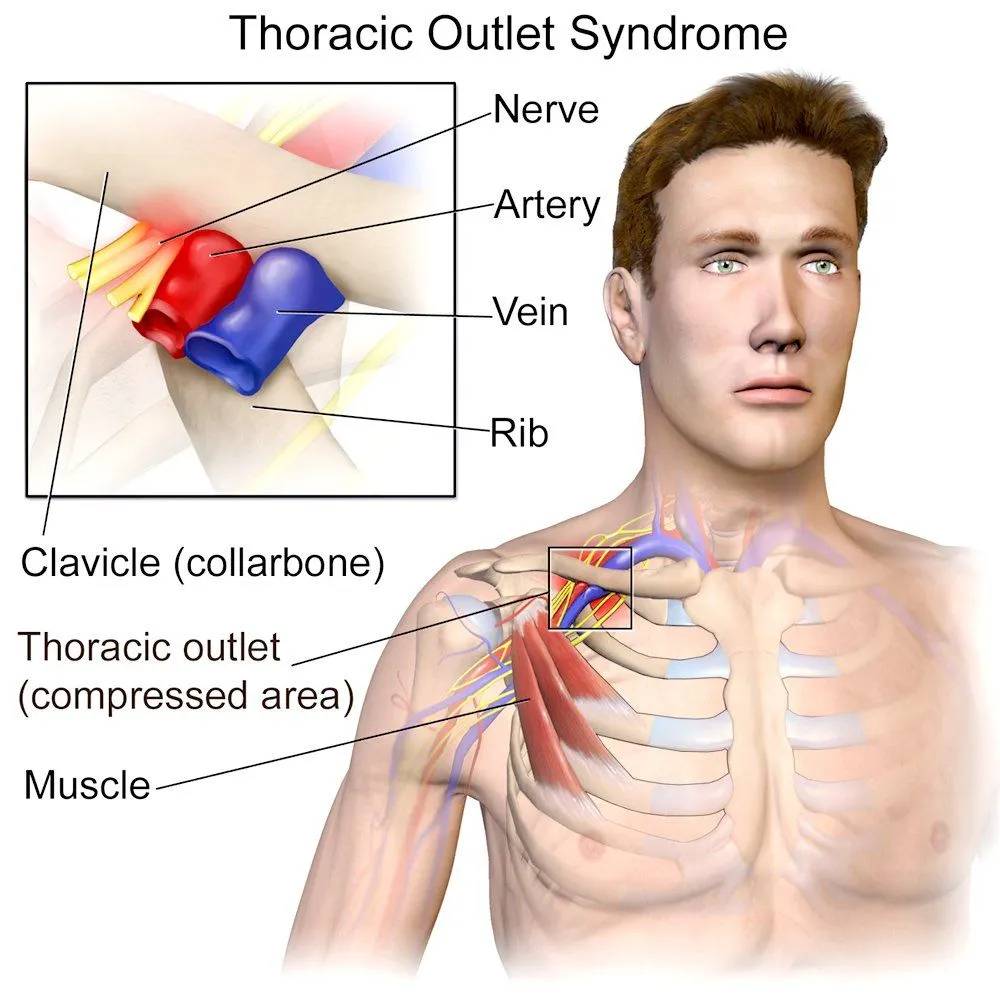
Before understanding the symptoms, lets take a look at why it might lead to any problems at all. The area where these ribs occur actually has a bunch of nerves and blood vessels that pass through it. There are two main ones – the brachial plexus and the subclavian artery. The former is a bundle of nerves supplying the arm, while the latter is the major blood vessel running into it. A cervical rib (along with its fibrous bands) can press against these structures, with the lower trunk of the brachial plexus (formed by the C8 and T1 nerve roots) being the most commonly affected. The most common condition associated with cervical ribs is thoracic outlet syndrome (TOS).
However, most symptoms don’t occur until the late teens to early twenties, and studies have suggested that women are more prone to it than men. The reason for that predominance is unknown.
Thoracic Outlet Syndrome (TOS)
While this syndrome may have many causes, let’s focus on cervical ribs for now. In TOS, the nerves, arteries and/or veins between the armpit and lower neck become compressed. This leads to various symptoms, including pain in the shoulder that travels down to the hand. This pain may not be constant. It also causes varying degrees of numbness in the fingers, like weakness, or a tingling sensation; if the blood vessels are getting compressed, it can lead to a lack of blood supply, or to the formation of blood clots; swelling can also occur, but this is quite rare.
Treatment Of Cervical Ribs
As mentioned earlier, cervical ribs are usually accidental findings. However, they may be detected because of the trouble they cause.
The muscles of the back, like the trapezius and muscles of the arm, may become weaker. Exercise helps in strengthening these muscles. Physical therapists and occupational therapists may also help to strengthen the muscles and correct posture mistakes, which can worsen the pain. If there is inflammation and a lot of pain, pain medications may be suggested by a doctor to ease the discomfort.
Very rarely, these extra ribs cause a major hindrance in a person’s daily routine that cannot be managed with exercise and medication. In such cases, surgery to remove the cervical rib (or release the surrounding fibrous bands) is the last resort.
However, one must remember that this condition is only one of many far more likely possibilities that can cause most of the above-mentioned symptoms. Therefore, it is advisable to consult a professional before coming to any conclusions with nothing but a self-diagnosis.
References (click to expand)
- Thoracic outlet syndrome (cervical rib) - NHS
- Anatomy, Thorax, Cervical Rib - StatPearls, NCBI Bookshelf
- Henry, B. M., Vikse, J., Sanna, B., Taterra, D., Gomulska, M., Pękala, P. A., … Tomaszewski, K. A. (2018, February). Cervical Rib Prevalence and its Association with Thoracic Outlet Syndrome: A Meta-Analysis of 141 Studies with Surgical Considerations. World Neurosurgery. Elsevier BV.
- Cervical rib - Wikipedia. Wikipedia
- Anatomy, Thorax, Ribs - StatPearls, NCBI Bookshelf
- Rib - Britannica
- Andreas Vesalius - the most famous Belgian you've never heard of. The British Library