No, shooting a car’s gas tank with a regular bullet won’t make it explode. Liquid gasoline doesn’t burn; only its vapor does, and only when mixed with air in a narrow flammability range (~1.4–7.6%). A standard lead bullet doesn’t carry the heat or spark to ignite that mix, as MythBusters demonstrated by pumping rounds into a Cadillac without a fireball. Incendiary or tracer rounds are a different story.
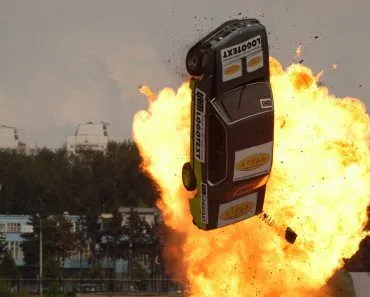
Whether you’re watching the high-octane action movies of Hollywood (James Bond franchise, I’m looking at you), or playing first-person shooter/action video games, one thing that you invariably observe (and may even enjoy) is seeing a vehicle blown to smithereens when its gas tank (oil tank) is precisely shot by a gun.
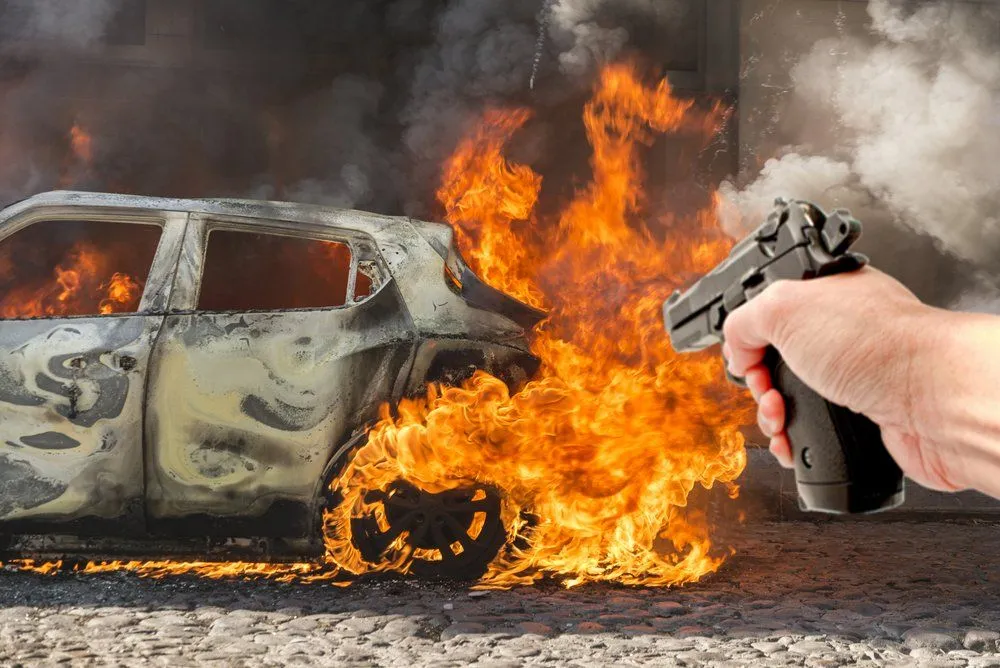
It may make for an incredible special effect, but is there any truth in that, or is it just another myth propagated by Hollywood in the minds of normal people?
Safety Of The Gas Tank
It turns out that you’re not the only person that watches movies; government authorities do too! Since road accidents may involve vehicles experiencing unusual stress upon impact, regulatory authorities enforce strict security standards to ensure that the gas tank is adequately reinforced. Therefore, if something does happen on the road, the gas tank will not be adversely impacted due to abrasive forces or heat generated by friction following an accident (however, excessive stress poses a grave threat to the gas tank).
In other words, breaching the reinforced cover of a gas tank would itself be a challenging task, let alone setting it on fire!
Why A Fire Is Unlikely
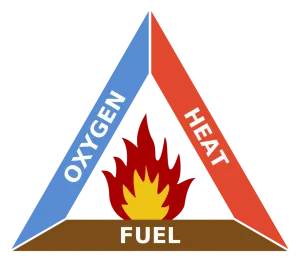
Before an explosion you need a fire, and for a fire you need three things: fuel, heat, and an oxidiser (usually oxygen from the air). Take any one away and the fire can’t sustain itself.
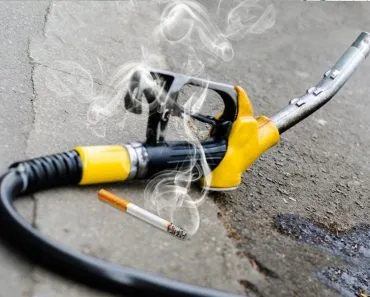
Here’s the key fact most movies ignore: liquid gasoline doesn’t actually burn, only its vapor does, and only within a narrow “flammability window” of roughly 1.4–7.6% gasoline vapor in air. A full tank is too rich (the headspace is saturated with vapor and starved of oxygen) and won’t ignite. A nearly empty tank is, paradoxically, the more dangerous one, as the headspace can drift into that explosive ratio. But even then, the bullet itself has to deliver enough heat to act as an ignition source. A standard lead-cored bullet doesn’t; it punches a hole and exits, mostly cool, then liquid fuel pours out the bottom.
The Problem Of The Bullet
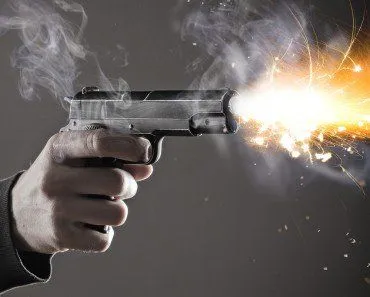
Regular bullets, i.e., the bullets that go in guns that are most commonly used and depicted in movies, are not made to ignite fires! These bullets are not powerful enough to cause an ignition and consequently set off an explosion. To prove this, the Mythbusters team unleashed an unrelenting barrage of bullets at the gas tank of a Cadillac to see whether an explosion would follow. Alas, despite how much we all hoped to see it, there was none!
If a barrage of bullets couldn’t trigger an explosion, how the heck could a single bullet from a revolver do it so easily, even if the shooter were a trained intelligence agent?
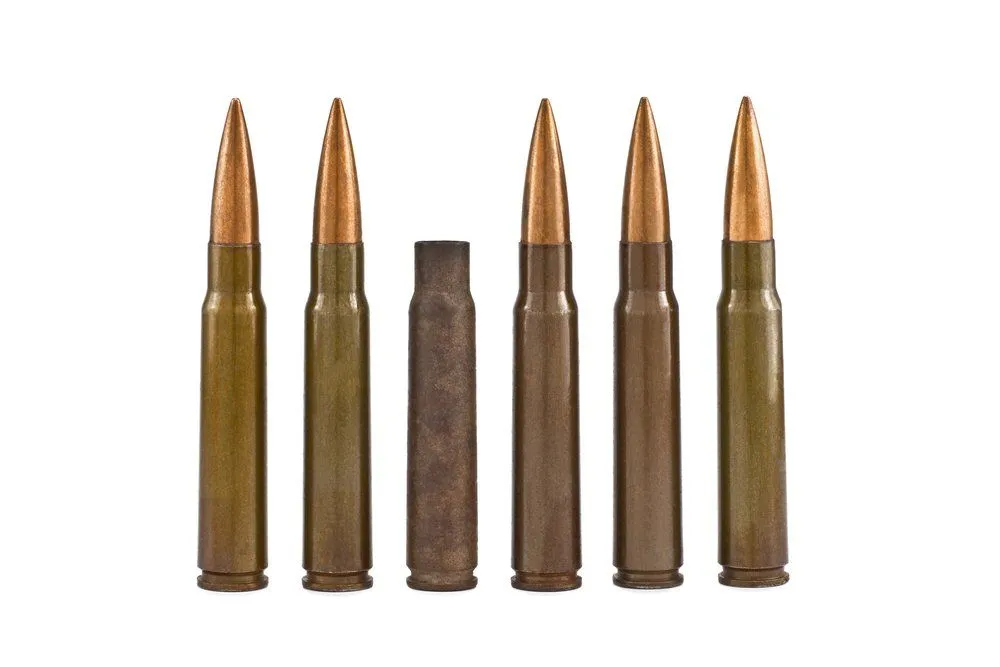
The exception is incendiary or tracer rounds, not the same thing as armor-piercing. Incendiary bullets contain a chemical (typically phosphorus, magnesium, or thermite-style mixes) that ignites on impact; tracer rounds carry a slow-burning pyrotechnic compound that lights up the trajectory and stays hot enough to start a fire when it hits something flammable. Either can ignite an exposed fuel-air mix. But even with those, MythBusters found it usually takes several rounds plus a near-empty tank to get a sustained fire, not the instant Hollywood fireball.
Do Cars Actually Explode When They Catch Fire?
So a bullet won’t do it, but what about a car that is already burning? Movies love to follow a fire with a fireball, yet real-world data tells a calmer story. Car fires are common (the U.S. Fire Administration counts roughly 171,500 highway vehicle fires a year), but the overwhelming majority simply burn rather than detonate.

Here’s the part Hollywood gets backwards: most vehicle fires don’t even start at the fuel tank. According to the U.S. Fire Administration, about 62% of highway vehicle fires begin in the engine, running gear, or wheel area, and mechanical failure is the single biggest cause (45%). The first things to ignite are usually wiring insulation and flammable liquids in the engine bay, not the gas tank.
When the fire does reach the tank, that reinforced steel or thick plastic typically softens, splits, and lets the fuel pour out and burn as a pool fire. You get a fierce, smoky blaze, possibly a whoosh as built-up vapor catches, but rarely the single, building-flattening explosion of the movies. A genuine car explosion needs a fairly specific recipe (a sealed tank, the right fuel-air ratio in the headspace, and a strong ignition source all lining up at once), which is also why a car doesn’t simply blow up after a crash. That is the exception, not the rule.
Can Bullets Or Ammunition Explode In A Hot Car?
A closely related worry: if you leave a box of ammunition in a car baking in the summer sun, will the rounds “cook off” and start firing? The short answer is no, and the reason is temperature. The smokeless powder inside modern cartridges needs to reach roughly 150–200 °C (about 300–400 °F) before it ignites on its own, which is why SAAMI (the Sporting Arms and Ammunition Manufacturers’ Institute) advises owners to keep ammunition below about 65 °C (150 °F).

A parked car in summer is hot, but not that hot. Studies of cars sitting in the sun find the cabin air peaks around 47–60 °C (116–140 °F), with dark surfaces like the dashboard reaching only about 69 °C (157 °F). That is dangerous for a child or a pet, but it is nowhere near the ignition point of gunpowder.
And even if ammunition is caught in an actual fire, it doesn’t behave like the movies. In SAAMI’s landmark fire tests, cartridges burning outside a gun discharged so weakly that the bullets wouldn’t even punch through an ordinary cardboard shipping box at close range. As their report puts it, “bullets and shot are not projected at velocities higher than you could throw them by hand.” Without the sealed steel chamber of a gun barrel to build up pressure, the case simply splits, and the highest-velocity piece is the tiny, lightweight primer cup, not the bullet. There is no chain-reaction mass explosion.
What About Propane, Oxygen Or Scuba Tanks?
People often picture a propane cylinder or scuba tank going off like a bomb the instant a bullet hits it, and this is where the physics genuinely differs from a car’s gas tank. A fuel tank holds a liquid at ordinary pressure. A propane, oxygen, or scuba cylinder holds gas (or liquefied gas) under high pressure, so its failure mode has its own name: a BLEVE, or boiling liquid expanding vapor explosion.

But a single bullet usually won’t trigger one. A small puncture lets the pressure bleed off gradually, so the tank vents and hisses rather than bursting. If there is no ignition source, the escaping gas just disperses; if a flame is present, you get a jet of fire at the hole, not a detonation. A true BLEVE needs sustained external heat, typically a fire licking the upper, vapor-filled part of the tank, which weakens the metal until it tears open and the superheated liquid inside flashes to vapor all at once. The U.S. National Wildfire Coordinating Group flags exactly this: BLEVE failure results from overpressurization caused by an external heat source, with flame impingement on the vapor space the key danger.
MythBusters tested this directly in their James Bond special, peppering a propane tank with armor-piercing and even tracer rounds. It refused to explode. Only sustained incendiary fire managed it, the same conclusion they reached for car gas tanks. The lesson holds across liquid fuel and pressurized gas alike: it takes far more than one well-aimed bullet.
To conclude, there is no component in a regular bullet that could cause an explosion. It might be possible when high-power firearms are used, but it’s definitely not going to be as simple as taking aim at the gas tank and shooting a single bullet to turn a car into a raging fireball.
References (click to expand)
- Fuel tank - Wikipedia. Wikipedia
- Expoding Gas Tank | MythBusters | Discovery - www.discovery.com:80
- Can you blow up a car by shooting the gas tank?. HowStuffWorks
- Highway Vehicle Fires (2014-2016). U.S. Fire Administration, FEMA
- Facts About Sporting Ammunition Fires. SAAMI
- How Long Does It Take a Parked Car to Reach Deadly Hot Temperatures?. Live Science
- Propane Tank Hazards. National Wildfire Coordinating Group
- Boiling liquid expanding vapor explosion - Wikipedia. Wikipedia