For natural magnets to be formed, magnetite (ore of iron) must have traces of maghemite. These natural magnets are not as strong as artificial magnets, which are made with desired strengths and shapes.
I am sure you played with magnets growing up, or maybe you still do! Those are generally magnets that are manufactured in a factory or a workshop, but do you know that magnets occur naturally too?
What Are Natural Magnets?
Minerals or metals that create a stable magnetic field on their own are called natural magnets. Artificial magnets, which people make, are not the same thing. Magnets that come from nature are permanent, but magnets made by humans can be either permanent or temporary.
Sand deposits in many locations worldwide have been found to include magnets made of the sand itself. The most powerful of all naturally occurring magnets are lodestone, also known as magnetite. This dark-colored mineral takes on a gleaming appearance after it has been polished.
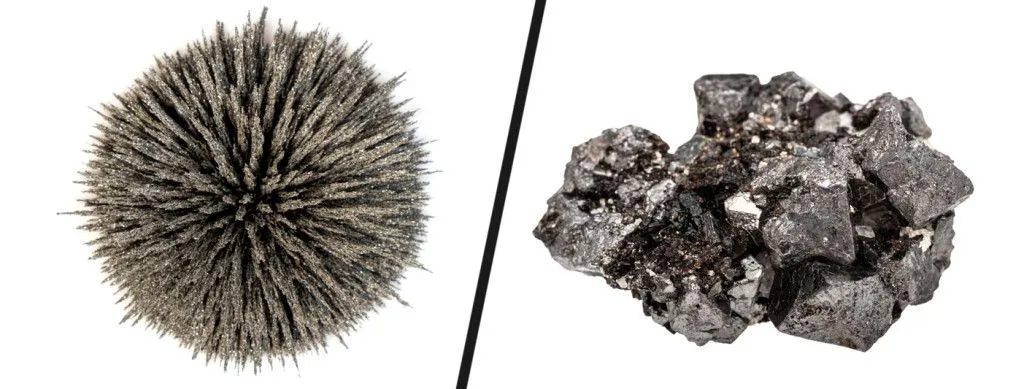
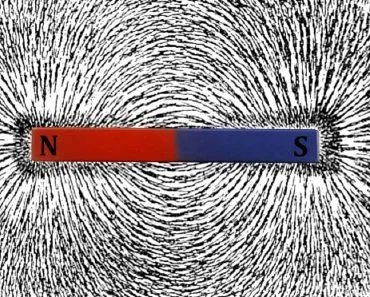
Lodestone was the component that was utilized when compasses were first created. If you give a lodestone the freedom to spin in any direction it chooses, its magnetic north pole will always align with the geographic north pole of the Earth.
Today we will learn more about the formation of natural magnets through lodestone, one of the most efficient natural magnets.
What Are Lodestones?
A piece of lodestone is a magnetite rock that has developed magnetic properties. The term “lodestone” originates from the Middle English word “lode,” which can be translated as either “way” or “journey.” A “lodestone” is a stone that indicates the path to take.
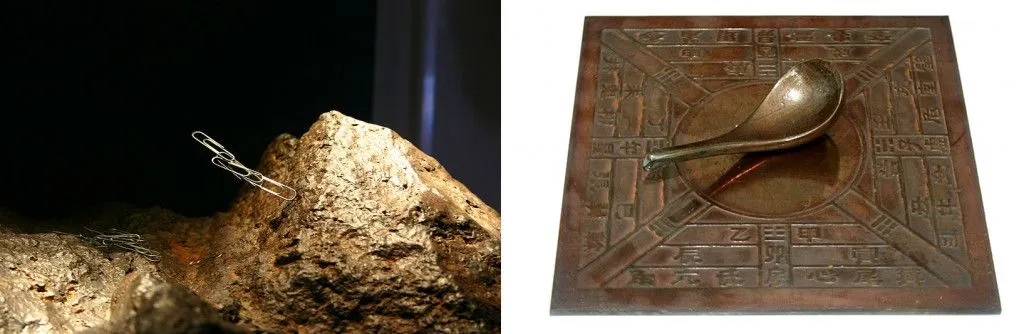
One of the earliest and most historically common uses for lodestone was as a natural magnetic compass.
Lodestones are primarily formed from magnetite. Magnetite is a brownish-black mineral that contains iron and has its own unique magnetic properties. It is possible to magnetize it very powerfully. Magnetite has the chemical formula Fe3O4; we know that each molecule of magnetite is made of three atoms of iron (Fe) and four atoms of oxygen (O). Magnetite is a ferrimagnetic mineral, meaning that the iron ions within its crystal structure have magnetic moments that partially cancel but still produce a net magnetic field. This ferrimagnetic ordering is what makes magnetite inherently magnetic.
Interestingly, some animals, such as pigeons and sea turtles, have magnetite crystals in their bodies that help them detect the Earth's magnetic field for navigation.
What Are Some Examples Of Natural Magnets?
If someone asks you to name a natural magnet, there is really only one safe answer: lodestone, the naturally magnetized form of the mineral magnetite (Fe3O4). Magnetite is the most magnetic of all the naturally occurring minerals on Earth, and a piece of it that has been magnetized in nature is what we call a lodestone. So when a textbook asks you to "name two natural magnets," the honest answer is that lodestone and magnetite are two names for essentially the same thing: magnetite is the mineral, and lodestone is a magnetite specimen that behaves as a permanent magnet.

That said, magnetite is not the only magnetic mineral found in the ground. A handful of other naturally occurring minerals are attracted to a magnet, even though they rarely act as permanent magnets the way lodestone does:
- Magnetite (lodestone): the strongest natural magnet and the only one that reliably behaves as a permanent magnet.
- Pyrrhotite: an iron sulfide mineral that is weakly magnetic, often found in igneous and metamorphic rocks.
- Ilmenite and titanomagnetite: iron-titanium oxides that are weakly to moderately magnetic and common in volcanic rocks and beach sands.
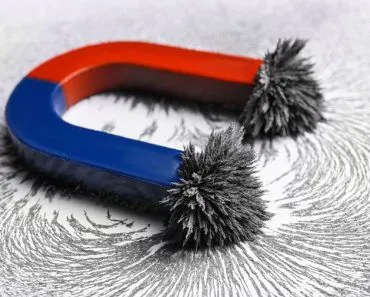
Native iron, which is extremely rare at the surface, is even more strongly magnetic than magnetite, but you are far more likely to come across magnetite in everyday life. It turns up as the black grains in many beaches and riverbeds, and you can drag a magnet through dark sand to pull them out. And as we mentioned earlier, a tiny biological example of a natural magnet lives inside animals such as pigeons and sea turtles, which grow microscopic magnetite crystals to sense the Earth's magnetic field and navigate. So the next time you are asked for an example of a natural magnet, lodestone is your headline answer, with magnetite-rich sand as a close runner-up.
How Are Lodestones (Natural Magnets) Formed?
Before magnetite may serve as a lodestone, the mineral must first be magnetized. Magnetite is not magnetic when first formed, and most magnetite cannot even be magnetized. For magnetite to exhibit magnetic properties, it needs to have a particular crystal structure and a distinct chemical composition.
Magnetite makes up most lodestone, but contains trace amounts of maghemite and other metal ions, in addition to the magnetite. Maghemite is a form of magnetite that has been oxidized. The crystal structure of magnetite does not have a homogeneous composition, due to impurities and inclusions. Once the mineral has been magnetized, it will have difficulty demagnetizing due to its natural properties.
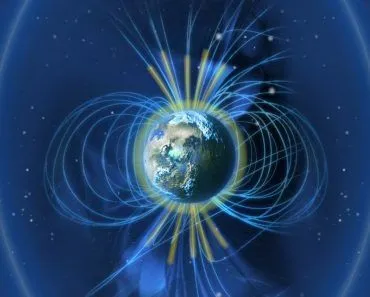
At first, it was believed that the Earth’s magnetic field was responsible for turning bits of magnetite into lodestone by causing them to become magnetized.
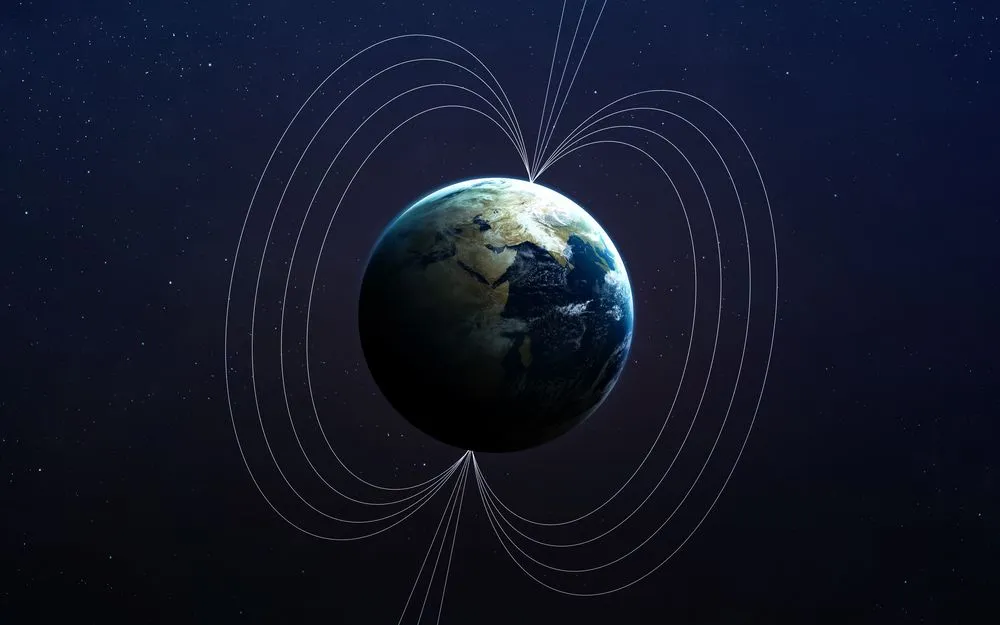
However, it has been discovered that the Earth’s magnetic field is not powerful enough to cause this kind of transformation in the mineral. Since that realization, many individuals have focused on lightning strikes being responsible for transforming the magnetite present in lodestones into a magnetic state.
When lightning strikes the Earth, it creates an electromagnetic field that is extremely powerful for a minimal period of time. It is believed that magnetite can turn into a lodestone as a result of such an extremely powerful magnetic field. Lightning strikes are the most likely source of the magnetic field required to transform magnetite into lodestone. This is because lodestones are typically found close to the surface of the Earth, rather than deep beneath it. This is how natural magnets or lodestones are formed.
What Are Magnets Made Of?
It is one thing to know where magnets come from and another to know what they are actually made of. The answer depends on whether you mean a natural magnet or a man-made one. A natural magnet is simply a piece of magnetite (Fe3O4), an iron oxide, that nature has magnetized. A man-made magnet, on the other hand, is built from carefully chosen metals to hit a target strength.

At the level of the elements, only three metals are ferromagnetic at room temperature, meaning they can be turned into strong magnets on their own: iron, nickel, and cobalt. Almost every magnet you will ever handle is built around one or more of these three. Manufacturers blend them with other elements to make four main families of permanent magnet:
- Ferrite (ceramic) magnets: made from iron oxide combined with barium or strontium. These are the cheap, brittle black magnets used in fridge magnets and loudspeakers.
- Alnico magnets: an alloy of aluminum, nickel, and cobalt (plus iron). They hold their magnetism well at high temperatures and were the workhorse magnet for much of the 20th century.
- Samarium-cobalt magnets: rare-earth magnets that stay strong even when hot.
- Neodymium-iron-boron (NdFeB) magnets: the strongest permanent magnets commercially available, and the tiny, powerful magnets you find in headphones, hard drives, cordless tools, and electric-vehicle motors.
So if you have ever wondered what a magnet is made up of, the short version is: iron, nickel, or cobalt doing the heavy lifting, usually alloyed with other metals (and, in the strongest magnets, a rare-earth element like neodymium or samarium). A natural magnet skips the recipe entirely and relies on plain magnetite.
Are Natural Magnets Stronger Than Artificial Magnets?
Magnets found in nature tend to have an asymmetrical appearance, and their magnetic strength is far lower than that of magnets produced in a laboratory. On the other hand, artificial magnets can be created to have any strength, and they can be magnetized and demagnetized with relative ease to accommodate a wide range of applications. Natural magnets cannot be manufactured to have any specified strength. Magnets made by man are superior to magnets made by nature for a number of reasons, and this is a major one.
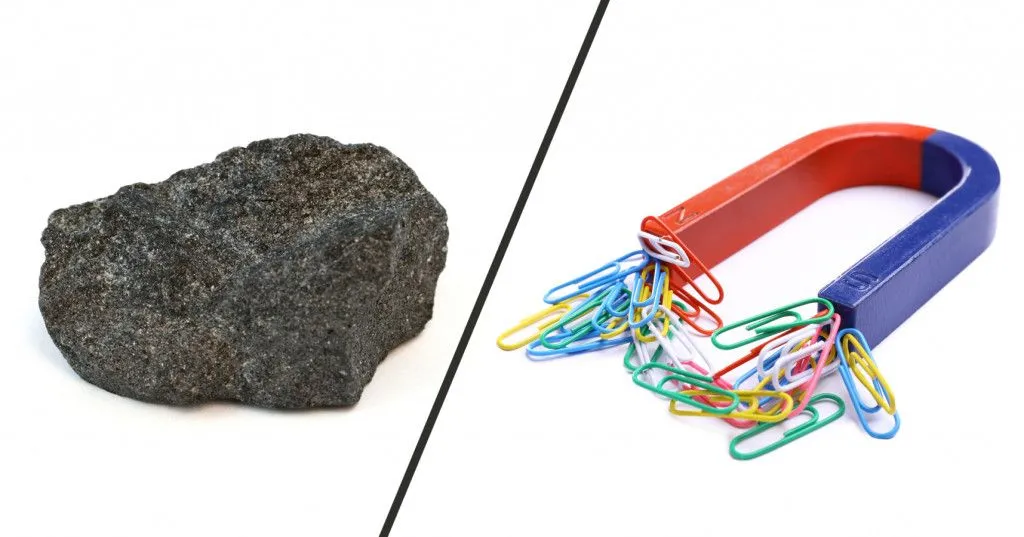
One other reason why artificial magnets are stronger than natural magnets is that artificial magnets can be made in any size, whereas natural magnets cannot be broken down or combined to make them into different sizes.
So, next time you go trekking, and your locket gets stuck to a nearby rock, you’ll know what it is, and how it was likely formed!
References (click to expand)
- Lodestone – 600 BC - National MagLab
- Lodestones. southampton.ac.uk
- Lodestone – 600 BC - MagLab - nationalmaglab.org
- Magnetite - American Chemical Society. The American Chemical Society
- Lodestone - Wikipedia
- Lodestone: Nature’s only permanent magnet - What it is and how it gets charged. Geophysical Research Letters (Wasilewski & Kletetschka, 1999)
- Rare Earth Permanent Magnets Supply Chain Deep Dive Assessment. U.S. Department of Energy
- Magnetite. Encyclopaedia Britannica