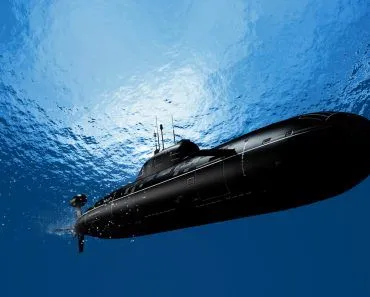
Losing a nuclear submarine at sea poses a danger to aquatic life and to humans who are in the vicinity of the fuel leak, but it is not as big a threat as one would expect it to be because the nuclear material onboard is well-secured and water is a good absorber of radiation.
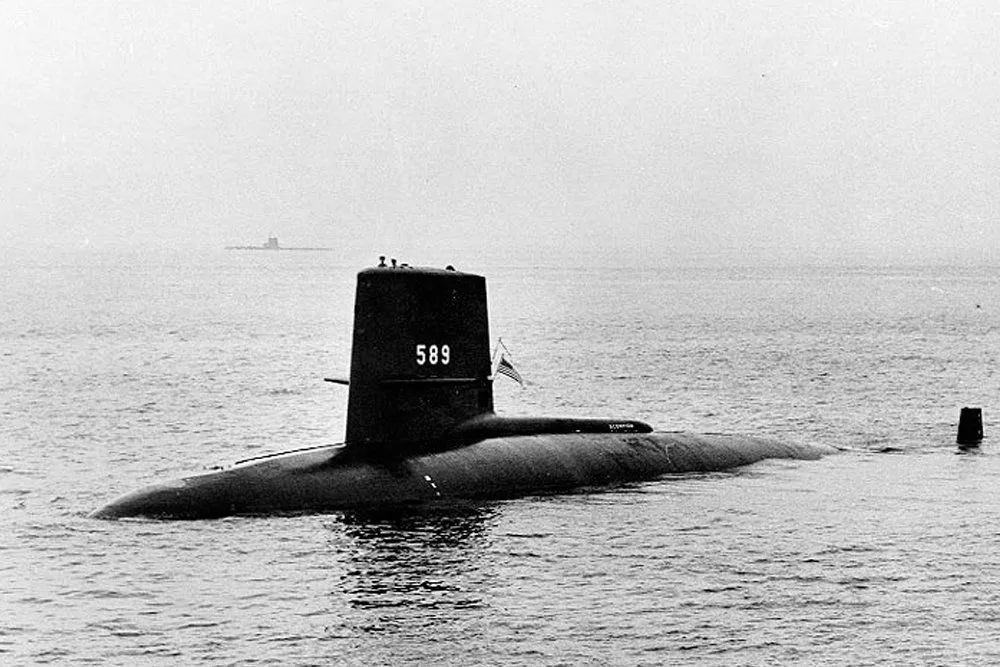
The USS Thresher, a nuclear-powered attack submarine of the US Navy, sank in 1963 during deep-diving tests about 350 km (220 miles) east of Cape Cod, killing all 129 crew and shipyard personnel onboard. Another nuclear submarine, the USS Scorpion, was lost at sea in 1968, resulting in the death of all 99 crewmen.
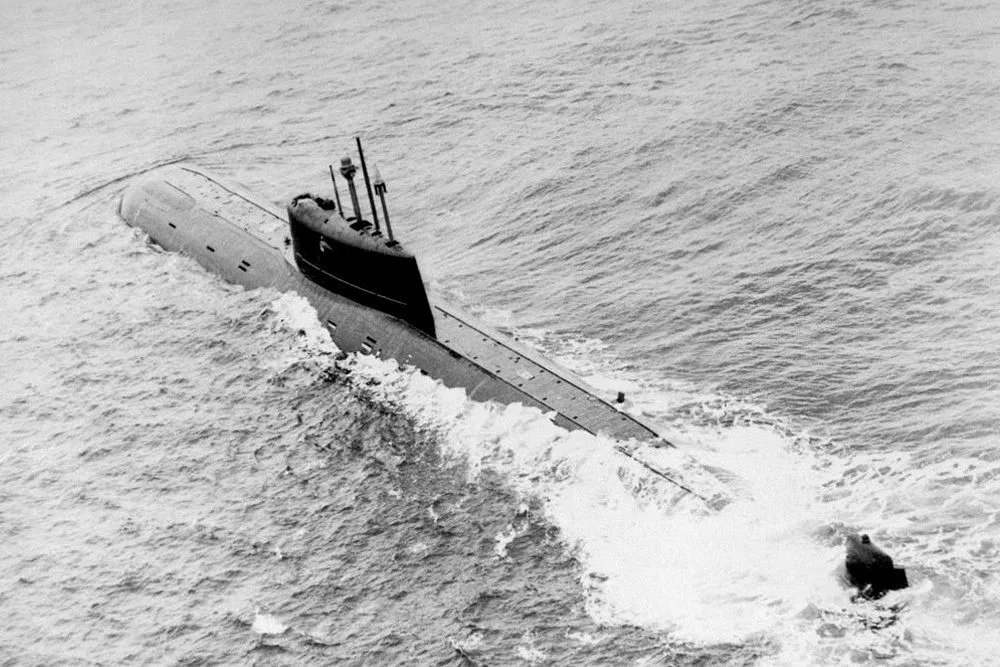
K-8, K-27, K-219, K-159, K-278 Komsomolets… these are the names of some of the Russian nuclear-powered submarines that were lost at sea in the past few decades. All in all, humans have lost a total of nine nuclear submarines at sea since the Second World War.
Most of those ships were never recovered; they foundered due to some freak accident onboard or extensive damage that ultimately led to their destruction, and their wrecks still rest on the ocean floor today.
But, interestingly enough, the world doesn’t seem to go crazy over the fact that those submarines were nuclear-powered, i.e., they carried small nuclear reactors onboard (to power them). Do you know why?
Why isn’t a nuclear submarine lost at sea considered as big a threat as one would expect it to be? Does the nuclear material onboard those submarines not pose a radiation problem, or some other serious risks to humans?
Let me start by answering the main question: a nuclear submarine buried thousands of feet below the surface of a sea doesn’t pose a serious threat to humans. Losing a nuclear submarine is, needless to say, not a situation that any navy would want to be in, but if it happens, the nuclear material onboard isn’t as serious a risk to humans as it would have been were it lost somewhere on land (or even in the air).
Now, let’s dive into some details of the whole thing:
Nuclear Reactors Are Well-secured Onboard
This one goes without saying, right?
Any vessel that’s powered by a nuclear reaction takes all possible precautions and deploys the best security measures to ensure that the reactor is adequately ‘secured’. This is done to make sure that the vessel’s crew is in no danger of radiation poisoning from the nuclear reaction that constantly powers the vessel.
Hence, even if a submarine founders, the chances of a tremendous and instantaneous leak of its nuclear material are very slim. However, the fuel would leak… eventually.
Water Is A Very Good Absorber Of Radiation
Remember the climax of Spider-Man 2, the superhero movie released in 2004? Doctor Octopus (the antagonist of the movie, who also happens to be a nuclear scientist) pulls a nuclear fusion reaction underwater to keep it from swelling more. He does this because he realizes that water will keep the reaction from spreading further.
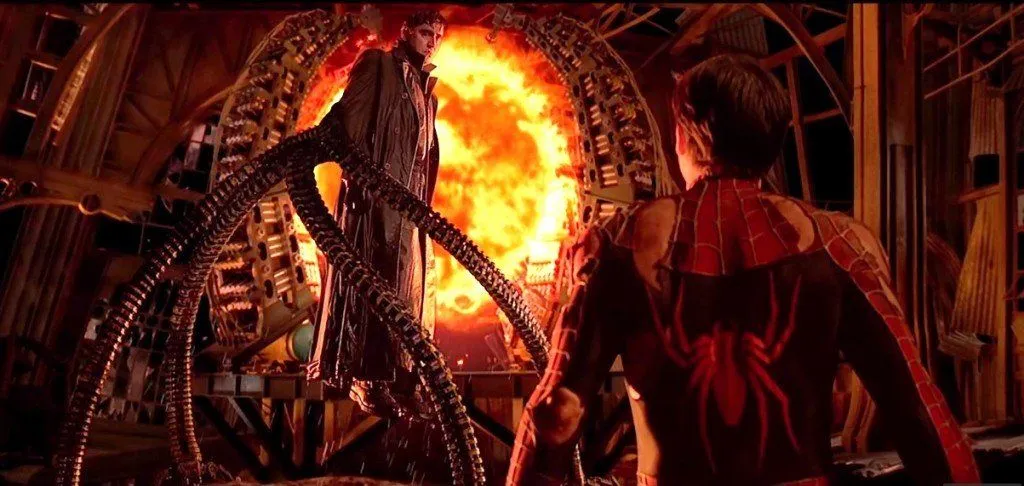
I would not comment on other fictional aspects of the movie that aren’t so scientifically accurate, but this one was spot on! Water is indeed a good absorber of nuclear radiation.
Water acts a fantastic insulator against radiation, as it absorbs the neutrons released in a fission reaction. It acts sort of like a blanket that covers the nuclear reactor and prevents it from hurting anything/anyone in the vicinity. So, if you were to lose a nuclear submarine, seawater is your best and safest bet.
Even so, the fuel (which is rich in uranium) would eventually leak out in the seawater. How bad can that be?
Seawater Is Filled With Uranium… Naturally
Most people think of saltwater as just ‘water that tastes salty’. While that’s not incorrect, technically, what most people fail to realize is that seawater is loaded with a number of elements and salts.
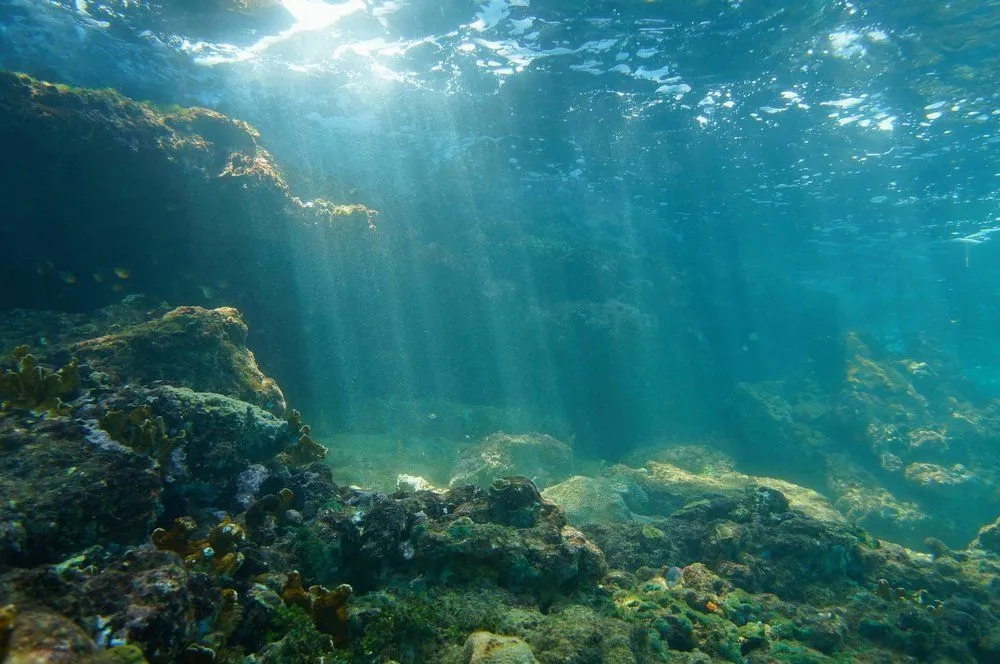
For instance, you might not know that seawater has a natural concentration of uranium (one of the primary elements required to make a nuclear weapon).
To be more specific, get this: the world’s oceans have no less than 4.5 billion tons of uranium dissolved in them already. 4.5 billion tons! That’s such a huge amount of dissolved uranium that if we could recover just half of that volume, it would support 6,500 years of our nuclear capacity.

Despite all this, losing a nuclear reactor underwater is not entirely harmless; it does harm aquatic life, especially in the immediate region where the fuel leaks. It could also harm humans if they are in the vicinity of the fuel leak.
We actually have a real-world measurement of this. In 2019, a Norwegian research team sent a remote-operated vehicle down to the K-278 Komsomolets wreck and sampled water right at a ventilation pipe leading from the reactor compartment. They picked up readings of around 800 becquerels of radioactive caesium-137 per liter, which sounds dramatic, since that’s up to a million times more than the roughly 0.001 becquerels per liter you’d find in normal Norwegian Sea water. Before you panic, though, here’s the catch: at a depth of about one mile, that plume gets diluted almost instantly. The researchers concluded the leak has very little impact on fish and seafood, and they found no sign of plutonium escaping from the submarine’s two nuclear warheads.
Can A Nuclear Submarine Explode Like A Nuclear Bomb?
This is the scariest version of the question, and it’s the one people search for the most. If a submarine is torpedoed, mined, or crushed at depth, will its reactor go off like an atomic bomb? The short answer is no, and the reason is physics rather than luck.

A nuclear weapon has to slam a critical mass of fuel together and hold it there for a fraction of a second while a runaway chain reaction builds, which takes precisely machined explosive lenses or a gun mechanism engineered for exactly that job. A reactor has none of that hardware. If a reactor core ever runs wild, it simply overheats, flashes the surrounding water to steam, and blows itself apart long before it could behave like a bomb.
We have actually seen this happen. In 1985, the Soviet submarine K-431 was being refueled at Chazhma Bay near Vladivostok when a reactor lid was lifted too far and the core briefly went ‘prompt critical’. The result was a steam explosion that tore open the hull and killed ten men. It was violent and it scattered radioactivity across the shipyard, but it was not a nuclear detonation, and it produced nothing like a mushroom cloud.
What about the nuclear-tipped torpedoes and missiles that some of these submarines carry? Those warheads are built with safety mechanisms so that a crash, a fire, or crushing water pressure cannot trigger a nuclear yield. Across decades of ‘broken arrow’ weapons accidents, those safety devices have worked as designed, and not a single one has ever set off a nuclear explosion. The worst case is that the ordinary explosives packed around the core detonate and scatter radioactive material, which is a contamination problem rather than a bomb.
The wrecks bear this out. When Norwegian scientists surveyed the Komsomolets, they found no plutonium leaking from its two warheads at all. And when the Kursk was destroyed in the Barents Sea in 2000, the culprit was its own conventional torpedoes; the second blast was equivalent to only two or three tonnes of TNT, yet the boat’s two reactors still shut themselves down automatically and stayed intact, with no radioactive release into the sea.
Which Nuclear Submarines Have Sunk, And Where Are They Now?
So where exactly are all these lost reactors sitting today? Since the dawn of the nuclear navy, nine nuclear-powered submarines have gone to the bottom, whether by accident or deliberate scuttling: two American, five Soviet, and two Russian. Most of them are still down there.

The two American losses both happened in the 1960s. The USS Thresher went down in 1963 during a deep-diving test and lies on the Atlantic floor about 350 km (220 miles) east of Cape Cod. The USS Scorpion was lost in 1968 and rests about 740 km (460 miles) southwest of the Azores. Neither wreck has ever been recovered.
The Soviet and Russian tally is longer. K-8 sank in the Bay of Biscay in 1970 after a fire; K-219 went down east of Bermuda in 1986 following a missile-tube explosion; and the K-278 Komsomolets, whose slow caesium leak we met earlier, rests in the Norwegian Sea. Two others are worrying mainly because of where they lie: K-27, deliberately scuttled in the shallow Kara Sea in 1982, and K-159, which broke free of its tow pontoons and sank in the Barents Sea in 2003 while being hauled off for scrapping.
Two of the nine, though, did not stay lost. The Kursk was raised from the Barents Sea in a landmark salvage operation in 2001, a little over a year after it sank. And the Soviet K-429 actually sank twice, in 1983 and again in 1985, and was refloated and returned to service both times. So of the nine, seven still rest on the seabed with their reactors sealed inside, quietly doing exactly what the rest of this article describes: leaking slowly, if at all, into a very large and very effective radiation shield.
All in all, losing a nuclear reactor at sea is obviously an extremely unfortunate event, but if we are strictly talking about the dangers it could pose to human life, the threat is reasonably contained at the bottom of the sea.
References (click to expand)
- K Ferguson. Uranium Extraction from Seawater - Stanford University. Stanford University
- (2013) THE RECOVERY OF URANIUM FROM SEA WATER - OSTI.gov. The University of North Texas Libraries
- Researchers Discovered Leak From Komsomolets. Institute of Marine Research (Norway)
- Trick Question: Can Nuclear Reactors Explode? Physicians for Social Responsibility Arizona
- Soviet Submarine K-431. Wikipedia
- Broken Arrows: Nuclear Weapons Accidents. AtomicArchive.com
- Kursk Submarine Disaster. Wikipedia
- List Of Sunken Nuclear Submarines. Wikipedia