Table of Contents (click to expand)
- Two Types Of Submarines
- So, How Long Can A Submarine Actually Stay Underwater?
- Why Do Diesel Submarines Have To Resurface?
- Recharging The Batteries Of Diesel Submarines
- Snorkel
- How Do Submarines Make Their Own Oxygen?
- Communications
- Rations And Supplies
- Maintenance
- The ‘Human’ Aspect Of Resurfacing Submarines
Diesel submarines need to come to the surface to recharge their batteries and get a fresh supply of atmospheric oxygen. Nuclear submarines need to resurface to communicate with their home base and to get fresh supplies. Maintenance is also a reason why submarines need to resurface.
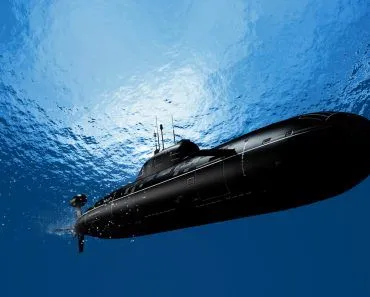
Submarines are incredible machines that can submerge underwater for extended periods, allowing for military operations or underwater research. Their most significant advantage, particularly in a military context, is their ability to conceal themselves underwater, away from the watchful eyes of the enemy.
Submarines are vulnerable to the powerful guns and canons of enemy destroyer ships when they resurface or appear on the water’s surface. This is why it is often said that forcing a submarine to resurface is half the battle won.
However, if resurfacing is so dangerous for a submarine and its crew, why must it do it at all? Can’t it remain submerged for the entire duration of the mission? What prevents a submarine from doing so?
To understand the answer to this question, it helps if you generally know a thing or two about submarines.
Two Types Of Submarines
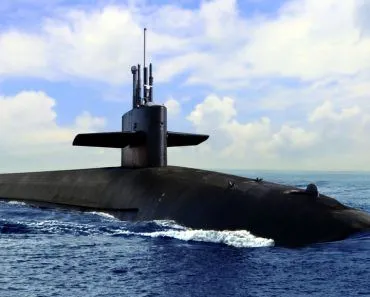
Submarines can be categorized into two types based on the kind of engine they run on: diesel-electric or nuclear.
Submarines powered by diesel-electric engines are known as diesel-engine submarines or diesel subs for short. In contrast, submarines that utilize power generated by an onboard nuclear reactor are called nuclear-powered submarines or nuclear subs.
A certain type of diesel submarine can remain submerged for at least 14 days, while a nuclear submarine can remain submerged for months. For example, a British submarine called Astute can go 25 years before it would need refuelling. (Source)
Although submarines of both types surface periodically, their reasons for doing so differ significantly.
So, How Long Can A Submarine Actually Stay Underwater?
Putting all of this together, the honest answer is that it depends entirely on what is powering the boat. A conventional diesel-electric submarine is the homebody of the two. Running submerged on its batteries alone, it can manage only a few days at a slow creep (and far less if it wants to move quickly) before it has to rise to at least periscope depth and run its diesels to recharge. Modern diesel boats fitted with air-independent propulsion (AIP) do considerably better, stretching a single dive to roughly two to three weeks without ever coming up for air.

A nuclear submarine is a different animal altogether. Its reactor supplies effectively limitless power, and (as we’ll see in a moment) the boat manufactures its own oxygen, so neither fuel nor air is what sets the limit. What actually caps the patrol is far more mundane: food for the crew, and the crew’s own endurance. Peer-reviewed studies of submarine deployments put a typical patrol at around 60 to 80 days submerged, roughly 2,000 hours underwater, before the boat must return to restock its pantry and rotate its sailors.
How far can that go in principle? In 1960, the US Navy’s nuclear submarine USS Triton answered the question emphatically by completing the first submerged circumnavigation of the globe: 26,723 nautical miles (49,491 km) in 60 days and 21 hours, all without surfacing. The reactor could have kept going for years. The galley could not.
Why Do Diesel Submarines Have To Resurface?
Diesel engines generate power through the process of internal combustion (the word ‘internal’ simply indicates that the diesel is burnt inside the main part of the engine). Note that internal combustion engines are different from external combustion engines.
You may remember from your high school science class that combustion is essentially the process of burning something in the presence of oxygen. The presence of oxygen is particularly crucial for large metallic vessels that operate underwater, away from a direct and fresh supply of oxygen.
Recharging The Batteries Of Diesel Submarines
As the name suggests, a diesel submarine runs on a diesel engine, which means that it must come up to the surface (or at least periscope depth). Periscopes on submarines may be as tall as 18 meters (around 60 feet).
When a sub is submerged to a depth that is equal to the height of the periscope, the sub is said to be at periscope depth.
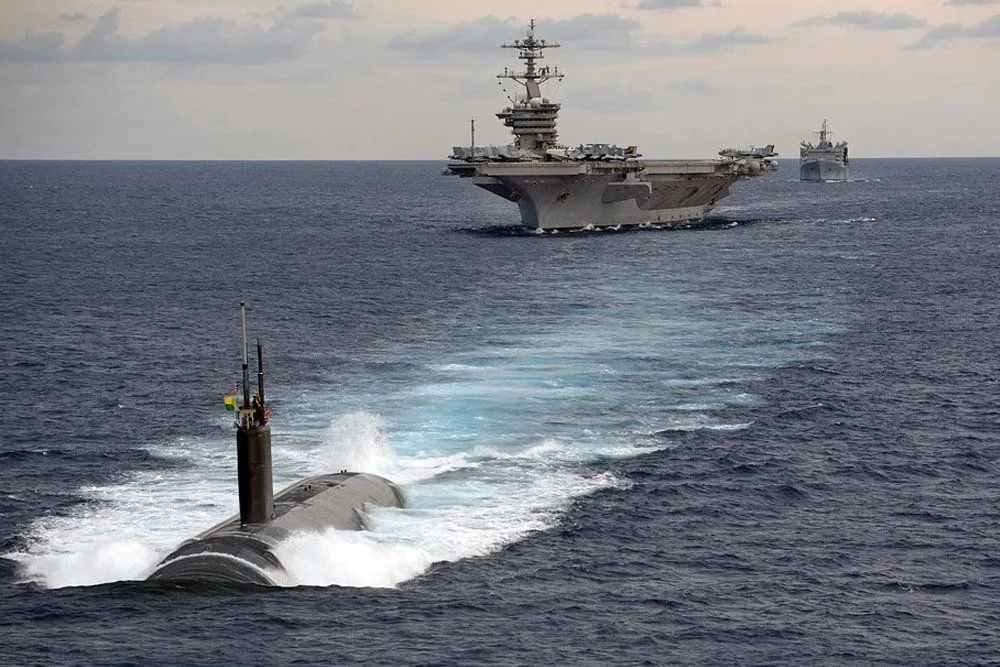
A submarine comes to the surface once every few days (or even more frequently than that), not only to get a fresh supply of atmospheric oxygen from above the water’s surface, but also to dispose of the waste gases that it produces onboard.
Snorkel
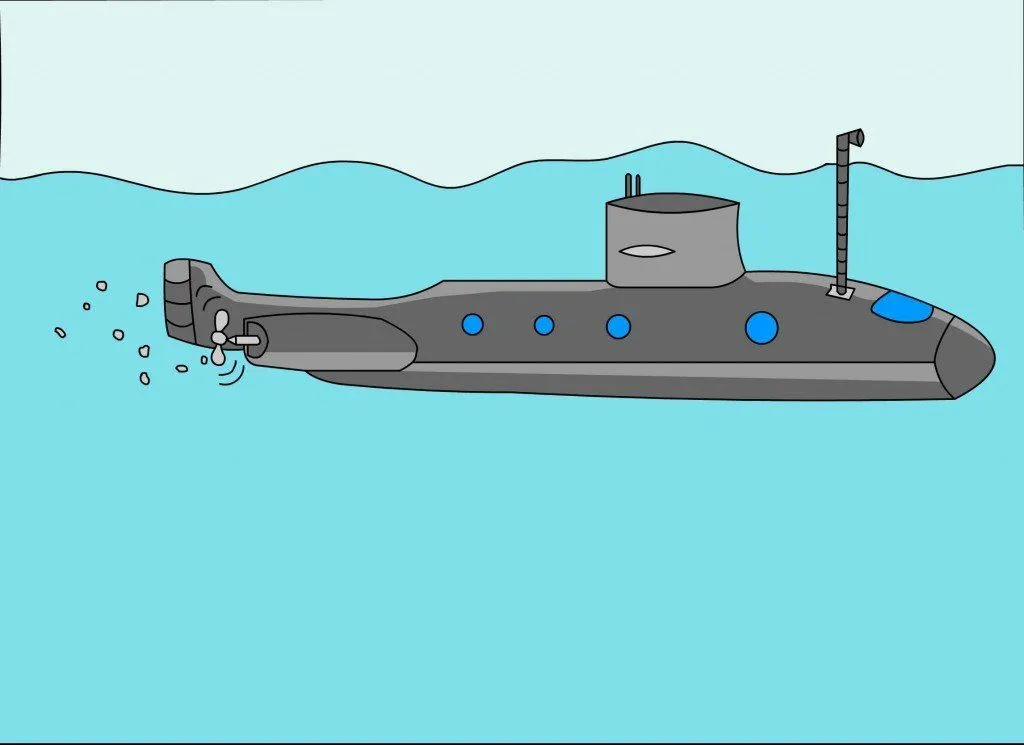
There’s a device known as the snorkel (the British call it the ‘snort’), which lets subs operate submerged while still taking in air from above the surface. Once the sub comes to the surface, its diesel engines run and produce power, which is used to recharge the batteries that ultimately run the sub.
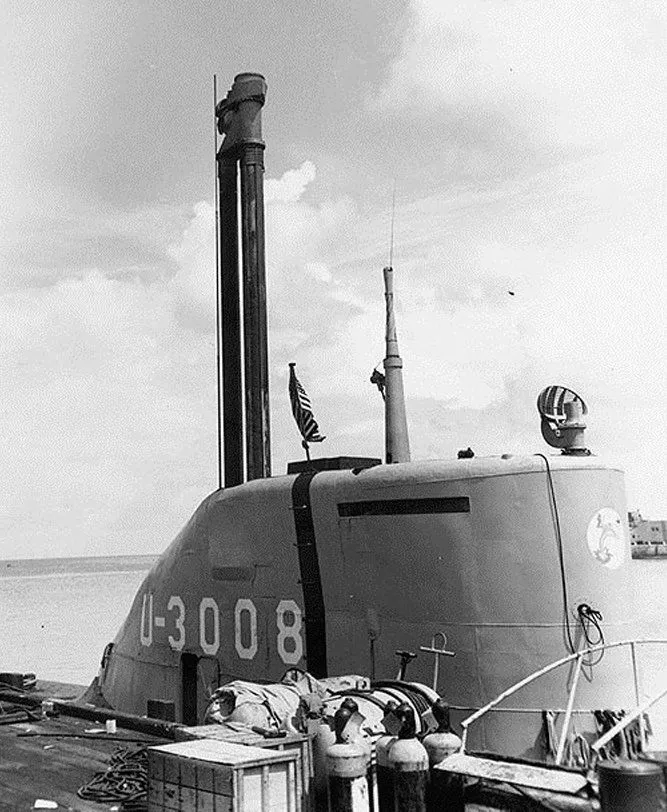
Nuclear subs, on the other hand, rely on the power generated by the nuclear reactor onboard. The reactor generates enough power to run all electronic and electrical systems onboard, in addition to the life support systems of the crew. Therefore, unlike diesel subs, nuclear subs can go for days, or even weeks on end without surfacing a single time. In fact, theoretically, a nuclear reactor onboard a submarine produces enough power to run the sub for a couple decades!
How Do Submarines Make Their Own Oxygen?
This raises an obvious question. If a nuclear submarine can stay down for months at a stretch, where does the crew’s air come from? A diesel boat solves the problem the easy way, by snorkeling for a lungful of fresh atmosphere, but a nuclear boat that never surfaces has to make breathable air from scratch. It does so with two separate jobs running around the clock: topping up the oxygen, and stripping out the carbon dioxide.

The oxygen comes from the sea itself. The submarine takes water, passes a strong electric current through it, and splits the H2O into its two elements. This is the same reaction you may have seen in a chemistry class, known as electrolysis. The oxygen is released into the boat’s atmosphere for the crew to breathe, while the leftover hydrogen is simply discharged overboard into the ocean. Because a nuclear reactor can supply all the electricity the process needs, the oxygen generator can keep running more or less indefinitely.
Getting rid of the carbon dioxide that a crew of more than a hundred sailors exhales is just as important, because the CO2 from a sealed crew would otherwise build up to harmful levels well before the boat ran short of oxygen. Submarines scrub it out of the air chemically, typically using liquid amine scrubbers (such as monoethanolamine) or solid absorbents like lithium hydroxide (LiOH). These systems hold the gas in check but never quite eliminate it: a submarine routinely runs at carbon dioxide levels of a few thousand parts per million, several times the roughly 400 ppm of ordinary outdoor air. A Central Atmosphere Monitoring System keeps a constant electronic eye on oxygen, CO2, carbon monoxide and hydrogen, so that the air inside the hull stays safe to breathe long after the last hatch has been sealed.
Communications
Radio signals don’t travel well deep underwater, particularly at the depths at which submarines usually operate during a mission. Therefore, both nuclear and diesel submarines must resurface in order to communicate with their home base, and receive orders and/or convey vital information.
Rations And Supplies
A nuclear submarine can stay and operate underwater for a couple decades, so long as it’s adequately stocked with enough supplies and ration for its onboard crew to survive that long.

Obviously, that’s nowhere near the realm of possibility, so submarines must resurface to load fresh supplies (from another vessel) and carry on, especially if it’s a long mission.
Maintenance
Howsoever sturdy and robust it may be, a submarine, at the end of the day, is still just a machine. It has a number of systems of different types – electrical, mechanical, electronic, hydraulic etc. – that make it work underwater.
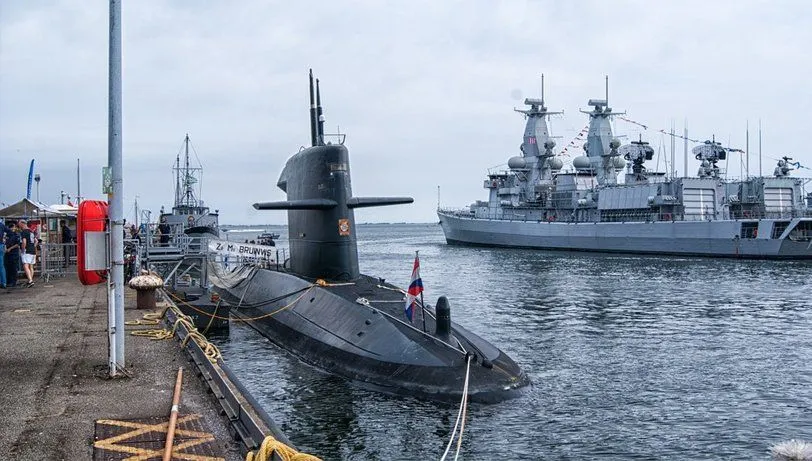
At times, some of these systems have problems that the onboard crew cannot fix on the go. If any of these problems are critical, the captain usually orders the resurfacing of the sub so that essential repairs can be made.
The ‘Human’ Aspect Of Resurfacing Submarines
Let’s not forget that a submarine is a manned vessel, i.e., it’s run by human beings. Sometimes a member of the crew gets injured or falls ill, and requires proper medical attention. There could also be some other sort of human emergency that calls for an unplanned resurfacing of the sub.
Apart from fulfilling their basic needs, human beings are also social animals. They need to have a social life, which includes activities such as talking to friends, meeting new people, visiting different places, trying out different cuisines, binge-watching TV shows, playing video games, going out for a walk, taking long drives, and engaging in various other activities to maintain their mental and emotional well-being.
To make sure that the crew doesn’t go crazy as a result of staying inside a metal tube for weeks on end, completely detached from family, friends and the rest of the world, submarine missions are planned in such a way that the crew keeps ‘rotating’, meaning that no single crew must bear the burden of staying underwater for ‘too long’.
To make that happen, submarines have to resurface so that the existing crew can debark as a fresh crew boards the sub for the next leg of the ongoing mission.
References (click to expand)
- Beare, A. N., Bondi, K. R., Biersner, R. J., & Naitoh, P. (1981, August). Work and rest on nuclear submarines. Ergonomics. Informa UK Limited.
- M Ragheb. Nuclear Naval Propulsion - Mragheb. Stanford University
- Magnuson, S. (2015). Nuclear power plants on new submarines may last 40-plus years. National Defense, 99(735), 30-31.
- Ragheb, Magdi. "Nuclear naval propulsion." Nuclear Power-Deployment, Operation and Sustainability. IntechOpen, 2011
- Introduction. Emergency and Continuous Exposure Guidance Levels for Selected Submarine Contaminants. National Research Council (US). NCBI Bookshelf.
- Submarine Indoor Air Quality and Crew Health: A Critical Narrative State-of-the-Art Review. PMC, National Library of Medicine (NIH).
- Is Regular Physical Activity Practice During a Submarine Patrol an Efficient Coping Strategy? PMC, National Library of Medicine (NIH).
- Triton (SSR(N)-586). Naval History and Heritage Command, U.S. Navy.
- Air-independent propulsion. Wikipedia.