Shade balls are 10 cm (4 inch) black plastic spheres that float on a reservoir. In 2015, the Los Angeles Department of Water and Power dropped 96 million of them onto the Los Angeles Reservoir, mainly to block sunlight so carcinogenic bromate could not form in the drinking water, while also cutting evaporation and algae growth.
While surfing the internet every day, we come across a lot of weird but exciting stuff. These things provide us with knowledge that can be useful in our everyday lives. I recently came across one such piece of information that left me simply amazed: shade balls. About 96 million of these little balls were added to the Los Angeles Reservoir in Sylmar, California, in 2015, and they have caught the eye of several environmental enthusiasts since then.
At first, I thought it was a one-time gimmick for some world record or a scene for some movie, but to my astonishment, these plastic balls are now as much a part of the reservoir as the water in it! So, what are these spherical items and why have they been added to the water? Let’s take a closer look.
What Are Shade Balls?
Shade balls are nothing more than small spheres made from plastic, partially filled with water, that are capable of floating on the surface of water bodies, such as reservoirs and lakes. Initially known as bird balls, they were introduced to prevent birds from landing on ponds or lakes that had been contaminated by industrial and mining operations. However, these little plastic balls were soon being used for a variety of reasons, as we will explain below.
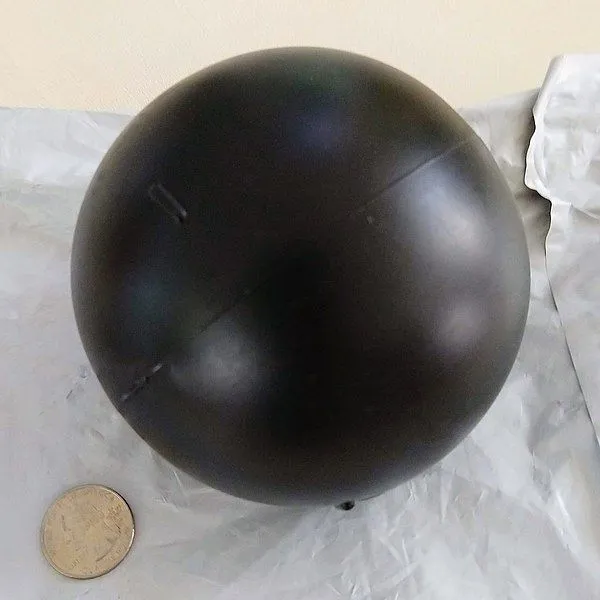
The shade balls are made from high-density polyethylene (HDPE), the same material used for milk jugs and bottles. Each ball is about 10 cm (4 inches) in diameter and is partially filled with water so the wind cannot blow it away. Carbon black is added to the plastic to protect it from the ultraviolet radiation of the sun, rendering each ball a dark black color. The spheres cost about 36 cents each, and the full Los Angeles Reservoir rollout came to roughly $34.5 million, a fraction of the estimated $300 million it would have cost to install a fixed floating cover over the same surface.
What Is The Purpose Of Shade Balls?
Amongst their various environmental uses, the most important is slowing down the evaporation of water. Although they are available in multiple colors, black shade balls are the most preferred ones, as they reduce the evaporation of water by a measurable amount. In addition to lowering evaporation, they also prevent the growth of algae and reduce UV radiation byproducts from contaminating the water.
These balls are also used to prevent bird aircraft strike hazards (BASH). Airports generally endorse having a drainage pond or a retention basin, which is basically a small artificial lake with some vegetation and a permanent pool of water. The excess rainwater throughout the airport is directed to this basin, preventing flooding of the runways and downstream erosion. However, these ponds also attract birds and other airborne animals, all of which present a risk of collision with aircraft. Shade balls cover the surface of these ponds, preventing the birds from hovering around and risking their lives, as well as the safety and integrity of the airplanes.
Why Were The Balls Used In Los Angeles?
Most of you are likely thinking that the purpose of releasing these balls into the LA reservoir was to protect the water from the California sun and reduce water loss via evaporation. However, there’s more to it than that.
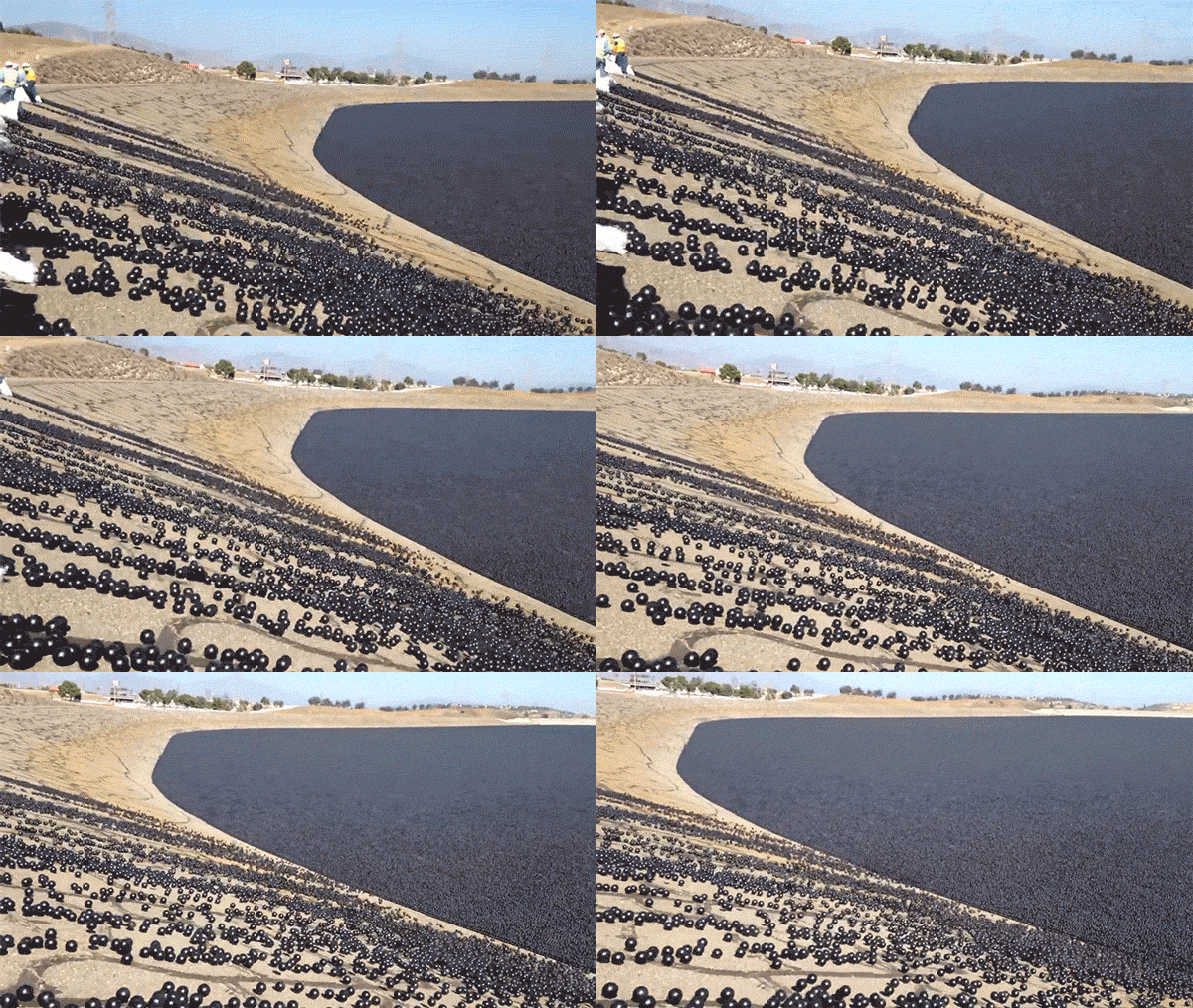
The Los Angeles Reservoir, which sits in Sylmar and holds about 3.3 billion gallons across roughly 175 acres, is a primary source of drinking water for the city and the surrounding regions. However, the water that enters this reservoir contains bromide. Now, bromide (Br−) is a harmless ion that is quite common in groundwater and saltwater, and it is almost impossible to separate entirely from water because of its small size. The problem starts when that bromide meets the chlorine used to disinfect the water and is then exposed to sunlight: the combination drives a reaction that forms bromate (BrO3−), which is a suspected human carcinogen.
The chlorine itself is harmless at the levels used, and it is necessary for killing off any bacteria or other pathogens in the supply. Of the three ingredients that drive this unwanted reaction (bromide, chlorine and sunlight), the authorities found that cutting out the sunlight was by far the easiest and most viable option. Hence, shade balls entered the picture.
Are These Balls Really “Saving” Water?
A team of researchers at Imperial College London, along with colleagues from the Massachusetts Institute of Technology (MIT) and the University of Twente, published findings on this subject in the journal Nature Sustainability in 2018, claiming that the shade balls might actually use up more water than they save. According to their research, over their deployment on the reservoir (from August 2015 to March 2017) the balls saved about 1.7 million cubic meters of water from evaporating, compared with the roughly 2.9 million cubic meters used to manufacture them. Yes, you read that right! These balls require water to be produced.
High-density polyethylene is manufactured using oil and natural gas, and producing those resources consumes a considerable amount of water. Based on the same study, the balls would need to stay on the reservoir for roughly two and a half years just to save back the water used in their production. This is not meant to discourage the use of these balls, but simply to point out that their utility might not be feasible everywhere. Also, we cannot forget that this type of work is not a permanent solution, as these balls only come with a certain life span, after which they will have to be replaced with new balls, which will again require a massive amount of water throughout the production process.
A Final Word
Whether these balls provide a long-term solution to the problem of water loss from evaporation and contamination is something only research and time will be able to validate. Although their potential benefits are enormous, the drawbacks cannot be overlooked.
It is worth noting how the story has unfolded since 2015. LADWP has since pulled shade balls out of several of its smaller reservoirs, such as Elysian and Upper Stone Canyon, and replaced them with fixed floating covers, which seal off both sunlight and airborne contaminants more completely. The 96 million balls remain on the Los Angeles Reservoir, though, mainly because covering its 175-acre surface with a rigid floating cover would be enormously expensive. So the black balls you have read about here are still bobbing on the water today.
The use of this quick-fix technology has brought several critical questions before us: Where are we going with this? We seem to be solving one problem somewhere and creating several new problems elsewhere. While dumping these polymeric spheres into the water, did anyone think about the birds that rely on the reservoir for their water supply or did we simply presume that, as humans, we’re the only ones that deserve to lay claim to it?
Regardless of where you stand on the issue we’ve presented here, it is clear that something must be done to protect our water supply and environment, so unique ideas like this one tend to stand out!
References (click to expand)
- Using 'shade balls' in reservoirs may use up more water than it saves. Imperial College London
- Why 96 million plastic 'shade balls' dumped into the LA Reservoir may not save water. PBS NewsHour
- Long Term 2 Enhanced Surface Water Treatment Rule Documents. U.S. Environmental Protection Agency
- L.A. Says Goodbye to 'Shade Balls'. Governing