A thermos keeps cold drinks cold longer than it keeps hot drinks hot because the temperature gap is asymmetric. A 90 °C coffee sits about 70 °C above room temperature, while a 0 °C iced drink sits only about 20 °C below it. By Newton’s law of cooling, heat moves faster when the gap is larger, so hot liquids cool faster than cold liquids warm up. Yes, a thermos really does keep things cold (just not magic).
Can you remember back to lunchtime during your school days? For me, my lunch bag would contain a peanut butter and jelly sandwich, an apple, a bag of chips and a room temperature Capri Sun. I still remember the envy I had for those kids who would pull out a thermos from their bag and begin slurping up warm soup or drinking ice-cold juice. All of my food tended to be the same temperature, and my parents refused to buy me a thermos, insisting that I would lose it (they were probably right).
The apparent magic of a thermos has perplexed me for many years, but I have also learned an interesting fact from various thermos-loving friends. In short, their thermoses are better at keeping cold liquids cold than they are at keeping hot liquids hot. Why is that?
What Is A Thermos?
Before we can understand its intricacies, let’s take a broad look at thermoses to have a clearer idea of the subject. A thermos is any container that is able to keep liquids either hot or cold, thanks to a double-walled design featuring a vacuum.
More formally known as a vacuum flask, this invention has been around since the end of the 19th century, when researcher Sir James Dewar stumbled upon it in the course of his study of cryogenics. In 1892, Dewar placed two glass flasks inside one another, joined them at the neck, evacuated the air between them, and silvered the inner surfaces to block radiative heat transfer. The air that became trapped between the two flasks in a thermos can be removed or evacuated, creating a vacuum inside the space.
Without any air to facilitate heat transfer, liquid placed in the inner flask will be isolated from the exterior conditions, and will thus be able to retain its temperature more effectively. Although this was a rudimentary version of a thermos, and only offered a partial vacuum, it was a huge breakthrough.

Basically, whether you put steaming hot soup or ice-cold water in the thermos, the vacuum bubble surrounding the inner flask will keep the temperature stable for an extended period of time. The best thermoses on the market claim to keep items cold or hot for two days, and up to 10 days if the liquid is iced! While thermos efficiency has certainly improved over the years, people still claim that liquids cool off before they warm up, a claim that is directly related to heat transfer.
Heat Transfer In A Thermos
Energy is created by the vibrational movement of atoms and molecules, and this energy can be transferred. When this transfer of energy occurs as a result of a temperature difference, it is called heat energy. In the case of differing temperatures, heat energy flows from a hot object to a cold object.
As mentioned above, a vacuum flask is able to prevent or minimize heat transfer between the exterior environment and the liquid inside the thermos. Why does this matter? Because heat transfer is a key part of thermal engineering and thermodynamics, and it occurs all across the universe! Heat transfer is how heat energy is transferred between objects, whether that is a convection stove boiling a pot of water, the sun heating the planet or a campfire warming a marshmallow!
When it comes to the contents of a thermos and the exterior environment, heat transfer is significantly delayed by the vacuum layer. If it was filled with hot soup, the heat energy from the interior flask would try to heat up the colder gas molecules in the space between, which could then pass that heat energy to the outer flask wall and the exterior environment temperature, which would be colder than the hot soup.
However, there is no gas in the vacuum space, so that transfer of heat energy does not readily occur. Similarly, if the inner flask is filled with ice water, the warmth of the outer environment will warm the flask, but there are no air molecules to transfer that heat energy across to the inner flask wall, and thus the cold water stays cold!
How Does A Thermos Block All Three Types Of Heat Transfer?
Heat has three different ways of getting from one place to another, and a good thermos has to shut down all of them at once. The three culprits are conduction (heat moving through a material or between objects that touch), convection (heat carried away by a moving fluid, such as the warm air rising off a bowl of soup) and radiation (heat traveling as invisible infrared waves, which is how the Sun warms your face across the emptiness of space).

The vacuum between the two walls deals with the first two. Conduction and convection both need matter to move through, and a vacuum is very nearly empty, so almost no heat can creep across the gap by either route. The one stubborn path left is the narrow neck where the inner and outer walls join, along with the stopper on top. That is exactly why the lid is the weak point of any flask, and why an open thermos sheds heat so quickly.
That leaves radiation, which is the sneaky one, because infrared waves do not need a medium and will happily cross a vacuum. This is where the silvering earns its keep. The mirror-bright inner surfaces are poor emitters of infrared and excellent reflectors, so they bounce radiant heat back toward whatever is inside rather than letting it escape. The trick runs in both directions: it reflects heat back into hot soup, and it keeps the room’s radiant warmth away from an iced drink. In short, a thermos never adds or removes heat itself, it simply resists the flow of thermal energy in or out, which is precisely the answer those physics quizzes are fishing for.
So Why Are Thermoses Better At Keeping Things Cold?
Concerning heat transfer, the greater the difference in temperature between two objects, the faster the energy will transfer between them, from hot to cold. Our perception of hot and cold is also an important thing to consider in this question. Consider that room temperature is about 70 degrees Fahrenheit (21 Celsius); water freezes at 32 degrees Fahrenheit (0 Celsius) and boils at 212 degrees Fahrenheit (100 Celsius).
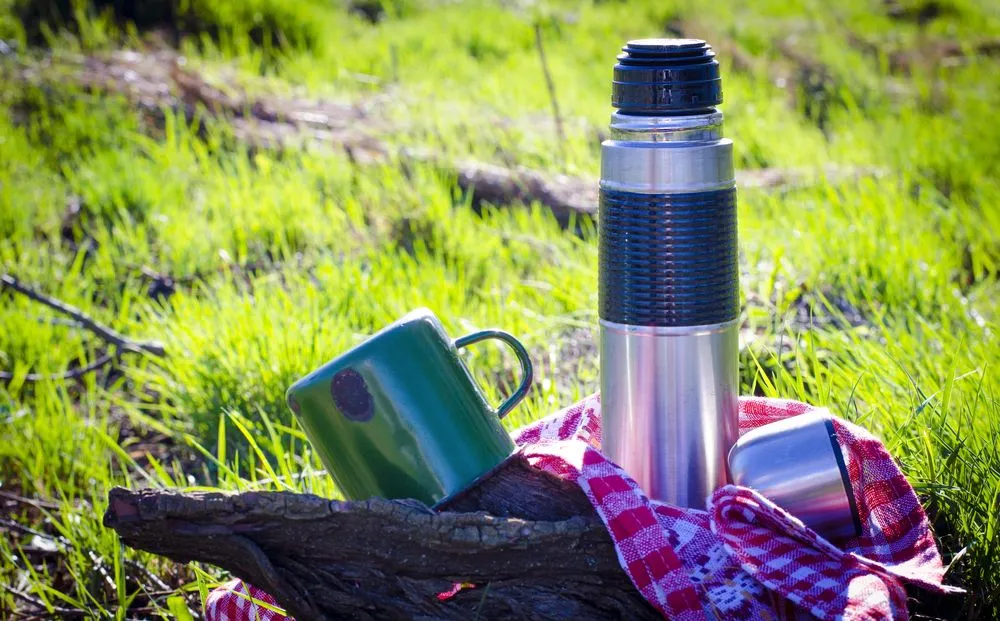
Thus, the difference between room temperature and a thermos of an ice-cold drink is much smaller than the difference between room temperature and a thermos of hot soup off the stove. Now, a thermos is far from perfect, and some heat is gradually lost. Every time you open the thermos, for example, a significant amount of heat transfer will occur (i.e., your coffee will cool or your water will warm). However, a larger amount of energy will be transferred between coffee and the cooler air, due to the larger difference in temperature. A smaller amount of energy will transfer between the cold water and the warmer air, due to their smaller difference in temperature.
This is where human perception comes into play; we will be more aware of the temperature change in the coffee than the temperature change in the water. There is also real physics behind it. By Newton's law of cooling, the rate of heat transfer is proportional to the temperature gap. A 90 °C coffee in a 20 °C room sits about 70 °C above ambient, while a 0 °C iced drink sits only 20 °C below ambient, so the hot drink loses heat in absolute terms about three and a half times faster than the cold drink gains it. The thermos itself is roughly as efficient at either end, but the larger temperature gap means hot drinks cross the "no longer feels hot" line sooner than cold drinks cross the "no longer feels cold" line.

How Long Does A Thermos Keep Water Hot Or Cold?
There is no single magic number here, because a flask’s staying power depends on a handful of things: how big it is, how full you fill it, how warm the surrounding room is, and how often you crack the lid. A larger volume of liquid holds its temperature far longer than a few inches sloshing around the bottom, because there is more thermal mass and proportionally less surface area through which heat can escape. And every time you open the flask, you trade that protected interior for the outside world and lose a chunk of the advantage.
“Hot” is partly a matter of taste, but a handy benchmark is about 60 °C (140 °F). That is the top of the food-safety “danger zone” the USDA uses, the line below which food is no longer considered safely hot. A good vacuum flask filled with near-boiling water will usually still sit above that 60 °C mark several hours later, comfortably covering a working day, but by the 24-hour point it has typically slipped to merely warm rather than steaming. That is why a flask advertised for “24 hours” almost always means “still pleasantly warm after a day”, not “still scalding”.
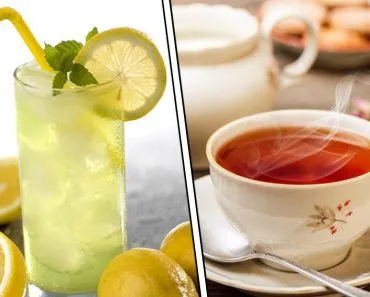
Cold drinks are the flask’s strong suit. As we have seen, an iced drink starts only about 20 °C below room temperature, so heat leaks in slowly and the contents stay cold long after a hot drink would have given up. It is the same reason a cold lemonade and a hot tea left out on the counter change at such different rates: the size of the temperature gap, not any flaw in the flask, sets the pace.
A Final Word
The reason that thermoses seem more effective at keeping things chilled than warm is our perception of the temperature change. Hot liquids (i.e., coffee and soup) are prepared considerably hotter than room temperature, whereas a cold drink is much closer to room temperature. As heat transfer occurs, we are simply more aware of the difference in heat energy as hot liquids change. A good way to avoid disappointment is to consume the contents of your thermos immediately upon opening it for the very first time, before heat energy has a chance to make its moves!
References (click to expand)
- The Effectiveness of a Thermos | Physics Van | UIUC. The University of Illinois Urbana-Champaign
- Heat energy - Science Learning Hub. sciencelearn.org.nz
- Kreith F., Manglik R. M.,& Bohn M. S. (2012). Principles of Heat Transfer, SI Edition. Cengage Learning
- Karls, M. A., & Scherschel, J. E. (2003, July). Modeling heat flow in a thermos. American Journal of Physics. American Association of Physics Teachers (AAPT).
- Thermos Flask. School of Physics, The University of Sydney.
- "Danger Zone" (40°F - 140°F). Food Safety and Inspection Service, U.S. Department of Agriculture.