Table of Contents (click to expand)
Yes. According to the USDA and FDA, food kept continuously at -18 °C (0 °F) or colder stays safe to eat indefinitely, because freezing stops bacteria, yeasts, and molds from growing. The recommended freezer times you see on charts are about quality, not safety: flavor, color, and texture slowly fade, but the food won’t become unsafe.
Yes, food can last for years if it’s frozen properly. According to the US Food and Drug Administration and the USDA, food stored continuously at -18 °C (0 °F) or below can be kept indefinitely, because at that temperature the microbes that spoil food simply can’t multiply.
I’m not a great cook. In fact, I can barely manage to cook a single meal for myself. As such, I often find myself wondering if I could get myself a week’s worth food in advance and store it in the fridge. That way, I wouldn’t have to bother cooking for myself and ruining perfectly good food.
But is it actually possible? Can foods be stored indefinitely if you store them in a freezer?
Can Foods Last Forever, If Stored Properly?
Yes, foods can last for years if they are frozen properly. According to the US Food and Drug Administration and the USDA, food stored continuously at -18 °C (0 °F) or below can be kept indefinitely. That magic number, -18 °C (0 °F), is the standard temperature for a home freezer, and it’s no accident. At that temperature, the bacteria, yeasts, and molds that spoil food (and the ones that can make you sick) don’t actually die, but they’re forced into a kind of suspended animation. Their chemistry grinds to a halt, so they can’t grow or reproduce. The moment the food thaws, of course, they wake right back up, which is why thawed food spoils at its usual pace.
In fact, there is a neat little list of food items and their ‘storage times’ compiled by the FDA. You can check it out here. Crucially, every time limit on that chart is a recommendation for quality, not safety. Those frozen chicken breasts will technically be safe to eat a year from now; they just might not taste as good.
Now, of course, such a bold claim, i.e. ‘frozen food can last forever’, comes with several terms and conditions.
Absolute Cooling
Firstly, in the sentence “frozen foods should be stored properly”, it’s important to understand and appreciate the meaning of the word ‘properly’. If you are looking to store a turkey for years on end, you must make sure that the freezing environment that you’re going to put it in is absolute. In other words, it should be constantly stored in a freezing environment; if there is a lapse in maintaining the desired temperature, the turkey would spoil and your efforts in storing it would all be futile.
Packaging And Speed Of Freezing
The efficiency of storing a frozen food also depends on how it’s packed and the speed with which it’s frozen. For instance, a food that’s ‘loosely’ packed in a freezer bag is more likely to spoil than food that’s packed in an airtight glass container, as the amount of evaporation is less in the latter case. Thus, it’s more likely to last longer when frozen.
Plus, foods that are flash frozen are more likely to last longer when stored. For the uninitiated, flash freezing is the process of freezing objects incredibly fast by subjecting them to extremely low temperatures. You see, when you flash freeze a food item, say berries, you essentially prevent the formation of ice crystals on their surface. This is good news because ice crystals can pierce the cell walls of those berries, and make them taste…. funny. In other words, not good.
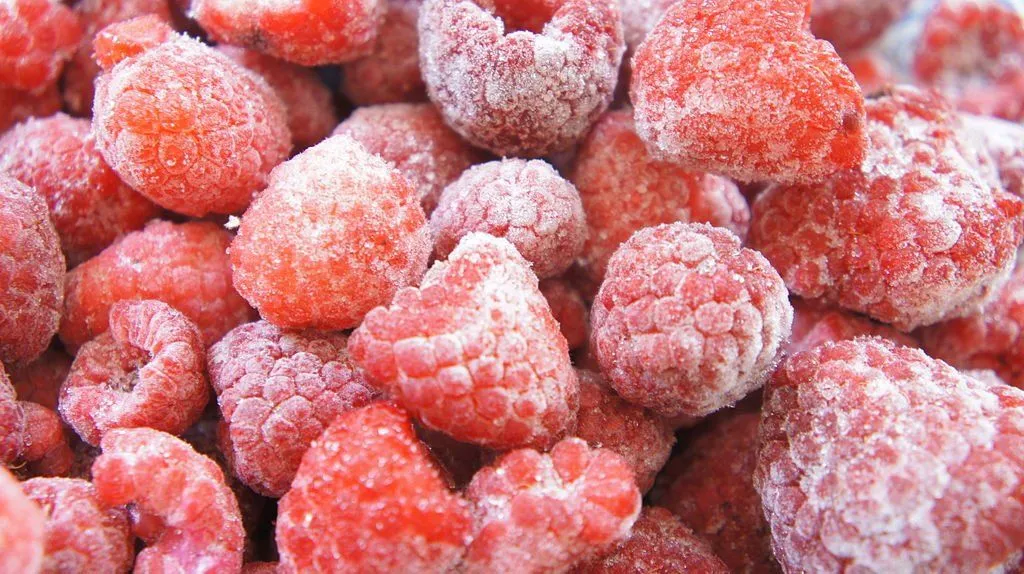
Note that if you have a frost-free freezer, you might want to rethink the idea of stashing food in there for years. To stop frost from building up on its walls, such a freezer runs an automatic defrost cycle every few hours, briefly warming the interior before chilling it back down. Each of these little freeze-thaw swings nudges moisture out of your food and refreezes it as larger ice crystals, which is exactly the kind of frost damage you’re trying to avoid. For storing foods indefinitely, the closer you can get to steady, uninterrupted cold, the better.
Freezing Doesn’t Stop Oxidation
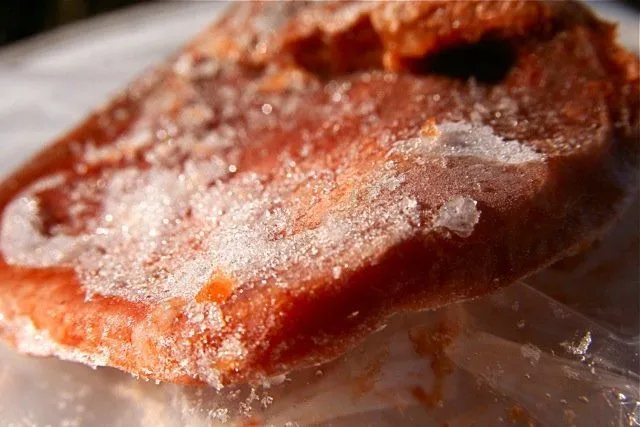
While freezing certainly ensures that the food doesn’t become harmful to consume, it cannot prevent chemical reactions, like oxidation, to occur. Oxidation, when coupled with dehydration (brought upon the food by the freezer itself), can potentially cause freezer burn.
A freezer burn occurs when frozen food is damaged by the combined effect of dehydration and oxidation. The dehydration happens through sublimation: ice crystals on the surface of the food turn straight from solid to vapor without ever melting, leaving behind dry, grayish-brown patches. Air then reaches those exposed spots and oxidizes the fats, which is what gives badly freezer-burned food that stale, cardboard-like taste. Foods that are not packed in airtight packaging are quite prone to this condition. The good news, per the USDA, is that freezer burn is purely a quality problem: it’s perfectly safe to eat, even if you might want to trim off the worst of the dried-out patches before cooking.
The Same Taste Is Not Guaranteed!
If you plan to purchase a year’s worth of groceries and stash them in your freezer (to beat inflation, of course!), there is a crucial thing that you need to consider. You can freeze certain food items for a long time, and consume them after years, and still they won’t be dangerous to your health. However, their taste and texture might not be the same as that of their ‘fresher counterparts’.
Several chemical reactions continue to occur even when food is frozen. In some cases, even the ingredients of the food might begin disintegrating and become slightly different forms of themselves after a long time. The upshot? You could still eat those food items and not get an upset stomach, but you won’t enjoy it.
This is exactly why those charts seem to suggest you can ‘only’ freeze something for a month or two. Bacon, for instance, is usually best within a month and ground beef within three to four months, while uncooked roasts and steaks hold their quality for several months up to a year. Those aren’t expiry dates. They’re simply the point at which most people start to notice the flavor and texture sliding downhill. Stick to the chart if you care about taste; ignore it (within reason) if you only care about whether the food is safe.