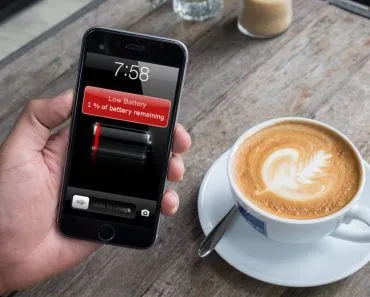
Batteries are placed in opposite directions so a single metal contact plate can bridge a (+) and a (−) terminal, completing the series circuit without extra wires. The alternating layout is the most space- and cost-efficient way to wire cells in series inside a device.
Think back to your childhood, and the joy you felt when opening a brand-new toy—a remote-controlled car, a new stereo, or even a Furby. After tearing off the wrapping paper, the most important things to locate were batteries so you could turn it on and start having fun. However, one thing you undoubtedly noticed, and have seen hundreds of times since, is that the visual instructions for the batteries explicitly told you to align the batteries in opposite directions.
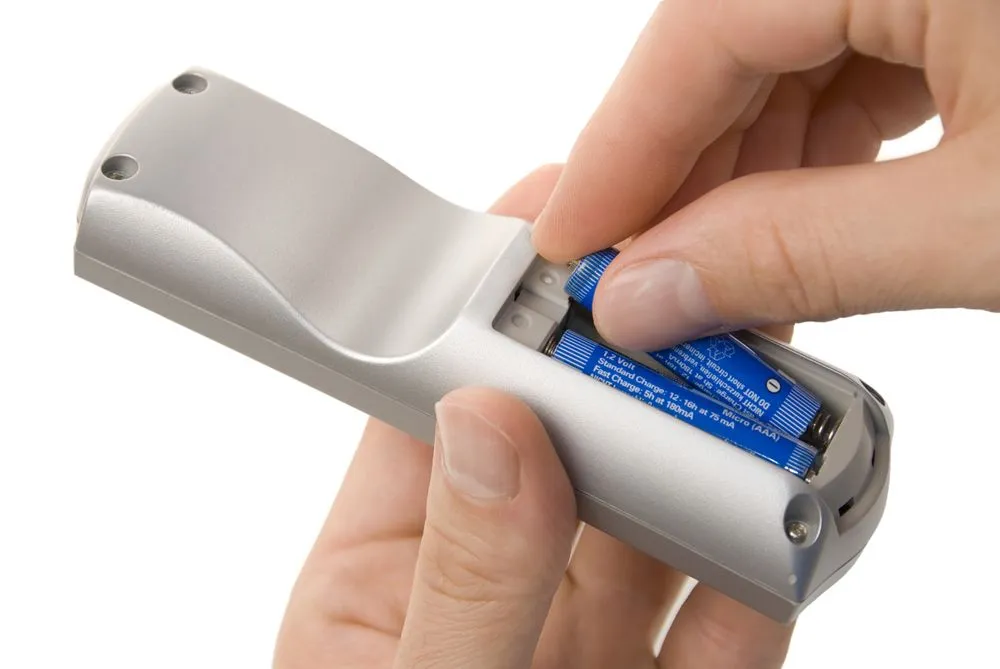
You would meticulously match the nub side of the battery to the (+) sign and the flat side of the battery to the (-) symbol. After clicking the battery panel back into place and flicking a switch, power had been achieved! Placing the batteries in a row in opposite alignments isn’t difficult, of course, but it does beg the question—why are batteries designed like that?
What Is A Battery?
Before we can understand the nuances of battery and product design integration, we should take a quick review of batteries themselves. A battery, quite simply, is a collection of electrochemical cells with external connections that enable it to power electronic devices. From minute batteries for hearing aids and smartphones to the massive batteries under the hood of your car, there are some basic elements of a battery that remain the same.
While a battery is in use, the positive terminal is the cathode, and the negative terminal is the anode. During discharge, electrons leave the anode (negative terminal), flow through the external circuit, and re-enter the battery at the cathode (positive terminal). A redox reaction occurs that will convert high-energy reactants into low-energy products; the remaining energy is then available for use by the device or product in the form of electric energy, which powers the device.

Basically, chemical energy within the battery is converted into electrical energy in the form of direct current (DC). The chemicals contained within the battery are typically acids, and are referred to as the electrolyte. Batteries themselves may be made of nickel, lithium, cadmium, lead, mercury and alkaline, all of which have different pros and cons. Today, lithium ion batteries have become incredibly popular due to their high energy density, allowing them to provide a lot of power from a small source, and being highly rechargeable.
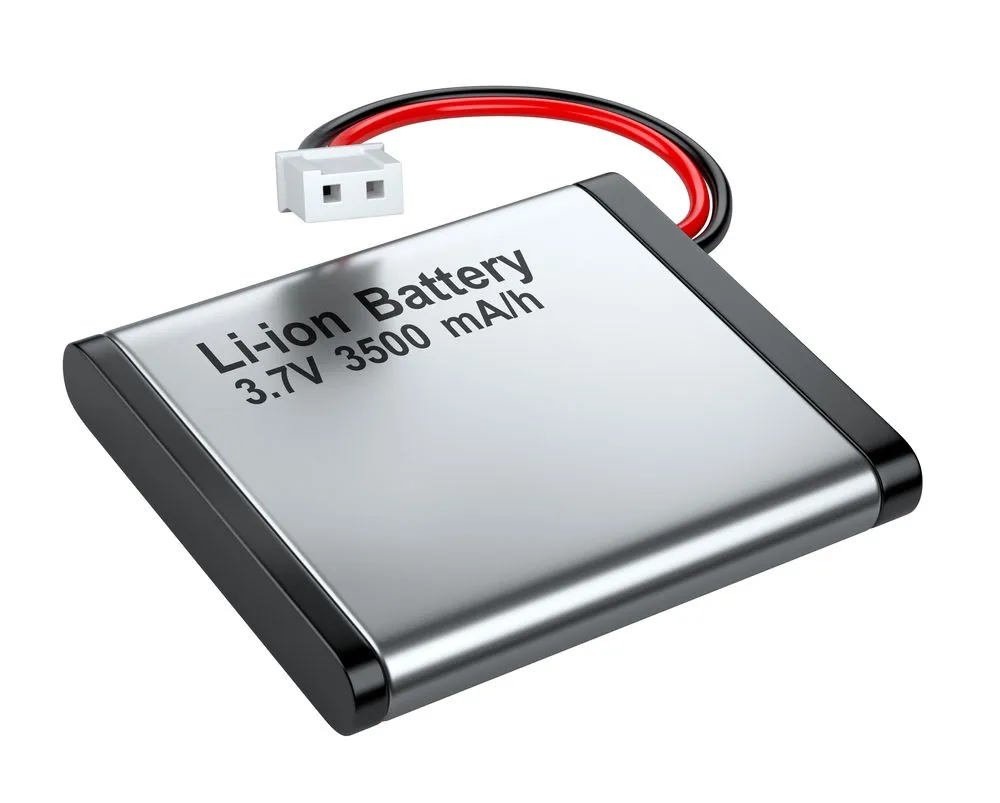
In the past, a battery referred to multiple cells connected to one another, but a modern battery can now contain several cells within itself. However, when multiple batteries are used together, they are typically arranged in series, allowing their voltages to add up while the Amp-hour capacity (the amount of charge that lets one ampere flow for one hour) stays the same as a single cell. The other option for batteries is to be arranged in parallel (increasing Amp-hour, but keeping voltage the same), which isn’t appropriate for devices that may require a higher voltage amount. To learn more about the nuances of series and parallel circuits, check out our in-depth article here.
Efficient Battery Design
When multiple batteries are arranged in series, the positive and negative terminals of adjacent terminals must be connected; that is how current is able to flow, completing the circuit and powering the device. With that in mind, arranging batteries in alternating pattern—a battery with the (+) terminal facing up, followed by a battery with the (−) terminal facing up—is efficient.
If the batteries were arranged with like terminals all facing the same direction, a wire would need to be included in the design between the positive and negative terminals on neighboring batteries. However, with the batteries alternating in terms of their terminal direction, a small metal plate at either end of the battery can establish this essential connection (between the (+) and (-) terminals).
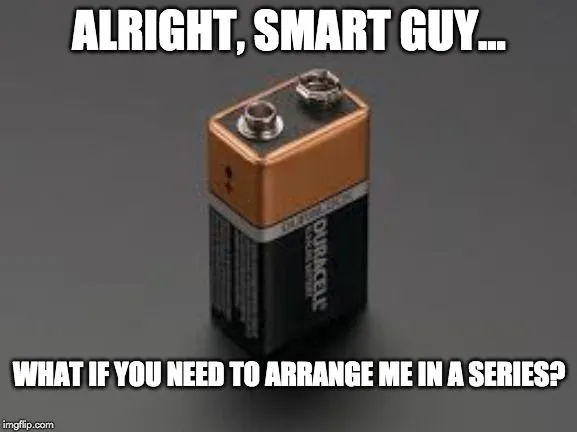
Depending on the product design, the batteries may have to be arranged next to one another, or in a row. In the latter arrangement, often found in flashlights, the positive and negative terminals are compressed and held against one another, allowing for the current to smoothly flow. In other products, such as handheld video games, tightly packing multiple batteries beside one another in alternating directions is the most efficient design in terms of circuit completion and total volume.
Which Way Do Batteries Go? Reading The (+) And (−)
So how do you actually know which way each cell should sit? Every cylindrical cell carries a built-in tell. The end with the small raised nub (sometimes called the button or cap) is the positive (+) terminal, and the smooth, flat end is the negative (−) terminal. That is not a quirk of one brand. The international standard for consumer batteries, IEC 60086-1, requires every primary battery to be marked with the polarity of its positive terminal, so the convention is the same whether you buy your AA cells in London, Sydney, Toronto or Ohio.

The compartment itself tells you the rest. The molded (+) and (−) symbols stamped into the plastic show which way each cell faces, and the coiled metal spring is always the negative contact. The raised nub of one cell presses against a flat metal strip, while the flat end of the next cell pushes into a spring. Line up the raised (+) nub with the (+) marking, drop the flat (−) end onto the spring, and you have it right. Because the cells alternate, the one beside it points the opposite way, exactly as the diagram inside the lid shows.
It is also why the cells in a flashlight, where they sit nose to tail in a single tube, all run the same direction down the barrel: the cap of one cell has to meet the flat base of the next so their voltages add up. Reverse just one of them and the chain breaks. Physically, the cells are wired in series, and the only orientation that completes that series is the alternating, head-to-tail one the markings guide you toward. (Their physical shape, meanwhile, is a separate decision, which is why devices call for different battery sizes like AA, AAA or D.)
What Happens If You Put A Battery In Backwards?
Picture loading the last cell the wrong way around. In most simple, single-cell gadgets, the result is anticlimactic: nothing happens. The device stays dark. Reversing the cell points its voltage the wrong way, the circuit no longer pushes current in the right direction, and it behaves as though no battery is fitted at all. Slot it back in correctly and you are fine.
Multi-cell devices are where it gets more interesting. When cells are joined in series, their voltages add only if every cell faces the same way around the loop. As OpenStax College Physics puts it, the cells in a series string add their voltages algebraically, so a single reversed cell subtracts its voltage instead of adding it. Two fresh 1.5-volt AA cells should deliver 3 volts; flip one and you are left with roughly 0 volts, and the device simply will not switch on.

The genuinely risky case is subtler. If a reversed or simply weak cell sits in a series string with healthy ones, the stronger cells can drive current backwards through it, a fault engineers call cell reversal or forced over-discharge. Pushed below zero volts, the cell can heat up, vent gas and leak its corrosive electrolyte, which then crusts over and eats away at the metal contacts. A 2016 study in Scientific Reports on over-discharged lithium-ion cells found that driving a cell past roughly −12% state of charge dissolves copper from inside it and seeds internal short circuits and permanent capacity loss. That is precisely why the markings, and the alternating layout they enforce, are worth following: many modern electronics now build in reverse-polarity protection, but the simplest, safest habit is still to match each cell to its (+) and (−) symbols.
A Final Word
When designing a product, every millimeter needs to be considered; even the inclusion of one extra wire is seen as wasteful, and may add to the final cost of production. Manufacturers and designers are perpetually seeking cost-efficiency, without compromising functionality. Arranging batteries in this up-down pattern, and linking the positive and negative terminals with a metal bar, rather than a wire, improves the efficiency and performance of the design. In terms of the battery orientation themselves (in a row or adjacent), that is dependent on the overall shape and other physical components of the product.
References (click to expand)
- Scrosati, B. (2011, May 4). History of lithium batteries. Journal of Solid State Electrochemistry. Springer Science and Business Media LLC.
- How Lithium-ion Batteries Work. U.S. Department of Energy.
- Batteries: Electricity though chemical reactions. LibreTexts
- Batteries - Hyperphysics. Georgia State University
- Electromotive Force: Terminal Voltage. College Physics (OpenStax). Physics LibreTexts.
- Mechanism of the entire overdischarge process and overdischarge-induced internal short circuit in lithium-ion batteries. Scientific Reports (2016). NCBI PMC.
- IEC 60086-1: Primary batteries - Part 1: General. International Electrotechnical Commission.