Table of Contents (click to expand)
Commercial airplanes are kept apart to prevent collisions and avoid wake turbulence. Under radar control, two aircraft must hold at least 1,000 feet (305 meters) of vertical separation or 3 to 5 nautical miles laterally. Military jets fly in tight formations because their pilots are trained for it, coordinate by radio, and fly nimble, pre-briefed maneuvers.
If the title seems confusing or doesn’t make sense to you, allow me to elaborate.
You might already know that commercial planes need to maintain a minimum distance from other commercial planes during flight. That’s why the ATC (Air Traffic Control) exists. One of the primary and most critical tasks of the ATC workers is to ensure that every plane taking off, landing or even passing through their airport doesn’t fly too close or get in the way of other planes flying in the same airspace.
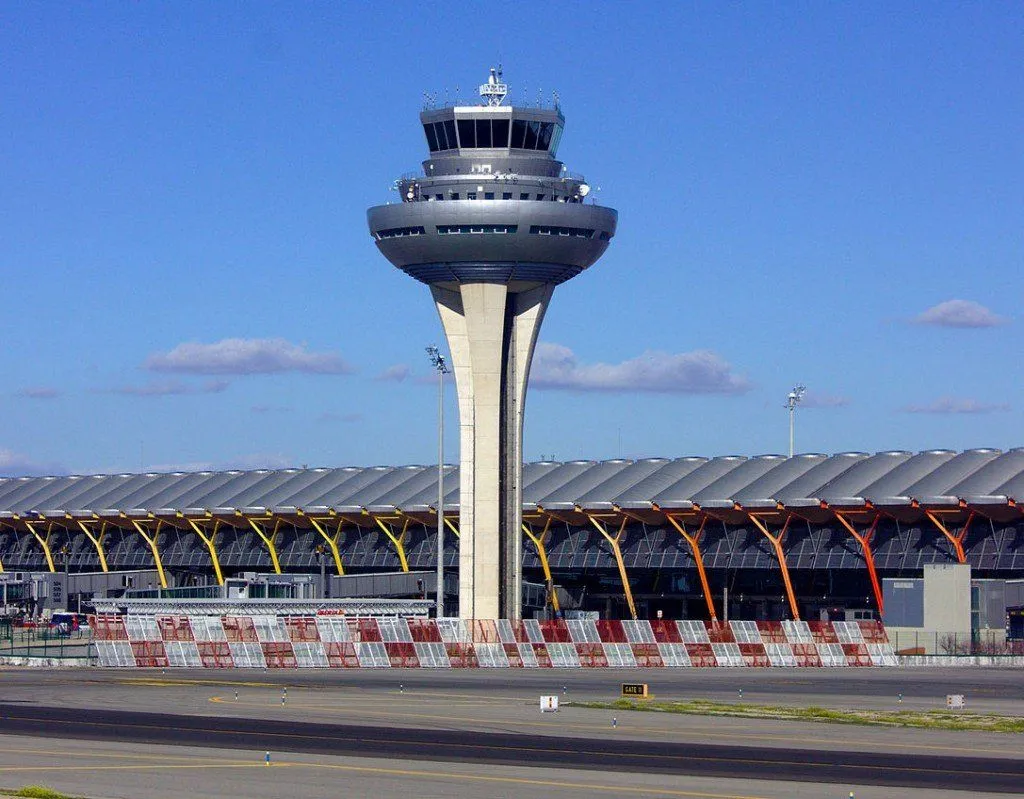
Because if that happens, it could potentially lead to a catastrophe of epic proportions. That’s why commercial airplanes maintain separation from other planes, i.e., they keep a safe distance away from other planes in their vicinity.
However, military aircraft are nothing like that. They often fly very close to each other in tight formations on purpose. They don’t maintain a miles’ worth of clearance from other military aircraft in the formation. It doesn’t seem to make sense.
Why do large, commercial airplanes require vertical and horizontal separation, but military aircraft don’t?
Separation
In the field of flying and aeronautics, the term ‘separation’ is used to refer to the concept of keeping a plane at least a minimum distance from another aircraft. The basic reason behind this is to keep planes from running into each other and avoid accidents due to secondary factors (e.g., wake turbulence).
In the US, normal aircraft separation guidelines under IFR are defined in an FAA order (you can read the whole document here).
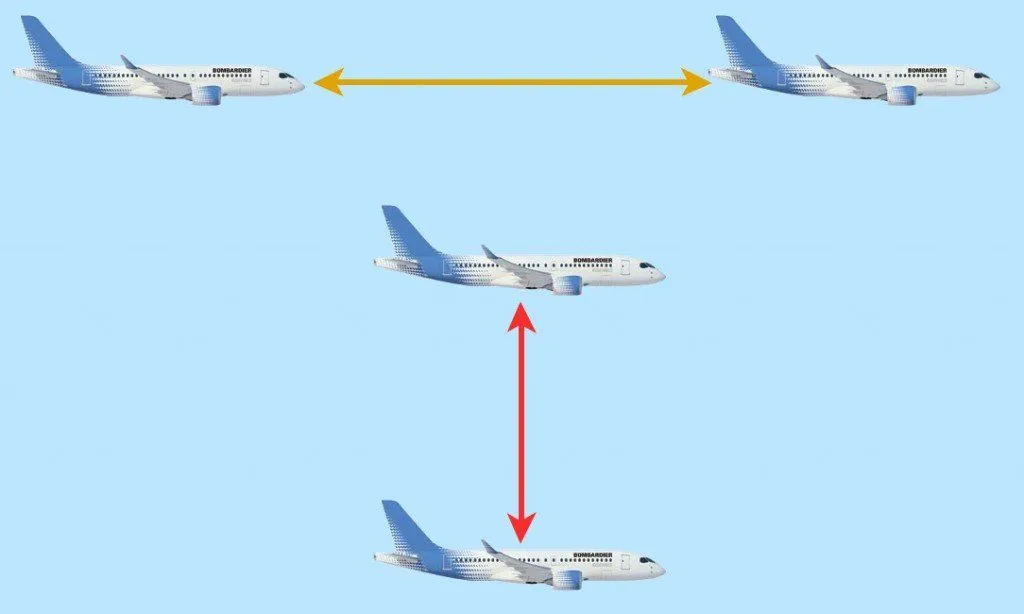
So, how close can two airplanes actually fly to each other? Two aircraft need to either maintain at least 1,000 feet (305 meters) of vertical separation or be kept laterally apart. Under radar control, that lateral gap is a minimum of 3 nautical miles (about 5.6 km) when both planes are within 40 nautical miles of the radar antenna, and 5 nautical miles (about 9.3 km) for traffic farther out en route. These values increase if the planes in question are larger, mainly to allow for wake turbulence.
Interestingly enough, not all aircraft need to be separated by the ATC. Whether airplanes actually need such a separation depends on the class of the airspace in which they’re flying, and the rules under which their pilots are operating their aircraft. These are the rules under which an aircraft can be flown: Visual Flight Rules (VFR), Special Visual Flight Rules (SVFR) and Instrument Flight Rules (IFR). Commercial aircraft are almost always operated under IFR.
Why Do Commercial Planes Need Separation?
The primary reason is to prevent collisions. Commercial airliners carry hundreds of passengers (as opposed to military jets, which carry only a few) and operate under civil air traffic guidelines, which are followed by every commercial aircraft flying in that airspace. By maintaining an appropriate clearance, they make sure to never get in the paths of other aircraft. This minimizes the risk of collisions occurring between planes.
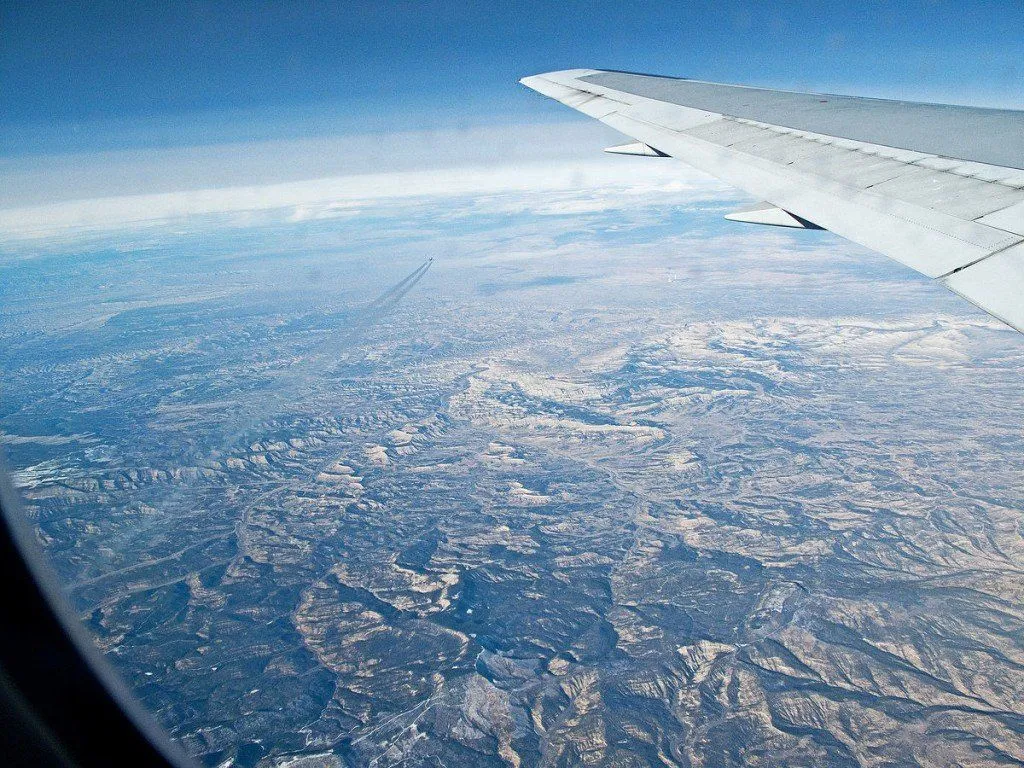
They also maintain a separation because of something called wake turbulence. When a big plane flies, its wings produce the lift it needs, which in turn produces wake turbulence, i.e., turbulence left in the wake of the plane.
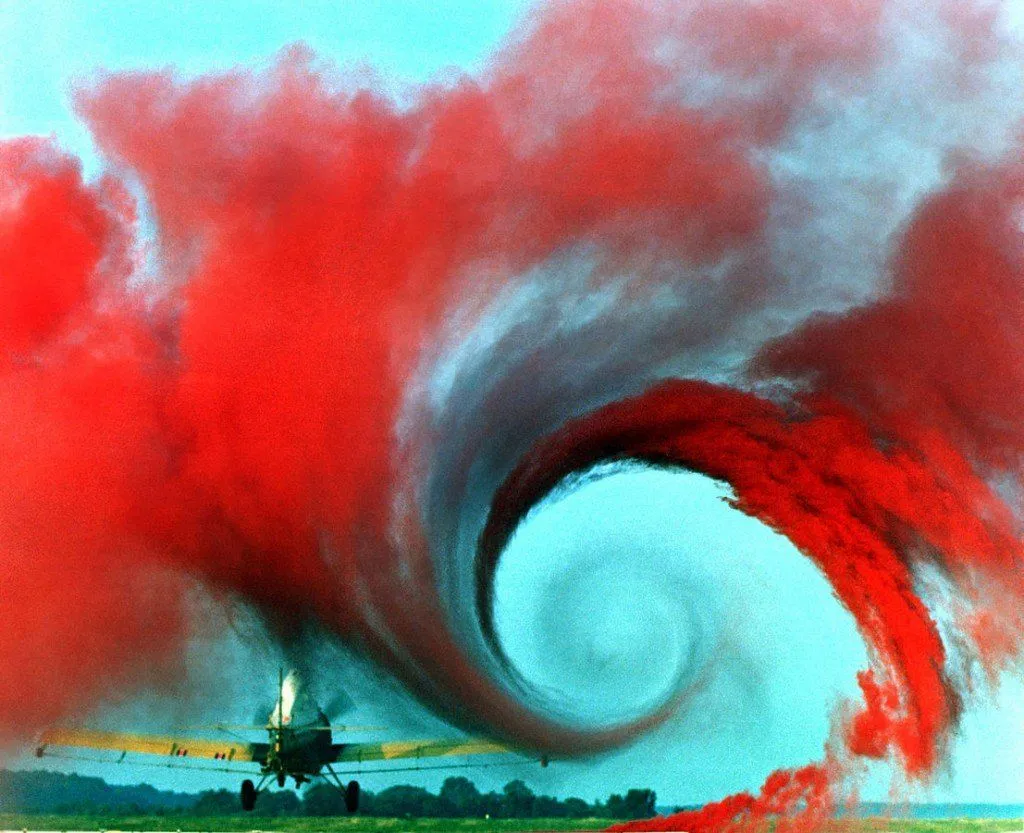
If two commercial planes fly too close to each other, they risk getting mixed up in the disturbance in the wind created by the leading plane, which could have nasty implications for the trailing plane.
Commercial airliners are also less maneuverable than military planes, and their pilots are less likely to be trained in formation flight. Lastly, there is simply not a good enough reason to make planes fly closer than they already are.
If you ever needed a sobering reminder of why all this clearance exists, look no further than what happened over Washington, D.C. On January 29, 2025, an American Eagle regional jet (Flight 5342, operated by PSA Airlines) collided with a U.S. Army Black Hawk helicopter at roughly 300 feet while the jet was on final approach to Ronald Reagan Washington National Airport. All 67 people aboard the two aircraft were killed. In its final report, released in 2026, the National Transportation Safety Board (NTSB) pointed to systemic failures, including a helicopter route running too close to the airliner's approach path and an over-reliance on pilots "seeing and avoiding" each other by eye instead of guaranteed separation. It is a grim illustration of exactly why commercial traffic is normally kept so far apart.
Why Can Military Aircraft Fly So Close To Each Other?
Of course, military aircraft also need a minimum separation from other aircraft, but they easily manage to fly in close, tight formations composed of quite a few planes. There are a few reasons behind this.
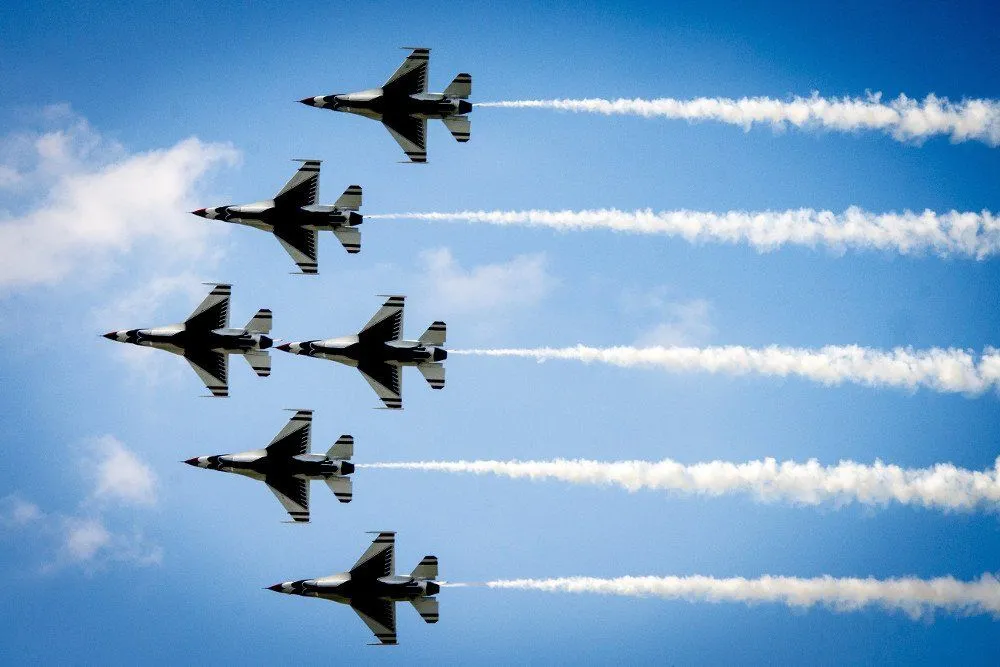
Fighter aircraft are much more maneuverable than commercial planes. They can take sharp turns and dip/climb in a split second at the very last moment. As mentioned earlier, separation between aircraft is for safety during sudden, unexpected maneuvers, not just for avoiding wake turbulence. Since military pilots are talking directly to the other pilots in the formation on a discrete radio frequency at all times, they know well in advance what maneuver their fellow pilots will make and can prep themselves accordingly.
Long before the actual flight, each pilot in the formation is briefed about the general flight plan, how it will be carried out and what formations they will be flying in. Thus, there are minimal chances of a pilot engaging in an unexpected maneuver to begin with. That’s why military pilots manage to pull off such death-defying stunts in the air, because it’s all planned and prepped in advance.
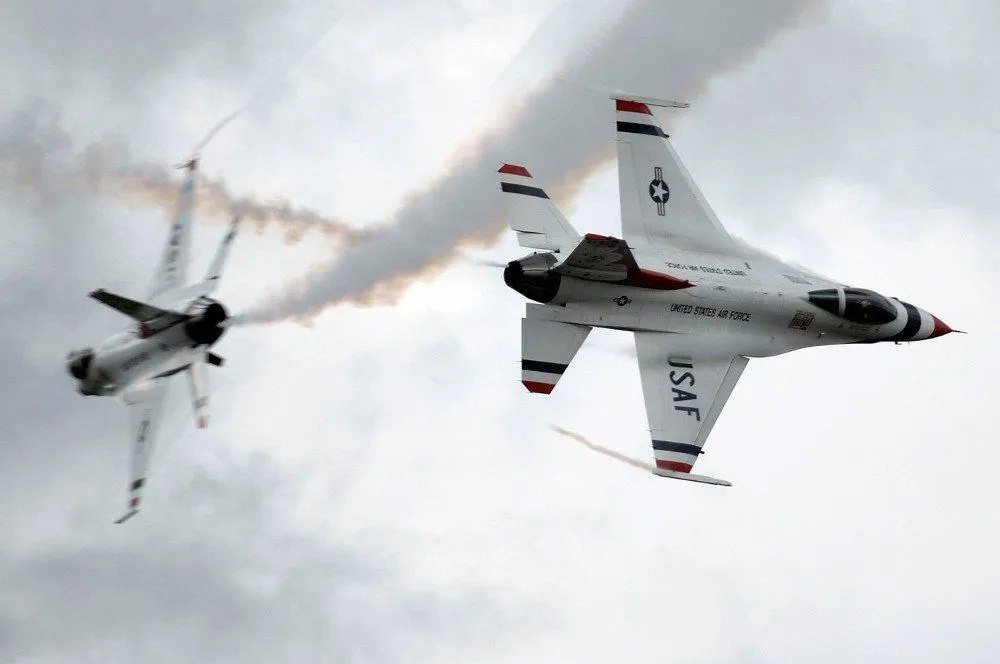
Last but not least, military pilots are trained to fly in tight formations. They spend hours and hours learning about flying in such formations, and then actually practice flying in them. The majority of commercial pilots can be generally assumed to not have that level of training or expertise to fly so close to other commercial planes.
That’s why commercial planes need to maintain a safe distance from each other, whereas military aircraft often fly very close to each other.
References (click to expand)
- Airliners could save fuel by taking a hint from birds flying in formation - news.stanford.edu
- FLYING LESSONS for October 13, 2011 - FAA Safety. faasafety.gov
- Reduced Vertical Separation Minimum (RVSM). faa.gov
- Wake Turbulence. Aeronautical Information Manual, Chapter 7, Section 4. FAA.gov
- FAA JO Order 7110.65W, Air Traffic Control. faa.gov
- Radar Separation. FAA Order JO 7110.65, Chapter 5, Section 5. faa.gov
- Midair Collision, PSA Airlines Flight 5342 and U.S. Army UH-60, Washington, D.C. National Transportation Safety Board (NTSB).