Table of Contents (click to expand)
Aircraft wings sit above the fuselage (high-wing) when designers want better ground clearance, easier loading, and visibility downward (cargo planes like the C-17, the Cessna 172, and most STOL bushplanes). Wings sit below the fuselage (low-wing) when designers prioritize maneuverability, ground stability, and easy passenger access (most commercial airliners like the Boeing 737 and Airbus A320, plus most fighter jets).
Even if one isn’t an aviation enthusiast, it’s quite difficult to miss the sheer grandeur of an aircraft. Upon close inspection, one may even point to the subtle differences between various craft.
However, did you know that while some aircraft have their wings near the bottom of the fuselage, some have them above it? Time to learn more!
Why Do Some Aircraft Have Wings Below The Fuselage, While Others Have Wings Above It?
Before we proceed, you should take a careful look at the following examples of aircraft. The fuselage is the tube-like section that houses passengers, crew, and luggage.
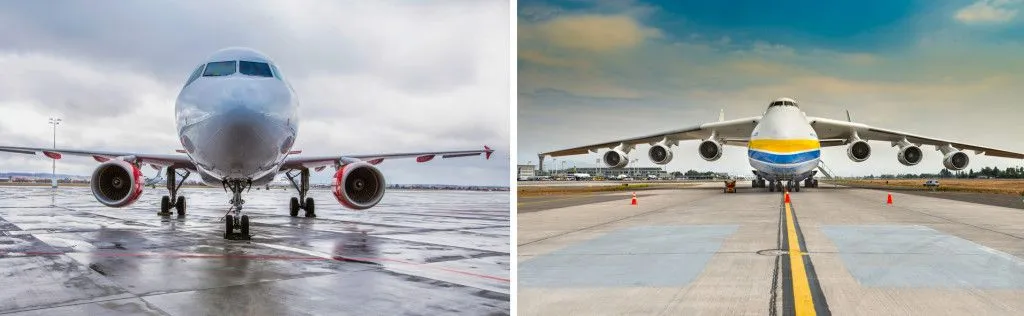
In the first image, the wings originate near the bottom of the fuselage. Such aircraft are called low-wing aircraft. In contrast, the second image shows the wings extending from its top. These aircraft are called high-wing aircraft.
The placement of wings in an aircraft is a crucial aspect of its design, as they play many roles that include:
- Generating lift for flight
- Mounting engines and control surfaces for aircraft control
- Storing fuel
- Acting as a structural component for weight and impact distribution
- Being a part of the crash structure in the event of emergency landings.
Aircraft have various wing configurations, depending on their applications. However, we shall focus specifically on cantilevered wings, which are the face of modern general aviation (commercial, military and civilian).

A cantilever refers to any horizontally projecting structure supported only on one side. To ensure that they don’t collapse, cantilevered structures must be additionally reinforced when compared to loads supported on both ends. Cantilevered aircraft wings support their weight using a wing box that connects them to the fuselage.
Low-wing Aircraft
A low-wing configuration is derived from wings attaching to the lower part of the fuselage. This causes the wing box to take up usable space in the fuselage. This restricts its use to carrying passengers and light cargo only.
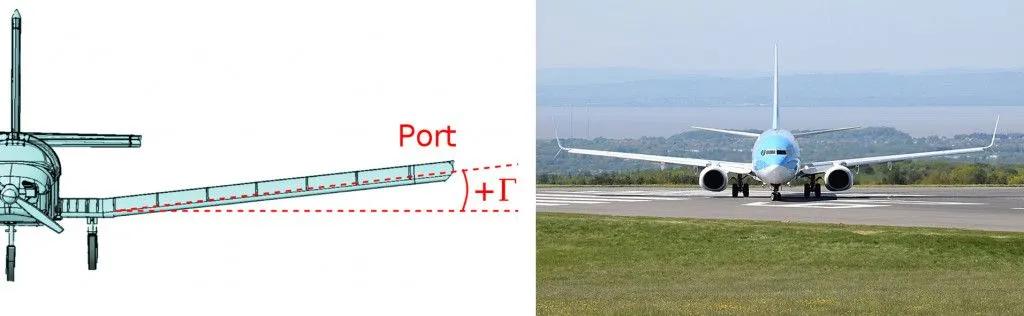
The wings do not protrude straight out of the fuselage; they are instead inclined upwards. This is known as dihedral, and is essential to an aircraft’s flight.
It imparts stability during turning (known as “roll” in aviation parlance), preventing it from staying its course or dropping altitude in the middle of the turn (known as side-slip).
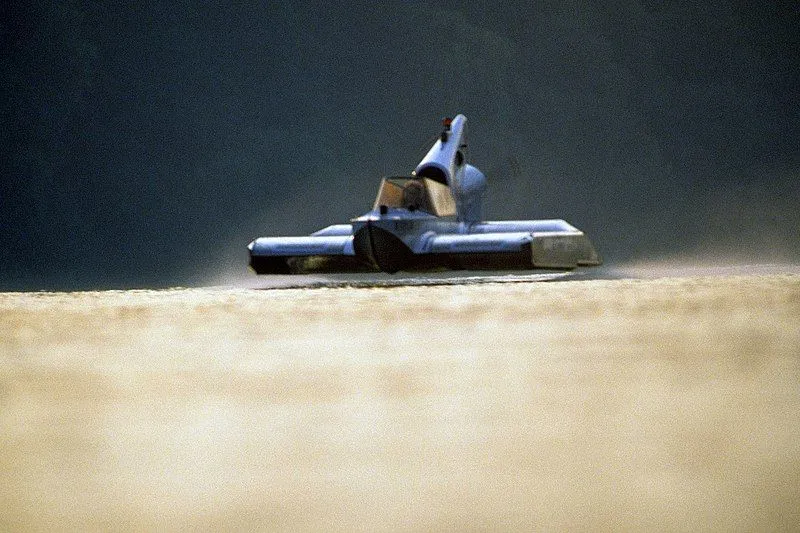
Low-wing aircraft are less susceptible to drag, but can incur a high ground effect upon landing. Occurring due to air between the wing and the ground, ground effect causes the aircraft to float, preventing it from landing. Low-wing aircraft are better suited to land on paved surfaces, as critical components are close to the ground.
Low-wing design offers great forward and upward visibility. Unless the aircraft is in a roll, the wings can obstruct a pilot’s view of the ground, and consequently, approaching air traffic.
High-wing Aircraft
When wings attach directly to the top of the fuselage, a high-wing configuration is achieved. As the wing box is out of way, this setup makes it ideal for freighters and cargo aircraft.
As the aircraft’s body is located ‘under’, the wings, its center of weight tends to bring it back to an upright position, much like a pendulum. While this imparts a lot of stability for rolling maneuvers, it fundamentally resists any rolling. This requires other control surfaces, such as ailerons, to help turn the aircraft. To help with this, the wings are inclined downwards, or in an anhedral position.
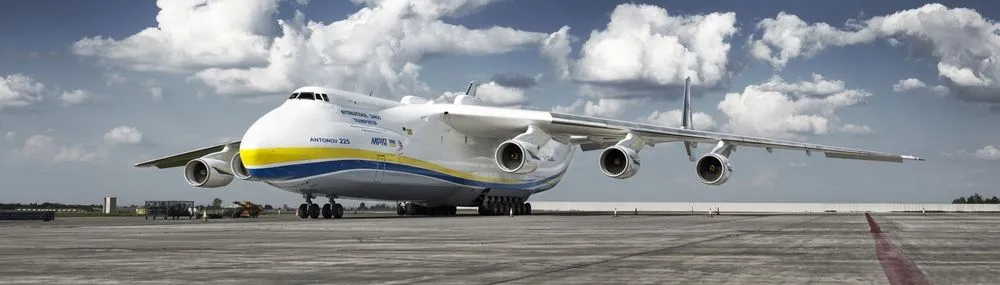
High-wing aircraft are aerodynamically more susceptible to drag, but experience less ground effect. They are more forgiving on rough terrain, as wings and engines are sufficiently cleared upon touch down. High-wing aircraft offer great downward visibility, as the wings do not obstruct the pilot’s view. However, such aircraft can be compromised during roll.
How Are Airplane Wings Attached To The Fuselage?
So how do the wings actually stay fixed to the body of the plane? The honest answer is that they don't simply poke out of the fuselage like a pair of arms; they form part of one continuous structural skeleton. Inside every wing run one or more spars, the long load-bearing beams that stretch from the fuselage out toward the wing tip. The FAA describes spars as the principal structural members of a wing, supporting both the distributed lift and concentrated weights such as engines and landing gear. The ribs you can sometimes glimpse through an unfinished wing give it its curved aerofoil shape and pass the skin's loads back to the spars.

When a wing generates lift, all of that force shows up as an enormous bending moment at the wing root, the point where the wing meets the body. That load has to go somewhere, so most modern airliners use a center wing box: a heavily reinforced box-beam structure, buried in the belly of the fuselage, that mates the left and right wings together and ties them into the body. At the inboard end of each spar, wing attach fittings (essentially thick metal lugs bolted through with several high-strength bolts) make the final connection. These joints are deliberately over-engineered, because a failure here would be catastrophic. It's precisely why you almost never hear of a wing simply detaching during normal flight.
Does Wing Configuration Really Matter?
Short answer – No! Both formats of wings have their pros and cons. However, this doesn’t make one aircraft less conducive to flying than the other. The choice of wings is purely dependent on the aircraft’s intended purpose, and no one design presents inherent superiority over the other.
Other Wing Configurations
It is worth noting that aircraft are not restricted to high- or low-wing configurations. Some of these configurations are enumerated below, but they don’t find widespread use in general commercial or military aviation, owing to their design shortcomings.
1. Fused-wing Configuration
A fused-wing configuration, also known as a blended wide body, is a unique aircraft design. In this, the fuselage itself converges to form wings, as opposed to distinct wings that ‘attach’ to it.
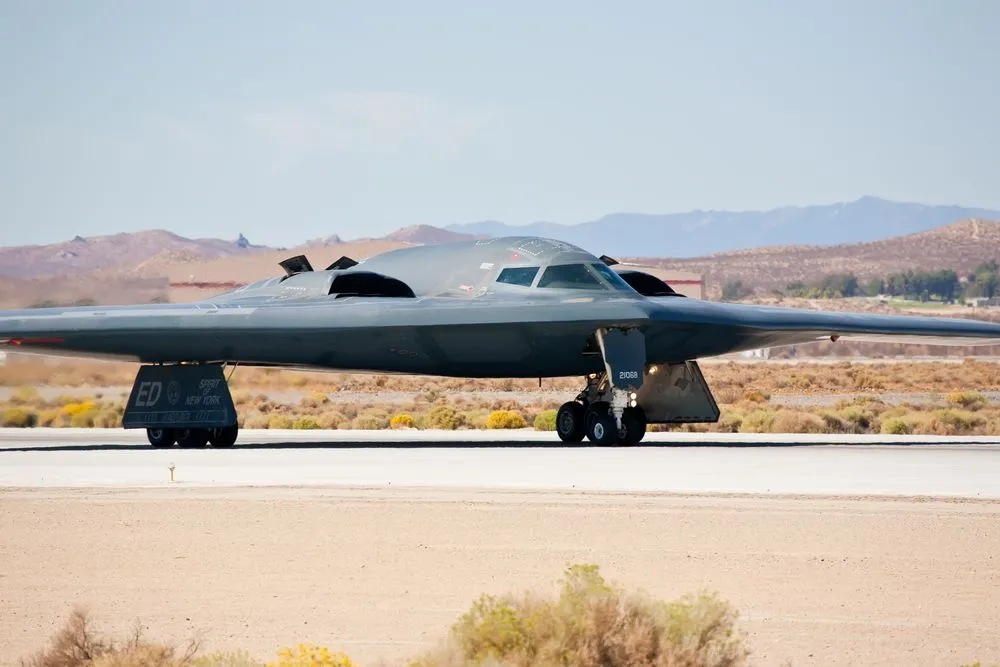
Its shape allows the entire aircraft to generate lift, as opposed to restricting this responsibility only to the wings. Its downside is severe space constraints. One of the most popular examples of fused-wing configuration aircraft is the B2 stealth bomber in the United States Air Force. They are also becoming increasingly popular in unmanned aerial vehicle design.
2. Mid-wing Configuration
As the name suggests, such configurations are achieved when the wings are mounted in the middle of the fuselage. This causes the wing box to occupy prime space within the aircraft, making it unsuitable for passengers or cargo.
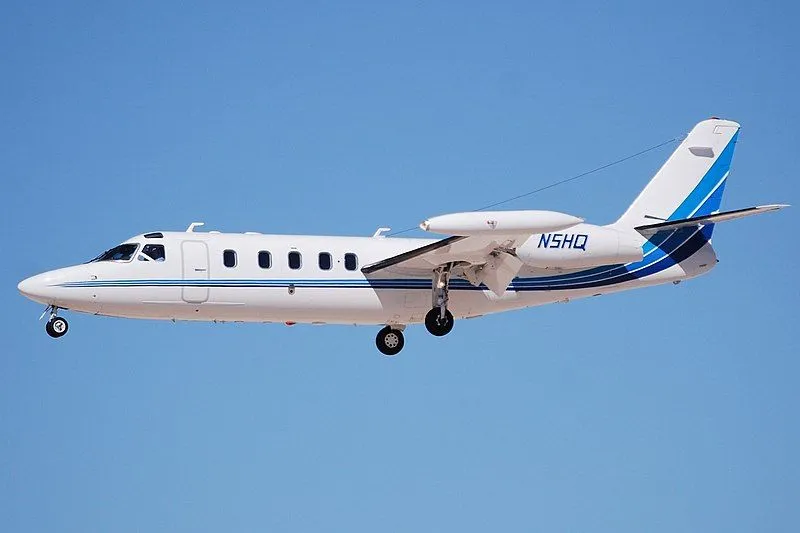
Mid-wing configuration aircraft find use in acrobatic, private and combat aircraft.
3. Tandem-wing Configuration
Tandem-wing aircraft comprise both high- and low-wing configurations arranged in a staggered pattern, one behind the other.
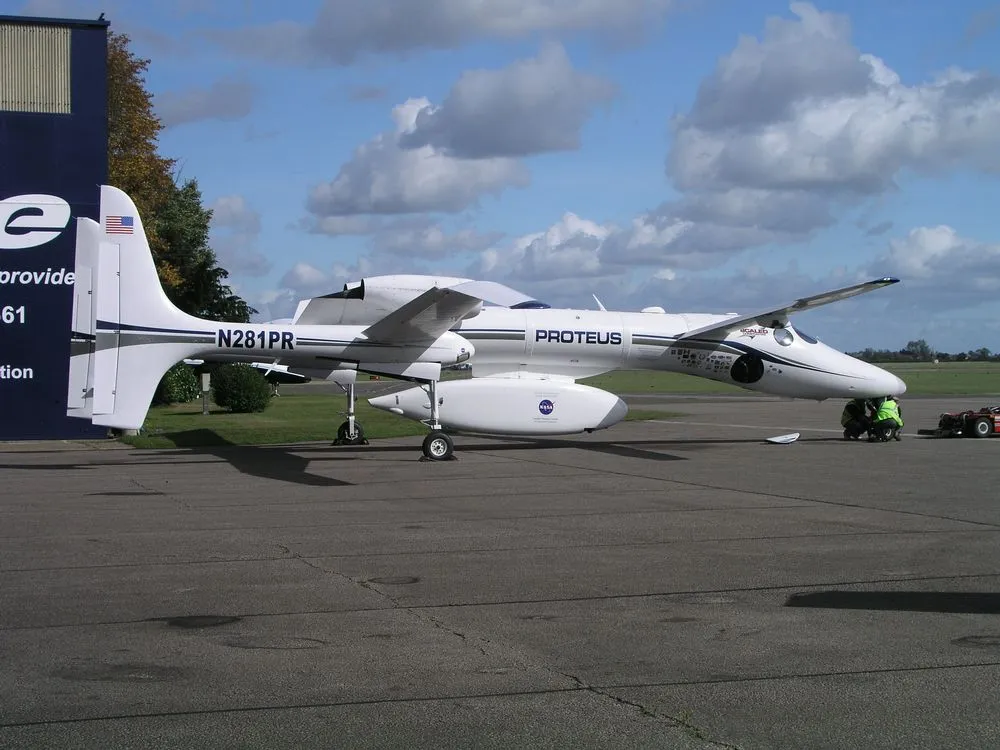
They demonstrate exceptional stability and are even purported to reduce wing span. They are being increasingly used in unmanned aerial vehicles and other light aircraft.
4. Braced Wings
Unlike all the formats mentioned above, braced wings are the most unique, in that they are not cantilevered. Instead of wing boxes; they rely on pylons, struts and cables to support their structure.
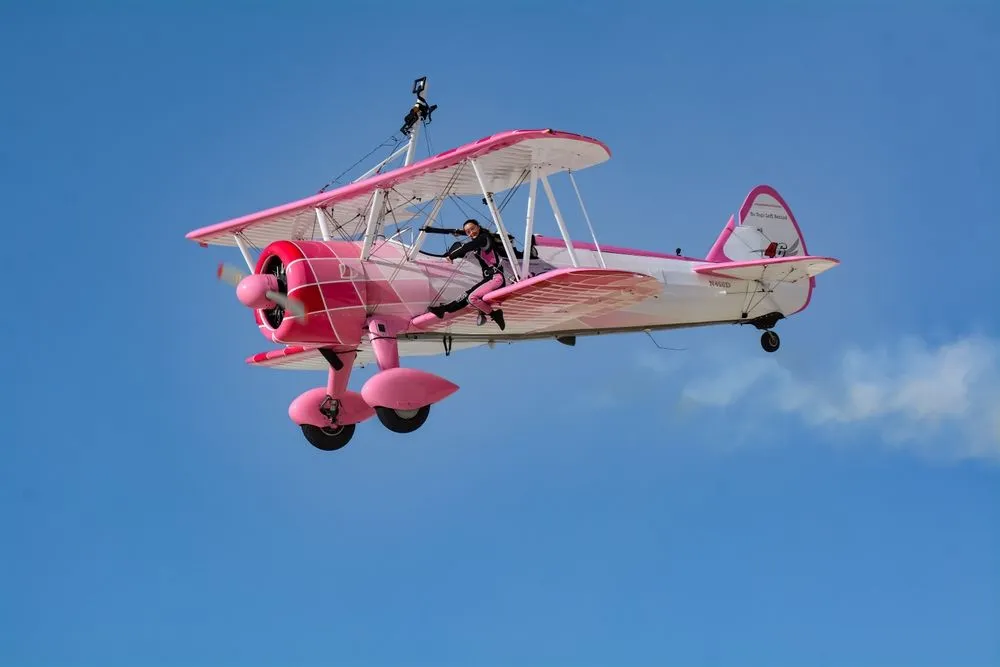
They are neither aerodynamically nor structurally as sound as cantilever wings, which reduces their application to light recreational aircraft, such as gliders.
Why Do Airplanes Have The Wingspan They Do?
Another question this topic raises is a deceptively simple one: why do planes have the wingspan they do, and could the wings just be made longer? Aerodynamically, longer usually is better. A wing's aspect ratio compares its span (tip to tip) with its chord (the front-to-back width), and NASA's numbers are blunt about it: for a given wing area, a long, slender, high-aspect-ratio wing produces far less induced drag than a short, stubby one. Induced drag is the penalty paid for the swirling vortices that spin off the wingtips, and the farther apart those tips sit, the smaller that penalty becomes. Because it scales with the square of how hard the wing is working, induced drag dominates the slow, high-lift phases of flight such as the climb, so trimming it pays off directly in fuel burned.

If long wings are so efficient, why not make them longer still? The limit is the airport, not the air. Under the ICAO Aerodrome Reference Code, Code E gates and taxiways handle wingspans up to about 65 m (213 ft), while Code F covers spans from 65 m up to 80 m. The double-deck Airbus A380 was deliberately designed with a 79.75 m (261 ft) span to squeeze inside this so-called "80-metre box". Boeing took a cleverer route with the 777X: its wings span roughly 71.8 m (235 ft) in flight, but the outer tips fold upward on the ground to bring the span down to about 65 m, dropping it from a Code F to a Code E aircraft so it can share the same gates as the older 777. Gliders, which never have to fit a gate, go to the opposite extreme, wearing very long, thin wings purely for efficiency.
A Final Word
Wing design is greatly impacted by aerodynamics and the machinery mounted on them. Electrification of aviation is surely the next big change in the aviation industry. As to how this will impact wing design… only time will tell!
References (click to expand)
- Aerodynamic Analysis of the Truss-Braced Wing Aircraft (2014). NASA Technical Reports Server.
- Blended Wing Body. NASA Aeronautics.
- Pilot's Handbook of Aeronautical Knowledge. FAA.
- High Wing vs. Low Wing Aircraft. Airplane Academy.
- Wing configuration. Wikipedia.
- Aviation Maintenance Technician Handbook - Airframe (FAA-H-8083-31B). FAA.
- Introduction to Wing Structural Design. AeroToolbox.
- Induced Drag Coefficient. NASA Glenn Research Center.
- ICAO Aerodrome Reference Code. SKYbrary.
- How the 777X's folding wing tips work. The Air Current.