Westbound flights take longer because they fly into the jet stream, a strong west-to-east river of high-altitude wind. Eastbound flights ride that same wind as a tailwind, so they arrive sooner. The effect is largest on mid-latitude routes (like London to New York) where the jet stream is strongest, and is only meaningful because the plane and the surrounding atmosphere both rotate with Earth, so the planet's rotation itself does not directly slow the plane down.
If you travel from New York to London, the flight typically takes around 7 hours, but when you travel from London to New York, it invariably takes significantly longer (often 8 hours or more).

If you’re a frequent flier, then you may have noticed that flights going from east to west take more time than the the flights traveling from west to east. Do you know the reason behind that?
Furthermore, Earth rotates from West to East. So, from a purely logical standpoint, the travel from east to west should take less time, since we’re in a plane that’s flying towards west, which means that the destination is actually spinning towards us (due to Earth’s rotation).
However, in reality, that clearly doesn’t happen. It takes longer to fly west than it does to fly east. Why is that?
Different Speeds Of Rotation
Earth is spherical… mostly. This shape influences a lot of things, including the seasons, weather conditions, GPS and yes, flight times.
Due to Earth’s spherical shape, different parts of the planet rotate at different speeds. The rotational velocity of Earth decreases as one goes from the Equator to the poles.
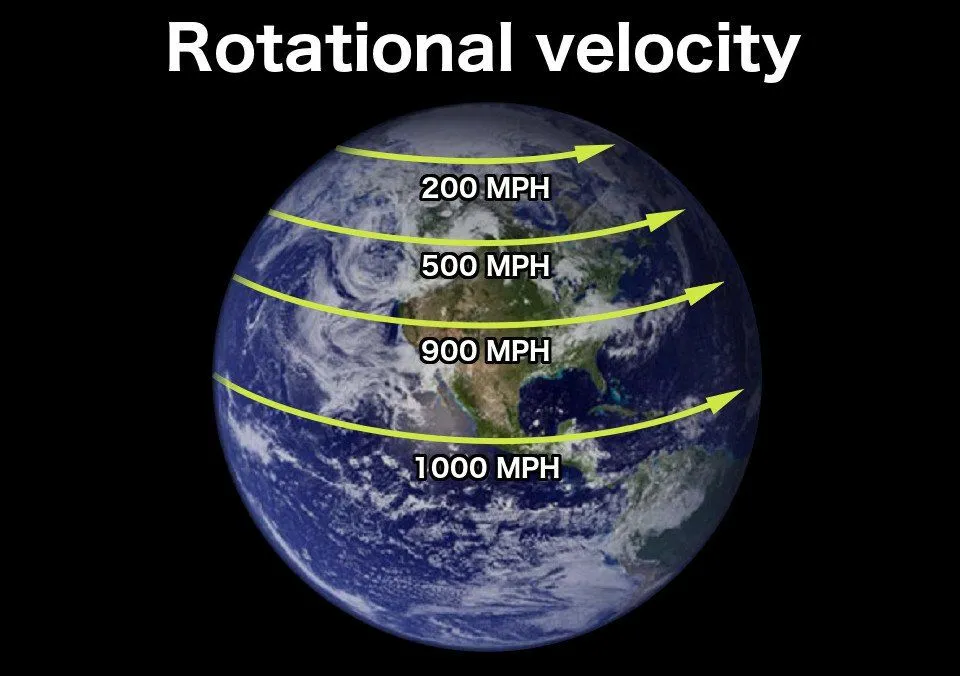
A place on the Equator will experience higher rotational velocity due to the fact that it has to cover the longest distance (because its movement will be along Earth’s circumference) within 24 hours, i.e., the length of a day. Since, the time available to cover a complete rotation is fixed (i.e., 24 hours), places on the Equator must rotate faster in order to complete one rotation every 24 hours.
That’s why different places on Earth experience different rotational velocities.
Traveling East Or West
When an airplane takes off from a specific point on Earth, it’s already travelling at the rotational speed of Earth at that point.
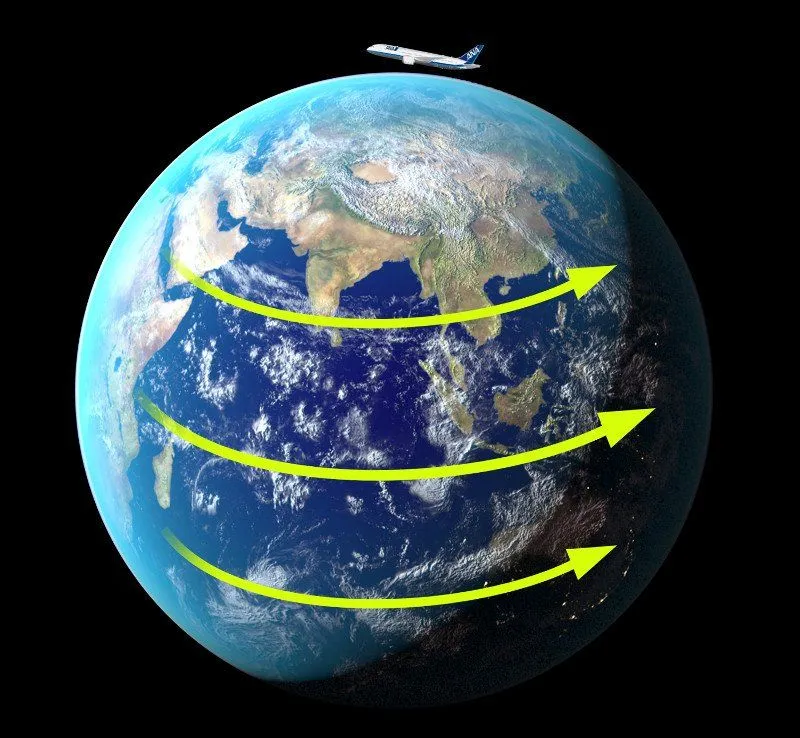
In other words, the plane is affected by Earth’s rotation, meaning that it also spins away from its destination as the destination spins towards the plane. Therefore, the net result remains the same, because the plane always has a relative velocity with respect to Earth’s rotation.
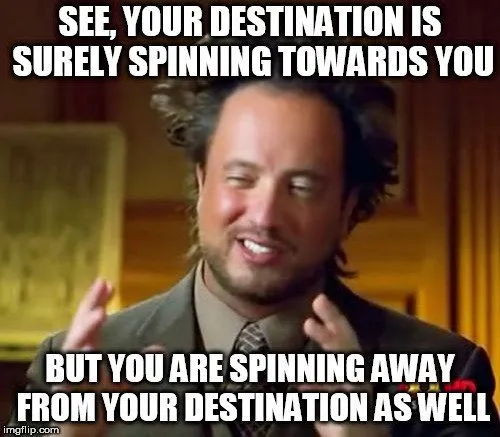
This is why the crude logic that traveling west in an airplane ought to take less time because ‘the destination spins towards the plane’ doesn’t hold up.
However, traveling east does take less time than traveling west.
Jet Streams
Jet streams are strong winds that blow about 5 to 9 miles (8 to 13 km) above Earth’s surface, from west to east. More specifically, these are relatively narrow bands of strong winds that blow in the upper levels of the atmosphere. Although they blow from west to east, their flow often shifts to the south and north.
These winds typically blow at 80 to 140 mph (130 to 225 km/h), but in strong winter jets they can exceed 275 mph (440 km/h). They help regulate climate all over the world. British Airways once crossed the Atlantic from New York to London in under 5 hours riding such a jet, with the plane clocking a ground speed of more than 800 mph.
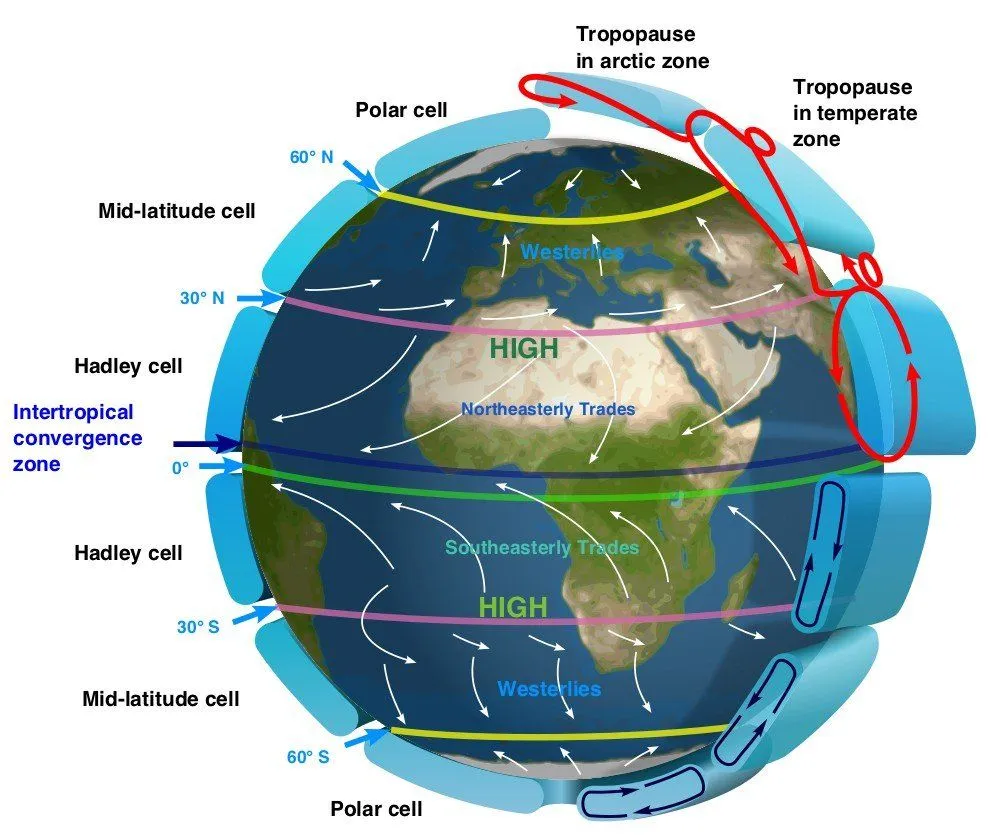
On every planet or moon with an atmosphere, the global wind pattern is driven by uneven solar heating, and the planet’s rotation rate shapes the pattern through the Coriolis effect (on very slow rotators like Venus, other forces take over). On Earth, the Coriolis effect deflects poleward-moving air to the east, and the result is the steady west-to-east flow of the jet streams.
Flights with these jet streams on their tails take less time to reach their destination than those facing these winds head on. Airline pilots navigate into these tunnel-like air patterns, which helps the plane take advantage of the fast-blowing winds, saving both time and fuel (and by extension, money).

That’s why, when airplanes fly from west to east, it takes less time (than it does going east to west), because jet streams help ‘piggyback’ them to their destination, making the flight time shorter.
Does Earth’s Rotation Affect Flight Time?
Here’s the short answer that trips up almost everyone: no, Earth’s rotation does not directly affect how long a flight takes. It feels like it should. The planet is spinning eastward at roughly 1,670 km/h (about 1,040 mph) at the Equator, so surely a plane heading west could just hover and let the destination rotate toward it, right?

The catch is that the air the plane flies through is spinning along with the planet. Earth’s gravity holds the atmosphere in place, and friction between the surface and the air keeps the whole envelope rotating eastward at very nearly the same rate as the ground below. A plane sitting on the runway is already moving east at that full rotational speed, and so is every parcel of air around it. When it lifts off, it doesn’t leave that motion behind.
The Smithsonian’s aviation explainers use a tidy analogy: jump straight up inside a moving train and you land in the same spot, not several seats back, because you were already moving with the train. The same logic keeps you from being thrown across the cabin when you stand up at cruising altitude. The plane, the passengers, and the surrounding air all share Earth’s eastward spin, so the rotation itself simply cancels out. What is left over, and what actually changes your flight time, is the wind moving relative to that already-rotating air, above all the jet stream.
Is It Faster To Fly East Or West? (And Why Your Return Flight Feels Longer)
For long routes that line up with the jet stream, flying east is usually faster than flying west. The jet stream blows from west to east, so an eastbound plane rides it as a tailwind while a westbound plane fights it as a headwind. On the busy North Atlantic corridor, that difference between the outbound and return legs of the same trip is typically in the range of 30 to 90 minutes, and it can stretch toward two hours when the winter jet is roaring.

So if your trip out was quick but the journey home dragged, the jet stream is the usual culprit, not your imagination. A New York to London hop might land in around 6 to 7 hours, while the London back to New York leg often runs closer to 7 or 8 hours. The eastbound direction even holds the record: in February 2020, riding the ferocious winds of Storm Ciara, a British Airways Boeing 747 crossed from New York to London in just 4 hours and 56 minutes, hitting a ground speed of about 1,327 km/h (825 mph) without ever flying faster than sound relative to the air around it.
One caveat: the “east is faster” rule only holds where a flight actually crosses the jet stream. On north-south routes, or short hops that never climb into those high-altitude winds, the direction barely matters. The effect is strongest on mid-latitude, roughly west-to-east routes in winter, when the temperature contrast that powers the jet is at its sharpest.
References (click to expand)
- Physical Systems of the Environment - G107 - www.iupui.edu
- The Jet Stream. The National Weather Service
- What is the jet stream? - Met Office. The Meteorological Office
- What Is the Jet Stream? NESDIS - National Oceanic and Atmospheric Administration
- How does Earth’s rotation affect the speed of an aircraft? Smithsonian National Air and Space Museum
- Does Earth’s rotation affect flight times? The Naked Scientists
- Fastest subsonic transatlantic commercial flight. Guinness World Records