Table of Contents (click to expand)
If Earth suddenly stopped rotating, the atmosphere would keep moving at its original ~1,100 mph (1,770 km/h), sweeping anything not firmly attached to bedrock (buildings, soil, oceans) across the surface. Days and nights would each last about six months, summers and winters near the equator would become brutal, the equatorial ocean bulge would drain toward the poles, and the planet’s magnetic field would weaken because the core dynamo depends on rotation.
There are just so many things that we take for granted: our teeth, our neighbor’s WiFi password, and even the existence of life on Earth! The three things that I listed here are absolutely unrelated, but that’s not the point I’m trying to make. I’m trying to express how the smallest and most obvious things that happen every single moment all around us shouldn’t be taken for granted. I
f everything on this planet stopped moving suddenly, it could mean instant obliteration of life as we know it.
More specifically, what if Earth, which constantly rotates on its axis, suddenly decides to call it quits and stop spinning?
What If The Spinning Stops Suddenly?
First off, rest assured that this is not going to happen, at least not for a few billion years. However, just for the sake of curiosity, what if…?
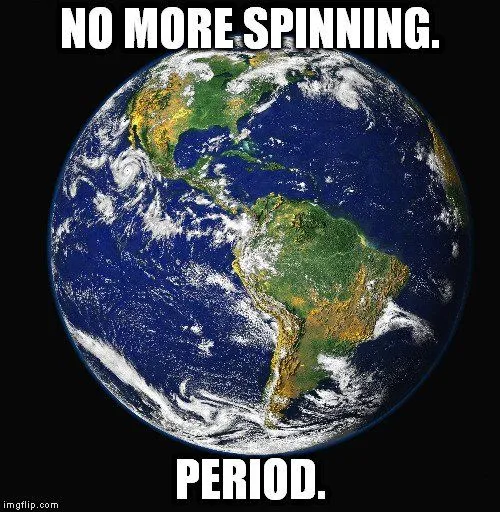
Needless to say, the effects of such an incredible event occurring so abruptly would cause nothing short of annihilation. According to NASA, a sudden stop of Earth’s spinning motion would displace everything that’s not firmly fixed to the bedrock. The reason for this is that, despite the Earth’s spin being stopped, the atmosphere would continue to be in motion at its original speed, i.e., 1100 miles per hour (1770 km per hour). Therefore, everything that’s not firmly attached to the bedrock will be swept off the ground; huge rocks, topsoil, buildings, vehicles, and even your beloved television, will be lifted up and swept away by the atmosphere.
That’s probably why being described as ‘down to earth’ is so desirable to many people.
What If The Spinning Slows Gradually?
Another variation of this global crisis is a bit less dramatic. What if Earth lost its ability to spin over a long period of time, rather than abruptly? Assuming that the different components of the ecosystem remain intact, the effects in this case would be quite different from what would have happened if it simply stopped suddenly.
Day And Night
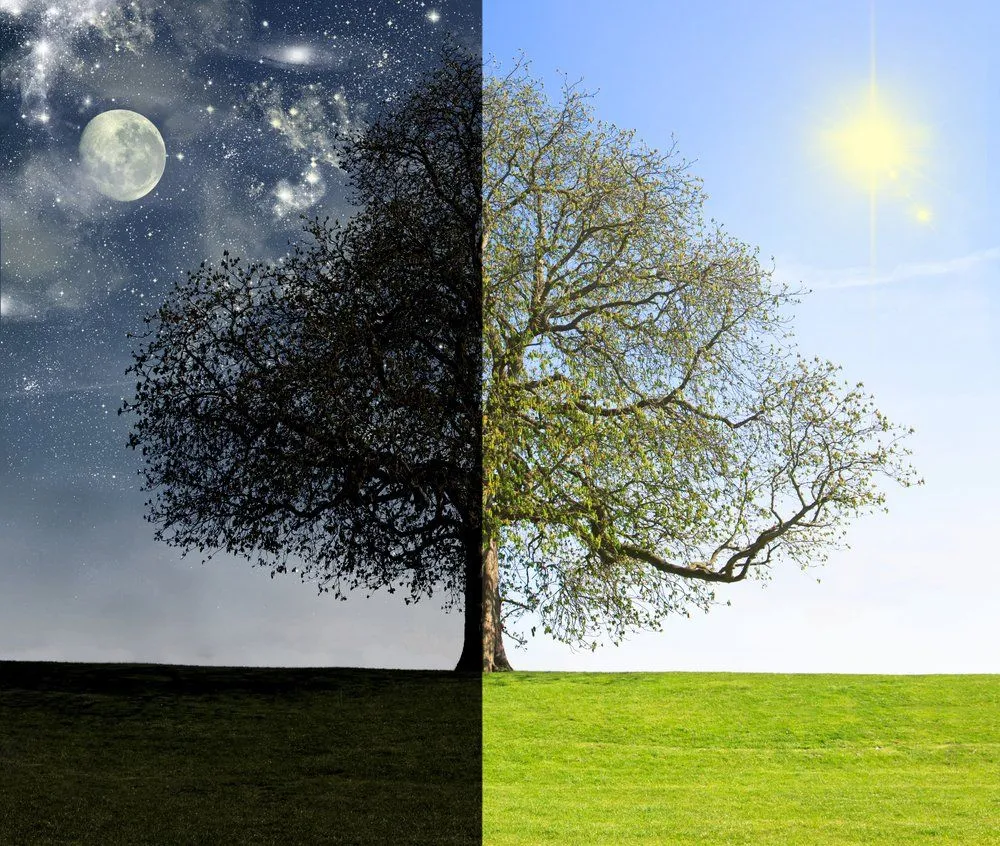
To start with, the most basic feature of our lives – the 24-hour ‘thing’ that we divide existence into, would be altered. It’s common knowledge that Earth takes 24 hours (approximately) to complete one spin on its axis, which in turn causes every creature on Earth to experience day and night. It’s pretty basic: while spinning, the side of Earth that faces the sun experiences day and the side facing away from the sun experiences night. This cycle goes on and on, forming weeks, years, and millennia. In fact, almost everything that we do relies upon this singular event. We always know that there’s going to be a ‘tomorrow’ – no matter what!
However, if Earth stopped spinning gradually, what it accomplishes in a single day might eventually take a year to complete; countries on the side facing the sun would experience daylight for 6 months, while those living on the side facing away from the sun would experience a six-month night. This is precisely what life is like at the North and South poles today at different points of the year.
Seasons
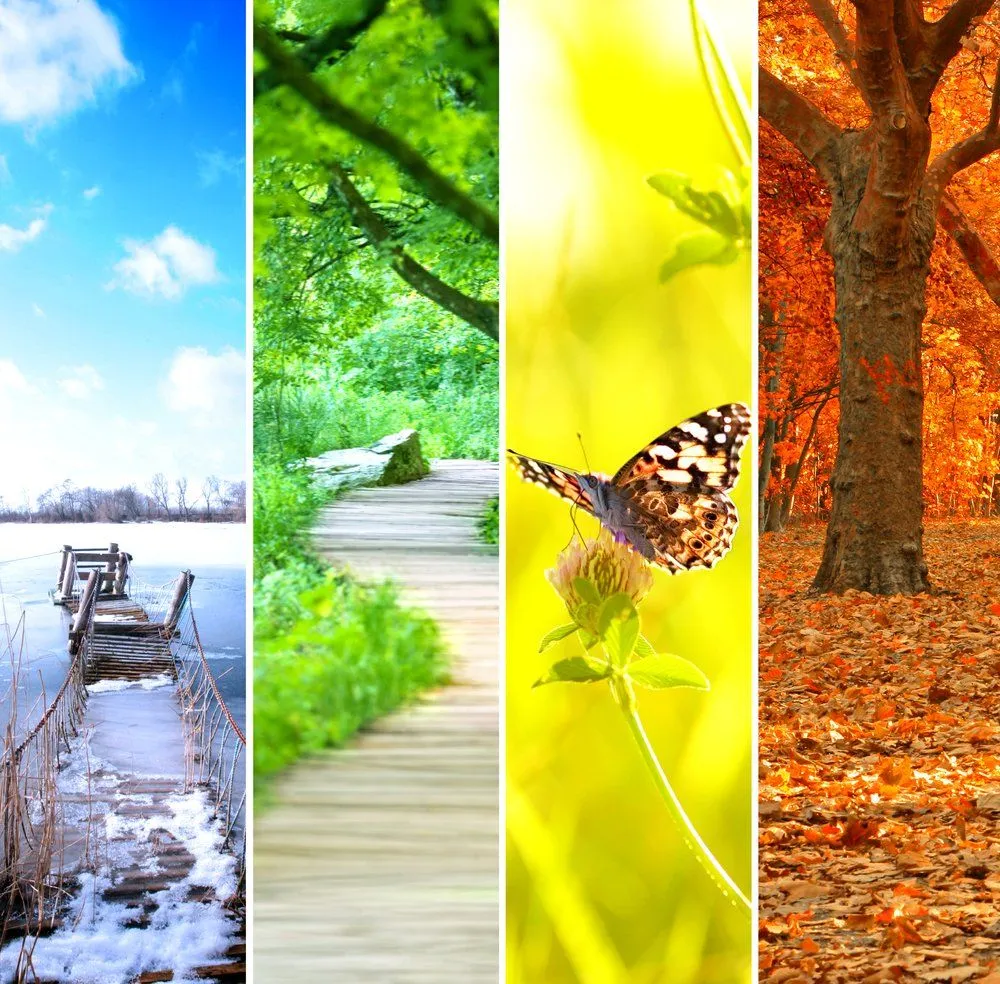
A sudden stop of Earth’s spin certainly wouldn’t stop seasons from occurring entirely, but it would have a marginal impact on the ‘way’ they behave. Currently, we experience a very smooth transition between various seasons; but in the absence of our planet’s spin, it wouldn’t be so comfortable, especially in the regions that lie on the Equator. Along the Equator, cities would experience fiery summers, while the areas facing away from the sun would face deadly winters. This would undoubtedly cause a tremendous change in the lives of humans, and many would succumb to these extremes. Also, for animals and other creatures, it would be even more difficult, as they would have a very hard time surviving in those conditions without any external aid (which they usually don’t have).
The result? Rapid extinctions of countless species across the globe.
So What? I’ll Just Go And Live In The Polar Regions!
Unfortunately, that isn’t going to work out very well either…
Through all the years of evolution and the development of human societies, we have become so accustomed to the idea of seas, oceans, and their boundaries that we now take them for granted. However, what if I told you that the line marking the end of an ocean and the start of a landmass was dependent on the spin of Earth?
Actually, it is. You see, sea level has always been at equilibrium with Earth’s gravity (which pulls the water towards the center of the Earth). Furthermore, due to the rotation of the planet, an outward centrifugal force is generated, which makes a ‘bulge’ along the center of the planet. After millions of years of rotation on its axis, Earth acquired this bulge along its Equator, giving it the shape of a flattened sphere, or an ellipsoid (in technical terms).
No rotation would mean no centrifugal force, which would cause the oceans to start moving towards the poles, completely drowning the polar regions. In contrast, a gigantic landmass would emerge along the Equator of the planet, which would then be surrounded by two vast water bodies on either side.
Absence Of A Magnetic Field
Due to the absence of the rotational motion, Earth’s magnetic field might also vanish. Without the magnetic field, we would be vulnerable to countless hazards (solar flares and other harmful radiation, just to start…) that the mighty sun would choose to throw our way. We have covered more about this fascinating battle between the Sun and our magnetic field in this article.
The good thing is, none of this is going to happen anytime soon; in fact, it won’t happen for millions, or even billions, of years. That’s definitely a relief!
That being said, it definitely teaches us one very important lesson…we should respect our calendars more and be grateful that this crazy world keeps spinning into tomorrow!
How Fast Is Earth Actually Spinning?
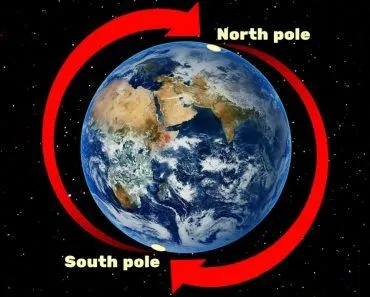
Here is the strange part of this whole thought experiment: you are being flung around in a giant circle at this very moment, and you cannot feel a thing. At the Equator, Earth's surface rotates at roughly 1,670 kilometers per hour (about 1,040 miles per hour), which is quicker than most passenger jets cruise. That figure is not a mystery; it is simple arithmetic. Our planet is about 40,075 kilometers around at the Equator, and it completes one full turn relative to the distant stars in 23 hours, 56 minutes and 4 seconds (a period astronomers call a sidereal day). Divide the distance by the time, and out pops that dizzying speed.

You are not spinning at that speed everywhere, though. The rotational velocity shrinks as you move away from the Equator, scaling with the cosine of your latitude. At 45 degrees north or south, roughly the latitude of Minneapolis or Milan, the ground beneath you is sweeping along at about 1,180 kilometers per hour (730 miles per hour). Stand exactly on the North or South Pole and your speed drops to zero; you would simply pirouette in place once a day. And the reason none of this hurls us off our feet is that we, the air, and the oceans are all moving together at a rock-steady velocity. You only sense motion when it suddenly changes, which is precisely why "stopping" the planet would be so violent.
What If Earth Stopped For Just One Second?
One of the internet's favorite versions of this question is oddly specific: what if Earth froze its spin for a single second, or a nanosecond, or some even tinier sliver of time? It feels like a shorter pause ought to be a gentler one. The physics, however, does not care about the label on the clock. It cares about two things: how fast everything was moving, and how long the mismatch is allowed to last.
Picture the Equator again, with the ground and everything on it barreling along at about 1,670 kilometers per hour, or roughly 460 meters every second. If the solid Earth truly halted and stayed put for one full second, inertia would keep the oceans, the atmosphere, and every unanchored object coasting at that original speed. In that single second, loose material at the Equator would be swept some 460 meters eastward at highway-shredding speed, which is more than enough to flatten cities and spawn ocean-wide tsunamis. So a genuine one-second stop is every bit as lethal as the sudden halt we described earlier.
The popular "one nanosecond" version, however, is a different animal. A nanosecond is a billionth of a second, so in that blink an object would drift less than a thousandth of a millimeter before the surface caught back up with it. The takeaway is subtle but satisfying: the danger is never the word "second" versus "nanosecond" on its own. It is the size of the speed mismatch multiplied by how long the planet actually stays stopped.
Would We Lose Gravity Or Get Flung Into Space?
A surprising number of people arrive at this question convinced that Earth's spin is what "holds us down," and that a stationary planet would leave us floating away or switch gravity off altogether. It is a natural guess, but it gets the physics backwards. Gravity comes from mass, not motion. Earth pulls on you because it is a colossal ball of rock and metal, and that pull would not weaken one bit if the planet stopped turning.
If anything, standing still would make you very slightly heavier. Right now the spin produces a small outward centrifugal effect that gently offsets gravity, and at the Equator, where it is strongest, it amounts to only about 0.3 percent of your weight. Take the spin away and that tiny discount disappears, so a person at the Equator would weigh a fraction of a percent more, not less. Nobody drifts off into orbit.

This is also why a rumor that went viral in early 2026, claiming a secret NASA project called "Project Anchor" would let Earth "lose gravity for 7 seconds" on 12 August 2026, was pure fiction. NASA flatly denied it, explaining that the only way for Earth to lose its gravity would be for the planet to lose its mass, meaning its core, mantle, crust, oceans and atmosphere. The only thing genuinely happening in the sky that day is an ordinary total solar eclipse, which has no effect whatsoever on how hard the ground pulls on your feet.
Will Earth Ever Actually Stop Spinning?
Here is the reassuring news: Earth is not going to grind to a halt, not now and not on any timescale that should keep you up at night. It is true that our planet's spin is very gradually slowing, mostly because of tidal friction with the Moon. The Moon's gravity raises bulges in our oceans, and the drag of that water against the seafloor acts like a feather-light brake on the whole planet.

The effect is real but almost comically slow. The length of a day is stretching by only about 1.7 milliseconds per century, and the Moon is drifting away from us at roughly 3.8 centimeters per year (a figure measured by bouncing lasers off reflectors left on the lunar surface). Run the clock backwards and the fingerprints show up in the rocks: growth bands in ancient corals and layered tidal sediments suggest a day was closer to 22 hours some 600 million years ago. Run it forwards and the picture is clear, too. The braking is so gentle that Earth could never spin down to a true standstill on any meaningful timescale; long before that could happen, our aging Sun is expected to swell into a red giant and end the story anyway. In short, this crazy world will keep spinning into every tomorrow you are ever likely to care about.
References (click to expand)
- What would happen if the Earth stopped spinning?. IMAGE
- What would happen if the magnetic field of the Earth suddenly .... IMAGE
- 24a.The Rotating Earth - NASA. The National Aeronautics and Space Administration
- How Fast Does Earth Spin?. Encyclopaedia Britannica
- If the world stopped spinning, would people be lighter or heavier?. Ask a Mathematician / Ask a Physicist
- Will Earth lose gravity for 7 seconds on Aug. 12, 2026?. Snopes
- No, Earth Won't Lose Gravity for 7 Seconds on August 12, NASA Says. Gizmodo
- Fact or Fiction: The Days (and Nights) Are Getting Longer. Scientific American