The lines on the rear window are an electric defroster grid that heats the glass to clear fog and ice. The black dots, called the frit, are baked-on ceramic enamel that hides and UV-protects the adhesive holding the window in place. The faint patterns seen through polarized sunglasses are stress marks from tempering, an effect called birefringence.
When most people look at cars, they are interested in the color, the shape of the body and the power of the engine under the hood. However, for more detail-oriented people, different elements of an automobile may be intriguing, such as the shape of the headlights, the number of cupholders, or perhaps the peculiar markings on the car’s windows. While this differs widely between auto manufacturers, most car windows have a number of strange mysteries, including the lines or stripes on the rear window, the small black dots near the window edges, or the mysterious lines that appear when you look at a car window through polarized glasses!
While these small details may have flown under your radar of notice, each plays an interesting role in protecting the integrity of the car and the safety of its passengers, so they deserve a bit of attention for once!
Lines On The Rear Window
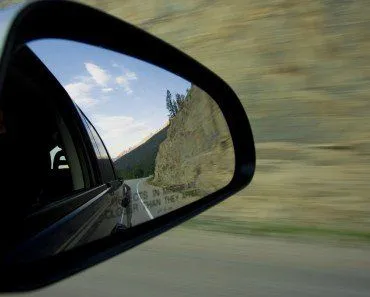
When you look back through your rear view mirror on winter mornings in some parts of the world, you probably aren’t surprised to find snow or ice back there, piled up and blocking your view. While you can dutifully get out of your car and brush off the snow or ice, your car also has a wonderful defrosting system in place to keep you safe. Those slim black lines you see on the rear window of cars are there to heat up the window and ensure that it’s clear. Again, the details of this system differ between makes and models, but generally, those thin lines are not wires buried inside the glass at all. They are a grid of silver-bearing conductive paste that is silk-screened onto the inside surface of the window and then baked on, much like the black dots themselves. When you switch on the defroster, a current runs through this grid, and the electrical resistance of the lines turns that current into heat (the same principle that warms a toaster element), warming the glass just enough to melt any snow or ice blocking your view, or to clear away any fog or condensation that has built up.
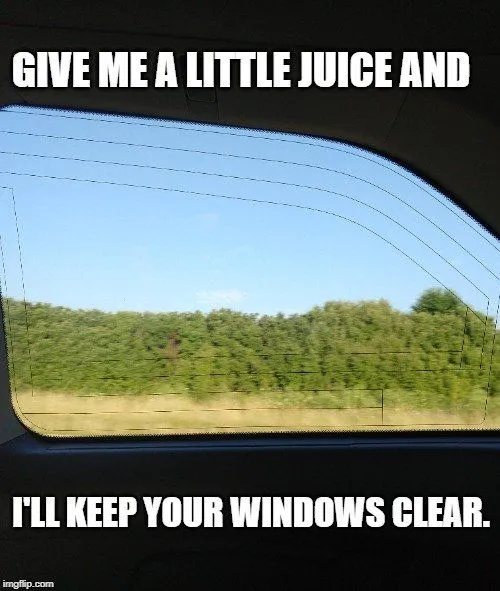
Your front windshield is similarly susceptible to snow, ice and fogging up, but the air vents on the dashboard are able to blow hot air directly at the windshield to increase its temperature and clear your view. Back windows aren’t usually positioned near air vents, so a different technology was required.
Is There A Radio Antenna Hidden In Your Rear Window?
Here is a detail that even careful observers tend to miss: in a great many cars, those same rear-window lines are pulling a second shift as the radio antenna. Rather than bolt a whip antenna to the fender, engineers realized that a conductive grid already baked onto the glass could be tuned to catch broadcast signals too. The heating grid is usually split into an upper and a lower half joined by the vertical bus bars at each edge, and those two halves can behave like a pair of conductive “rabbit ears” for FM reception, while a separate flat element tucked between them handles the longer wavelengths of AM radio.
Because the antenna lines are silk-screened and baked on in exactly the same way as the defroster, switching on the heater clears ice from the antenna at the same moment it clears your view. The obvious problem is that a defroster carries a strong direct current, and you do not want that swamping a faint radio signal. To keep the two jobs from interfering, the circuit uses radio-frequency filters (called chokes) that let the heating current through while blocking it from leaking into the antenna feed. In practice the arrangement works very well for FM and rather less well for AM, which is one reason some cars still pair it with a separate aerial for the AM band. Next time your reception fades on a frosty morning, spare a thought for the humble grid doing two jobs at once.
Black Dots On The Windows
If you have ever stared aimlessly out the side window during a long drive, you will have surely noticed the unusual pattern of small black dots emanating from the bottom edge of the window, or from every edge in those windows that aren’t designed to open. That solid black border and its trailing dots are collectively called the frit, a ceramic-based enamel that is screen-printed onto the glass and then baked on at around 600 to 700 °C (about 1,100 to 1,300 °F), which fuses it permanently into the surface and makes it nearly impossible to scrape off. It does more than one job. Most obviously, it hides the strong urethane adhesive that bonds the window to the car body, since consumers don’t want to see bled-over areas of glue. Just as importantly, that opaque band shields the adhesive from sunlight: urethane degrades when it is exposed to ultraviolet light, so the frit acts as a built-in sunscreen that helps the bond last for the life of the vehicle. The slightly rough enamel surface also gives the adhesive more to grip than smooth glass would, making for a stronger seal. The familiar fade-out from a solid edge into shrinking, more widely spaced dots is a “half-tone” (dot-matrix) pattern. It eases your eye through the transition from the black band to the clear glass, so the border doesn’t end in a hard, distracting line.
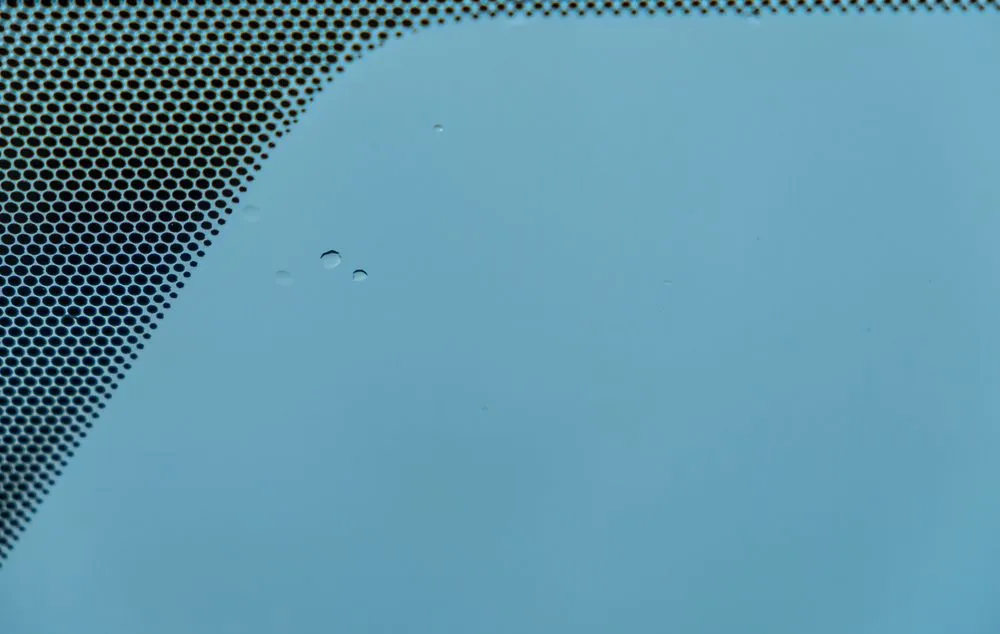
The gradient of dots also serves a clever thermal purpose. A windshield is heated and bent into its curved final shape, and the black enamel absorbs heat and warms up faster than the clear glass around it. If the band ended in a hard line, that abrupt edge would heat unevenly and could leave a visible optical distortion (a lens-like warping known as “lensing”) right where the dark border meets the clear glass. By gradually breaking the band into smaller and smaller dots, the design spreads the temperature change out across a wider zone, so the glass forms with a smooth, even surface and no distracting distortion at the edge.
What Are The Strange Codes And Marks On Your Windshield?
If the dots are the pattern people notice most, the little cluster of letters and numbers etched into a bottom corner of the windshield is the one that puzzles them most. This block of text is known in the trade as the “bug” or monogram, and far from being a random blemish, it is effectively the glass’s identity card. The most important entry is the DOT code, the letters “DOT” followed by a number that the National Highway Traffic Safety Administration assigns to the company that made the glass. It certifies that the pane meets United States federal safety-glazing standards and identifies the manufacturer, and often the specific plant, that produced it.
You will usually also find an “AS” rating, drawn from the American National Standard for automotive glazing. AS1 is laminated glass that transmits at least 70 percent of visible light and is the only grade permitted for the windshield itself; AS2 is tempered glass cleared for the side and rear windows but not the windshield; and AS3 is the darker, privacy-tinted glass used behind the front seats. Alongside these you may spot the maker’s logo, a part or model number that encodes the glass’s thickness and tint, the words “Laminated” or “Tempered” spelled out, and a country-of-origin mark such as a circled “E” for glass certified in Europe. Newer windshields may carry extra symbols flagging an acoustic sound-damping layer, a solar or infrared-reflective coating, or compatibility with a head-up display. So those cryptic marks are not a manufacturing slip at all; they are a compact record of exactly what your glass is and who is accountable for it.
Polarized Lines On Car Windows
Depending on the sunglasses you choose to wear, you may have seen something rather strange on a number of car windows, particularly the side and back windows. If you are wearing polarized glasses, it is possible to see lines, waves or patterns emerge on the windows, but without the glasses, they are impossible to see. No, you’re not going crazy, but your sunglasses are allowing you to see reflected light slightly differently.
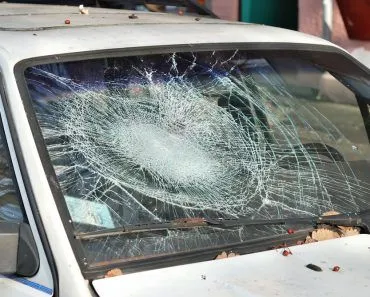
Most side and rear car windows are tempered, meaning the glass is deliberately put under a lot of locked-in stress. After the glass is heated to near-softening, it is blasted by jets of cool air that chill the outer surfaces first. The skin freezes and hardens while the core is still hot, and as the core finally cools and contracts, it pulls the surfaces into permanent compression while the inside stays in tension. That stored energy is why tempered glass is so strong, and why, when it does finally break, it crumbles into thousands of small, relatively blunt pieces rather than the huge, dangerous shards that ordinary glass produces.

The pattern that you can see whilst wearing polarized glasses is formed by the movement of the cold air jets, and the patterns of stress that are put into the glass. Because the stress is not perfectly uniform, it changes how light is polarized as it passes through different parts of the glass. Polarized sunglasses only let through light vibrating in one direction, so they reveal those variations as faint dark spots, stripes, or “leopard” patterns that are invisible to the naked eye. This stress-induced effect is called birefringence, in which a single transparent material refracts light differently depending on the internal stress at each point.
You won’t see this type of polarization on your front windshield, as this glass is laminated, rather than tempered. Car manufacturers don’t want the front windshield to shatter into a thousand pieces, as it is the primary obstruction between objects inside and outside of the car. Instead, the windshield usually comes off in one huge sheet, thanks to the powerful lamination process keeping it together.
Are Car Windows Actually Polarized?
Given that the effect only shows up through polarized sunglasses, plenty of people reasonably assume the car glass itself must be polarized. It isn’t, at least not in the way a polarizing filter is. Your polarized sunglasses are a genuine filter that only passes light vibrating along one axis. The glass, on the other hand, is not filtering anything out; the uneven, locked-in stress from tempering makes the otherwise clear pane slightly birefringent, meaning it rotates the polarization of light passing through it by different amounts in different spots.

The visible pattern only appears when three things line up: light that already carries some polarization (skylight and reflections off roads and other cars are naturally partly polarized), the stressed glass that twists that polarization region by region, and your sunglasses acting as the analyzer at the end. Where the glass has rotated the light away from the axis your lenses let through, that patch looks dark, which is why the leopard-spots and stripes emerge. Because the amount of twist depends on the color of the light, different wavelengths are shifted by different amounts, and that is where the faint rainbow tints come from. Engineers exploit exactly this behavior, called photoelasticity, to map stress in transparent parts, so your window-gazing is really an accidental physics experiment.
A Final Word
All of these small details on a car may not seem to add up to much, but each one is quietly doing real work for the safety, comfort and durability of the vehicle, from the defroster grid keeping your view clear to the humble frit protecting the glue that holds the glass in. Next time you sit down for a long drive, pay attention to those tiny details and be grateful that someone in the car manufacturing industry thinks about the small stuff!
References (click to expand)
- Tech In Plain Sight: Windshield Frit. Hackaday
- Safety glass | Definition, Types, and Facts. Encyclopaedia Britannica
- Influence of Cooling Jets on Stress Pattern and Anisotropy in Tempered Glass. glassonweb.com
- Defogger. Wikipedia
- The Rear Defroster In Your Car Is Doing More Work Than Meets The Eye. Jalopnik
- Decoding Your Car’s Windshield Bug. Glass.com
- Why You’re Seeing Rainbows in Car Windows. Revant Optics