Table of Contents (click to expand)
Microwaves are loud (typically 45-60 decibels, about as loud as normal conversation) because of three working parts: the cooling fan that whooshes air over the magnetron, the spinning turntable motor, and the transformer, whose steel core vibrates 120 times a second to produce the electric hum. The magnetron itself runs far above human hearing.
We are in an age of endless improvement, where people expect everything in their lives to be faster, smarter, stronger, smaller and more efficient. Essentially, comfort and convenience is king, and manufacturers have been more than happy to provide the demanding masses with precisely what they want. However, this constant struggle for improvement seems to have skipped a few key items, such as the beloved microwave.
To be more specific, have you ever noticed how your microwave always makes noise? I have personally never owned a microwave that wasn’t unusually loud. In a world where hybrid cars can move like ninjas, one would think that someone would have put a muzzle on microwaves, but so far, this buzzing, humming, and vibrating appliance hasn’t gotten a makeover. Why is that? Why do microwaves make so much noise?
Short Answer: The components that power and cool a microwave (the cooling fan, the turntable motor, and the transformer) all make noise, so some humming and whooshing is almost unavoidable. A near-silent microwave is possible, but it would be significantly more expensive to produce.
What Makes A Microwave?
Although the power of microwaves to heat frozen food in mere moments often feels like a tool of the future, you might be surprised to know that the core technology required to run a microwave is actually a piece of the past. A vacuum tube, like the one found in old radios, controls electric current flowing between electrodes in an evacuated space (no oxygen).
Now, the particular vacuum tube found in microwaves is called a magnetron, and is usually located behind the back panel of your microwave. The magnetron is the part of the microwave that actually creates the energy that eventually heats the food. The second main component is called the waveguide, and this is a small divot or angled part of the microwave wall that directs the energy from the magnetron to the food. The final element of every microwave is the chamber itself, which is sealed and insulated in order to trap the microwaves inside. There are also less important aspects, such as the diode, capacitor, transformer, and stirrer (the blade that moves back and forth to evenly distribute the microwaves so your food cooks evenly). Granted, even cooking is not always guaranteed…
Now, unlike normal ovens or frying pans, which cook our meals by heating the outside of the food, and then waiting for heat transfer to cook the interior of our meals, microwaves allow us to significantly speed up that process. The microwaves produced by the magnetron interact directly with the water molecules present in our food. These water molecules have both a positive and a negatively charged end (in other words, they are electric dipoles); the microwaves that we are sending out from the magnetron, on the other hand, have an electric field that flips back and forth roughly 2.45 billion times a second. The water molecules will do their best to constantly reorient and align with these microwaves as they shoot through the food, directed by the waveguide.
This constant scramble to line up with the microwaves’ reversing field makes the molecules rotate very rapidly, jostling their neighbors and thus increasing in temperature. Because the energy is deposited directly inside the food rather than slowly conducting inward from the surface, microwaves cook far faster than a traditional stove or oven. The microwaves are directed at the food to cook it from the waveguide, and are prevented from escaping the cooking chamber thanks to the metal screen embedded in the glass. The wavelength of the microwaves is much larger than the small holes in the screen, meaning that they can’t penetrate and cook your eyeballs as you hungrily gaze at your food as it cooks.

But Why Are They So Loud?
A running microwave usually registers somewhere between 45 and 60 decibels, which is roughly as loud as a normal conversation or background music. Several parts are working at once to produce that racket. Many people claim that the humming noise of a microwave is caused by the magnetron, but the frequency of the microwaves it emits (about 2.45 GHz) is billions of times higher than a human being could ever hear. That “blowing” sound that often accompanies a reheated meal is actually caused by the cooling fan that must continually blow over the magnetron to prevent it from overheating while it produces the microwaves. The magnetron does make noise in some models, but only if it is not well secured, which causes it to vibrate against the chamber walls where it is stored. Other microwaves also have an exhaust fan that automatically turns on whenever the microwave is being used. This can often be turned off, if the noise is beginning to drive you crazy.
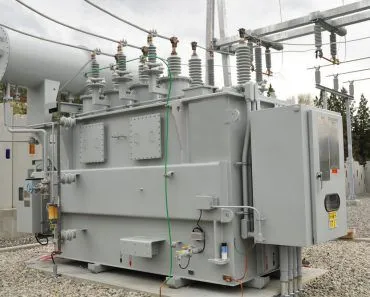
However, the “whooshing” sound isn’t the only noise your favorite appliance makes. There is also a characteristic hum, which comes from the diode, capacitor and transformer. These components handle the energy from the wall outlet and step it up to the high voltage the magnetron needs. The hum itself comes mainly from the transformer: as alternating current surges through it, the magnetic field rapidly squeezes and releases the steel core (an effect called magnetostriction), making it vibrate 120 times a second (100 times in countries on a 50 Hz supply) and producing that steady electric “buzz”.
If you hear other noises coming out of your microwave, such as a grinding, whirring, or clanking noise, it is a good sign that your magnetron is failing, the stirrer engine is breaking down, or the turntable motor is getting old. While this usually doesn’t prevent the microwave from working, it will make it less efficient, and the noise will probably only get worse. Most experts say that it is cheaper for you to simply buy a new microwave than repair an old one, since they are relatively inexpensive, and somewhat difficult to fix.
If you are determined to find a completely silent microwave… good luck. The components that do make noise are essential to the functioning of the microwave, and to work around those noise-inducing elements would require a more complex – and more expensive – appliance.
Since microwaves are only used a few minutes every day, and the noise isn’t intolerable, microwave manufacturers assume that customers would rather spend less money and simply deal with the humming, whooshing and buzzing sounds while they wait for their Hot Pockets.