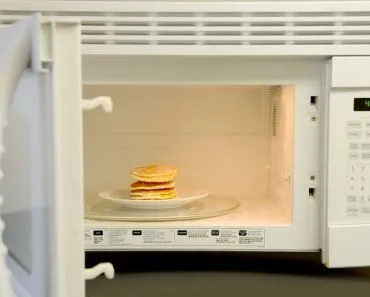
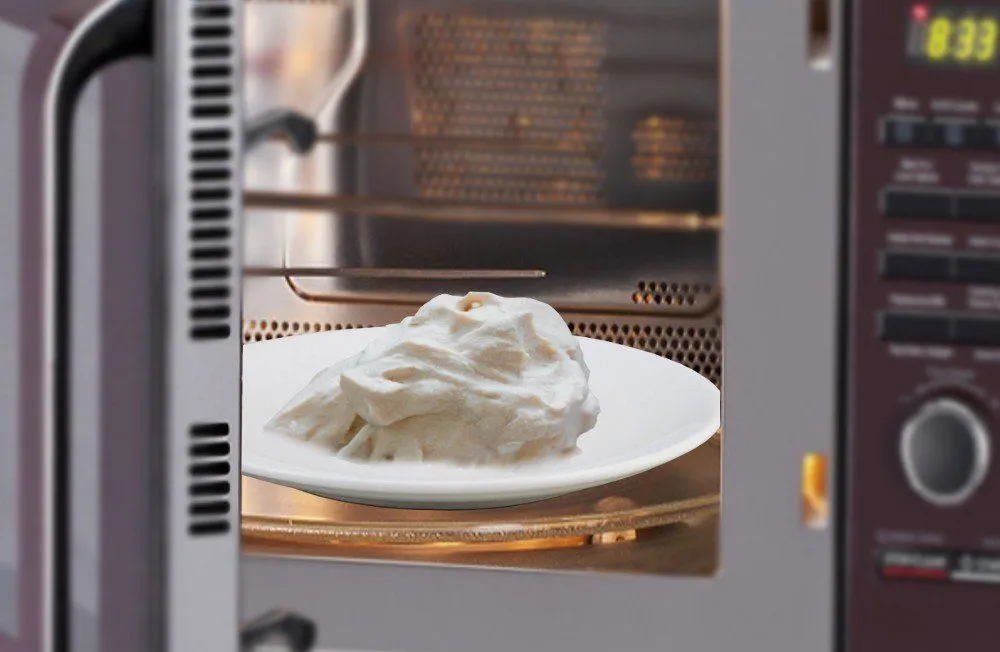
Marshmallows are about 50% air by volume. In a microwave, that trapped air heats up and expands, and some moisture turns to vapor that adds even more gas. The stretchy gelatin lets the marshmallow puff up instead of bursting, but heat it too long and it expands past what the gelatin can hold, and it explodes.
Remember feeling jealous of cartoon characters who got to jump around on clouds, while you couldn’t even convince your mom to buy you a trampoline? Me too! As a result, the first time I got to eat a marshmallow, I pretended I was eating a little bit of a cloud and many years later, I still do. Can you really blame me? They’re spongy, stretchy and taste like everything good in the world.

Marshmallows were first made around 4,000 years ago in ancient Egypt, from the sap in the root of a marsh plant called ‘mallow’ (Althaea officinalis). Back then they were a sweet medicine reserved for pharaohs, but they have developed so much more over the years, including being made into different shapes, with various flavors and many colors. They are now manufactured on a large scale and like most other things, have probably become much better with time.
What Do Marshmallows Consist Of Now?
Marshmallows are basically made of sugar syrup (primarily consisting of sucrose and corn syrup), along with water and gelatin, which is added for its sticky consistency and acts as an aerating agent. The marshmallows are also coated with corn starch. Now, we also add artificial flavors and colors.
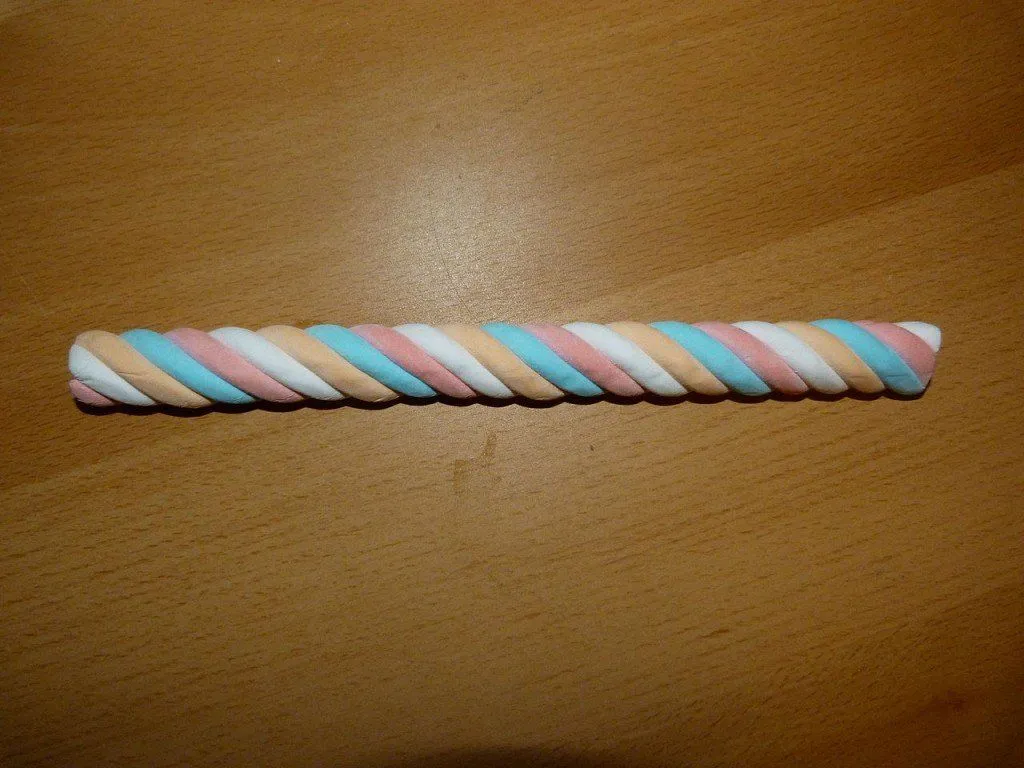
Gelatin and other aerating agents are what give marshmallows their fluffy texture. An aerating agent works by releasing small air bubbles into the rest of the mixture during the process of making marshmallows. The mixture is also whipped to increase the air content in it. The air is not allowed to escape, so that trapped air within the marshmallow gives it a spongy texture.
So Why Do Marshmallows Blow Up?
Marshmallows have a high air content and are actually made up of more than 50% air by volume. Therefore, when the air in a marshmallow expands, it will eventually blow up, because the gelatin allows for the size to increase, as it is elastic in nature. This means that if more air is forced into a marshmallow, the volume of air within the marshmallow increases and the marshmallow grows in size!
Another way to increase the volume of air within a marshmallow is by supplying energy to it in the form of heat, which causes the gas to expand. Matter usually expands upon being heated, and gaseous matter expands the fastest, since the intermolecular forces are comparatively weak. There is a second effect at work too: a marshmallow holds a little water, and as the microwave heats it, some of that water turns to vapor. That vapor is extra gas pumped into the bubbles, so the marshmallow swells from both the warming air and the new steam. As a result, when marshmallows are put into a microwave, they fluff up dramatically.
Aerated drinks have a lot of gaseous content as well, so why doesn’t your quantity of Coke increase upon heating?
Firstly, I suggest you not try this because warm Coke tastes terrible.
Secondly, as mentioned before, due to the presence of gelatin and its elastic properties, the gas expands without escaping. However, if an aerated drink is heated, the air bubbles will escape because liquid cannot expand easily.
Toasting marshmallows over bonfires is a very popular tradition. However, toasting marshmallows over the fire is very different from heating them up in a microwave. When a marshmallow is put on a stick and heated in the fire, the heat is strong enough to caramelize the sugar syrup on the surface of it. Caramelization is the thermal breakdown of sugar (it doesn't need oxygen), which kicks in only above roughly 170 °C (340 °F). In a microwave, the marshmallow rarely gets that hot, so the sugar never caramelizes. In fact, if kept in the microwave for too long, the air will expand too much for the stretching ability of the gelatin and…. BOOM! The marshmallow will explode.
Apart from the added flavor of caramel, toasted marshmallows are popular because the inside is very soft and gooey. The steady heat is also enough to destroy the bonds in gelatin, causing it to melt after the marshmallow expands a bit in size. However, we must be careful to not burn the outside before the insides begin to melt. Therefore, a perfectly toasted marshmallow is golden-brown on the outside, and soft and warm on the inside.

Why Does A Microwaved Marshmallow Taste Different From A Roasted One?
Pull a marshmallow out of the microwave and it is enormous, soft and gooey, but it tastes pretty much like it did going in: just sweet. Hold the same marshmallow over a campfire and you get something else entirely, with a toasty, almost nutty crust and a much richer flavor. The difference comes down to a single thing, namely heat, and specifically how hot the surface actually gets.

A marshmallow is mostly sugar and water, so in a microwave its temperature struggles to climb much past the boiling point of water, around 100 °C (212 °F). That is plenty of heat to expand the trapped air and boil off some moisture (which is why it puffs up), but it is far too cool to brown anything. The flavor-making reactions simply never start.
A flame is a different league. The surface of a roasting marshmallow can race past 140 °C (280 °F) and beyond, which switches on two browning reactions. The first is the Maillard reaction, a reaction between amino acids and reducing sugars that becomes noticeable from roughly 140 to 165 °C (280 to 330 °F). Marshmallows are full of both ingredients, since gelatin is a protein (a source of amino acids) and corn syrup supplies reducing sugars, so a roasting marshmallow is practically a Maillard reaction waiting to happen. It produces brown pigments called melanoidins along with a whole orchestra of roasty, nutty and toasty aroma compounds. Push the heat higher still, above about 170 °C (340 °F), and caramelization joins in, breaking sugars down into warm, buttery, slightly bitter flavors. The microwave never reaches the starting line for either reaction, so a microwaved marshmallow is bigger but blander, while a roasted one is browned and bursting with flavor.
Is Toasting A Marshmallow A Physical Or Chemical Change?
This is a classic homework trap, because the honest answer is “both”, and which one you are looking at depends on which part of the marshmallow you mean. A physical change rearranges a substance without making a new one, and no chemical bonds are broken or formed, so it can often be undone. A chemical change breaks and forms bonds and turns the original substance into something genuinely new, which is usually hard to reverse.
When you heat a marshmallow, the puffing up and the softening of the gooey inside are physical changes. The trapped air expands, the water inside turns to steam, and the gelatin loosens and melts, but the sugar and gelatin are still sugar and gelatin. Nothing new has been created, which is exactly why a microwaved marshmallow can deflate back toward its old size as it cools.
The golden-brown crust is the chemical change. Browning is driven by the Maillard reaction and caramelization, and both forge brand-new molecules (the brown melanoidins and dozens of fresh flavor compounds) that were not in the original marshmallow. A new color appearing where there was none is one of the textbook signs of a chemical change, and you cannot un-toast a marshmallow back to plain white the way you can let a puffed one shrink. So a marshmallow warming in the microwave is mostly a physical change, while a marshmallow browning over a flame is undergoing a chemical change on its surface and a physical change just beneath it, all at once.
Now, the next time you have only one marshmallow left, remember to microwave it so you can make it even bigger! Also, make sure your mom isn’t around in case it doesn’t go too well!
References (click to expand)
- Marshmallow: Althaea Officinalis | The Medicinal Herb Gardens at ONU - webstu.onu.edu
- Science Experiment: Monster Marshmallows - extension.purdue.edu
- Puffing Up Marshmallows - Scientific American
- The Maillard Reaction - K-State Research and Extension, Wild West District
- Changes in Matter: Physical and Chemical Changes - Chemistry LibreTexts
- Maillard reaction - Wikipedia