Peanut butter is actually a sandy brown. The people who insist it looks green almost always have red-green color blindness — a genetic condition where the red-sensing (L) or green-sensing (M) cone cells in the retina are defective. Their spectral sensitivities overlap so much that brown (a mix of red, green and other wavelengths) gets confused with pure green. About 8% of men and 0.5% of women are affected.
Ever heard of green peanut butter? Wait. Don’t roll your eyes. I’m not talking about some new age organic peanut butter. Rather, I mean acual green-colored peanut butter!
If you’ve seen the viral video of a guy seeing peanut butter as green, you know what I’m referring to. If you thought peanut butter was green, you’re a minority; for most people, peanut butter is a sandy brown. Also, you might want to visit your ophthalmologist.
Nothing to freak out about, but you might be suffering from Color Vision Deficiency (CVD), colloquially known as color blindness.
And here’s the science behind it.
What Is Color?
In the simplest manner of speaking, color is all in our heads. It isn’t a physical property of any substance, but rather a perception of the objects in our minds. Click here to find out more about this mind-bending fact!
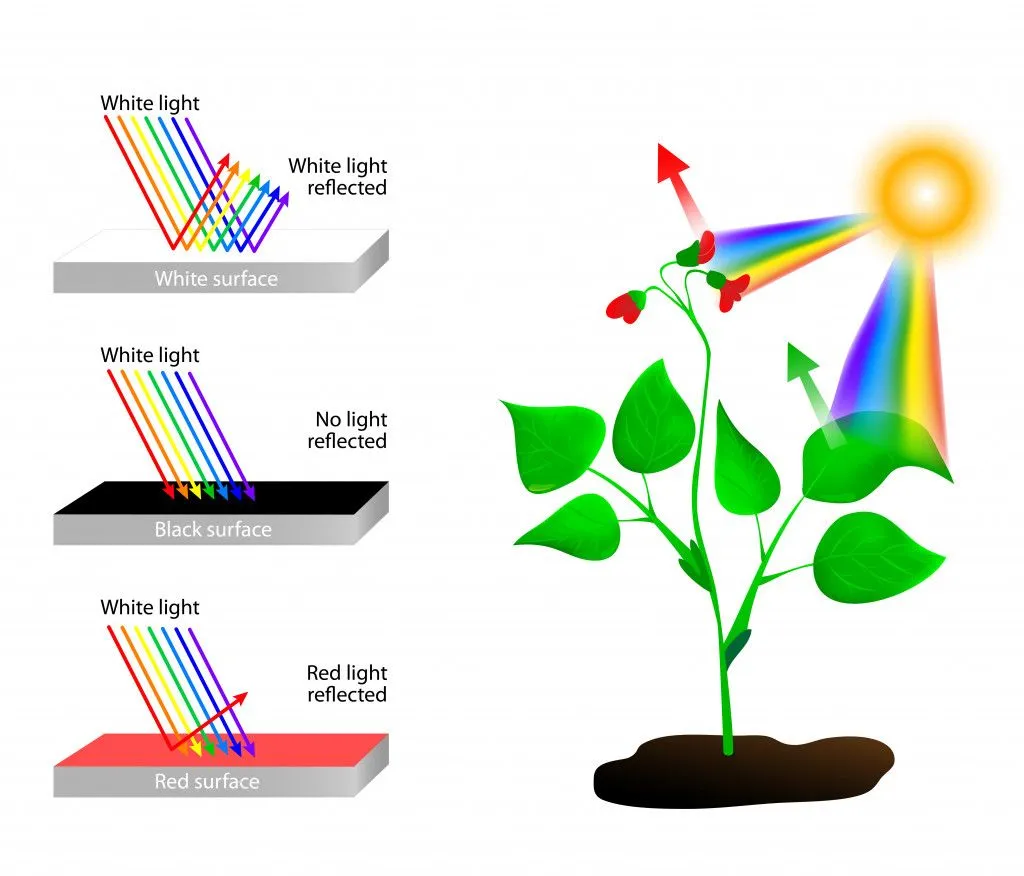
The color we see around us is a summation of the light that falls on it, the wavelengths absorbed by it, and the wavelengths reflected off it.
How Do We See Color?
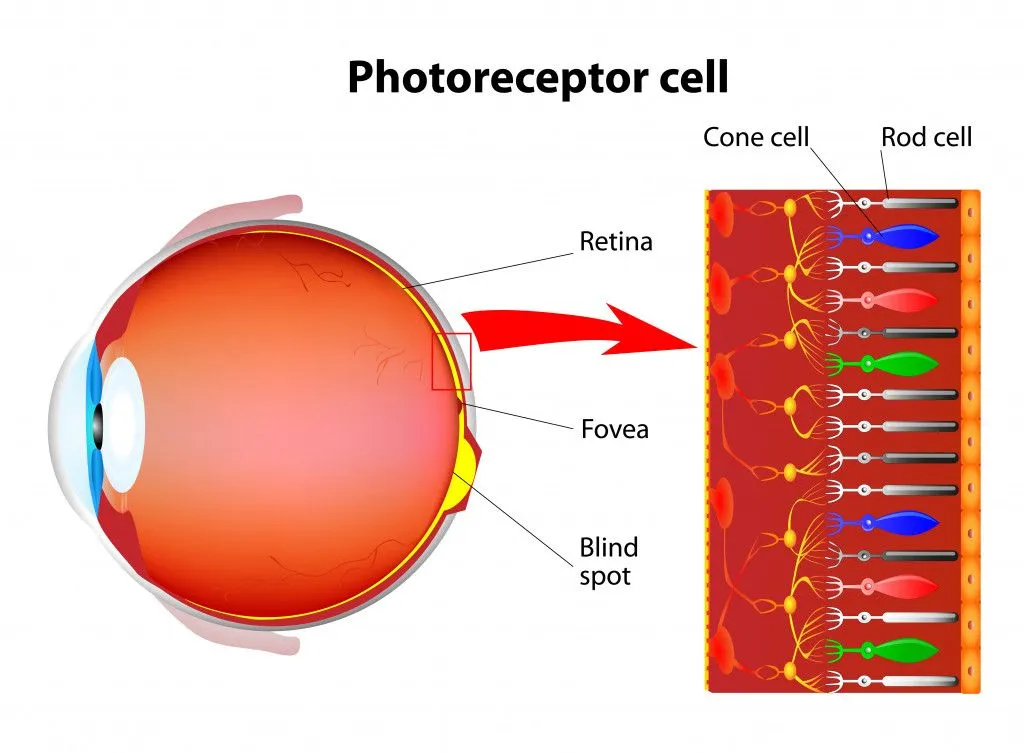
When wavelengths reflect off any object, they fall onto our retina, a thin layer at the back of our eye.
Briefly, the retina is composed of a few layers. The layer that helps us see color has a specialized group of cells called cones that detect specific wavelengths of light. There are three subtypes—Short (S), Medium (M) and Long (L)-wavelength sensitive—which have overlapping ranges of detectable wavelengths. Based on the range of wavelengths detected by each subtype, they are called Blue-, Green- and Red-sensitive cones, respectively (S cones peak around 420 nm in the blue, M around 530 nm in the green, L around 560 nm in the red).
Essentially, they detect the three primary colors.
Remember primary school color mixing and finger painting?
If all these cone cells are present in normal proportions, they can reproduce any color from these three primary colors, giving you trichromatic color vision. This makes peanut butter appear brown, bananas and lemons yellow, and the sky blue.
So What Color Is Peanut Butter, Really?
Strip the perception out of the question and peanut butter has a definite, measurable color: a warm, sandy brown that sits somewhere between light tan and a deep, milk-chocolate shade, depending on the brand and the roast. Not green, and not orange.

That brown is not baked into the raw nut. Fresh, unroasted peanuts are pale and yellowish, and butter ground straight from them looks noticeably lighter. The familiar color is created in the roaster. As the peanuts heat up, their natural sugars and amino acids react in what chemists call the Maillard reaction, the same browning chemistry that toasts bread and sears a steak. Roasting first converts the peanut's sucrose into reducing sugars, which then bond with amino acids and rearrange into large brown pigments called melanoidins. Those pigments are what give roasted peanuts, and the butter ground from them, both their signature color and their toasty flavor.
You can even put numbers on it. When food scientists compared pastes ground from raw versus roasted peanuts, the raw paste was clearly the lightest (a lightness value of about 61 on a 0–100 scale), while roasting dropped that to roughly 57 and pushed the paste toward red. In short, the longer and hotter the roast, the deeper and redder the brown.
And nothing about a peanut is naturally green. Crack open a raw pod and the woody shell is a pale tan, while each kernel is wrapped in a thin, papery skin that ranges across red, tan and brown depending on the variety. So however you slice it, real peanut butter lands somewhere on the tan-to-brown spectrum. The green, as we are about to see, is added by the viewer, not the jar.
But Why Is My Peanut Butter Green?
Now, if any of these cone cells are not in their adequate proportion or are not performing their appropriate function, it results in Color Vision Deficiency, more commonly called color blindness.
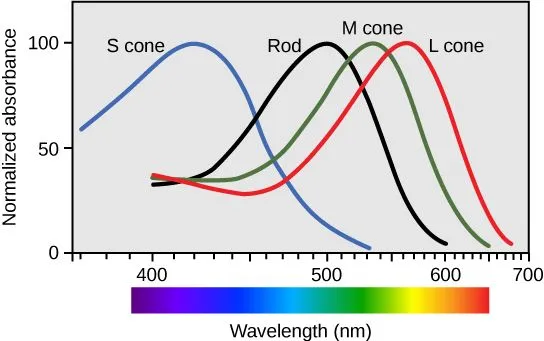
The most common color blindness is red/green color blindness, which happens because the red-sensing L cones and/or the green-sensing M cones are defective. The wavelength sensitivity of the cones overlap, which makes it difficult for individuals with the condition to distinguish red and green tones as a whole, or even as a part of the color.
Thus, peanut butter appears green, ripe and unripe bananas look the same, and crossing the road can mean living life on the edge!
Is It Just Peanut Butter?
Based on the type and number of defective cones, there can be different types of CVD. Keeping in mind that normal 3D color vision is trichromatic, the variations include:
Anomalous trichromacy, where one of the three cones is slightly defective, but not completely lost.
Dichromacy, where one of the three cones is completely absent or dysfunctional.
Monochromacy, where 2 or 3 of the cones are completely lost, resulting in single-color vision. This is the most severe and rarest form of color blindness.
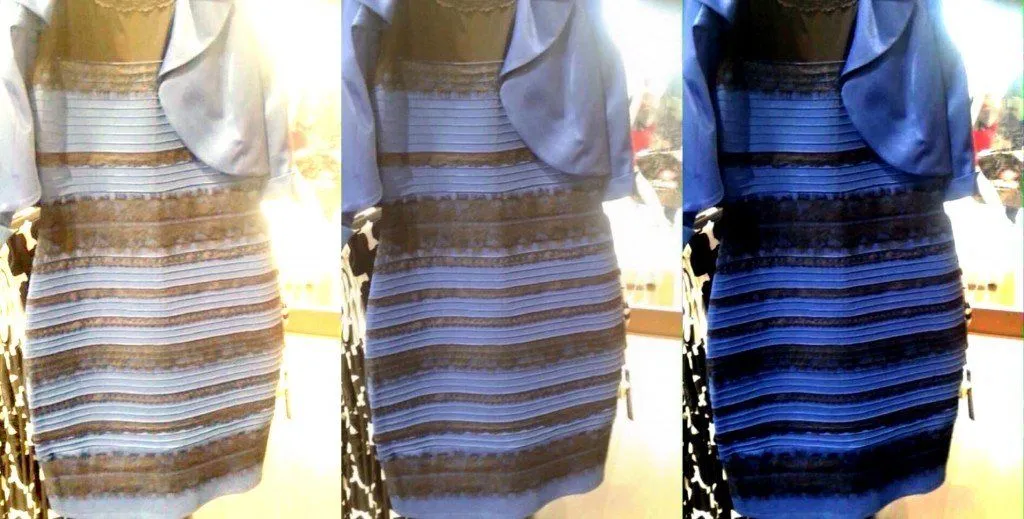
People with blue-yellow (tritan) color blindness find it hard to distinguish blue from yellow and shades of red. (Quick aside: the famous 2015 viral ‘blue/black vs. white/gold dress’ was not caused by color blindness — it is a color constancy illusion, where different brains make different assumptions about the room’s lighting.)
What Causes Color Blindness?
Most reported cases of CVD are hereditary, due to some genetic mutation that affects the functioning of one or more of the cones. Among these hereditary cases, Red/Green color blindness is the most common, representing 98% of the full colorblind population, and of this group, 95% are men. This is because the genes that code for the red- and green-sensing cones are present on the X chromosome.
Mendelian genetics can explain why this is the case. Males have the XY chromosome combination, whereas females have the XX combination. If any gene on the X chromosome is defective, you are bound to see its effects. For females, even if they inherit a defective X chromosome gene for color blindness, they still have a backup X chromosome to make up for its loss.
This is basically how all X-linked genetic diseases work and why females only ‘carry’ the disease, while males actually suffer from it. The girls got lucky on this one!
Apart from genetic causes, some people can also acquire color blindness. Some causes include trauma to the eye, which damages the retina, as a side effect of alcoholism, and as a complication of various diseases like diabetes and hypertension.
Am I Seeing Colors Differently?
Luckily for all of us, medical science has evolved well enough that we don’t have to always keep a lookout for a Subreddit to diagnose color blindness.
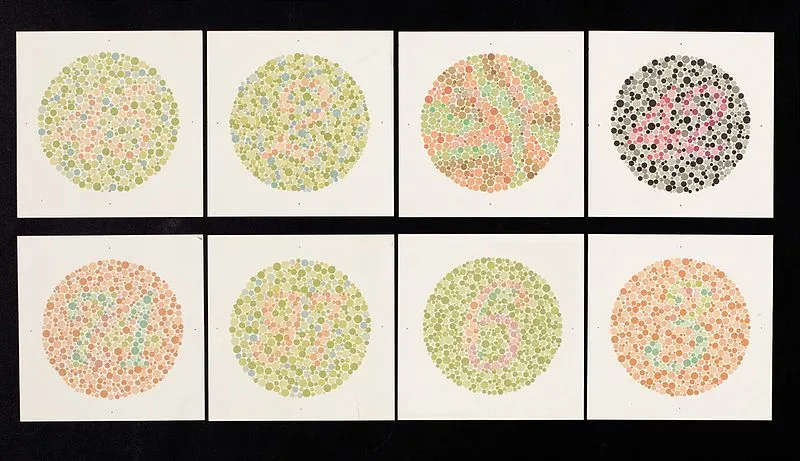
The most commonly used test today for color blindness was introduced by Dr. Shinobu Ishihara more than 100 years ago, rightfully named the Ishihara plate test. It essentially consists of images of either numbers/signs of one color put in the background of some other color. There are a total of 38 Ishihara plates. They can even help doctors diagnose the different types of color blindness!
Living With Color Blindness
As is the case with all genetic disorders, there is no treatment or cure. It just becomes a way of life and one learns to live with it. In the case of CVD, there are no fatal complications from not being able to distinguish between a few colors.
However, it does make going about day-to-day life a little tricky. Color blind people report having obstacles, such as not being able to tell when their meat is cooked, picking up an what looks like unripe banana and realizing it too late, difficulty playing sports or games that involve certain colors, and a slightly dangerous inability to differentiate between green and yellow at traffic signals.
It’s not just a traffic ticket they have to worry about!
Fortunately, we now have filtered glasses that can correct some types of color blindness, like enchroma glasses for red-green color blindness.
References (click to expand)
- Solomon, S. G., & Lennie, P. (2007, April). The machinery of colour vision. Nature Reviews Neuroscience. Springer Science and Business Media LLC.
- Simunovic, M. P. (2009, November 20). Colour vision deficiency. Eye. Springer Science and Business Media LLC.
- Gordon, N. (1998, March). Colour blindness. Public Health. Elsevier BV.
- PICKFORD, R. W. (1944, May). The Ishihara Test for Colour Blindness. Nature. Springer Science and Business Media LLC.
- Testing for Color Blindness | National Eye Institute. The National Eye Institute was established in 1968. It
- Roasting Does More than Enhance Flavor in Peanuts. USDA Agricultural Research Service.
- Recent Advances in the Mechanisms of Quality Degradation and Control Technologies for Peanut Butter. PMC, National Library of Medicine.
- A comparative analysis of the physicochemical properties of peanut butter paste from raw, roasted, and boiled peanuts. Frontiers in Food Science and Technology.
- Peanut Skins: More than Meets the Eye. USDA Agricultural Research Service.