Table of Contents (click to expand)
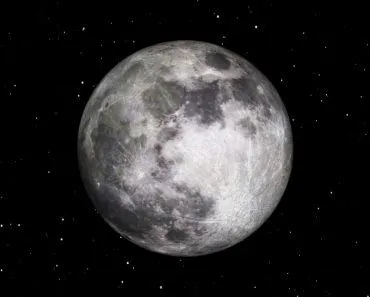
Yes, the Moon does have an atmosphere, but it is so vanishingly thin that scientists call it an "exosphere" rather than a true atmosphere. It is roughly 100 trillion times less dense than Earth's air at sea level, and is made mostly of helium, argon and neon, with traces of sodium, potassium and water vapor.
The claims that Eskimos have a thousand words for snow or the classic “we only use 10% of our brain” are mere scientific myths. No one knows at what vague point these were imprinted in our scientific history and then amplified to the extent that they’ve become “common” knowledge.
A similarly common misconception is the moon’s lack of oxygen and the absence of any atmosphere around it.
How Are Atmospheres Formed?
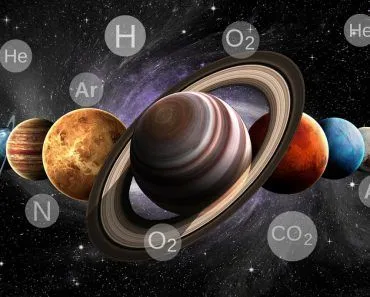
An atmosphere is just a concoction of various gases. Initially, the original atmospheres in the universe consisted only of hydrogen and helium atoms, as these were the most abundant gases in the dusty disk around the Sun from which the planets formed.
Another major contributor is the material accumulated in the depths of a planet itself. For instance, the huge amount of nitrogen in Earth’s atmosphere built up over billions of years as nitrogen and ammonia belched out by our young, violent volcanoes were broken apart by sunlight and reshuffled into stable N2 molecules. These gas molecules wander around and escape into space, but a large share is retained by a planet’s gravitational pull. This is why larger planets like Jupiter, Saturn and Neptune have thicker atmospheres.
Hydrogen and helium atoms’ low mass and high speed allowed them to escape our gravitational pull and drift into space. However, the attraction of larger planets is so strong that, despite their elusive nature, they still wound up stuck in other atmospheres, and the composition of Saturn and Jupiter’s atmosphere still displays an abundance of hydrogen and helium.
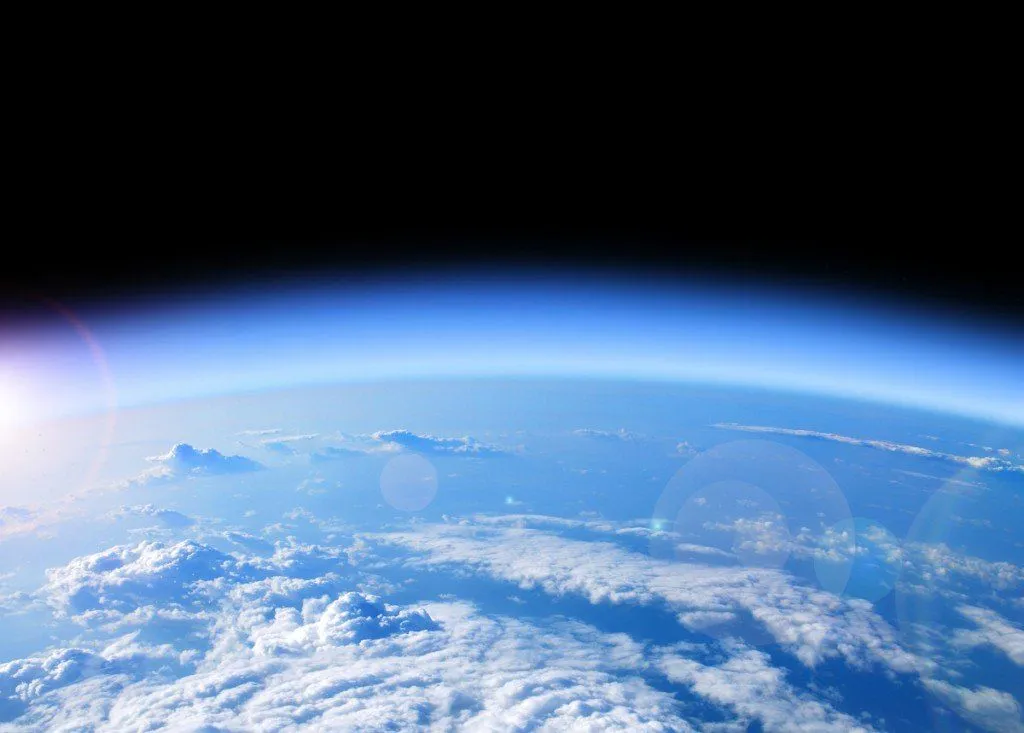
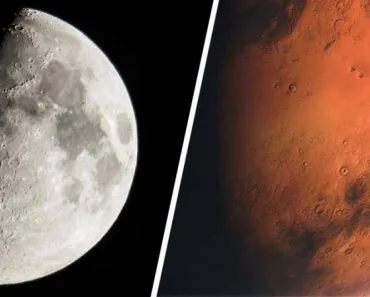
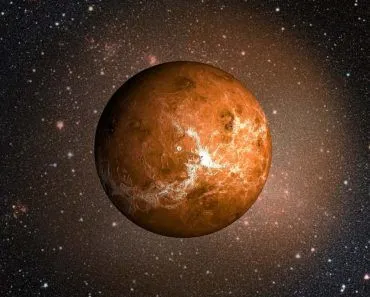
The question of whether a planet can harbor life comes down to the thickness or density of the atmosphere and having just the right gases. Other than water, the reason why Earth welcomes life is that the atmosphere is adequately thick and there is a sufficient amount of oxygen within it. By adequate, I mean that it is neither too thick, like the atmosphere of Venus, nor too thin, like the atmosphere of Mars.
With the knowledge that atmospheres aren’t mysterious space blankets, but rather a mixture of gases formed on a planet, which (subject to gravity and temperature) decide whether or not to continue their stay, we can go on to ask what the moon’s atmosphere includes.
The Moon’s Atmosphere
According to the above logic, one can postulate that, due to the moon’s tiny mass and consequently weak gravitational pull, even though it is enclosed by an atmospheric layer, it is bound to be infinitesimally thin. This is indeed the case.
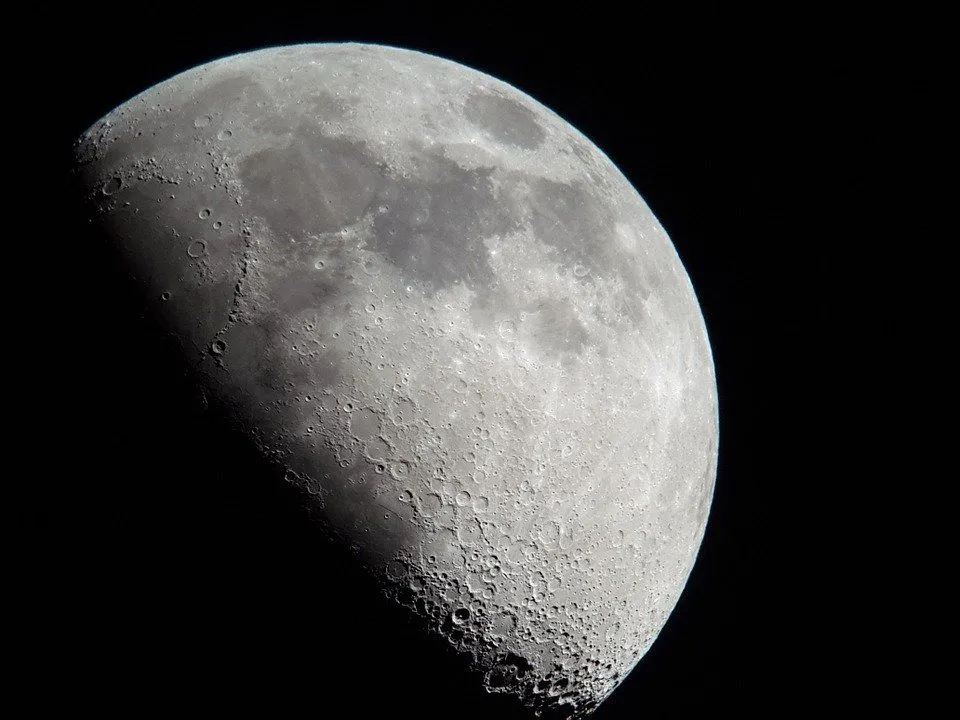
In fact, the layer is so thin that the blanket is only deemed to be almost an atmosphere. This thin layer above the lunar surface is technically known as an “exosphere”. In an exosphere, the gas molecules are so distanced that they never seem to collide.
Several elements have been detected in the moon’s atmosphere. NASA’s Lunar Reconnaissance Orbiter (LRO) confirmed helium in 2012 using its LAMP ultraviolet spectrograph, and the dedicated Lunar Atmosphere and Dust Environment Explorer (LADEE) mission then mapped helium, neon and argon in detail between 2013 and 2014. The Lunar Atmospheric Composition Experiment deployed by the Apollo 17 astronauts had already detected argon-40, helium-4, oxygen, methane, nitrogen, carbon monoxide and carbon dioxide back in the 1970s. Earth-based spectrometers have found traces of sodium and potassium, while NASA’s Lunar Prospector picked up the radioactive isotopes radon-222 and polonium-210 leaking from the surface.
Where Did The Exosphere Come From?
The major source of the gases constituting the atmosphere (or exosphere) is impact vaporization, the heating and release of soil and meteoroid material when tiny grains slam into the lunar surface at tens of kilometers per second. A 2024 study of lunar soil samples by MIT and University of Chicago researchers, published in Science Advances, showed that impact vaporization has accounted for more than 65% of the atmosphere's sodium and potassium over the Moon's history. Solar wind ion sputtering, in which charged particles from the Sun knock atoms loose from the surface, contributes a smaller but steady share. A third process, out-gassing from the lunar interior driven by radioactive decay, also adds gases, often during moonquakes; once liberated, those atoms drift towards the surface almost immediately. Photons from the Sun and gusty solar winds can also pry atoms loose from the soil, and micrometeorites brashly slamming into the moon knock fresh atoms off its surface, replenishing the wisp of an atmosphere as fast as it is stripped away.
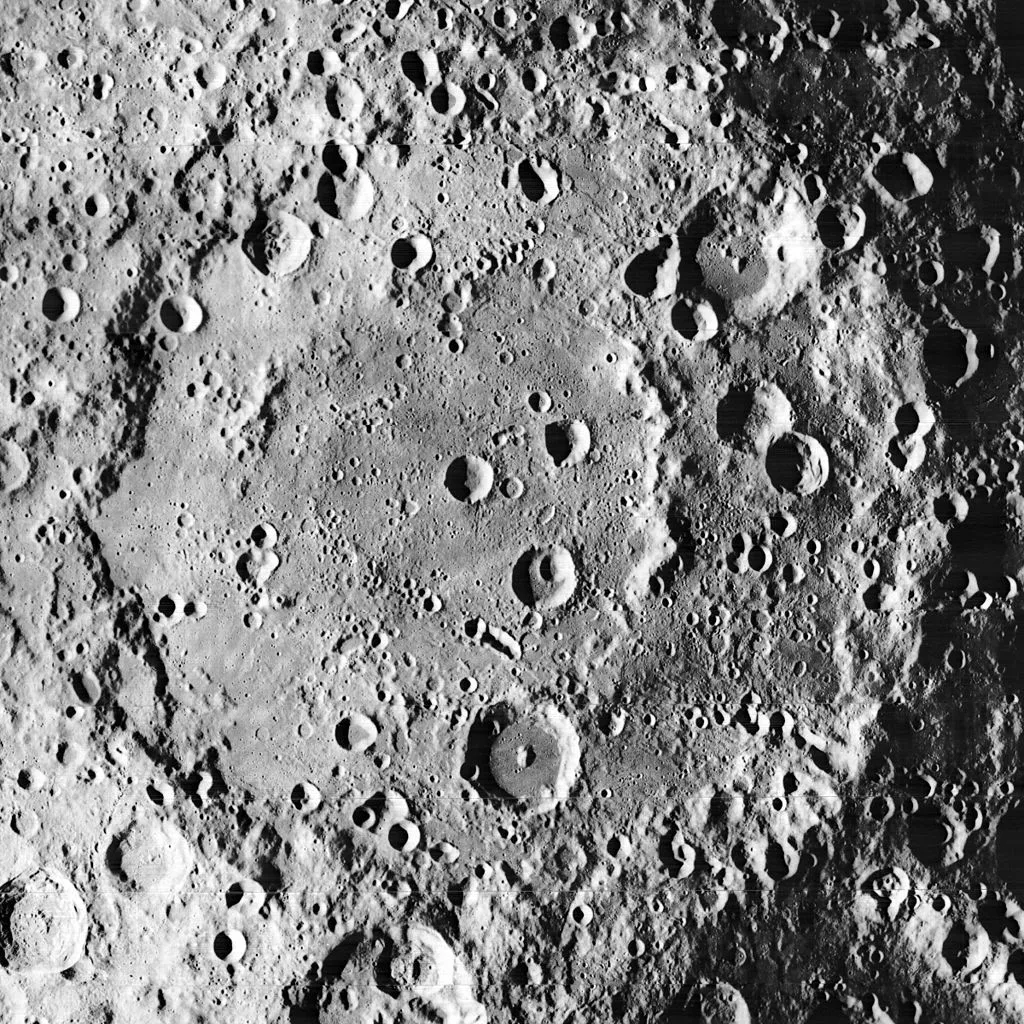
Moreover, the moon is known to have been a victim of a massive bombardment of comets during its initial years of formation. These comets could have imparted water molecules, and due to the cold temperatures deep within a crater, the water molecules might have solidified into beds of ice.
The total mass of these gases is only about 25,000 kg (55,000 lb), roughly the combined weight of four African bush elephants, all of it spread across the entire surface of the Moon. On a per-volume basis, the lunar exosphere is laughably empty: only about 100 molecules per cubic centimeter on the night side, rising into the millions when the surface is in sunlight. Compare that to Earth’s atmosphere at sea level, which packs roughly 27 quintillion (2.7 × 10¹⁹) molecules into the same cubic centimeter, about 100 trillion times denser than the Moon’s.
Also, due to such a thin atmosphere, the moon, unlike its Earthly neighbor, cannot moderate its temperatures or protect itself from trespassing meteors.
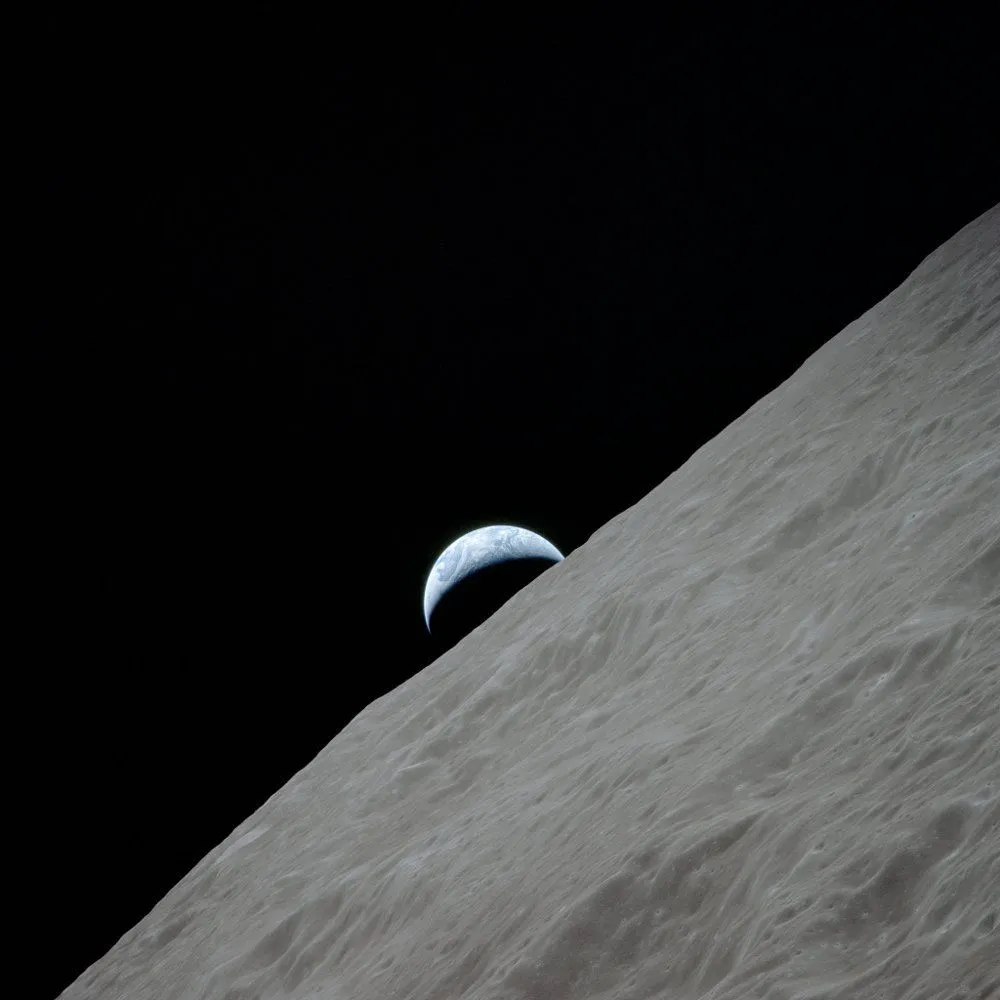
So, not only does the moon have a thin peel of an atmosphere, but it also consists of unusual gases, such as sodium and potassium, which are highly unlikely to be found in the atmospheres of Earth or Mars.
Until the discovery of ice beds in shadowed craters on the moon, its lack of an atmosphere was (and to some extent still is) an irrefutable popular perception or widely accepted conventional wisdom. Let’s rewrite the textbooks, shall we?
References (click to expand)
- The Moon's Atmosphere. NASA Science
- Moon Fact Sheet. NASA Goddard Space Flight Center / NSSDCA
- Nie, N. X., et al. (2024). Lunar soil record of atmosphere loss over eons. Science Advances.
- Characteristics of the Lunar Environment. The University of Texas at Austin
- Lunar Reconnaissance Orbiter's LAMP Spectrometer Detects Helium in Moon's Atmosphere. Southwest Research Institute.
- Atmosphere of the Moon. Wikipedia