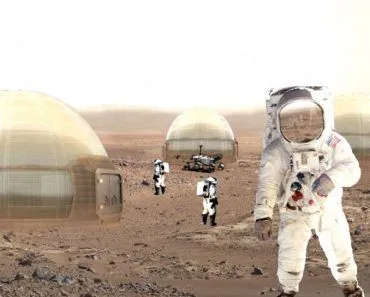
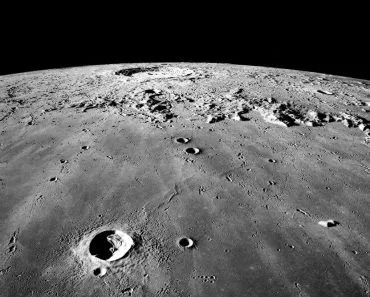
One of the most compelling reasons for building a lunar base station is that it will serve as a practice ground or staging area for our bigger ambitions, such as colonizing Mars and beyond.
It’s been five decades since we reached one of mankind’s greatest achievements—landing on the moon. Apollo programs of the 1960s and 1970s have catapulted us from being an Earth-bound species to one that had strolled on the pockmarked surface of our closest celestial neighbor.
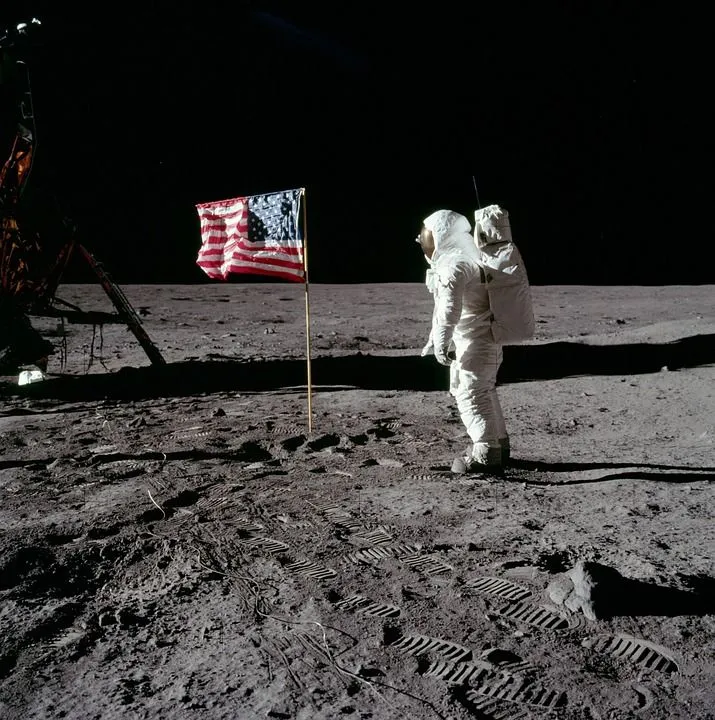
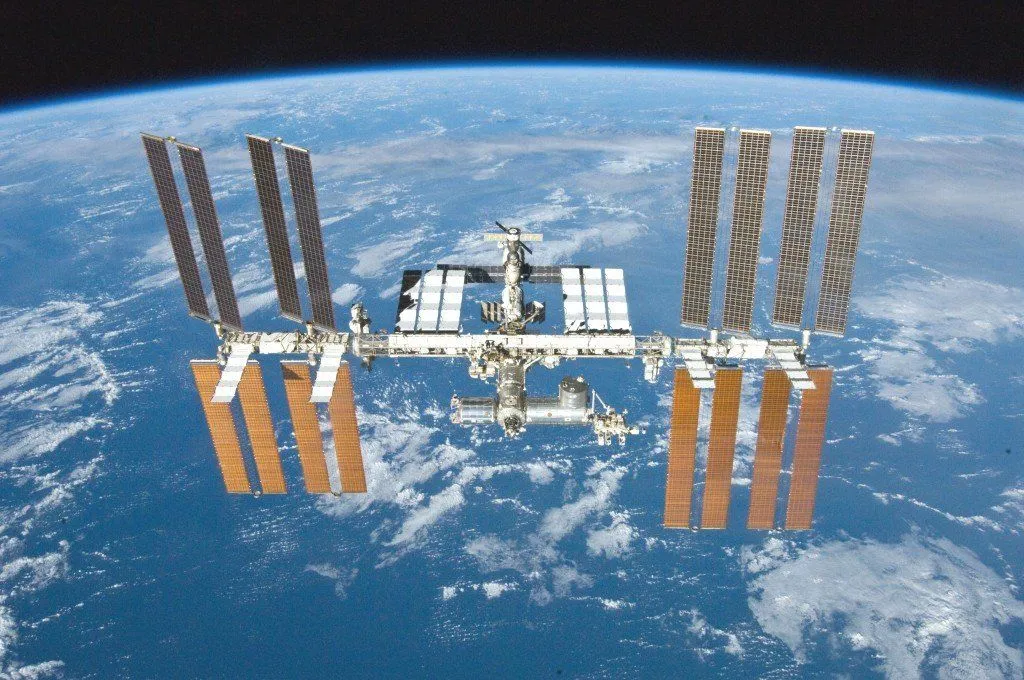
When Neil Armstrong and Buzz Aldrin became the first people to walk on the moon in 1969, people hoped that bigger things would happen in future space missions. Unfortunately, since the Apollo 17 mission of 1972, no human has walked on the moon again, nor any other planet for that matter. Since then, the moon has occasionally been explored by robotic probes bereft of humans. In fact, for half a century, astronauts traveled only about 400 kilometers (roughly 250 miles) above the Earth’s surface to the International Space Station (ISS). That drought finally started to break in April 2026, when NASA’s Artemis II crew looped around the moon on the first crewed flight beyond Earth orbit since Apollo, though they did not land.
Mars Vs Moon
There has been a lot of talk recently about Mars missions and how we can colonize or terraform the red planet. However, given the logistical challenges associated with such an endeavor, we’re still probably a few decades away from colonizing Mars. What’s easier is to set foot again on the moon, and not just for a short excursion this time. Rather, we should aim for a lunar base where astronauts can live and work for weeks and months at a time, if not years!
Now, you may ask why we would even think of setting up a lunar base… but before that, we should clearly understand what a lunar base station would actually be. By lunar base, I do not mean a bustling metropolis brimming with human establishments. A lunar base would be a simple outpost with a lab, where scientists would be able to work for long periods of time—perhaps for several months—just like they do on the ISS.
Is There Already A Base On The Moon?
If you have ever wondered whether astronauts are living up there right now, the honest answer is no. As of 2026, there is no permanent human base anywhere on the moon, and there never has been. The only places people currently live off our planet are orbiting space stations in low orbit around Earth, such as the International Space Station. Everything that has reached the lunar surface since Apollo 17 departed in 1972 has been robotic, from orbiters mapping the terrain to landers and rovers scooping up soil. Even the Artemis II crew, who looped around the moon in April 2026, did not land.

What has changed is that a lunar base is no longer just a talking point. NASA has laid out an official Moon Base program to be built in phases near the lunar south pole, starting with a series of robotic missions to prove out the technology before astronauts arrive for extended stays. So while nobody is stationed on the moon today, for the first time since Apollo we are genuinely building toward it, rather than simply visiting.
Why Should We Establish A Base Station On The Moon?
One of the most compelling reasons for establishing a lunar base station is that it will serve as a practice ground and staging area for our bigger ambitions, such as colonizing Mars and beyond.
Proximity To Earth
On average, the moon is 384,000 kilometers away from Earth. Therefore, the moon offers the closest opportunity to establish a base station for launching other space missions.
Apollo missions allowed humans to reach the moon in just three days. On the other hand, reaching Mars would take a couple months. The short travel time to the moon would make it possible to quickly deploy rescue missions from Earth in case things went wrong.
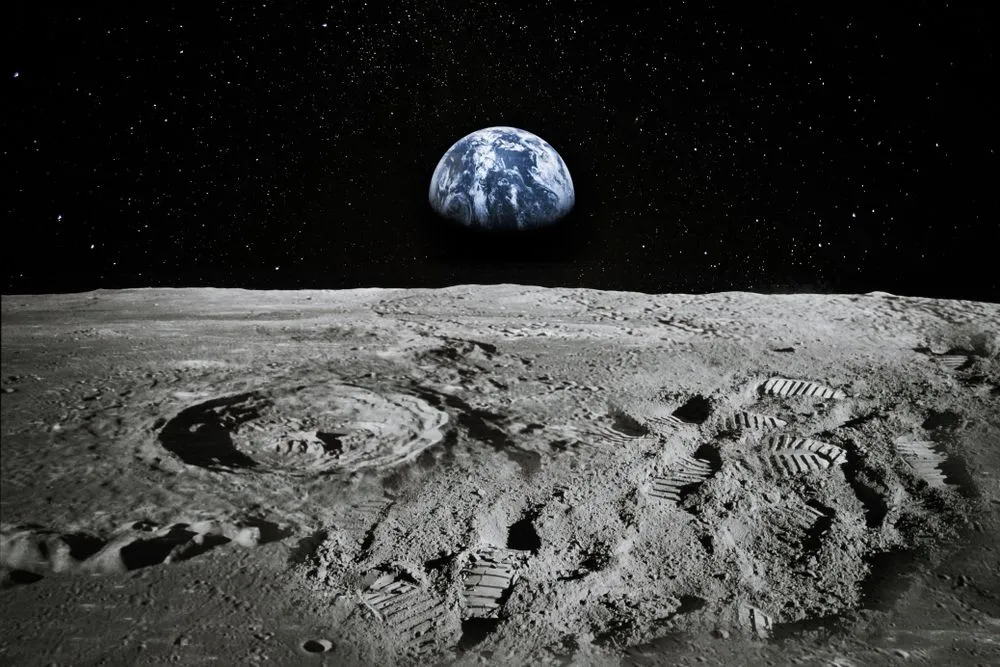
Near Real-time Communication
To communicate with astronauts, we rely on telecommunication signals. These telecommunication signals are electromagnetic waves traveling at the speed of light (approximately 300,000 km/second). Roughly, it would take 1.3 seconds for a telecommunication signal to reach Earth from the moon. This lag seems completely fine, as compared to communicating with astronauts on Mars. On Mars, it would take anywhere from 5 to 20 minutes. A delay of only a second or two would make it possible to have regular audio or video communication with astronauts on the moon almost in real time.
To Understand How The Human Body Copes In The Environment Of Space
As a species, if we aspire to live in the cosmos beyond Earth, we can consider the moon as our first stepping stone. Going to the moon and staying there for a prolonged period of time would prepare us for living on other planets like Mars. Living on the moon for a long stretch would help us understand how our bodies behave and react in lower gravity. We could better understand how living on an alien body like the moon affects our health, sleep, and psychology. Living on a lunar base would also give us clues about how well humans could cope on a foreign celestial body with a negligible atmosphere and more dramatic temperature fluctuations.
A lunar base station could also serve as a great site for astronomical observation. As the rotation of the moon around its axis is slow, observations in the sunlight would last for several (Earth) days.
The question is, are we seriously considering the idea of establishing a lunar base station? The short answer is YES! One of the most anticipated missions that will take us back to the moon is NASA’s Artemis mission.
NASA’s Lunar mission–Artemis
In 2019, NASA announced an ambitious lunar project called Artemis. One of the longer-term goals of this mission is to establish a lunar base. The program took its first big step in April 2026, when Artemis II carried four astronauts on a crewed flyby of the moon. The first crewed landing, which is set to put the first woman and the first person of color on the lunar surface, has slipped from its original 2024 target and is now planned for Artemis IV in 2028.
Apollo lunar missions of the 1960s were brief missions. Those missions were more to demonstrate the technological capabilities we had achieved. Artemis’s mission of the twenty-first century, on the other hand, would be more elaborate. NASA is planning to have astronauts stay on the moon for a stretch of several weeks.
NASA has highlighted that one of the aims of the Artemis mission is to turn the moon into a staging area for more ambitious missions, like Martian colonization. In monetary terms, it is much cheaper to send astronauts to the moon than to Mars.
Gateway To The Cosmos
For years, the most distinctive feature of the Artemis mission was a planned outpost called the Gateway. Think of Gateway as an intermediary platform for astronauts going to and from the moon. It was designed as an orbiting station around the moon that would help resupply the surface base with food, fuel, and other materials needed to stay on the moon’s surface for longer stretches of time. Another beauty of this Gateway was that it could be positioned in a way that would make it possible to launch even deeper space missions from it.
In March 2026, though, NASA changed course. Administrator Jared Isaacman announced that the agency was pausing Gateway in its current form to concentrate on infrastructure that supports sustained operations directly on the lunar surface. The station’s halo orbit made for awkward fuel math for landers, so NASA decided it was more efficient to put resources into a surface base instead. Gateway hardware already built, including the HALO habitation module, may be repurposed for those surface systems rather than scrapped.
How And Where Would We Build A Moon Base?
Not just anywhere on the moon will do. The leading candidate is the lunar south pole, and the reason comes down to water. Because the moon barely tilts on its axis, the sun never climbs high in the polar sky, so the floors of some deep craters there have sat in permanent shadow for billions of years. These frigid cold traps can plunge to around minus 203 degrees Celsius (minus 334 degrees Fahrenheit), cold enough to preserve water ice. NASA’s LCROSS mission confirmed that ice in a crater’s debris plume back in 2009, and in 2020 the SOFIA observatory detected water even on sunlit ground, roughly the amount held in a 355-milliliter (12-ounce) bottle locked inside every cubic meter of soil.

That ice is the whole point of going there. It can be melted for drinking water, split into breathable oxygen, and processed into hydrogen and oxygen rocket propellant, so a base could refuel on site instead of hauling everything up from Earth. The crater rims near the pole offer a bonus, too: near-constant sunlight, the so-called peaks of eternal light, which would keep solar panels powered almost around the clock. The rim of Shackleton Crater is a favorite candidate for exactly this combination.
As for the building itself, the plan is to live off the land, an approach engineers call in-situ resource utilization. The European Space Agency, working with the architects Foster + Partners, has tested a design in which a robot-operated 3D printer builds up layers of lunar regolith (the moon’s dusty soil) over an inflatable dome, forming a hard shell that shields astronauts from micrometeorites and radiation. A 1.5-tonne demonstration block has already been printed on Earth. Another idea skips most of the construction altogether: sheltering inside the moon’s natural lava tubes. These ancient volcanic tunnels can be up to a kilometer wide, and their thick rocky roofs would guard a base against radiation, meteorite strikes, and the moon’s wild temperature swings.
A Global Race For The Lunar Base
The United States (US) is not alone in the quest to establish a base station on the moon. China, through its space agency CNSA (China National Space Administration), aims to land its own astronauts on the moon before 2030 and, together with Russia, is leading an International Lunar Research Station (ILRS) targeted at the lunar south pole in the 2030s. Similarly, space agencies in India, Japan, Russia, and Canada have lunar missions lined up for the future.
The moon, which has been illuminating our world every night for millions of years, will soon serve as a launching pad for our future space missions. It will also prepare us to survive, and perhaps thrive on other unexplored planets of our solar system!
References (click to expand)
- Who Was Neil Armstrong? - NASA. The National Aeronautics and Space Administration
- (1985) Lunar Bases: A Post-Apollo Evaluation - NASA/ADS. The SAO/NASA Astrophysics Data System
- By the Numbers | Earth's Moon - NASA Solar System Exploration. The National Aeronautics and Space Administration
- Artemis - NASA. The National Aeronautics and Space Administration
- Artemis II - Wikipedia
- NASA Welcomes Gateway Lunar Space Station's HALO Module to US - NASA. The National Aeronautics and Space Administration
- International Lunar Research Station - Wikipedia
- Moon Base - NASA. The National Aeronautics and Space Administration
- The Harsh Environment of the Lunar South Pole - NASA. The National Aeronautics and Space Administration
- Moon Water and Ices - NASA Science. The National Aeronautics and Space Administration
- Building a lunar base with 3D printing - ESA. The European Space Agency
- Take refuge in a cave - on the Moon - ESA. The European Space Agency