Table of Contents (click to expand)
India and China together hold roughly 35% of humanity because two of the world’s most productive farming regions, the Indo-Gangetic Plain in South Asia and the Yangtze and Yellow river basins in eastern China, sit on flat, fertile, monsoon-watered land that was ideally suited to rice. That combination let agriculture, and the populations it could feed, scale earlier and faster there than almost anywhere else on Earth.
10,000 years ago, after the last ice age, only a few million people lived on Earth. 9,000 years later, around 1000 AD, the global population was still only about 300 million. In the 1,000 years since, it has grown more than 25-fold.
As of 2026, the world’s population stands at roughly 8.3 billion. According to the UN’s 2024 World Population Prospects, it is projected to climb to about 9.7 billion by 2050 and peak at around 10.3 billion in the mid-2080s, before beginning a gentle decline.
It is striking that, of the roughly 195 countries on Earth, most of the world’s population is concentrated in just two: India and China. About 35% of all people live in one of these two countries. In 2023, India surpassed China to become the world’s most populous nation, with roughly 1.48 billion people compared to China’s 1.40 billion. China’s population actually peaked at around 1.43 billion in 2022 and has been gently declining since, while India is still growing and isn’t projected to peak until the early 2060s. But why did these two countries grow so populous in the first place?
How Humanity Spread Around The World
Humans have faced significant survival challenges throughout history, mainly due to the Earth’s conditions. After the last ice age, it took approximately 9,000 years for the global population to increase from a few million to 300 million.
Based on estimations, it is believed that the world’s population during this post-ice age period was around 4 million individuals living on the planet (Source).
This slow and steady growth shows how humanity gradually adapted and became resilient despite environmental changes over thousands of years.
Facilitating Agriculture
After humans migrated out of Africa, China and India became highly desirable regions for sustenance and survival due to their climatic conditions and the variety of crops available for agriculture. The favorable environment allowed for more successful hunting, gathering, and farming, resulting in higher survival rates and a more remarkable ability to support larger populations.
Around 1,000 years ago, Asia had a considerable advantage in terms of population, but the global population was similar. Birth and mortality rates were relatively consistent worldwide, with many not surviving to reproductive age, which was a natural restriction on population growth.
The inability to produce food on a large scale also hampered the sustainability of larger populations.
It’s essential to note that historical events such as wars and epidemics had a more profound and long-lasting impact due to the smaller global population, shorter lifespans, and limited resources in many regions. The challenges of survival and natural limitations on population growth shaped the dynamics of human civilization in various parts of the world.
Optimal Climatic Conditions And Geography
Environmental conditions and the world’s geography must have also been a major factor in this decline in population on the planet. There were vast areas of land that could not be inhabited, such as Antarctica and the Arctic Circle, and harsh deserts were there on every continent where agriculture could not grow.
Large mountain ranges, tropical rainforests, tundra, and high-salinity coastlines made stable settlement and farming difficult or impossible. If those regions are stripped away, what stands out are two enormous, well-watered lowlands at the heart of Asia: the Indo-Gangetic Plain, which stretches across northern India, Pakistan, and Bangladesh and is fed by the Indus, Ganges, and Brahmaputra rivers; and the great basins of eastern China, shaped by the Yangtze and Yellow rivers. Both are flat, fertile alluvial plains drenched each year by the Asian monsoon, making them among the most uninterrupted and productive areas on the planet for growing crops at scale.
Rice Cultivation
Choosing agriculture was also a big decision; rice cultivation and consumption tend to have a larger population. A rice field produces much more calories than a wheat or corn field. However, rice cultivation is a difficult business, so larger families required a built-in workforce to produce a good harvest each year. Naturally, this resulted in more children and a society with a calorie capacity to feed more people.

Advances In Medical Science
Medical advancements and improvements were significant in the 1800s when the world’s population reached 1 billion for the first time. However, subsequent advances in science, medicine, and agriculture have revolutionized how we live and feed the world.
As a result, people are living longer, and more children are surviving into adulthood and starting their own families. This has led to rapid population growth worldwide.
The rise of industry and large-scale agriculture has facilitated larger family sizes, and the division between urban and rural areas has given rise to more complex societies and cities.
This population growth trend has continued to this day, with Asia remaining the most populous continent on Earth due to larger family sizes and abundant food supplies.
China and India, in particular, have seen exponential population growth over the past 200 years.
While many other social, cultural, religious, and political factors are at play, the sheer size of their populations has contributed significantly to the overall increase in global population.
Asia now houses roughly 59% of the world’s population across its 48-odd countries, and a huge share of that total is concentrated in just two of them, India and China. This lopsidedness is a striking reminder of how unevenly humanity is distributed across the planet.
Why Is India So Populated?
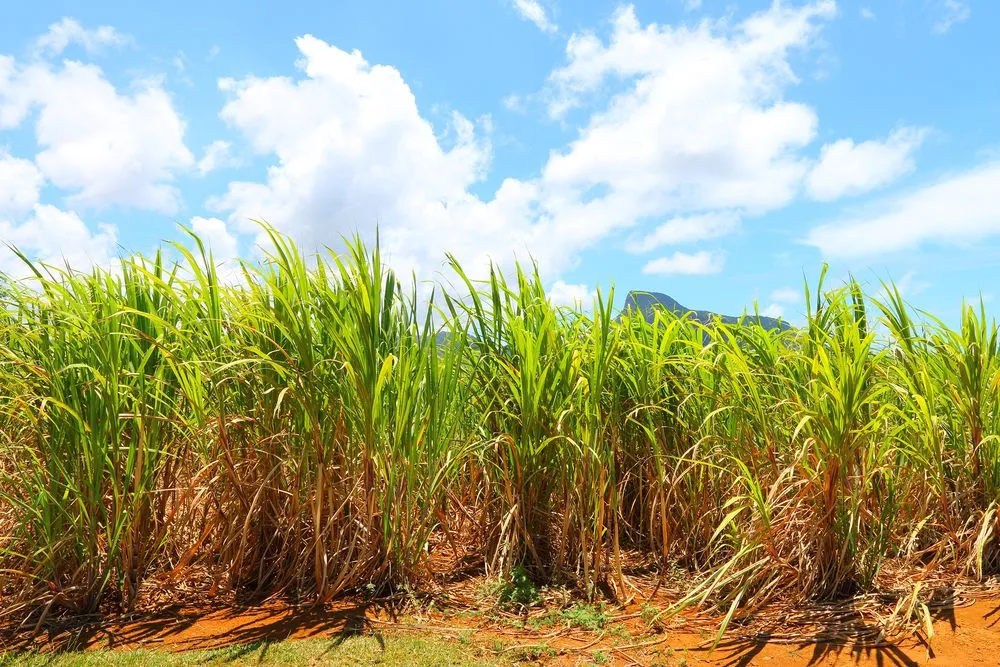
Most of India's people are packed into the Indo-Gangetic Plain, a flat sweep of alluvial land fed by the Indus, Ganges, and Brahmaputra rivers. It is some of the richest farmland on the planet, and the summer monsoon waters it on a dependable yearly cycle. A warm climate and reliable rain meant farmers could often raise more than one crop a year, and land that productive can feed a lot of people in a small area.

For most of history, big families made sense on that land. Children were extra hands for planting and harvest, so birth rates stayed high for generations. Then, through the 1900s, death rates fell fast as vaccination, antibiotics, and better sanitation arrived, while birth rates stayed high for decades longer. That gap is what sent India's numbers soaring, and in 2023 India passed China to become the world's most populous country.
Here is the part that surprises people: India's birth rate has actually dropped below the replacement level, to roughly 1.9 children per woman. So why is the population still climbing? Demographic momentum. So many Indians are young and only now reaching the age of having children that the total keeps rising even as families shrink. Demographers expect India's population to keep growing for decades before peaking somewhere around 1.7 billion in the 2060s.
Why Is China So Populated?
China's people cluster around two of the oldest farming regions on Earth: the Yellow River basin in the north and the Yangtze basin in the south. Farmers were growing millet on the loess soils of the Yellow River some 7,800 years ago, and cultivating rice in the warm, wet Yangtze valley even earlier, around 10,000 years ago. Wheat arrived later, roughly 4,000 years ago. That double base of dryland grain in the north and rice in the south gave China an unusually broad and stable food supply.

Centralized states reinforced the advantage. Organizing irrigation, flood control, and grain storage on a large scale let dense farming populations survive bad years that would have scattered smaller societies. So China carried a large population forward, century after century, long before the modern era.
The 20th century then did to China what it did to India: death rates collapsed thanks to modern medicine and food production, and the population shot past a billion, stoking fears that growth would outrun the food supply. To slow it, China ran a one-child policy from 1980 to 2015. It worked, perhaps too well. China's population has now begun to shrink, which is exactly how India overtook it in 2023. Even so, the roughly 1.4 billion people already there are not going anywhere, and China remains the second most populous country on the planet.
Why India And China, And Not Europe Or The Americas?
If fertile land and old farming traditions are the recipe, why didn't the same thing happen everywhere? The short answer is that few other places had all the ingredients at once.

Europe is fertile, but it has no monsoon, sits farther north with cooler and shorter growing seasons, and is carved up by mountains, peninsulas, and seas. There is no single contiguous river plain on the scale of the Indo-Gangetic Plain or the combined Yangtze and Yellow basins, so European farming supported smaller, more scattered populations rather than one giant concentration.
The Americas tell a different story. People only reached them late, roughly 15,000 to 20,000 years ago across the Bering land bridge, so there was far less time for populations to build up. And whatever had accumulated was devastated after 1492: the Indigenous population of the Americas fell from around 60 million to about 6 million within a century, as introduced diseases, warfare, and famine swept through. Africa, for its part, holds enormous numbers too, but spread across a vast continent rather than packed into two river valleys.
India and China hit the rare trifecta: a warm, monsoon-fed climate, huge stretches of contiguous fertile lowland, and thousands of years of uninterrupted intensive farming. Put those three together and you get exactly what we see today, more than a third of humanity living in two countries.
Are India And China Actually “Overpopulated”?
“Populated” and “overpopulated” aren’t the same thing, and the difference matters here. A country is densely populated when a lot of people live in a given area; it is overpopulated only if those numbers exceed what its land, water, food, and economy can reasonably support. By that stricter test, the answer in 2026 is more nuanced than the popular framing suggests.
By sheer numbers, India (about 1.48 billion) and China (about 1.40 billion) are unmatched. By density, though, neither tops the list: India sits around 490 people per km2 and China around 150 per km2, while small, wealthy states such as Singapore, Bahrain, and Monaco are several times denser without being called overpopulated. The defining feature of India and China isn’t crowding per square kilometer; it’s that two enormous, fertile heartlands kept feeding huge populations for thousands of years.
The bigger demographic story today is the turnaround. China’s fertility rate has fallen below 1.1 children per woman, well under the replacement rate of 2.1, and its population began shrinking in 2022. India’s fertility rate slipped below replacement around 2020, and the UN expects its population to peak in the early 2060s before declining as well. Zoom out to the whole continent and Asia still houses close to 60% of humanity across roughly 48 countries, but that share is now set to drift downward over the rest of this century, with Africa accounting for almost all future population growth.
Last Updated By: Ashish Tiwari
References (click to expand)
- Hertog, S., Gerland, P., & Wilmoth, J. (2023). India overtakes China as the world’s most populous country.
- The Impact of Rice on Human Civilization and Population Expansion
- The Role of Geography in Human Adaptation
- How Has the Lower Boundary of Human Mortality Evolved, and Has It Already Stopped Decreasing?
- Coale, A. J. (1983). Population trends in China and India (a review). Proceedings of the National Academy of Sciences, 80(6), 1757-1763.
- World Population Prospects 2024: Summary of Results. United Nations Department of Economic and Social Affairs, Population Division.
- Indo-Gangetic Plain. Encyclopaedia Britannica.
- Monsoon. Encyclopaedia Britannica.
- China Population (2026). Worldometer, based on UN World Population Prospects 2024.
- Early Mixed Farming of Millet and Rice 7800 Years Ago in the Middle Yellow River Region, China. PLOS ONE.
- 'Great Dying' in Americas disturbed Earth's climate. University College London.