Table of Contents (click to expand)
- What Would Happen To Our Homes?
- What Would Be The Impact On Animals?
- What Would Happen To Our Great Cities?
- What Would Happen To Nuclear Power Plants?
- Will There Be Any Human Legacy?
- How Long Would Everything Take To Disappear?
- What If Humans Had Never Existed At All?
- Most Likely Scenario After Population Zero
If humans vanished, homes would collapse within decades, subways would flood in 36 hours, and cities would become forests. Mount Rushmore could last 7 million years.
Have you ever wondered what could happen if all human beings were suddenly wiped from the face of the Earth?
Even though this scenario seems impossible, throughout history, humans have faced events that have threatened large portions of the population, such as the Black Death in the 14th century, which killed an estimated 30-60% of Europe’s population, or the 1918 influenza pandemic, which infected roughly 500 million people and killed an estimated 50 million worldwide.
However, what if humans disappeared suddenly but not due to a pandemic?
Let’s examine the definite consequences one by one.
What Would Happen To Our Homes?
Nature has an immense power to take over everything if humans are not around to maintain them. Even the strongest structures are not immune to the elements. For example, a small hole in the roof of a barn, just 18″ x 18″, can let in the elements and cause the entire structure to collapse within a decade.
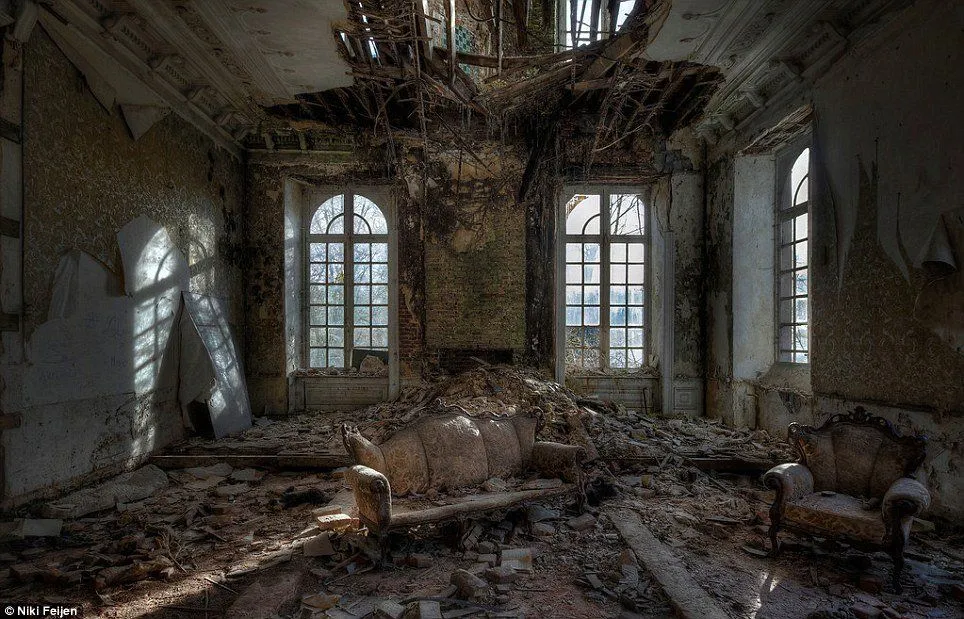
If humans were to disappear, houses made of wood would be destroyed by termites, and creepers would grow through the cracks, causing the wood to rot and eventually collapse. Concrete structures would also deteriorate due to extreme weather conditions, leading to their eventual collapse. In colder areas, pipes would freeze and burst, while basements would fill with soil and water.
Water would be the biggest enemy to all structures, causing untold damage over time. In the end, it would be as if these structures had never existed at all.
What Would Be The Impact On Animals?
If we were to disappear, the future wouldn’t be bright for domesticated animals. Livestock such as cows, pigs, and chickens would be left to fend for themselves, with over 1.5 billion cows, nearly a billion pigs, and over 25 billion chickens becoming easy prey for wild carnivores. Even our beloved cats and dogs would be forced to fend for themselves, competing with advanced hunters such as foxes, wolves, leopards, lions, and tigers. They would either adapt to the wilder ways or face extinction themselves.
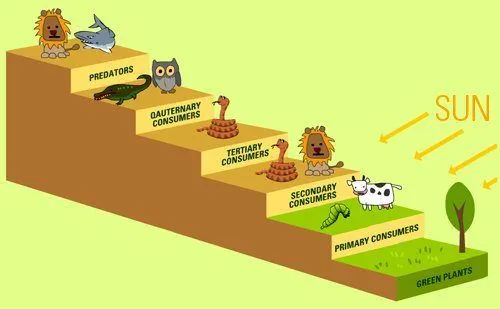
Without us producing trash, there would be a sharp drop in the population of rats and cockroaches. Head lice would quickly go extinct, and rats would become easy targets for predators, further decreasing their population. In time, the animal species would repopulate themselves until a balance is restored, as it was before humans arrived. The ocean would have many more fish, almost equal to what it was before humans began fishing.
Camels in Australia, huskies in India, and lions in the USA would become a common sight after a few hundred years.
What Would Happen To Our Great Cities?
If the pumps that keep water out of underground services fail, the subway tunnels would be filled with water within 36 hours, causing the subway services to shut down. This would result in rats coming out of hiding and roaming around, tree roots eroding the road systems, and undergrowth emerging from almost anything.
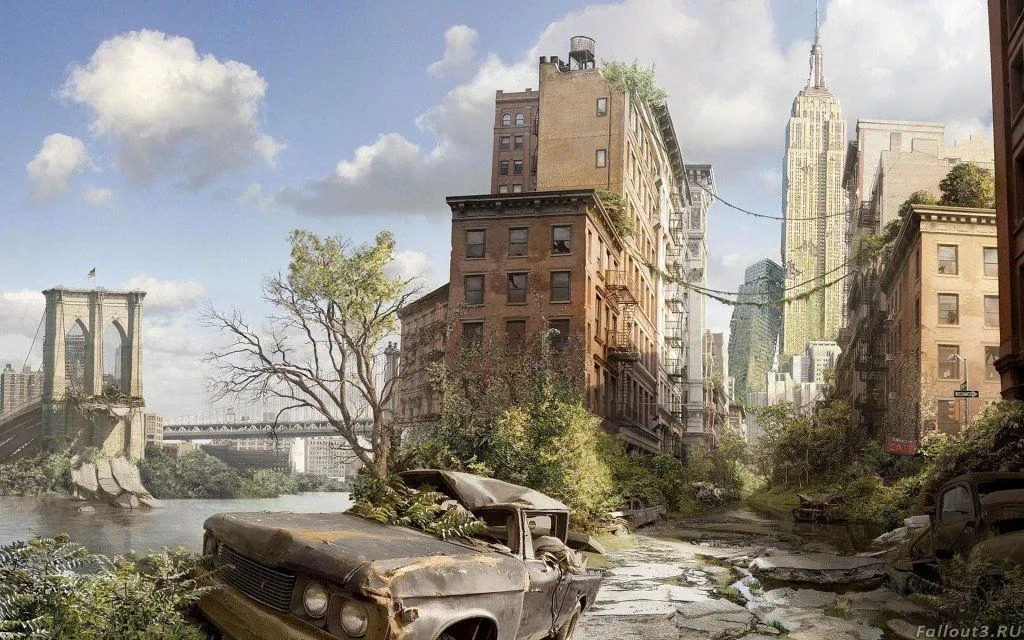
Zoo animals would escape from their cages, and cities would soon become forests. Water would seep through major structures, causing corrosion and the destruction of major steel structures such as the Empire State Building, CN Tower, London Bridge, Golden Gate Bridge, and more. Roads would turn into rivers, and iconic monuments like the Taj Mahal, Sydney Opera House, and the Leaning Tower of Pisa would eventually give in to corrosion.
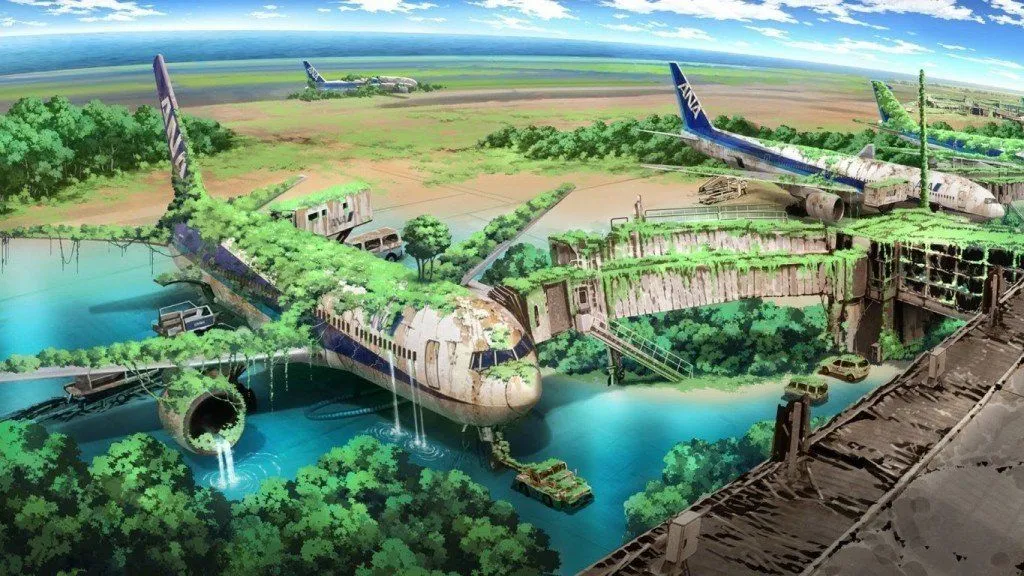
If the population drops to zero, it would take a hundred years for the dams to collapse finally.
What Would Happen To Nuclear Power Plants?
With no engineers left to watch the dials, you might expect every nuclear plant on Earth to melt down at once. The reality is less dramatic, at least at first. Modern reactors are built to fail safe. The moment the electricity grid goes dark, they automatically "scram," dropping their control rods and shutting the chain reaction down on their own. Backup diesel generators then kick in to keep the cooling pumps running.

The trouble starts when that backup fuel runs dry, usually within a few days. Once the pumps stop, the real hazard is not the reactor core but the spent fuel pools beside it, where used fuel rods sit underwater so the pool can carry away their leftover heat. With no one topping up the water and no cooling, the pool heats up, boils, and over a span of days to weeks can drop low enough to expose the rods. Left bare, the zirconium casing around the fuel can catch fire and throw radioactive material into the air.
With more than 400 reactors operating around the world, a human-free planet would slowly be dotted with dozens of radioactive dead zones, leaking into the very forests creeping back over them.
Will There Be Any Human Legacy?
After 15-20,000 years, not many traces of humans or human activity would be visible.
However, future scientists will certainly be able to identify signs of our presence, no matter how much time has passed since the moment we disappeared. The ceramic elements will definitely last longer, along with brass and plastic.
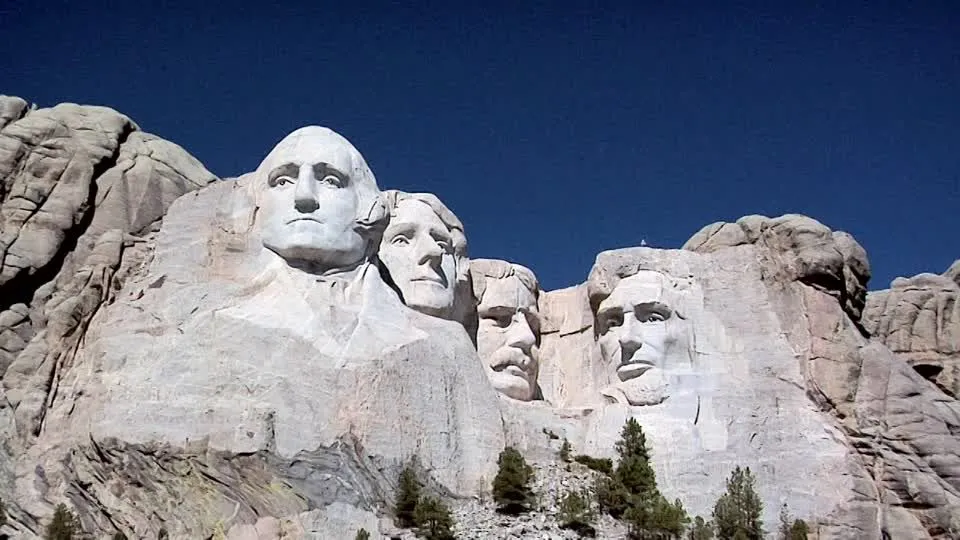
The four presidents carved on Mount Rushmore – George Washington, Thomas Jefferson, Theodore Roosevelt, and Abraham Lincoln – will endure for at least 7 million years.
How Long Would Everything Take To Disappear?
It helps to put all of this on a single clock. From the first silent hours to the deep future, here is roughly how a world without people would come undone:
- A few hours: With no one running the pumps, New York's subway tunnels begin to flood. Within about 36 hours, the whole system is underwater.
- A few days: Backup generators run out of fuel and the power grid falls silent. Nuclear cooling pumps stop, and spent fuel pools begin to heat up.
- 1 year: Pets and livestock have either gone feral or been picked off by predators, and crops disappear under weeds.
- 10 to 20 years: Wooden houses, gnawed by termites and split open by creeping plants, collapse. Roads crack as roots push through.
- 100 to 300 years: Steel skyscrapers such as the Empire State Building corrode and topple, dams give way, and cities turn into young forests.
- A few thousand years: Most everyday structures are gone. Only durable materials like bronze, ceramics, and some plastics still linger.
- 15,000 to 20,000 years: Almost nothing on the surface shows that we were ever here.
- 7 million years: The granite faces of Mount Rushmore, worn down barely 2.5 cm (one inch) every 10,000 years, still gaze across the plains as our longest-lasting monument.
What If Humans Had Never Existed At All?
So far we have imagined humanity blinking out overnight. People often ask a subtly different question, though: what if we had never shown up in the first place? That is not the same scenario. A world we abandon still carries our fingerprints, from flooded subways to crumbling skyscrapers. A world where Homo sapiens never evolved would look stranger still.
For one thing, it would be far wilder. Until our ancestors spread across the globe, the continents teemed with giant animals: woolly mammoths, ground sloths the size of cars, giant kangaroos, and saber-toothed cats. A large body of research links the disappearance of this "megafauna" to the arrival of humans rather than to a changing climate. Without us, many of these creatures would very likely still be roaming the land today.

There would be no farms and no cities carved out of forests, so woodland and grassland would blanket far more of the planet. Carbon dioxide would sit closer to its natural background level, and the climate would not be warming the way it is now. In short, Earth would still be Earth, just a good deal wilder and a lot quieter.
Most Likely Scenario After Population Zero
Pripyat, near Chernobyl, Ukraine, was a densely populated, booming city. This place was abandoned after the nuclear disaster in 1986 and remains deserted to this day. From a distance, it seems like Pripyat is a solid city, but the buildings are slowly decaying.
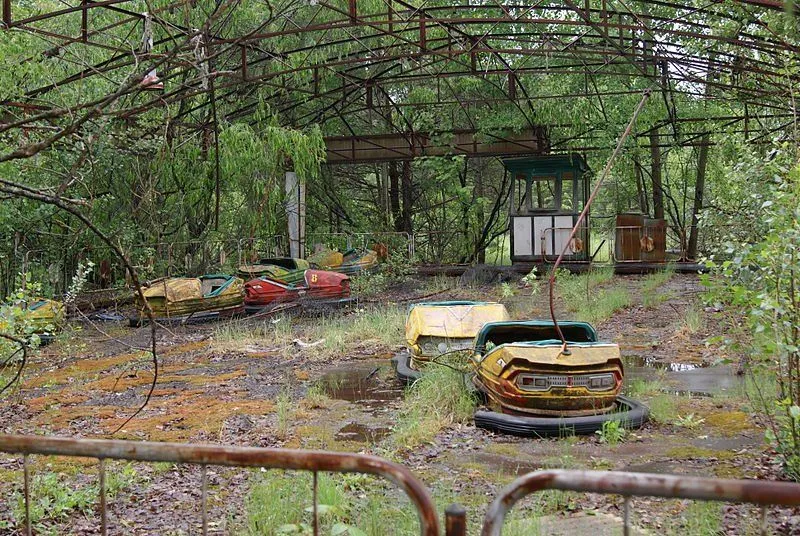
In conclusion, nothing will be spared because, in the end, nature always claims what is rightfully hers.
However, this is a highly improbable scenario, so chill out everyone. Humans are going to exist for a long, long time.
Last Updated By: Ashish Tiwari
References (click to expand)
- Introductory Biology. MIT OpenCourseWare.
- Global late Quaternary megafauna extinctions linked to humans, not climate change. Proceedings of the Royal Society B.
- Spent Fuel Storage in Pools and Dry Casks. U.S. Nuclear Regulatory Commission.
- Loss-of-Coolant Events in Spent Fuel Pools. National Academies Press (NCBI Bookshelf).
- Nuclear Power Reactors in the World. IAEA Power Reactor Information System (PRIS).
- Weisman, A. The World Without Us.