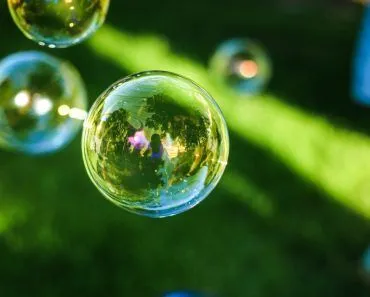
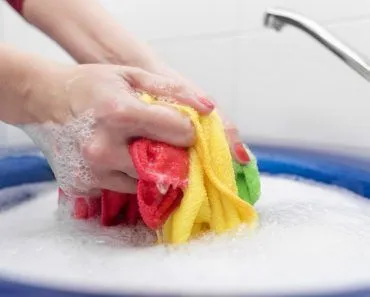
Soap and shampoo lather is always white, whatever the color of the soap, because the foam is a mass of tiny bubbles. As light passes through this network of countless air-water surfaces, it scatters in all directions and across every wavelength roughly equally. Light scattered evenly across all colors looks white, so the bubbles and lather appear white.
Regardless of whether the original soap/shampoo is orange, green, pink, yellow or any other color, you have surely observed that the foam or lather that forms when it’s mixed with water and rubbed vigorously is always white in color. Isn’t that a bit strange?

Why Do Soaps Of Different Colors Form The Same White-colored Foam?
Short answer: The ultra-thin layer of soap (that’s formed when it’s dissolved with water) is pretty much transparent on its own, but the foam looks white, because visible light gets scattered in multiple directions after passing through several surfaces.
To understand this better, let’s do a quick recap of an important optical phenomenon.
What Is The Scattering Of Light?
The dictionary meaning of the word ‘scatter’ is ‘to throw in various random directions’ or ‘move off quickly in different directions’. This is also pretty much what ‘scattering of light’ means in the world of optics.
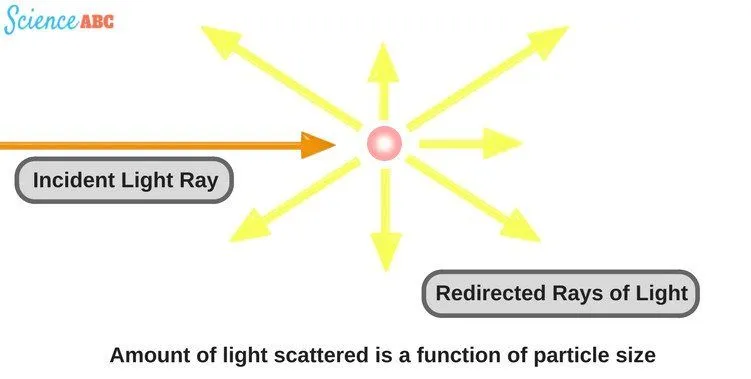
We say that light has ‘scattered’ when light rays in a straight line are deflected in random directions after striking something (that ‘something’ could be as small as an air molecule). The scattering of light occurs due to irregularities in the propagation medium, particles, or in the interface between two media.
Clouds Appear White/grey Because Of The Scattering Of Light
A clear sky is blue, but the clouds drifting across it appear white/grey due to the scattering of light (a specific type of scattering called Mie scattering). You see, almost all the sunlight that enters a cloud gets scattered, thanks to the presence of large enough water droplets (~20 micrometers, far bigger than the wavelengths of visible light) that scatter all visible wavelengths roughly equally. When every color is scattered by the same amount, the scattered light recombines to look white, giving clouds their white/greyish appearance.
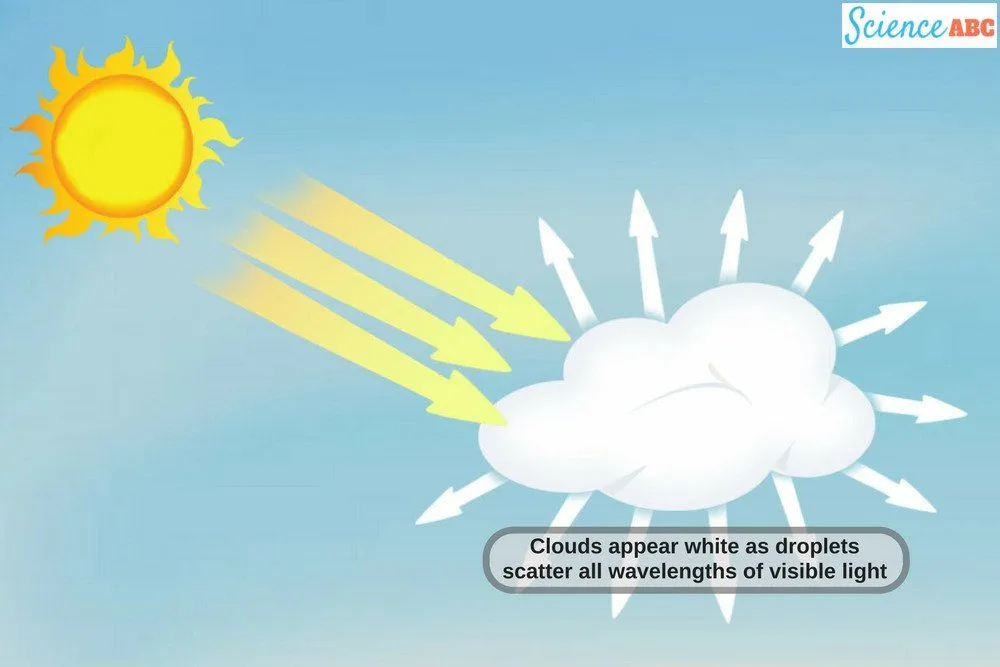
Note that scattering is different from reflection. Reflection involves the deflection of the incident light ray in only one direction, whereas in scattering, you can never tell (with certainty) which direction the deflected light ray is going to move.
Why Is Foam White?
First off, you should know that the dyes used to impart color to soaps and shampoos are highly diluted. In other words, they only use a tiny bit of dye to color a soap. When we rub soap in water to make lather, an incredibly minuscule amount of dye goes into the formation of lather. Thus, there’s little (or almost no) color in the foam to begin with.
Scattering Of Light
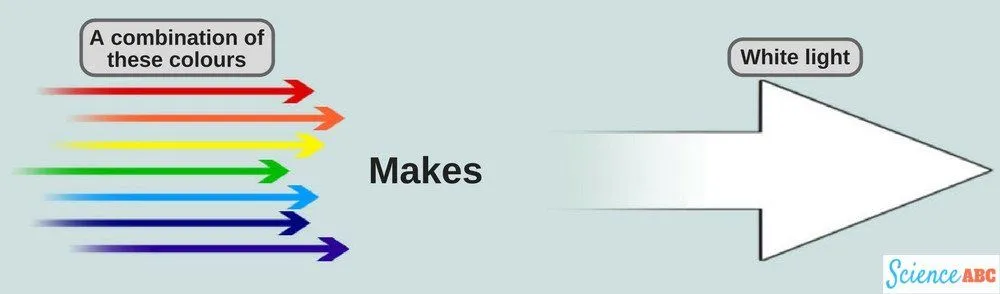
White light, as you might recall from your high school science classes, is a combination of visible light of different wavelengths (and therefore, different colors).
The foam that you see after rubbing soap in your hands is a large collection of tiny soap bubbles. Each individual bubble is actually an extremely thin film of the soap solution. Since soap is a surfactant (meaning that it affects the surface tension of the liquid), it lowers the surface tension of water, which then causes the film to stretch. This results in an increase in the total surface area of the film (thanks to the countless bubbles), which causes the already deficient color in the film to spread out and become next to impossible to visually detect.
The foam in its entirety looks white because when light enters the soap solution, it must pass through a number of tiny soap bubbles, i.e., a number of surfaces. These countless surfaces scatter the light in different directions, and because the bubbles are large compared to the wavelengths of visible light, every color is scattered by roughly the same amount. When all the colors come back out together, the eye reads the mix as white, which is why the foam/lather looks white.
After reading all this, it should be clear that trying to find a color in soap foam is an exercise in futility.
What Actually Makes Soap Lather In The First Place?
We have explained why the foam is white, but that leaves an even more basic question: why does soap froth up into a pile of bubbles at all, when plain water just runs off your hands? The answer is the very same property that makes soap clean: it is a surfactant, short for ‘surface-active agent’.

Every soap molecule has two ends that feel very differently about water. One end (the ‘head’) is hydrophilic, so it loves water and burrows into it; the other end (the ‘tail’) is hydrophobic, so it shuns water and tries to escape into the air. Because of this split personality, soap molecules crowd onto the very surface of the water, heads down in the liquid and tails sticking up into the air. By wedging themselves between the water molecules, they weaken the cohesive pull those molecules have on each other and lower the water’s surface tension. (For the cleaning side of the same molecule, see how soap and detergents lift away grease.)
That drop in surface tension is the whole trick. Pure water has a high surface tension and almost no ‘give’, so any air you whip into it escapes at once and no bubbles survive. Once soap lowers the tension, the water can stretch into wafer-thin sheets that wrap around pockets of air without instantly snapping. When you rub a bar between wet hands, scrub with a washcloth or work shampoo through your hair, that agitation folds air into the soapy water, and each trapped pocket becomes a bubble. Pile up enough of these tiny bubbles and you get lather. This also explains the everyday gripe that ‘my shampoo won’t lather’: hard water, leftover oils or too little product can blunt the surfactant’s effect, so fewer stable bubbles form even though plenty of cleaning is still going on.
What’s The Difference Between Lather, Foam And Suds?
In day-to-day speech we use ‘lather’, ‘foam’ and ‘suds’ interchangeably, and for the bathroom that is perfectly fine. In the language of chemistry, though, the words sit at slightly different levels of generality.

Foam is the broad scientific term: any mass of gas bubbles trapped inside a liquid (or even a solid). Sea spray, the head on a glass of beer, whipped cream and the froth on a cappuccino are all foams, and not one of them involves soap. Lather is the specific kind of foam you get when a surfactant, such as soap, shampoo or shaving cream, is mixed with water and air and then agitated. Put simply, all lather is foam, but not all foam is lather. Suds is just an informal everyday word for the same soapy foam, used more often for laundry or dishwater than for a face wash.
None of this changes the color story above. Whether you call it lather, foam or suds, it is still a dense network of tiny, near-transparent bubbles, and the countless air-water surfaces scatter every wavelength of light by roughly the same amount. So the froth comes out white regardless of which label you reach for, and regardless of the color of the soap that made it.
References (click to expand)
- Scattering - Wikipedia. Wikipedia
- Scattering of Light: by small particles and molecules in the .... The University of Illinois Urbana-Champaign
- More than you ever wanted to know about light scattering. The University of Arizona
- Scattering optics of foam. Applied Optics (Optica Publishing Group)
- Why Are Clouds White? Encyclopaedia Britannica
- Why does soap get bubbly? Ask Dr. Universe. Washington State University
- What are surfactants and how do they work? Biolin Scientific
- Foam. Encyclopaedia Britannica