Table of Contents (click to expand)
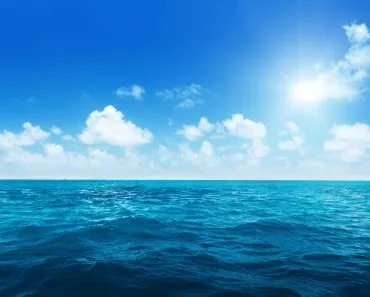
The ocean is blue because water itself is faintly blue. Water molecules absorb the longer red, orange and yellow wavelengths of sunlight and let the shorter blue wavelengths scatter back to your eye. A glass of water looks colorless, but over many meters this absorption stacks up, so the sea appears deep blue. Sediment, algae and minerals can shift it to green, red, brown or turquoise.
You’re probably taught in your science class that water is ‘colorless’, but if that’s true, have you ever wondered why oceans appear blue? Or more interestingly, why are they different shades of blue in various parts of the world?
Let’s decode the science behind why large water bodies like the ocean are not actually ‘colorless’.
Why Is The Ocean Blue?
A glass of water that you pour from the faucet looks clear and colorless because the light passes through that thin layer with negligible obstruction. Water is, in fact, ever so slightly blue. You just can’t notice it in a glass. You need several meters of it, like an ocean, for the color to become obvious. Let’s look into the physics to understand why.
The light coming from the sun is composed of a spectrum of different wavelengths, with red, orange and yellow being the longer wavelengths and blue being a relatively shorter one. When the rays of sunlight strike the ocean, they interact with the water molecules (H2O). Here’s the key part: water itself absorbs the longer red, orange and yellow wavelengths far more strongly than it absorbs blue. (The blue you see in the sky comes from a different process, the scattering of sunlight by air molecules, so the sky and the sea end up blue for two genuinely different reasons.) As sunlight travels down through the water, the warm colors are steadily filtered out, leaving mostly blue light to scatter back up to your eye. That’s the main reason deep water looks blue.

The surface of the ocean also reflects a little of the sky, which is why the sea can look greyer under a cloudy sky and a brighter blue on a clear day. This reflection is real, but it’s only a minor touch-up. Even under an overcast sky, deep clear water still looks blue, because the blue is coming from the water itself, not borrowed from above.
So far, we’ve used principles from physics to examine why ocean waters appear blue. Well, if you’re a frequent traveler and a keen observer, you have probably noticed that water bodies can sometimes be a color other than blue—something like turquoise or green. Now, let’s take some wisdom from the other branches of science, such as chemistry and biology, to figure out what makes these water bodies so ‘colorful’!
Reasons Of Different Colors Of Oceans
Another school of thought, beyond the light’s reflection, absorption and scattering, is that the color of water comes from two components: dissolved impurities and suspended components. A good example of a dissolved component would be tannin. Tannin is a type of organic matter from plants and trees. When plant material is broken down in the marine ecosystem, the organic acids that are released get dissolved, which also contributes to the color of the water. However, the bigger contribution to water color is made by suspended particles. Suspended sediment and algae are two common forms of particulate matter that cause natural water to become ‘colored’.
Let us now briefly look at the reasons for specific colors of large water bodies besides blue:
Turquoise: Lakes such as Bear Lake in Utah have a turquoise color due to an abundance of suspended microscopic particles of calcium carbonate.

Green: Water of the Atlantic Ocean near the east coast of the USA appears green in some places due to the presence of algae and phytoplankton in large quantities.
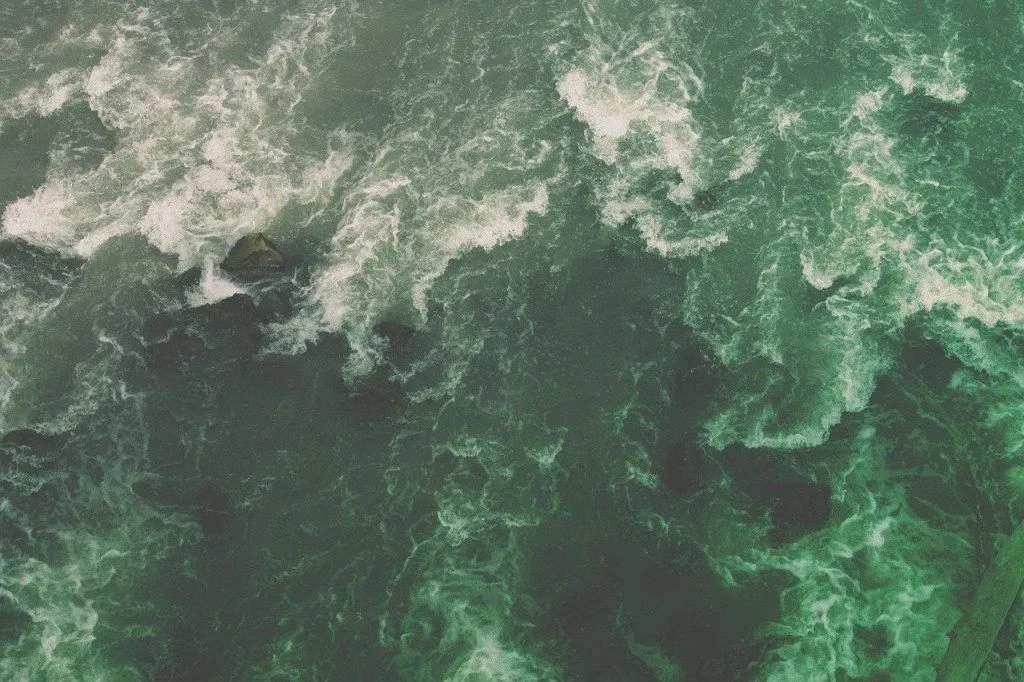
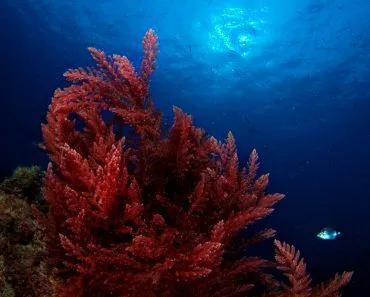
Red: The Red Sea witnesses occasional blooms of ‘red’, a color attributed to a high concentration of Trichodesmium erythraeum, a reddish blue-green cyanobacterium. In fact, these blooms are widely thought to be the source of the sea’s name.
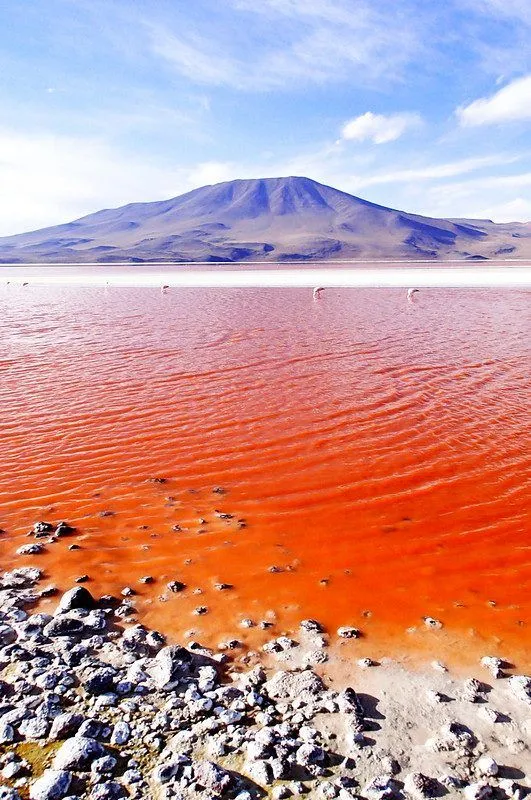
Yellow: Dissolved organic matter like peat, humus or decaying marine matter can make the sea or ocean water appear yellowish.
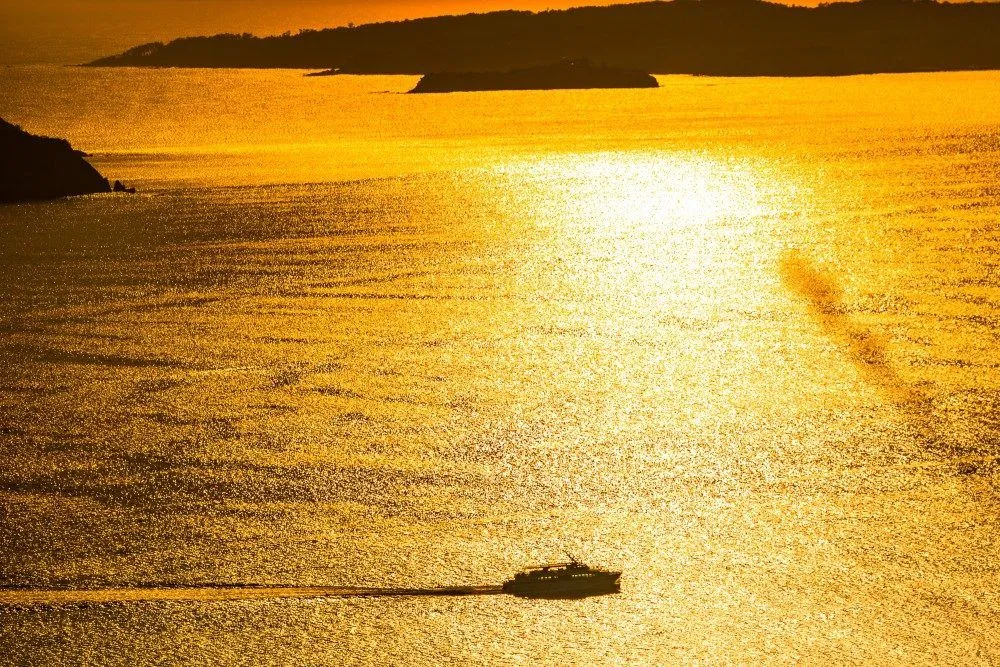
Brown: A high quantity of mud in any water body can give it brownish appearance.
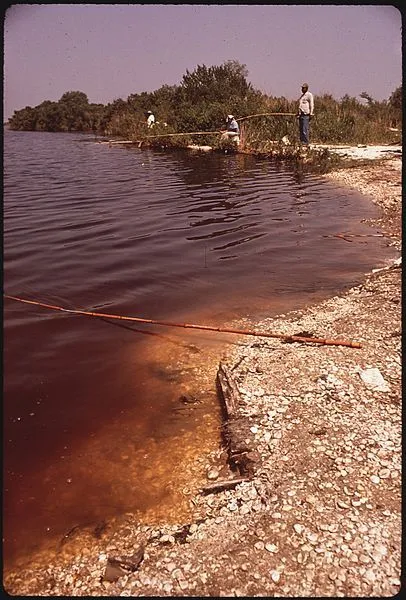
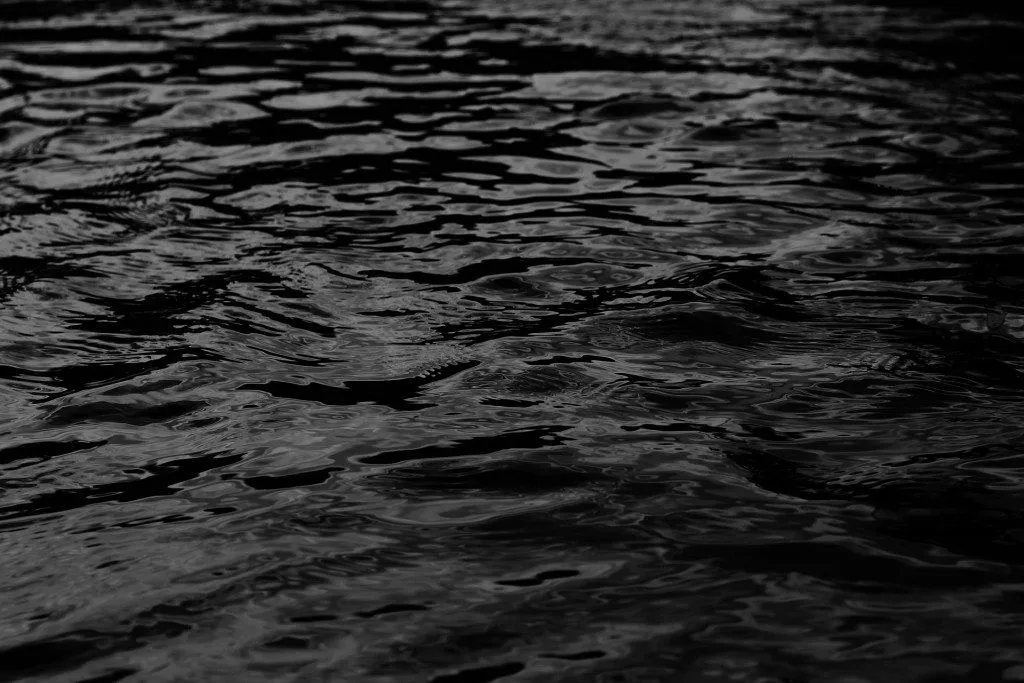
Black: Black or gray water is generally due to the abundant growth of sulfur-reducing bacteria in the water body.
Effects Of Color On The Marine Ecosystem
Colored water impacts aquatic flora and fauna, as light is an important ingredient for the growth of marine life. Very deep water in the ocean limits the penetration of light. Generally, a highly colored body of water mitigates the chances of booming aquatic life. Rapid algal growth that remains suspended in the water body impedes the light penetration even further. When these algae die off, the bacteria that decompose them use up the dissolved oxygen, which creates eutrophic conditions and drastically lowers the chance of survival for marine animals.
So, with this knowledge now in mind, perhaps you should take your science teacher to a water body like the Red Sea and inform her of the alternate scientific explanations behind this ‘colored’ water. Not every question can be answered in definitive terms; exploring the natural world is all about understanding complex systems and interconnected factors that generate the beautiful and fascinating planet we call home.