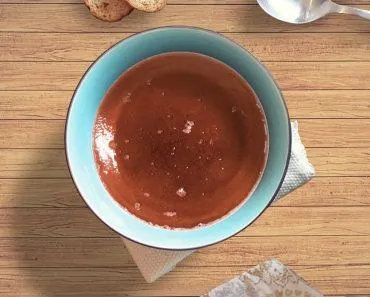
Food turns black when it’s burnt because heat drives off the water, oxygen and hydrogen in it and leaves behind a residue that is mostly carbon—char. The char is dominated by amorphous carbon and graphite-like nanostructures whose disordered atomic arrangement absorbs essentially all visible light, so the surface reads as black to your eye.
You may have seen food turn black when it gets overheated, or when it’s left on the stove longer than it should have been. Have you ever wondered what brings that black hue to burnt food?
Presence Of Carbon In Almost All Organic Matter
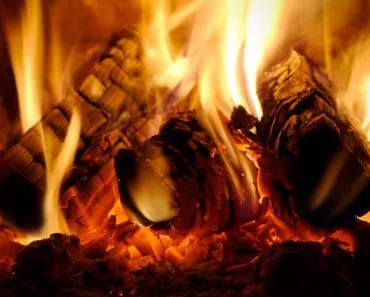
Not just food, but most organic matter, is made of carbon, along with a few other elements, including oxygen, hydrogen, nitrogen, phosphorus etc. Thus, when you burn food, it usually turns black, as the carbon present inside it undergoes combustion and leads to the formation of carbon dioxide gas and burnt carbon, which is black in color.
Overheating Vs Burning
It is also worth noting that food does not jump straight from raw to charcoal. As the surface temperature climbs, sugars and amino acids first react together in the Maillard reaction (roughly 140—165°C), giving toast its golden-brown colour and savoury aroma. Pure sugar follows a parallel route called caramelisation, mostly between about 160—180°C. Push past around 180—200°C and pyrolysis takes over: the organic molecules break apart, volatile compounds escape as smoke, and what is left is the carbon skeleton we recognise as char. So "burnt" is really the end of a temperature ladder, not a single event.
Not All Forms Of Carbon Are Black
A carbon atom has 4 valence electrons. In diamond, every carbon atom is connected to 4 other carbon atoms in a tight tetrahedral lattice; in graphite, each carbon is linked to only 3. Thus, the extra electrons that don’t participate in any bond formation remain ‘delocalized’, and are sort of shared among all carbon atoms via a shared electron cloud.
Color Of Carbon-based Substances
Everything gets its color based on how light rays interact with it. When light rays hit an object, they may be reflected, refracted, scattered or absorbed. Which color (of light) is absorbed by an object is totally dependent on the latter’s atomic structure.
Diamond is shiny because its carbon atoms form a regular, well-ordered lattice, which is why diamond absorbs very few frequencies of light. Consequently, diamond does not absorb/scatter light in the visible spectrum; hence, it appears transparent and shiny. (Note: diamond brilliance is also related to total internal reflection, which is another optical phenomenon).
On the other hand, if you consider materials such as graphite, which do not have as well-ordered a structure as diamond, and have free delocalized electrons, it absorbs/scatters a broader range of frequencies, including colored light. This causes graphite to have a characteristic blackish hue, since it doesn’t reflect almost any color back to your eyes.
Is Burning Food A Chemical Change?
Yes, burning food is firmly a chemical change, not a physical one. The difference matters: a physical change (melting butter, dissolving salt) rearranges a substance without altering what it actually is, and it can usually be reversed. A chemical change breaks and reforms bonds, producing new substances with different properties, and it is much harder to undo. As the chemistry texts put it, one substance with a certain set of properties is turned into a different substance with different properties, and chemical changes are frequently harder to reverse than physical ones.

When food burns, two chemical processes are at work. With enough oxygen, parts of it undergo combustion, reacting with oxygen to release heat and light and forming carbon dioxide and water vapor that drift off into the air. Where oxygen is scarce, such as deep inside a thick piece of meat or a slice of bread, the heat instead drives pyrolysis: the molecules break apart into gases, tar-like vapors and a carbon-rich solid char. This is exactly why burnt chocolate goes black and bitter. Heat shreds its sugars, fats and proteins, the lighter fragments escape as smoke and aroma, and the carbon left behind tastes nothing like the sweet solid you started with. You cannot gather that smoke back up and rebuild the chocolate, which is the giveaway that a chemical change has taken place. The same logic explains why white sugar turns first golden, then deep brown, then a black carbon mass when you keep heating it.
Can Burnt Food Catch Fire?
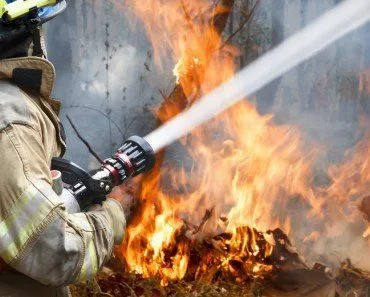
It absolutely can, and this is one of the most common ways a kitchen mishap turns into a real fire. Char and dried-out food are basically concentrated carbon and fuel, and the fats and oils released as food overheats are even more dangerous. According to U.S. fire data, cooking equipment was involved in 46% of reported home fires, and cooking oil or similar greasy material was the first thing to ignite in 52% of cooking fires.

The frightening part is that hot grease does not even need a spark. Once heated past its autoignition temperature, it bursts into flame on its own. For common cooking oils that point sits roughly between 390 and 445 °C (about 735 to 833 °F), so a forgotten pan or a crumb-filled toaster left on too long can quietly climb toward ignition. That is also why you should never throw water on a grease fire: the water flashes to steam and sprays burning oil outward. Fire-safety agencies advise smothering a stovetop fire by sliding a lid or baking sheet over the pan and turning off the heat, keeping an oven fire starved of oxygen by leaving the door shut, and calling the fire department if the flames do not die quickly.
Carbon And Burnt Food
It’s now clear that burned food contains carbon. However, a noteworthy thing is that burned food is mostly amorphous carbon, graphite and other miscellaneous random carbon nanostructures. These structures absorb/scatter all visible light falling on them, thereby imparting a blackish color to burnt food, or any other completely burnt organic material, for that matter.
So, it’s not just the stuff that’s left behind that gives burnt things their black color, but also how the constituent atoms inside that stuff are organized, as that plays a major role in determining the color of burnt organic materials.
References (click to expand)
- Burning to Carbon | Physics Van | UIUC. The University of Illinois Urbana-Champaign
- Maillard reaction - Wikipedia
- Chapter 2. Wood carbonisation and the products it yields. The Food and Agriculture Organization of the United Nations
- 3.6: Changes in Matter - Physical and Chemical Changes. Chemistry LibreTexts
- 11.6: Combustion Reactions. Chemistry LibreTexts
- Pyrolysis: An effective technique for degradation of waste. Chemosphere. PMC, NCBI
- Characterization of Stovetop Cooking Oil Fires. Journal of Fire Sciences. PMC, NCBI
- Kitchen Fires. Food Safety. Illinois Extension, University of Illinois