Table of Contents (click to expand)
The polymers, divided into three groups – caramelans (C24H36O18), caramelens (C36H50O25), and caramelins (C125H188O80) – are responsible for the browning of sugar. On the other hand, volatile compounds like diacetyl, hydroxymethylfurfural (HMF), furfural, and various small esters and ketones are responsible for the characteristic 'caramel smell'.
When granulated sugar is first heated, it begins to melt. As it melts, its color starts to change from white to golden brown, and then to dark brown (if you continue heating it).
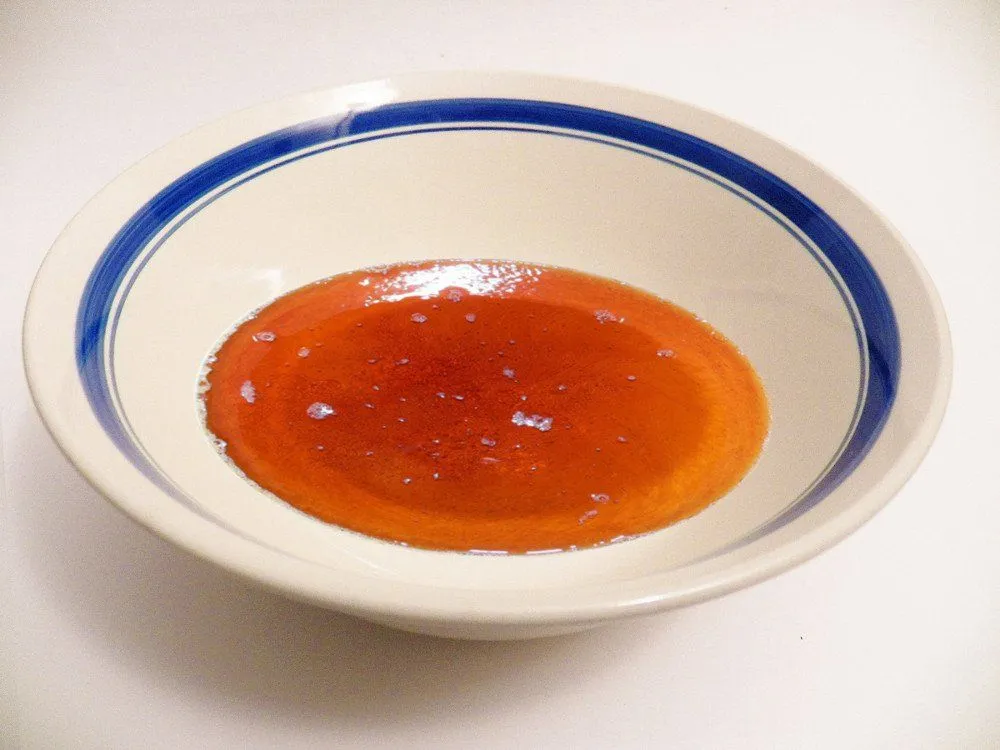
If you apply heat for even longer, it becomes black and gives off unpleasant fumes. It even tastes different at that point, but do you know what processes are at work here?
In order to understand why sugar turns brown when melted, and ultimately turns black, it’s imperative to first understand what sugar actually is.
What Is Sugar?
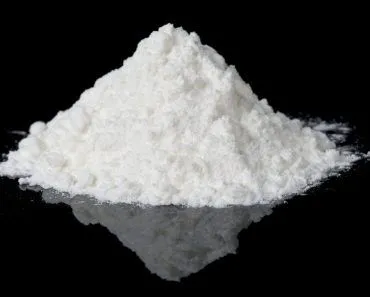
The term ‘sugar’ can be used for many chemical compounds – namely organic compounds (carbohydrates) that are sweet in taste and usually have a cyclic structure. The white stuff that we call ‘sugar’ is actually sucrose. It’s composed of 22 atoms of hydrogen, 12 atoms of carbon and 11 atoms of oxygen.
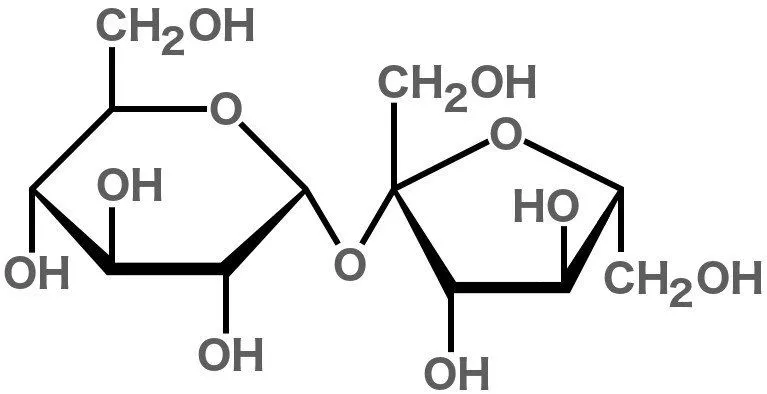
Just like all other compounds made from these elements (including fructose, glucose and maltose), sucrose is a carbohydrate. In fact, sucrose is actually two simpler sugars joined together: glucose and fructose. Sugar's sweetness is attributed to the OH (hydroxyl) groups it contains; these OH groups, in a particular spatial arrangement, fit into the sweet-taste receptors on our tongues.
Now that we know the basics of sugar, let’s proceed to the original question: why does sugar become brown when melted?
This is due to a process called caramelization.
What Is Caramelization?
Caramelization refers to the browning of sugar. It's the process that causes sugar to acquire a brownish hue when it's heated. Strictly speaking it's thermal decomposition (pyrolysis) of sugars, a cascade of dehydration, fragmentation and condensation reactions, not a true oxidation, since it doesn't require oxygen.
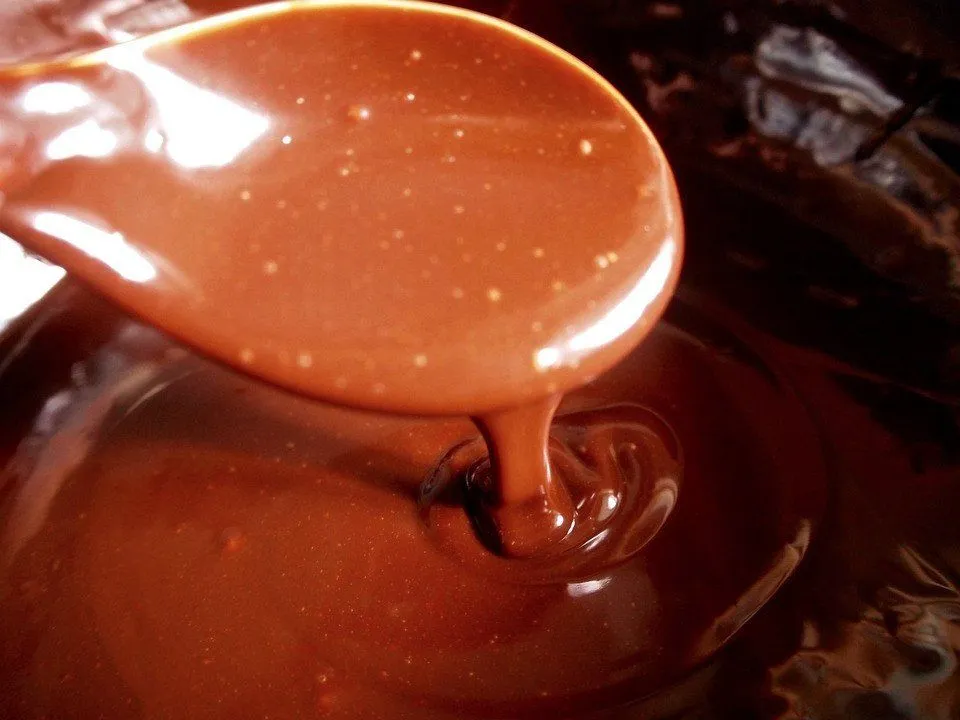
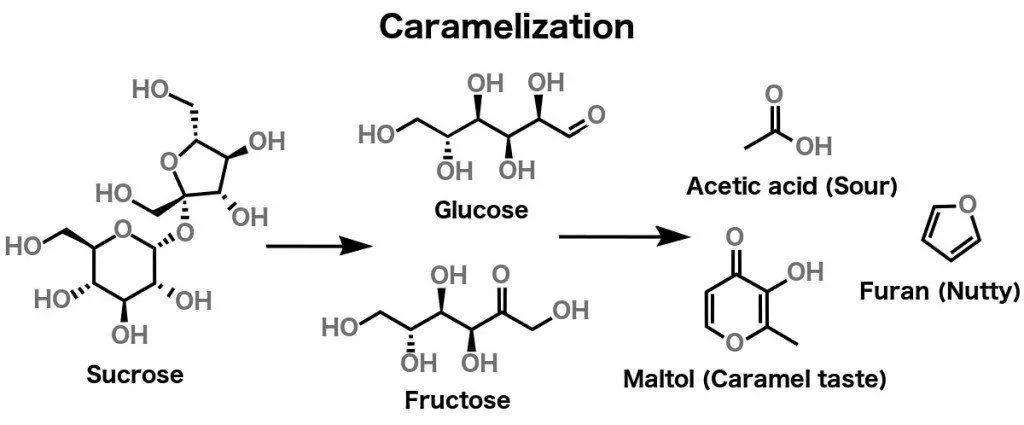
As mentioned earlier, different kinds of sugar (i.e., sucrose, fructose, glucose etc.) are carbon-based molecules. Caramelization happens to pure sugar when it is heated to 338 degrees Fahrenheit (170 Degree Celsius). As sugar reaches this temperature, it is broken down into simpler sugars, which then dehydrate and fragment into ketones and aldehydes. These polymerize and undergo various other reactions, but all of that is beyond the scope of this article.
What’s really relevant to our current discussion is that the compounds formed as a result of heating sugar can be classified into two categories: polymers and volatile compounds.
The polymers, divided into three groups – caramelans (C24H36O18), caramelens (C36H50O25), and caramelins (C125H188O80) – are responsible for the browning of sugar. On the other hand, volatile compounds like diacetyl, hydroxymethylfurfural (HMF), furfural, and various small esters and ketones are responsible for the characteristic 'caramel smell'.
Interestingly though, caramelization is not the only process that causes browning of a sugary substance; a Maillard reaction (browning of meat, bread etc.) also does the same thing.
Caramelization Vs Maillard Reaction
It should be noted that both caramelization and Maillard reactions cause the browning of sugars under high heat, and in fact, caramelization may sometimes cause browning in the same foods in which the Maillard reaction occurs, but the two processes are NOT the same.
The primary difference between both the processes is that caramelization occurs when only sugar is heated to a high temperature, whereas the Maillard reaction occurs when both amino acids (from proteins) and carbohydrates (sugar) are present.
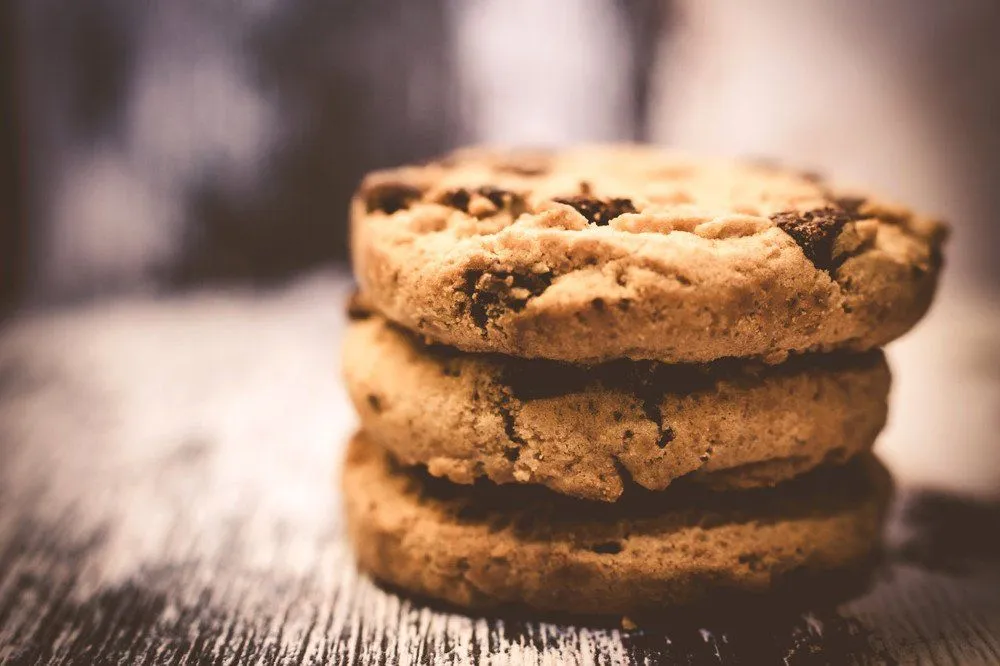
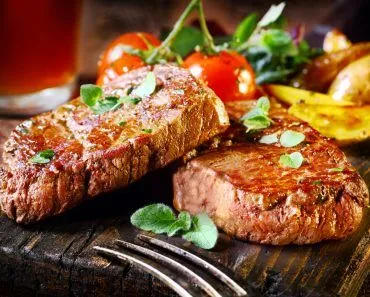
A lot of delicious everyday food items, including cookies, biscuits, breads, toasted marshmallows, seared steaks and others get their distinctive brown color and characteristic nutty taste due to the Maillard reaction.
The thing is that both caramelization and the Maillard reaction involve heat, cause browning, have similar effects on the taste buds and even work on similar food bases, so it’s easy to confuse the two processes.
You may have noticed that if you continue heating sugar after it has turned dark brown, it gradually turns black, and acquires a bitter ‘charred’ taste. That’s because the carbon, oxygen and hydrogen atoms in the sugar vaporize as different organic fragments, leaving behind a black, bitter version of sugar.
At What Temperature Does Sugar Caramelize (And Does It Even Melt)?
Different sugars start to brown at different temperatures, because each one breaks down at its own pace. Fructose gets going first, at roughly 110 °C (230 °F). Glucose and ordinary table sugar (sucrose) caramelize at around 160–170 °C (320–338 °F), and maltose holds out until about 180 °C (356 °F). That is why a syrup rich in fructose, like honey, darkens far more readily than plain white sugar.

Here is the surprising part: sugar does not really have a fixed melting point the way ice or a metal does. For decades, textbooks quoted a melting point for sucrose anywhere between roughly 160 and 192 °C, and the numbers never quite agreed. In 2011, a team led by food scientist Shelly Schmidt at the University of Illinois showed why. When they heated sucrose at different rates, they got different "melting" temperatures, which is not how a genuine melting point behaves. What actually happens is that the crystal starts to decompose before it can cleanly melt. The researchers called this apparent melting: the sugar looks like it is turning to liquid, but the molecules are already falling apart. So the puddle of molten sugar in your pan is not pure liquid sucrose at all; it is a stew of sucrose, its broken-down fragments, and the brown caramel compounds forming in real time.
Is Caramelizing Or Melting Sugar A Chemical Change?
This one trips up a lot of students, so let's settle it clearly. Caramelization is a chemical change. Heating sugar until it browns breaks the bonds inside the sucrose molecules and builds entirely new substances, the caramelans, caramelens and caramelins responsible for the color, plus the volatile molecules behind that toasty smell. Chemists treat the appearance of a new color, a new odor, and a product that cannot be turned back into the original as classic signs that a chemical reaction has occurred, and caramelization ticks all three. You cannot cool caramel back into white granulated sugar, which tells you the change is permanent and chemical, not physical.
What about simply melting sugar? You might expect that to be a tidy physical change, the way melting ice is. But as we just saw, sucrose decomposes the moment it appears to melt, so even melting sugar is really the opening move of a chemical reaction. Contrast that with dissolving sugar in water or grinding it into powder: those are true physical changes, because the sucrose molecules stay intact and you can recover the sugar by evaporating the water. The rule of thumb is simple, no heat-driven browning means physical; browning means new molecules, and that is chemistry.
What Is Brown Sugar, And What Is Its Chemical Formula?
People often search for a special "chemical formula for brown sugar," expecting something different from white sugar. There isn't one. Brown sugar is essentially the same sucrose, C12H22O11, simply coated with or containing molasses. The molasses is what supplies the color, the moisture and the faintly toffee-like flavor; the crystals underneath are plain sucrose.

The difference between light and dark brown sugar is just how much molasses is in the mix: light brown sugar carries around 3.5% molasses by volume, while dark brown sugar carries about 6.5%. Commercial brown sugar is still required to be at least 88% sucrose plus invert sugar, so chemically it is white sugar with a coat of molasses, nothing more exotic. When you heat brown sugar, it browns and breaks down through the very same caramelization we have been describing; it simply starts off already tinted because of the molasses, and the trace minerals and acids in that molasses can nudge the browning along a little faster.
Why Does Sugar Turn Black When Heated Too Long?
If you keep the heat on well past the golden-brown stage, caramel stops being delicious and turns into a black, smoking mess. A common exam question, "a black residue is formed when sugar is heated, give the reason," is really asking what that black stuff is. The answer is carbon. Sugar is built only from carbon, hydrogen and oxygen, and at high enough temperatures (past roughly 190 °C / 375 °F for table sugar) the molecules are torn apart faster than they can recombine into caramel. The hydrogen and oxygen leave, largely as water vapor and other volatile fragments, and what is left behind is a carbon-rich black solid, the same reason a charred marshmallow goes black.

This is the same chemistry that lets researchers deliberately turn sugars into pure carbon: heat a sugar hard enough, in the right conditions, and you drive off the water while the carbon skeleton stays put and blackens. It also explains why burnt sugar is bitter rather than sweet, the molecules your tongue reads as "sweet" are gone, replaced by acrid breakdown products. So the full color journey of heated sugar, white to golden to deep brown to black, is one continuous slide from intact sucrose, through caramel, all the way to charred carbon.
References (click to expand)
- Science of Candy: What is Sugar? - Exploratorium. The Exploratorium
- Science of Candy: Caramelization & Caramels - Exploratorium. The Exploratorium
- Why is sugar sweet?. The University of Illinois Urbana-Champaign
- Processed vs. Natural Sugars: What’s the Difference? - blogs.oregonstate.edu:443
- Can the Thermodynamic Melting Temperature of Sucrose, Glucose, and Fructose Be Measured? - Journal of Agricultural and Food Chemistry
- Carbohydrates: Caramelisation - Institute of Food Science and Technology
- Physical and Chemical Changes - Chemistry LibreTexts
- What is Brown Sugar? - International Food Information Council
- Analysis of Formation Mechanisms of Sugar-Derived Dense Carbons - Nanomaterials