Alice in Wonderland syndrome (AIWS), also known as Todd's syndrome, is a rare neurological condition that warps how the brain perceives size, distance, and time. Patients briefly see objects or their own body parts as too small (micropsia), too large (macropsia), too close (pelopsia), or too far away (teleopsia). Migraine in adults and viral infections in children are the most common triggers.
A few years ago, I read a novel in which a kid was lying down on a couch, trying to take a nap. While his eyes were still open, he stared at the point where the ceiling met the corner of the wall opposite him.
Suddenly, he felt as though the room grew smaller while his own body swelled to the size of a giant. He rubbed his eyes a few times, but the sensation persisted until he finally fell asleep. In subsequent parts of the novel, it was disclosed that the little boy suffered from a rare brain disorder.

At the time of reading the novel, I thought that it was just a made-up disease invented by the writer. It was only some time later that I came to know that it is, in fact, a genuine brain affliction, a very rare condition with an even more unusual name: Alice in Wonderland syndrome.
What Is Alice In Wonderland Syndrome?
Alice in Wonderland syndrome, commonly abbreviated as AIWS or AWS (and also known as Todd's syndrome, after the English psychiatrist John Todd, who first described it in 1955), is a disorienting neurological condition characterized by a set of symptoms that affect and alter the patient’s perception.
Patients experience a wide range of distortions in the perception of size, including micropsia (objects look smaller than they really are), macropsia (objects look larger), pelopsia (objects look closer) and teleopsia (objects look farther away). Of those four symptoms, micropsia and macropsia are the most commonly reported, where the sizes of external objects (like a room’s dimensions) or the patient’s own body parts are perceived incorrectly. Many patients also report that time itself feels stretched, sped up, or slowed down during an episode.
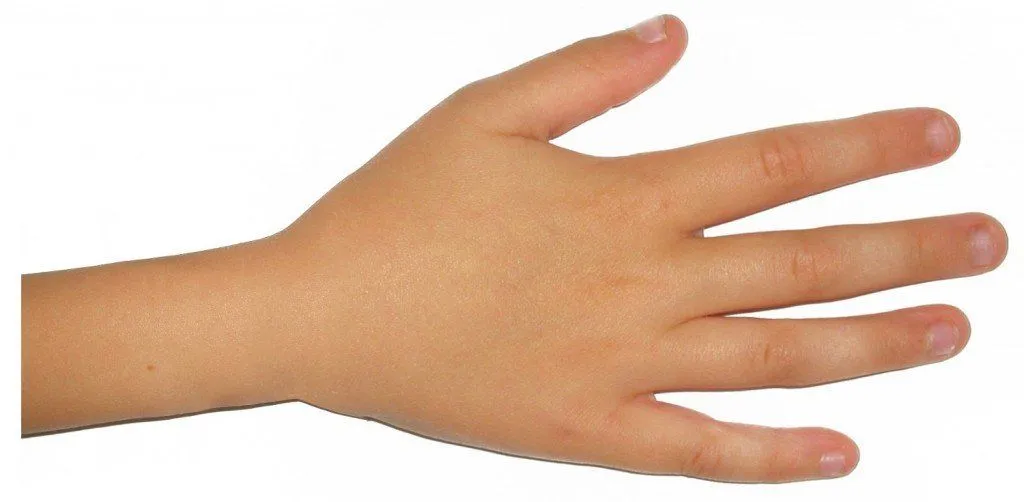
Although AIWS affects people of all ages, it’s mostly reported to be experienced by children, and especially at nighttime. Some people say that they experienced a distortion in their perception in their early years, but ‘grew out’ of it once they reached their teens.
Alice In Wonderland Syndrome: The Reason Behind Such An Unusual Name
If you read fairy tales as a child or are a fan of literature, you may have associated the name of the disease with the popular 19th-century novel Alice’s Adventures in Wonderland (1865), authored by Lewis Carroll.
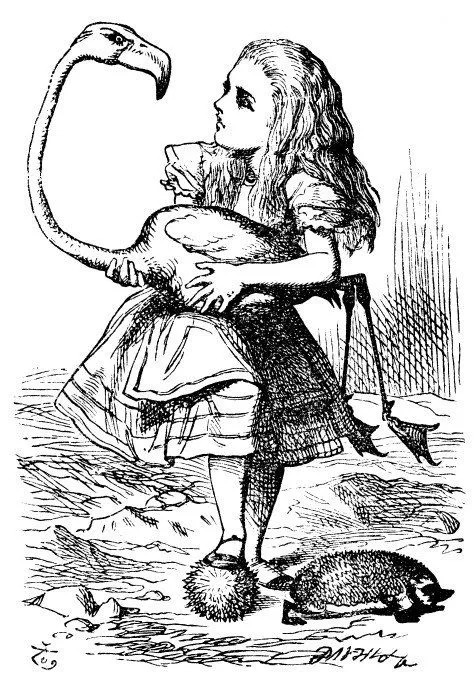
In that novel, Alice, the protagonist of the story, experiences a number of situations that are quite similar to macropsia and micropsia. Due to this, it has been widely speculated that Carroll himself experienced such episodes of altered perception of sizes.
Another fictional parallel of AIWS can be drawn from Jonathan Swift’s Gulliver’s Travels (1726), in which the protagonist Gulliver washes ashore on an island whose inhabitants, the Lilliputians, are of minuscule size. The AIWS symptom of micropsia is therefore sometimes referred to as a ‘Lilliputian hallucination’.
Interestingly, in that second novel, the protagonist leaves Lilliput Island only to find himself amongst a colony of giants, people so big that they could carry him in their palms. That’s another fairly common symptom (macropsia) of AIWS.

Causes Of Alice In Wonderland Syndrome
Unfortunately, medical researchers haven’t yet pinned down a single underlying cause for AIWS. The condition is rare and the science is still catching up, which makes things harder for patients, since most doctors aren’t familiar enough with the syndrome to recognize it in the first place.
That said, several conditions show a strong correlation with AIWS. For instance, AIWS patients very often turn out to be migraine sufferers (with the usual cast of symptoms: an aura, visual disturbances, nausea, vomiting and headache).

In adults, migraine is in fact the most commonly reported trigger, and many researchers consider AIWS a form of migraine aura. Temporal lobe epilepsy is another well-documented cause.
In children, viral infections are actually the most commonly reported trigger. Epstein-Barr virus (the virus behind glandular fever) tops the list, but cases have also followed influenza A, coxsackievirus, varicella-zoster (chickenpox) and even COVID-19. Other documented causes include acute disseminated encephalomyelitis, brain tumors and, occasionally, medications such as topiramate or montelukast. (Source)
Brain imaging suggests these distortions originate at the temporo-parietal-occipital junction, the region where the brain stitches together visual, spatial and body-position information. When that hub misfires, the size and distance of objects (and of your own limbs) can get rescaled in disorienting ways.
Can AIWS Be Cured?
Curing any medical condition really requires a solid grip on what causes it, and as we just saw, AIWS isn’t fully understood yet. As a result, there is no proven, dedicated treatment for the syndrome itself. Instead, doctors usually target the underlying trigger: managing migraines, treating the viral infection, or addressing the epilepsy. Chronic cases without a clear cause are largely left to run their course.
However, there’s a silver lining. Although patients may feel frightened and panic-stricken during episodes of AIWS, the distortions themselves are not usually harmful. Episodes are typically brief (often a few minutes to under an hour), and in many cases the symptoms fade and gradually disappear over time.
In other words, a child who sometimes perceives things to be much bigger than they really are may eventually return to normalcy once they hit their teenage years.
References (click to expand)
- Bittmann S, Weissenstein A, Luchter E. (2014). Alice in Wonderland syndrome: A rare neurological manifestation with microscopy in a 6-year-old child. Journal of Pediatric Neurosciences.
- Mastria G, Mancini V, Vigano A, Di Piero V. (2016). Alice in Wonderland Syndrome: A Clinical and Pathophysiological Review. BioMed Research International. PMC.
- Alice in Wonderland Syndrome (AIWS): Symptoms & Treatment. Cleveland Clinic.
- Blom JD. (2021). Time Distortions: A Systematic Review of Cases Characteristic of Alice in Wonderland Syndrome. Frontiers in Psychiatry.