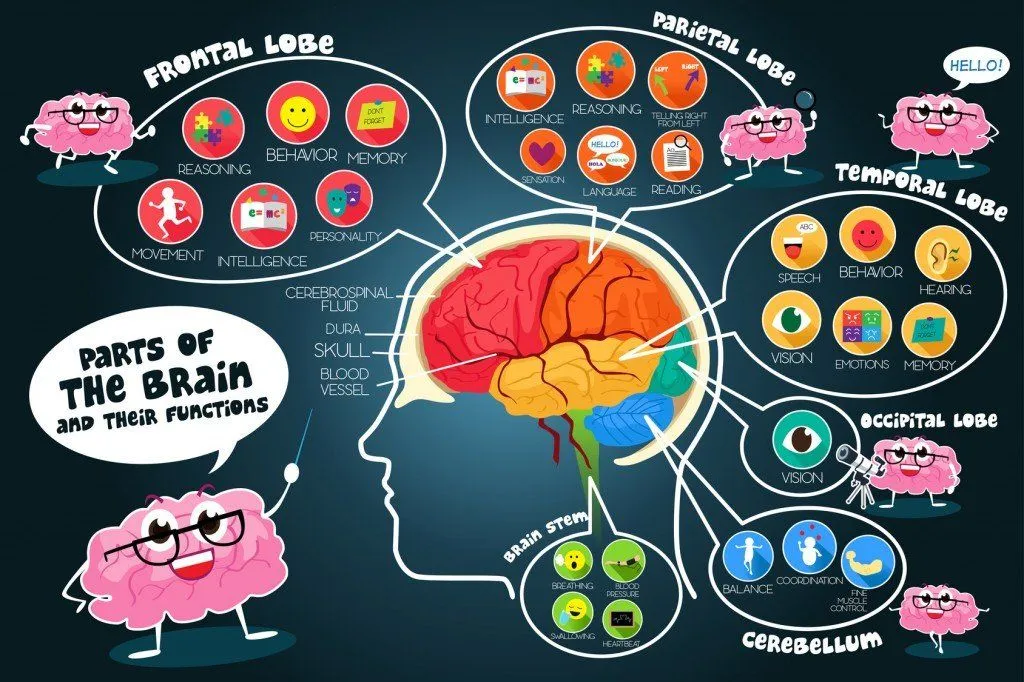
The “stars” you see after a knock to the head are phosphenes, flashes of light created when your visual system is mechanically stimulated rather than by actual light. A blow snaps your brain inside the skull, briefly jolting the visual cortex at the back of the head (the occipital lobe). The neurons there respond by firing as if light had hit them, so your conscious experience is a brief shower of bright dots and streaks.
The chaotic discharge of energy tricks the brain into thinking that it is seeing a twinkling array of lights without any discernible order or pattern. However, this effect doesn’t last for too long.
If you’ve never cracked your head on something at some point in your life, then you’re very lucky, and should probably stop living in such a safe little bubble. However, for those of us who have ever walked into an open cabinet, taken a bad fall, or been smacked with the backside of a 2×4, we know what it feels like for our noggin to take a beating. Aside from the pain and the inevitable bump on our skull, a peculiar thing happens when we sustain a head injury – we end up “seeing stars”.
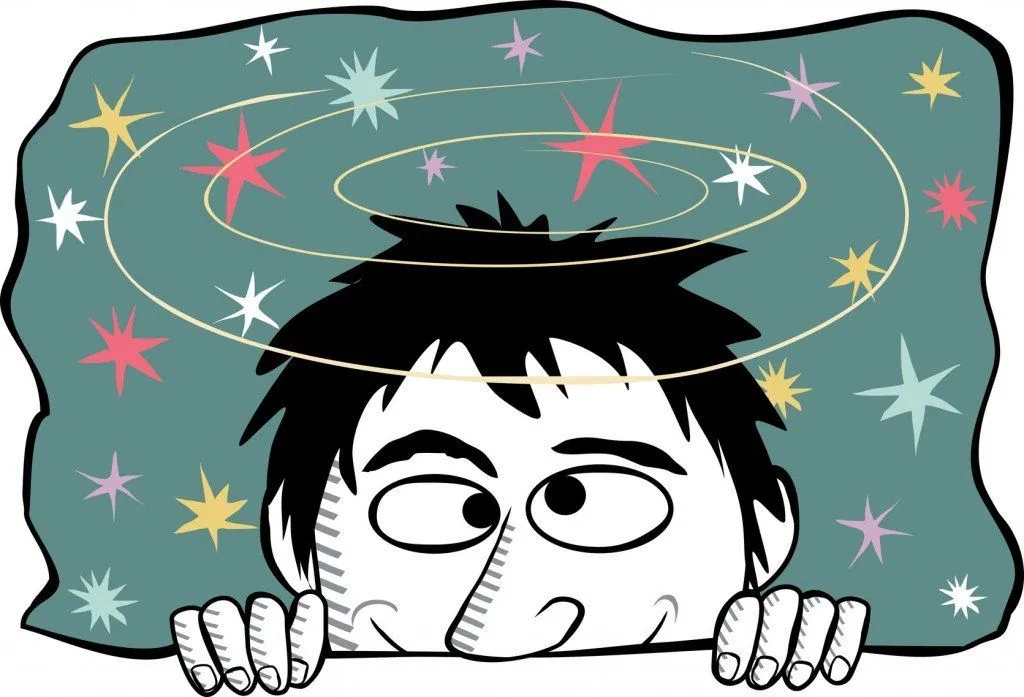
If you get hit hard enough, you end up seeing darkness, but somewhere between a bump and a knockout blow, this phenomenon occurs, but why?
A Bump To The Brain
Humans have evolved over hundreds of thousands of years to protect the most important part of our anatomy – the brain. Our grey matter is surrounded by something called cerebrospinal fluid, which acts as a cushion for our brain. When we turn our heads suddenly, bang our forehead on a table, or rock out to our favorite song, our brains move in accordance with the impact, but doesn’t bang against the sides of our skull too hard.
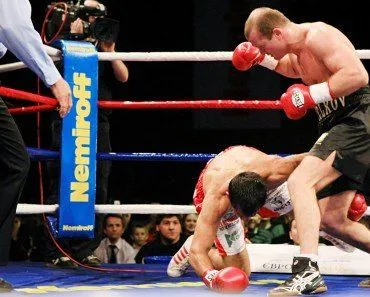
However, in more extreme cases, when we hit our heads with more velocity (or when an object hits us with great speed), something different occurs. Let’s take the example of getting punched in the face. When the blow lands, our skull will snap back, at which point it will hit the front part of our brain. When we fall to the ground and bang our head on the ground, the skull will then be shoved forward, hitting the back part of the brain, namely the occipital lobe. This rapid impact can disrupt the flow of blood in that area, and can also affect the huge amount of nerve cells at the back of the head.
This rapid movement of the skull and its impact on the brain is what causes us to “see stars”, because the occipital lobe is where the visual cortex is located.
Tricking The Visual Cortex
When we open our eyes and look around, those nerve impulses are translated into images in the tissues of the visual cortex. Essentially, that is how we see the world around us. However, when those tissues are impacted so violently (by the skull snapping back against the occipital lobe), the nerve cells at the back of the head discharge a waterfall of electrical impulses, which scatter through the tissues.
This chaotic discharge of energy tricks the brain into thinking that it is seeing a twinkling array of lights without any discernible order or pattern. This effect doesn’t last for too long, however, and as the tissues return to normal and the pressure is eased from those nerve cells, the stars will gradually fade. “Seeing stars” is harmless, although whatever caused you to see those stars may do some real damage.
You can artificially create the same experience by gently rubbing your eyes when you wake up in the morning. Pressing on the eyeball mechanically stimulates the photoreceptor cells of the retina (not the optic nerve, contrary to a common myth), which then send light signals to the visual cortex even though no light has entered the eye. The result is the same kind of phosphene (swirling patches of color, blobs, or shimmering dots) with no head injury required.
While looking up at a star-filled sky can be a transcendent way to view the world, sustaining head injuries to replicate that experience isn’t a very wise choice. Protect your brain at all costs!
Is Seeing Stars A Sign Of A Concussion?
This is the question most people are really asking, so let’s be clear about it. Seeing stars on its own is simply a phosphene, and a brief shower of them after a knock is not, by itself, proof of a concussion. But a concussion is a mild traumatic brain injury, and a blow hard enough to fire off your visual cortex is exactly the kind of jolt that can cause one. The two often arrive together.

Here is the part that surprises people: you do not have to black out to have a concussion. According to StatPearls, more than 90% of people diagnosed with a concussion never lose consciousness at all. So the absence of a knockout doesn’t mean you got off scot-free. The symptoms to watch for are headache, dizziness, nausea, confusion, sensitivity to light or noise, and feeling foggy or slowed down, and they can show up hours or even a day or two after the impact, not just in the moment.
When should you stop reading and go get checked? The CDC lists clear danger signs that call for emergency care after a head injury: a headache that keeps getting worse, repeated vomiting, slurred speech, weakness or numbness, poor coordination, convulsions or seizures, one pupil larger than the other, double vision, drowsiness you can’t shake or an inability to stay awake, and growing confusion, restlessness or agitation. Any of those means a hospital, not a nap. When in doubt, get a professional to look at you, because the stars are harmless but the blow that caused them might not be.
Why Do Some People See White, Black, Or Colored Light Instead Of Stars?
Not everyone reports the same light show. Some people see a single bright white flash, others a wash of color, and a hard enough hit can black out the field entirely. It turns out the “color” of a phosphene is a clue to which part of your visual system got rattled.
Your retina is paved with two kinds of light-sensing cells. Cones, clustered in the central macula, handle color, while rods, spread across the periphery, handle dim, colorless vision. Research on phosphenes shows that when the cone-rich central retina is stimulated, people tend to see colored phosphenes, while stimulation of the rod-dominated periphery and the optic nerve produces white phosphenes. A mechanical jolt that mostly fires the periphery, then, reads as a white flash rather than a colorful one.
And the blackout? That’s the other end of the scale. A light knock fires off a few phosphenes, but a hard enough blow can briefly knock you unconscious, which is why a really heavy hit lands you in darkness instead of a sky full of dots. As with the stars, the white flashes and brief dimming pass on their own. But if flashes of light linger after a head injury, or arrive with a curtain or shadow drifting across your vision, treat that as a red flag and see an eye doctor quickly: persistent photopsia can signal a retinal tear or retinal detachment, which is a genuine emergency rather than a harmless trick of the brain.
References (click to expand)
- After bumping my head, why do I 'see stars'? | SiOWfa15. The Pennsylvania State University
- (2008) Post-Traumatic Visual Loss - PMC - NCBI. The National Center for Biotechnology Information
- Vision and Neurological Disorders | University of Maryland Medical Center - umm.edu
- Signs and Symptoms of Concussion | HEADS UP | CDC
- Concussion - StatPearls - NCBI Bookshelf. National Library of Medicine
- Traumatic brain injury: Mechanisms, manifestations, and visual sequelae. Frontiers in Neuroscience (2023) - PMC
- Mechanisms of phosphenes in irradiated patients - PMC. National Center for Biotechnology Information