Table of Contents (click to expand)
Yes. Babies are born able to tell apart the speech sounds of every language, so growing up with two languages does not confuse them. Between about 6 and 12 months, the brain tunes to whatever languages it hears most, which is why infants raised in bilingual homes can pick up both, provided the exposure comes from real social interaction with people.
Babies can start speaking from as early as a few months of age. They quickly pick up their ‘native’ language that is spoken around them with ease. However, today’s world presents a new challenge for babies.
More than half of the world’s population is thought to be “bilingual” (estimates range from roughly 50% to 75%, depending on how strictly the word is defined). This means that in many homes, babies grow up learning more than one language. Sometimes both parents speak different languages, or the children speak one language at home, and another in school. Have you ever wondered if babies are capable of understanding this or are we going too far in teaching them more than one language?
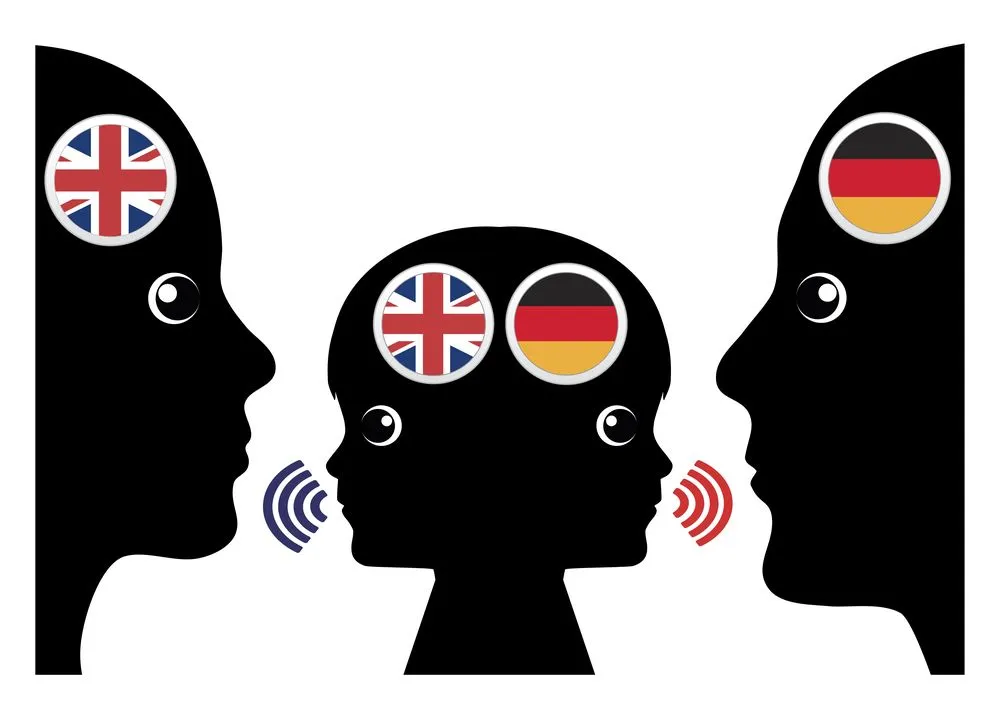
Bilingualism – Good Or Bad?
Before we can understand whether babies are “born bilinguals”, let’s look at what science really has to say about bilingualism.
For much of the 20th century, it was believed that learning two languages slowed down language development in children, and parents were often advised to use only one language with their infants. That advice has not held up. Study after study now shows that bilingual children reach the usual language milestones (babbling, first words, first sentences) on the same schedule as monolingual children. When you add up the words a bilingual toddler knows across both languages, the total is right in line with their monolingual peers.
Some research has also reported that bilingual children do better on tests of attention and mental flexibility than monolingual children. This “bilingual advantage” is genuinely debated, though. A large U.S. study of more than 4,500 nine- and ten-year-olds found little sign of any executive-function advantage once family background was taken into account, and the benefit (if it exists) appears to be small and inconsistent. What is no longer in doubt is the original fear: growing up bilingual does not harm a child’s development. So if there is no downside, are babies actually born ready to handle bilingualism?
How Babies Learn Their Native Language
A baby’s brain constantly measures how often they hear certain sounds from their native language. Much like a “statistical machine”, their brain measures the statistics of sounds and how frequently they are heard.
They become better at their native language, which they hear more often, and slowly become skilled in that language. This tuning unfolds across roughly the first year of life, between about 6 and 12 months of age, a stretch that researchers call the “sensitive period” (or “critical period”) for speech-sound learning. As it closes, near a baby’s first birthday, their brain starts preferring the sounds it already knows (those from the native language) and mostly loses the ability to pick up new sounds from foreign languages. In some ways, one can say that they become “bound” by their native language.
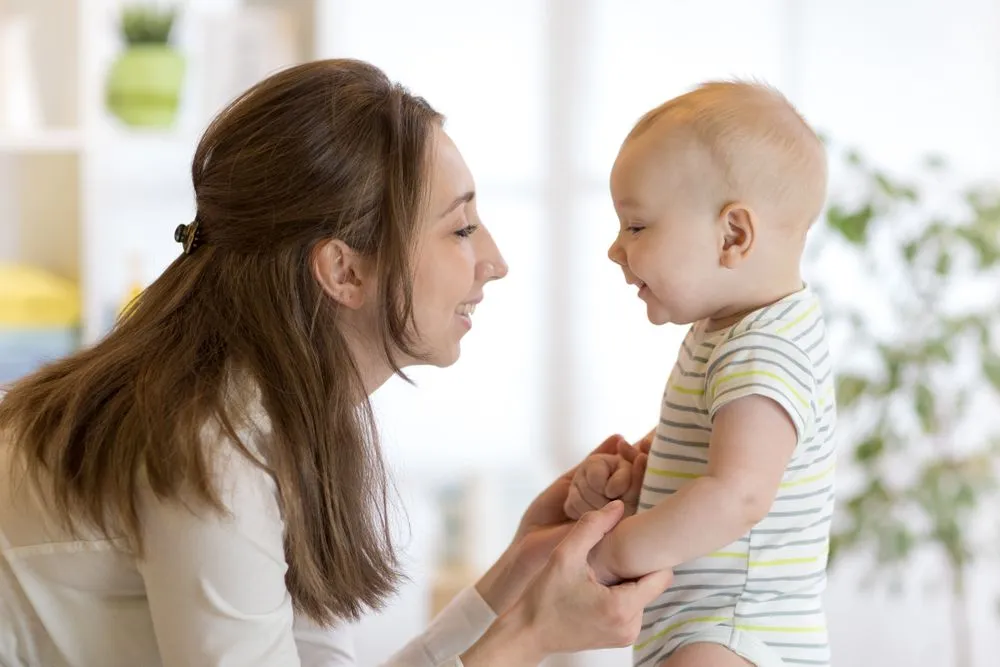
This phenomenon is very interesting to study across languages because different languages place distinct demands on their speakers. Consider the languages Japanese and English. The Japanese language does not distinguish the sounds ‘/ra/’ and ‘/la/’, unlike in English. Therefore, Japanese adults cannot tell these sounds apart. This prompted scientists to study American and Japanese babies to understand at what point infants start to become “bound” by their native language.
In this study, they tracked the ability of Japanese and American infants to distinguish these sounds from 6 months to 12 months of age. Initially, Japanese infants could tell the sounds apart until 6-8 months of age, just like their American peers. However, by the age of ten months, Japanese infants began to have difficulty distinguishing these two sounds. American infants, on the other hand, started getting better at distinguishing these two sounds. Both groups of infants were slowly starting to resemble their respective adult populations as they grew older.
So what happens if a baby receives foreign language input during the critical period?
In another study by the same team of scientists, they explored this question. They exposed American infants in their critical period to adult Mandarin speakers. These adults would regularly visit them and do interactive storytelling in Mandarin. When tested before these interactive sessions, the babies did poorly in terms of recognizing Mandarin sounds. After several sessions, however, they improved in their recognition of Mandarin sounds. They also retained the ability to distinguish sounds in Mandarin (a foreign language) after crossing the critical period mark.
In a separate experiment in the same study, these scientists also tried to train infants on Mandarin without human interaction, using audio and visual media in Mandarin. Interestingly, this didn’t help the infants learn to distinguish Mandarin sounds efficiently. Social interaction appears to be important in picking up a second language.
From these studies, it is clear that we are born with the ability to pick up any language that we’re taught. However, over the course of development, we lose this ability for foreign sounds and become more focused on mastering only the language spoken around us. That being said, if we’re frequently exposed to a foreign language during the critical period, we continue to be good at perceiving the relevant sounds, just as we could in infancy.
It can be said that babies are born as “citizens of the world”, and theoretically have the ability to speak any language.
A Final Word
In many parts of the world, children grow up learning more than one language. Studies show that growing up learning more than one language gives you an edge in several areas, including intelligence. This often raises the question of whether it’s okay to push infants to learn more than one language.
Scientific evidence shows that across the first year of life, roughly 6 to 12 months of age, infants become “tuned” to their native language. If they are exposed to another language while that window is still open, they hold on to the ability to perceive its sounds. Infants, in other words, are more than capable of soaking up whatever languages surround them, so long as the exposure begins before that first birthday. It is important to note that babies require social interaction to learn a language. Nothing can replace or create the magic that an adult can deliver simply by talking to the infants!
These findings have crucial implications for certain parts of the world where children are pushed to learn multiple languages for various reasons. For example, many non-English speaking societies push children to learn English. These studies tell us that there is nothing wrong with such an approach, as long as children get rich, in-person exposure to the language while the sensitive period is still open. The true upper limits of human language learning are still being mapped out, but one thing is clear: becoming bilingual (or multilingual) carries almost no reported downsides, and a second language opens cultural and communicative doors that a single language never can.
References (click to expand)
- English as a global language - OUM Library. Open University Malaysia
- C Gauthier. Language Development in Bilingual Children - OpenSIUC. Morris Library
- Kuhl, P. K., Kiritani, S., Deguchi, T., Hayashi, A., Stevens, E. B., Dugger, C. D., & Iverson, P. (1997, November). Effects of language experience on speech perception: American and Japanese infants’ perception of /ra/ and /la/. The Journal of the Acoustical Society of America. Acoustical Society of America (ASA).
- Kuhl, P. K., Tsao, F.-M., & Liu, H.-M. (2003). Foreign-language experience in infancy: Effects of short-term exposure and social interaction on phonetic learning. Proceedings of the National Academy of Sciences (PNAS).
- Dick, A. S., et al. (2019). No evidence for a bilingual executive function advantage in the ABCD study. Nature Human Behaviour.