Before nail clippers, human fingernails were likely worn down through regular daily use, similar to how canine nails are worn down when walked daily on pavement or sidewalk.
Animals have many grooming habits that help them stay healthy and look good to a potential mate, and the same can be said of humans! We have incorporated grooming into every aspect of our appearance, from combing our hair and showering to scraping dry skin off our feet and trimming our beards. Some people spend hours and hundreds of dollars getting their nails done every month, shaping, polishing, and even extending them! Most people simply trim back their nails with rudimentary trimmers that can be found in almost every bathroom in the world.
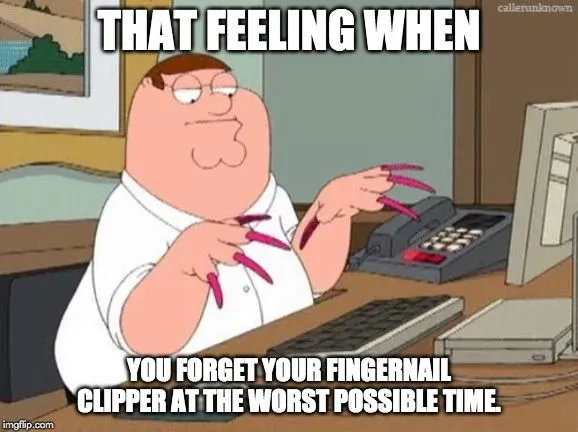
Nail care often differs between men and women, but the bottom line remains the same – our nails grow, and they need to be trimmed back or managed in some way. The question is that tens of thousands of years ago, people still had fast-growing nails, but without our modern tools, how did they keep their fingers looking fresh? What did early humans do before nail clippers?
The History Of Nail Clippers
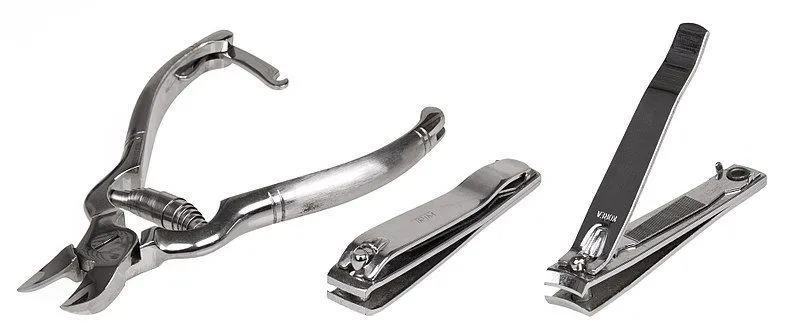
Before we go too far back in time, let’s take a quick look at the nail clippers that we have, whether you use them or not! These days, when you snag a nail on an article of clothing or notice that your crescent-moon fingertips are starting to click annoyingly on your phone screen, there are a few obvious solutions.
Most people go to the bathroom drawer and find the nail clippers, which typically come in two forms: pliers and compound lever. As the name of the former type suggests, this small stainless steel tool looks like a set of pliers, with two metal levers connected at a fulcrum to create a set of “jaws” that can be precisely placed over a nail to trim it. The compound lever type is more commonly seen, with a manipulable lever that can be rotated into place with a concave clipping end.
The familiar compound-lever clipper became widespread in the early 20th century. Chapel S. Carter received an influential US patent for the modern lever-style clipper in 1905. The earliest US patent for any kind of fingernail clipper, however, was filed by Valentine Fogerty in 1875, with related designs from William C. Edge (1876), John H. Hollman (1878), and Eugene Heim and Celestin Matz (1881) following in quick succession. Before that point, the history of this grooming tool becomes much murkier. There have been various literary references to people cutting their nails throughout history, but the tool of choice is almost always a small penknife or a blade. Depending on social status, cultural tradition, and place in history, carrying a knife may have been as common as putting on clothes. Therefore, it makes sense to trim the nails with this readily available tool carefully.
Going back even further, references to nails being cut or trimmed date back to the 8th century BC, so clearly this has been a point of concern for humans for at least 3,000 years! From Roman satirists pondering the nature of trimming one’s nails in their plays to Cleopatra carefully trimming her fingernails and painting them red, fingernail style and grooming have existed for as long as recorded history.
But what if we want to go even further back? Before humans developed blades or social expectations of hygiene, how did we handle the inexorably growing nails at the ends of our fingers?
How Did People Cut Their Nails In Ancient Times?

So once people were past the rough-and-ready labor that wore nails down on its own, what did they actually reach for? In the ancient world, the honest answer is a blade. A small knife or penknife was the universal grooming tool, and the references are surprisingly literary. The Roman poet Horace, writing around 35 BC, describes a barber sitting with a penknife in hand, quietly paring and cleaning his nails while a customer waited. Cutting your nails was simply something a careful blade could do alongside a dozen other daily tasks, which is exactly why so few people thought to invent a dedicated tool for it.
The Romans, who turned personal grooming into something close to an art, went one step further. Wealthier Romans carried compact toilet sets: a cluster of small bronze implements, often strung together like a ring of keys, that typically held tweezers, an ear scoop, and a dedicated nail cleaner. Archaeologists have pulled hundreds of these from sites across the former Roman world. The nail cleaners are usually slim, forked or V-shaped tools designed to scrape dirt from under the nail, and some were shaped so they could double as a crude file to smooth a rough edge. They were not clippers in any modern sense, but they show that a tidy, clean fingernail was a recognized marker of status thousands of years ago. Cleopatra is said to have kept her nails carefully shaped and stained red, so the idea of a "manicure" is far older than the word.
How Did Medieval And Early-Modern People Cut Their Nails?

For the long stretch between Rome and the 19th century, surprisingly little changed. Through the medieval period, the everyday solution was still the small knife almost everyone carried for eating and odd jobs. You pared a nail much as you would whittle a stick, slicing carefully back toward the fingertip. People without a fine blade made do with whatever was at hand, smoothing rough edges against a stone or simply biting and tearing the nail off. Clean, neatly trimmed hands signaled leisure and high rank, while laborers, whose nails were worn and chipped by work anyway, had far less reason to fuss over them.
The dedicated nail scissors we would recognize today crept in slowly. By the 1700s, small folding knives, scissors, files, and tweezers were being tucked into elegant fitted cases known as an etui or nécessaire; a surviving English example from around 1750 holds a folding knife, a pair of scissors, and steel tweezers in a single pocket-sized kit. From roughly 1750 onward, a fresh trade of hand-and-nail specialists also appeared, advertising painless nail cutting for fashionable clients who fretted over the state of their fingertips. So a person in the 1700s or 1800s typically pared their nails with a small knife or trimmed them with scissors, and the very wealthy paid a specialist or carried a purpose-made grooming set. The familiar spring-loaded clipper only displaced all of this once the patents of the 1870s through 1905 brought it into mass production.
Letting Nature Take Its Course
The answer to this question is quite simple… fingernails probably took care of themselves. Fingernails are largely made of keratin, a hardened protein that is also found in skin and hair. While keratin is hardy and durable, it is far from unbreakable, as any woman with a chipped nail will attest.
Now, think back 100,000 years, when early humans behaved like hunters and gatherers, engaging in strenuous physical activities to survive. Over the course of their normal days, they might have dug tubers out of the earth, sharpened a rudimentary spear, carried makeshift shelters, or tried to light a fire. With all this manual labor, it is believed that the fingernails would have naturally been worn down and chipped away. The daily demands of survival would have kept the fingernails from growing to unruly or unmanageable lengths. As mentioned above, we also see this passive maintenance in other species, such as dogs, which often walk on pavement, which gradually wears down their nails, thus requiring fewer nail trimmings at the vet.
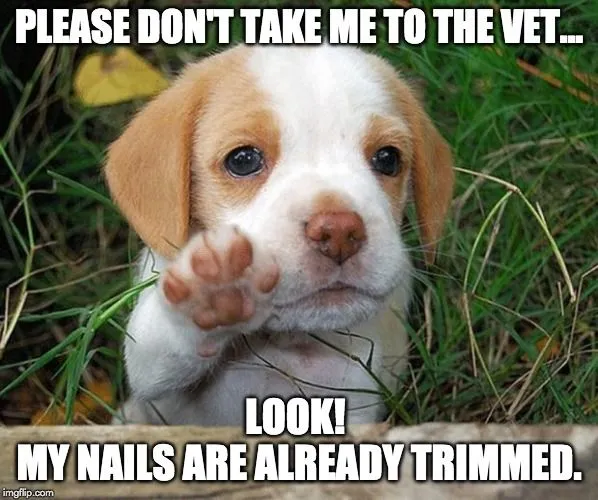
If the fingernails of these early humans did break or chip, they likely solved the problem as we do today – giving them a nibble and maybe tugging off the occasional irritating hangnail. Again, we see the same behavior in other species that lick at, soften, and bite their nails when they grow too long.
A Final Word
Everyone has their own personal preferences regarding grooming, but the practice itself has been present throughout evolutionary history. Animals have countless ways of keeping themselves clean and looking good, even trading grooming duties in their hard-to-reach places! There is no denying that grooming is an essential part of our nature. Whether we get our nails carefully manicured every week or anxiously nibble on our cuticles all day, everyone participates in some form of nail maintenance. Grooming is a hygienic practice that dates back millions of years and has cultural significance and social foundations, so if you’re often worried about the condition of your nails, don’t worry… it’s perfectly natural!
References (click to expand)
- Wang, B., Yang, W., McKittrick, J., & Meyers, M. A. (2016, March). Keratin: Structure, mechanical properties, occurrence in biological organisms, and efforts at bioinspiration. Progress in Materials Science. Elsevier BV.
- Smith V. (2007). Clean: A History of Personal Hygiene and Purity. OUP Oxford
- Draelos Z. D. (2015). Cosmetic Dermatology: Products and Procedures. John Wiley & Sons
- Yerkes, R. M. (1933, February). Genetic Aspects of Grooming, a Socially Important Primate Behavior Pattern. The Journal of Social Psychology. Informa UK Limited.
- Inside the grooming habits of ancient Rome. National Geographic.
- Review of Ralph Jackson, Cosmetic Sets of Late Iron Age and Roman Britain (British Museum Press, 2010). Bryn Mawr Classical Review.
- Withey, A. The Hand of History: Hands, Fingers and Nails in the Eighteenth Century. Dr Alun Withey, University of Exeter.
- Toilet service. Wikipedia.